
John Vercher
Author of Devil Is Fine
Works by John Vercher
Associated Works
Tagged
Common Knowledge
Members
Reviews
Rating: 4.5* of five
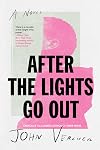
The Publisher Says: A harrowing and spellbinding story about family, the complications of mixed-race relationships, misplaced loyalties, and the price athletes pay to entertain—from the critically acclaimed author of Three-Fifths
Xavier "Scarecrow" Wallace, a mixed-race MMA fighter on the wrong side of thirty, is facing the fight of his life. Xavier is losing his battle with chronic traumatic encephalopathy (CTE), or pugilistic dementia—a struggle he can no longer show more deny. Through the fog of memory loss, migraines, and paranoia, Xavier does his best to keep in shape while he waits for the call that will reinstate him after a year-long suspension.
Until then, he watches his diet and trains every day at the Philadelphia gym owned by his cousin-cum-manager, Shot, a retired champion boxer to whom Xavier owes an unpayable debt. Xavier makes ends meet by teaching youth classes at Shot’s gym and by living rent-free in the house of his white father, whom Xavier has been forced to commit to a nursing home because of the progress of his end-stage Alzheimer’s. Dementia has revealed a shocking truth about Sam Wallace, and Xavier finally gains insight into why his Black mother left the family when Xavier was young.
As Xavier battles his aging body and his failing brain, each day is filled with challenges and setbacks. Then Xavier is offered a chance at redemption: a last-minute comeback fight in the largest MMA promotion. If he can get himself back in the game, he’ll be able to clear his name and begin to pay off Shot. But with his memory in shreds and his life crumbling around him, can Xavier hold onto the focus he needs to survive? After the Lights Go Out is a haunting, unflinching look at the aftermath of a career in MMA—as Xavier forgets everything around him, you'll want to remember every single word.
I RECEIVED A DRC FROM THE PUBLISHER VIA NETGALLEY. THANK YOU.
My Review: This is one rough ride of a book. There are people whose road through life is not paved, has many potholes, throws up gravel and clouds of caliche dust as their bald-tired forty-year-old chassis bounces and shakes over to one ditch, down into another. And that is who we're with here. Xavier is not, was never, expecting a limo ride, not even waiting for a cab ride...he's still rollin' but the roll is slow and it's not getting faster.
The bad marriage he came from was made worse by its permanent poison-gift to him. His mother was Black and father white, so he knows something a lot of people don't have to: Not belonging to either side in a war isn't being neutral. That's a gift only those with a clear side, one that can't be denied, are given. He's mixed. He's mixed up, he's mixed it up in fights his whole life. No one wanted him on their team so he used what strength and speed he could find to go one-on-one with other rage-filled testosterone-poisoned Others.
Now nearing forty, he's sure he's got no future. So is everyone else but they never thought he had a present. His efforts to get one more headline bout in Mixed Martial Arts are, as we meet him, wavering in and out of existence in front of eyes that don't connect to his brain right anymore. The voices he hears clearest are the ones in his battered head, they aren't competing with tinnitus. At least they aren't the ones telling him things he doesn't want to hear...his father, foundering under Alzheimer's disease's heavy burdens, doesn't remember him but does remember how to hate, his chances to fight again, more, are steadily melting away and there's nothing else he can do to make a living.
The life of someone always on the margins is, realistically, never going to turn into a happily ever after. Xavier never once thought it would. He chooses his own adventure, like he always has, right up to the last bitter dreg from the cup.
Author Vercher tells this deeply moving, unbearably honest story in direct, immediate prose. He selects the small images...a texting app's continuation icon of dots keeping him on tenterhooks about his future, the feeling of hanging his hand out the window while driving his dad's old car bringing back the times he did the same thing as a kid...that make Xavier real. That keep him, however fleetingly, locked in to the present moment. They work very well, are sharp but still small enough to make them fit right on everyone.
What isn't quite as smooth is the passages where Xavier is learning his mother and father, very late in life from my point of view, are fully human people. What Author Vercher does to make Xavier aware of his mother's full humanity was a scene both a little long as well as underdeveloped. It needed not to feel rushed as Xavier learns Evelyn was a very different person than the mother he had. The issues around dementia were handled very well, in my experienced opinion. When Xavier realizes that disinhibition is part of the course of dementia, it rocks his world. It did not need to be played out in the over-the-top manner that it was. Honestly, the choice to make Xavier's pathology so very foregrounded wore on my patience at times. Every reader has their own crotchets...these are mine.
Perfection not being of this Earth, I can honestly say that your Yule gift cards, spent on this deep and emotionally honest journey, will not be wasted. This second novel tells me that Author Vercher is a gift to the readers who want to get into a story and come out changed.
Bravo, good sir. show less
The Publisher Says: A harrowing and spellbinding story about family, the complications of mixed-race relationships, misplaced loyalties, and the price athletes pay to entertain—from the critically acclaimed author of Three-Fifths
Xavier "Scarecrow" Wallace, a mixed-race MMA fighter on the wrong side of thirty, is facing the fight of his life. Xavier is losing his battle with chronic traumatic encephalopathy (CTE), or pugilistic dementia—a struggle he can no longer show more deny. Through the fog of memory loss, migraines, and paranoia, Xavier does his best to keep in shape while he waits for the call that will reinstate him after a year-long suspension.
Until then, he watches his diet and trains every day at the Philadelphia gym owned by his cousin-cum-manager, Shot, a retired champion boxer to whom Xavier owes an unpayable debt. Xavier makes ends meet by teaching youth classes at Shot’s gym and by living rent-free in the house of his white father, whom Xavier has been forced to commit to a nursing home because of the progress of his end-stage Alzheimer’s. Dementia has revealed a shocking truth about Sam Wallace, and Xavier finally gains insight into why his Black mother left the family when Xavier was young.
As Xavier battles his aging body and his failing brain, each day is filled with challenges and setbacks. Then Xavier is offered a chance at redemption: a last-minute comeback fight in the largest MMA promotion. If he can get himself back in the game, he’ll be able to clear his name and begin to pay off Shot. But with his memory in shreds and his life crumbling around him, can Xavier hold onto the focus he needs to survive? After the Lights Go Out is a haunting, unflinching look at the aftermath of a career in MMA—as Xavier forgets everything around him, you'll want to remember every single word.
I RECEIVED A DRC FROM THE PUBLISHER VIA NETGALLEY. THANK YOU.
My Review: This is one rough ride of a book. There are people whose road through life is not paved, has many potholes, throws up gravel and clouds of caliche dust as their bald-tired forty-year-old chassis bounces and shakes over to one ditch, down into another. And that is who we're with here. Xavier is not, was never, expecting a limo ride, not even waiting for a cab ride...he's still rollin' but the roll is slow and it's not getting faster.
The bad marriage he came from was made worse by its permanent poison-gift to him. His mother was Black and father white, so he knows something a lot of people don't have to: Not belonging to either side in a war isn't being neutral. That's a gift only those with a clear side, one that can't be denied, are given. He's mixed. He's mixed up, he's mixed it up in fights his whole life. No one wanted him on their team so he used what strength and speed he could find to go one-on-one with other rage-filled testosterone-poisoned Others.
Now nearing forty, he's sure he's got no future. So is everyone else but they never thought he had a present. His efforts to get one more headline bout in Mixed Martial Arts are, as we meet him, wavering in and out of existence in front of eyes that don't connect to his brain right anymore. The voices he hears clearest are the ones in his battered head, they aren't competing with tinnitus. At least they aren't the ones telling him things he doesn't want to hear...his father, foundering under Alzheimer's disease's heavy burdens, doesn't remember him but does remember how to hate, his chances to fight again, more, are steadily melting away and there's nothing else he can do to make a living.
The life of someone always on the margins is, realistically, never going to turn into a happily ever after. Xavier never once thought it would. He chooses his own adventure, like he always has, right up to the last bitter dreg from the cup.
Author Vercher tells this deeply moving, unbearably honest story in direct, immediate prose. He selects the small images...a texting app's continuation icon of dots keeping him on tenterhooks about his future, the feeling of hanging his hand out the window while driving his dad's old car bringing back the times he did the same thing as a kid...that make Xavier real. That keep him, however fleetingly, locked in to the present moment. They work very well, are sharp but still small enough to make them fit right on everyone.
What isn't quite as smooth is the passages where Xavier is learning his mother and father, very late in life from my point of view, are fully human people. What Author Vercher does to make Xavier aware of his mother's full humanity was a scene both a little long as well as underdeveloped. It needed not to feel rushed as Xavier learns Evelyn was a very different person than the mother he had. The issues around dementia were handled very well, in my experienced opinion. When Xavier realizes that disinhibition is part of the course of dementia, it rocks his world. It did not need to be played out in the over-the-top manner that it was. Honestly, the choice to make Xavier's pathology so very foregrounded wore on my patience at times. Every reader has their own crotchets...these are mine.
Perfection not being of this Earth, I can honestly say that your Yule gift cards, spent on this deep and emotionally honest journey, will not be wasted. This second novel tells me that Author Vercher is a gift to the readers who want to get into a story and come out changed.
Bravo, good sir. show less
There is so much depth to this novel. Written as a conversation between a father and his recently deceased son, it delves into an exploration of fatherhood and family ties, race identity when Black and biracial, grief, and guilt. All of these elements and themes built on each other and inter-played in ways that strengthened each of them. The writing is both rich and subtle, evoking complex emotions or ideas with small details and without growing overbearing. It works regardless of how deeply show more you want to analyze it.
I would have to reread it to decide if I think the magical realism elements were used in the best way. They worked well to accentuate the conflict in the narrator's identity and to explore the history of the plantation. Still, there were times when they didn't seem to be serving the themes or the narrative as well, complicating more than enriching. show less
I would have to reread it to decide if I think the magical realism elements were used in the best way. They worked well to accentuate the conflict in the narrator's identity and to explore the history of the plantation. Still, there were times when they didn't seem to be serving the themes or the narrative as well, complicating more than enriching. show less
Rating: 4.5* of five
The Publisher Says: Still reeling from a sudden tragedy, our biracial narrator receives a letter from an attorney: he has just inherited a plot of land from his estranged white grandfather. He travels to a beach town several hours south of his home with the intention of selling the land immediately and moving on. But upon inspection, what lies beneath the dirt is far more complicated than he ever imagined. In a shocking irony, he is now the Black owner of a former show more plantation passed down by the men on his white mother’s side of the family.
Vercher deftly blurs the lines between real and imagined, past and present, tragedy and humor, and fathers and sons in this story of discovering and reclaiming a painful past. With the wit and rawness of Paul Beatty’s The Sellout, Devil Is Fine is a gripping, surreal, and brilliantly crafted dissection of the legacies we leave behind and those we inherit.
I RECEIVED A DRC FROM THE PUBLISHER VIA NETGALLEY. THANK YOU.
My Review: The first book I reviwed by Author Vercher was After the Lights Go Out, a tough, unflinching look at the way one biracial man navigates a life whose deck is stacked against him as he determinedly struggles for Better.
Not so our unnamed stream-of-consciousness narrator. He's subsided into a haze of addiction, numbing the rejection of US society, his family of origin, and himself. He does not manage his pain, he tries to outrun it. This is, as anyone who has ever entered therapy knows, pointless and causes far more problems than it solves.
Be that as it may, here we are as the novel opens on the one disaster any parent dreads the most: the death of his son, a teenager, is unsurprisingly a shock to his system. His white mother's father, a stranger to him (for the most part) died and left a landholding...a plantation...to his son. After the unbearable horror of his son's funeral, he discovers he's a landowner for the first time in his life.
When he goes to the property to get the train moving on the process of selling it to be developed, ending at last his lifetime of (largely self-inflicted) poverty, things get weird. Like, "am I hallucinating?" weird. The language used in the synopsis above, "blurs the lines between real and imagined," is very carefully chosen. I like magical realism, and am resolutely a materialist, but the eerie, spooky things that happen in the corner of one's eye, and juuust out of sight, aren't unreal necessarily. After all, if the brain does in fact create reality from the bouncing of photons and the resistance of electrons to merging, there's nothing to say ghost or spirits or other such "hallucinations" are not real.
Our narrator's derangement from this latest helping of grief, added to his borning acknowlefgment of harms he's caused via addiction behaviors, is entirely enough to explain his altered perceptions of the material world. The good news for him is these spirits or whatever are guiding him onto a path of redemption. The bad news is he's going to forego a lot of money.
Redemption, to the degree it is possible, is worth a lot more than money. That our man is on that path at last makes this a very satisfying read indeed.
I was less impressed by the author's approach to stream-of-consciousness storytelling here. I followed, I think, most of the shifts in narrative. The key is "I think". I'm a savvy, experienced old reader, who loves him some Virginia Woolf; and yet I was left wondering if I was following every change. That's not a good sign that the author's got the material entirely under his control. I'm happy to pay it forward and occasionally do a re-visit of a paragraph once in a way, but it happened a lot. That's why this isn't a five-star review.
The story told ends up getting all the stars; the storytelling was a very slight bit less than perfectly aligned wiith it. On balance, though, a strong positive on getting yourself a copy.
Just maybe from the library. show less
The Publisher Says: Still reeling from a sudden tragedy, our biracial narrator receives a letter from an attorney: he has just inherited a plot of land from his estranged white grandfather. He travels to a beach town several hours south of his home with the intention of selling the land immediately and moving on. But upon inspection, what lies beneath the dirt is far more complicated than he ever imagined. In a shocking irony, he is now the Black owner of a former show more plantation passed down by the men on his white mother’s side of the family.
Vercher deftly blurs the lines between real and imagined, past and present, tragedy and humor, and fathers and sons in this story of discovering and reclaiming a painful past. With the wit and rawness of Paul Beatty’s The Sellout, Devil Is Fine is a gripping, surreal, and brilliantly crafted dissection of the legacies we leave behind and those we inherit.
I RECEIVED A DRC FROM THE PUBLISHER VIA NETGALLEY. THANK YOU.
My Review: The first book I reviwed by Author Vercher was After the Lights Go Out, a tough, unflinching look at the way one biracial man navigates a life whose deck is stacked against him as he determinedly struggles for Better.
Not so our unnamed stream-of-consciousness narrator. He's subsided into a haze of addiction, numbing the rejection of US society, his family of origin, and himself. He does not manage his pain, he tries to outrun it. This is, as anyone who has ever entered therapy knows, pointless and causes far more problems than it solves.
Be that as it may, here we are as the novel opens on the one disaster any parent dreads the most: the death of his son, a teenager, is unsurprisingly a shock to his system. His white mother's father, a stranger to him (for the most part) died and left a landholding...a plantation...to his son. After the unbearable horror of his son's funeral, he discovers he's a landowner for the first time in his life.
When he goes to the property to get the train moving on the process of selling it to be developed, ending at last his lifetime of (largely self-inflicted) poverty, things get weird. Like, "am I hallucinating?" weird. The language used in the synopsis above, "blurs the lines between real and imagined," is very carefully chosen. I like magical realism, and am resolutely a materialist, but the eerie, spooky things that happen in the corner of one's eye, and juuust out of sight, aren't unreal necessarily. After all, if the brain does in fact create reality from the bouncing of photons and the resistance of electrons to merging, there's nothing to say ghost or spirits or other such "hallucinations" are not real.
Our narrator's derangement from this latest helping of grief, added to his borning acknowlefgment of harms he's caused via addiction behaviors, is entirely enough to explain his altered perceptions of the material world. The good news for him is these spirits or whatever are guiding him onto a path of redemption. The bad news is he's going to forego a lot of money.
Redemption, to the degree it is possible, is worth a lot more than money. That our man is on that path at last makes this a very satisfying read indeed.
I was less impressed by the author's approach to stream-of-consciousness storytelling here. I followed, I think, most of the shifts in narrative. The key is "I think". I'm a savvy, experienced old reader, who loves him some Virginia Woolf; and yet I was left wondering if I was following every change. That's not a good sign that the author's got the material entirely under his control. I'm happy to pay it forward and occasionally do a re-visit of a paragraph once in a way, but it happened a lot. That's why this isn't a five-star review.
The story told ends up getting all the stars; the storytelling was a very slight bit less than perfectly aligned wiith it. On balance, though, a strong positive on getting yourself a copy.
Just maybe from the library. show less
Wow! What to say about this book? I loved it! The novel starts at the funeral of the protagonist’s son. The story is told in second person with the unnamed narrator addressing his son directly. This is a surprisingly effective perspective and one that is difficult to pull off. It allows the father’s grief to flow, and the reader to feel his emotions right along with him.
The storyline follows the narrator’s inheritance of a plot of land, which formerly served as a plantation. This show more situation introduces even more emotional conflict, where the (biracial) main character must deal with many microaggressions, the legacy of colonialism, and outright racism. The narrator has a sarcastic sense of humor, and the shifts between tragedy and humor strike a beautiful balance.
The narrator is a writer, and the situations he experiences are directly applicable to today’s issues, particularly with respect to the attitude that all the racial inequalities America has faced are now behind us. It contains surrealist elements mixed with satire and absurdism. These elements flow seamlessly, blending dreamlike sequences with realism.
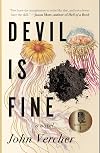
I am not usually a fan of magical realism, but the author has brilliantly incorporated it – the jellyfish on the cover will give you a hint. I rarely re-read books, but I am certain to revisit this one. It is only March, but Devil Is Fine is sure to make my shortlist of favorites for the year. show less
The storyline follows the narrator’s inheritance of a plot of land, which formerly served as a plantation. This show more situation introduces even more emotional conflict, where the (biracial) main character must deal with many microaggressions, the legacy of colonialism, and outright racism. The narrator has a sarcastic sense of humor, and the shifts between tragedy and humor strike a beautiful balance.
The narrator is a writer, and the situations he experiences are directly applicable to today’s issues, particularly with respect to the attitude that all the racial inequalities America has faced are now behind us. It contains surrealist elements mixed with satire and absurdism. These elements flow seamlessly, blending dreamlike sequences with realism.
I am not usually a fan of magical realism, but the author has brilliantly incorporated it – the jellyfish on the cover will give you a hint. I rarely re-read books, but I am certain to revisit this one. It is only March, but Devil Is Fine is sure to make my shortlist of favorites for the year. show less
Lists
Awards


You May Also Like
Associated Authors
Statistics
- Works
- 5
- Also by
- 1
- Members
- 285
- Popularity
- #81,814
- Rating
- 3.9
- Reviews
- 27
- ISBNs
- 26
- Languages
- 3