
Ian Bogost
Author of Racing the Beam: The Atari Video Computer System
About the Author
Ian Bogost is Ivan Allen College Distinguished Chair in Media Studies and professor of interactive computing at the Georgia Institute of Technology. He is author of many books, including How to Do Things with Videogames and Alien Phenomenology, or What It's Like to Be a Thing (both from the show more University of Minnesota Press). He is the award-winning game designer of A Slow Year, Cow Clicker, and more. show less
Image credit: Source: http://bogost.com/about/photos_of_me.shtml Author: Ian Bogost
Works by Ian Bogost
Play Anything: The Pleasure of Limits, the Uses of Boredom, and the Secret of Games (2016) 153 copies, 3 reviews
The New Aesthetic Needs to Get Weirder — Author — 1 copy
Associated Works
Second Person: Role-Playing and Story in Games and Playable Media (2007) — Contributor — 113 copies, 1 review
Tagged
Common Knowledge
- Canonical name
- Bogost, Ian
- Gender
- male
- Occupations
- Ivan Allen College Distinguished Chair in Media Studies at School of Literature, Media, and Communication, Ivan Allen College
Interactive Computing in the College of Computing at the Georgia Institute of Technology - Nationality
- USA
- Places of residence
- Atanta, Georgia, USA
- Associated Place (for map)
- Georgia, USA
Members
Reviews

This is a work at the absolute pinnacle of its field. While I usually reserve the 5-star rating for aesthetic masterpieces, I just couldn't imagine this book being any better. In its disciplinary breadth and clarity of presentation it resembles the excellent [b:Understanding Computers and Cognition: A New Foundation for Design|53482|Understanding Computers and Cognition A New Foundation for Design|Terry Winograd|http://photo.goodreads.com/books/1170425081s/53482.jpg|52158], and indeed some show more of the same figures appear in both: Heidegger and Gadamer, Maturana, von Neumann. Bogost, however, ranges much farther afield. In addition to providing an excellent foundational text in video game studies, he creates a framework suitable for analyzing just about any collision of technological and humanistic endeavor.
After months of slogging through lazy MMOG ethnographies, bloodless Nordic "ludology" texts, and the weighty pronouncements of media studies experts who obviously don't play video games, this book gave me relief and a feeling of rejuvenation. It is a common, and generally correct, opinion that video games deserve better criticism than they get; I wonder, though, if they yet deserve criticism quite this good. show less
After months of slogging through lazy MMOG ethnographies, bloodless Nordic "ludology" texts, and the weighty pronouncements of media studies experts who obviously don't play video games, this book gave me relief and a feeling of rejuvenation. It is a common, and generally correct, opinion that video games deserve better criticism than they get; I wonder, though, if they yet deserve criticism quite this good. show less
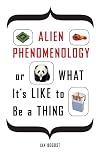
What to say about this book? Nothing good, definitely. It starts with a fairly serious if whimsical question, "What is it like to be a thing?" (shades of Thomas Nagel), but loses itself in a cavalcade of irrelevant philosophical flatulence.
As an STS scholar, I take the equivalence of human beings and things seriously. Bruno Latour's Parliament of Things actually sounds like an interesting idea. But even if we erase the divide between human and non-human, there still seem to be some show more bifurcations in the world: things and signs, atoms and bits, entities with intentional stances and those capable solely of reaction. A philosopher should examine these common-sensical distinctions, and the ways in which they are wrong. A true unitary theory would be a wonder. That is not in this book.
I'd hoped to see an approach by which we might approach the existence and quality of things: objects, technologies, artifacts, and so-called nature. Instead, Bogost throws out a few sparkling bon-mots in a sea of disconnected anecdotes and generally sloppy thinking. A subject that should be approached with immense care is treated with disrespect.
The only reason I finished this book was to honestly describe how bad it was. show less
As an STS scholar, I take the equivalence of human beings and things seriously. Bruno Latour's Parliament of Things actually sounds like an interesting idea. But even if we erase the divide between human and non-human, there still seem to be some show more bifurcations in the world: things and signs, atoms and bits, entities with intentional stances and those capable solely of reaction. A philosopher should examine these common-sensical distinctions, and the ways in which they are wrong. A true unitary theory would be a wonder. That is not in this book.
I'd hoped to see an approach by which we might approach the existence and quality of things: objects, technologies, artifacts, and so-called nature. Instead, Bogost throws out a few sparkling bon-mots in a sea of disconnected anecdotes and generally sloppy thinking. A subject that should be approached with immense care is treated with disrespect.
The only reason I finished this book was to honestly describe how bad it was. show less
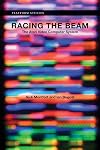
https://fromtheheartofeurope.eu/racing-the-beam-the-atari-video-computer-system-...
I know very little about computer games, and still less about the early history of the Atari system; but sometimes it does you good to read about a field of human endeavour with which you are completely unfamiliar. This is a tremendous analysis of how coding is affected by external factors, especially the way in which the business of game development is financed and structured, but also from learning about show more player preferences and making crazy bets about game features which turn out to pay off (or not).
This slim volume looks in depth at six games, only one of which I had heard of – Combat, Adventure, Pac-Man, Yars’ Revenge, Pitfall and Star Wars: The Empire Strikes Back, but also in passing at the other games developed before or at the same time in each case, to paint a picture of the intellectual moment in which the writing of the game took place. There is a modest amount of machine code, but a lot of analysis of how ideas get turned into player experience. I don’t think I have retained very much of the information, but I come away struck by the cultural profundity of the whole enterprise. Recommended even for those like me who are not immersed in the subject. show less
I know very little about computer games, and still less about the early history of the Atari system; but sometimes it does you good to read about a field of human endeavour with which you are completely unfamiliar. This is a tremendous analysis of how coding is affected by external factors, especially the way in which the business of game development is financed and structured, but also from learning about show more player preferences and making crazy bets about game features which turn out to pay off (or not).
This slim volume looks in depth at six games, only one of which I had heard of – Combat, Adventure, Pac-Man, Yars’ Revenge, Pitfall and Star Wars: The Empire Strikes Back, but also in passing at the other games developed before or at the same time in each case, to paint a picture of the intellectual moment in which the writing of the game took place. There is a modest amount of machine code, but a lot of analysis of how ideas get turned into player experience. I don’t think I have retained very much of the information, but I come away struck by the cultural profundity of the whole enterprise. Recommended even for those like me who are not immersed in the subject. show less

More like Prada, less like Edison
I open these mini-books with trepidation because they are usually incomplete thoughts, unresearched theories, or halfbaked editorials. The Geek’s Chihuahua is the opposite. It is a complete history, a thoughtful analysis and a tidy encapsulation. It is a time capsule for what we lived through when something called Apple ruled.
Starting with the Apple II, Bogost and I had the same experiences, and this was nostalgic for me. I also remember my 150 baud modem, show more which I hooked up to the hotel room telephone by removing its cover and physically attaching wires. It bypassed the hotel’s Centrex system because the receiver never left the hookswitch, so my hourlong e-mail and chat sessions never got billed. My point is that it is not so different today than it was 35 years ago; hyperemployment is not a 21st century phenomenon. Underemployment is however, and the time wasted on iphones is a disease worth remarking on.
The most memorable finding is that Apple is no longer about pushing the bounds of technology; it is all about pushing the bounds of fashion. New iterations focus on the showy rather than the functionality. Must have means must be seen to have. Planned obsolescence isn’t even necessary, though it it there in all its ugliness.
I realize it’s a short book, but I’m a little surprised Bogost didn’t include mention of the old fashioned corporate beast Apple has become. It hoards vast piles of money, bigger than the currency reserves of most countries, yet refuses to pay its store employees more than minimum wage, insisting they should be thrilled to live The Apple Experience instead. Apple refuses to even consider unions. Apple wants Europe to authorize freezing women’s eggs so they can work longer when they’re young, and not bother coming back to work when they’re more expensive to employ. And of course, Apple is all about the walled garden and its own standards, the very opposite of the open systems of the idealistic.
Bogost swiftly summarizes the rise of various Apple products and the societal fallout from them, making the company the poster child for the technology slaves many have become. He does it with pinpoint perceptions and accurate reflection, often of himself. The Geek’s Chihuahua is a little gem.
David Wineberg show less
I open these mini-books with trepidation because they are usually incomplete thoughts, unresearched theories, or halfbaked editorials. The Geek’s Chihuahua is the opposite. It is a complete history, a thoughtful analysis and a tidy encapsulation. It is a time capsule for what we lived through when something called Apple ruled.
Starting with the Apple II, Bogost and I had the same experiences, and this was nostalgic for me. I also remember my 150 baud modem, show more which I hooked up to the hotel room telephone by removing its cover and physically attaching wires. It bypassed the hotel’s Centrex system because the receiver never left the hookswitch, so my hourlong e-mail and chat sessions never got billed. My point is that it is not so different today than it was 35 years ago; hyperemployment is not a 21st century phenomenon. Underemployment is however, and the time wasted on iphones is a disease worth remarking on.
The most memorable finding is that Apple is no longer about pushing the bounds of technology; it is all about pushing the bounds of fashion. New iterations focus on the showy rather than the functionality. Must have means must be seen to have. Planned obsolescence isn’t even necessary, though it it there in all its ugliness.
I realize it’s a short book, but I’m a little surprised Bogost didn’t include mention of the old fashioned corporate beast Apple has become. It hoards vast piles of money, bigger than the currency reserves of most countries, yet refuses to pay its store employees more than minimum wage, insisting they should be thrilled to live The Apple Experience instead. Apple refuses to even consider unions. Apple wants Europe to authorize freezing women’s eggs so they can work longer when they’re young, and not bother coming back to work when they’re more expensive to employ. And of course, Apple is all about the walled garden and its own standards, the very opposite of the open systems of the idealistic.
Bogost swiftly summarizes the rise of various Apple products and the societal fallout from them, making the company the poster child for the technology slaves many have become. He does it with pinpoint perceptions and accurate reflection, often of himself. The Geek’s Chihuahua is a little gem.
David Wineberg show less
Lists
Awards

You May Also Like


Associated Authors
Statistics
- Works
- 15
- Also by
- 3
- Members
- 1,328
- Popularity
- #19,368
- Rating
- 3.6
- Reviews
- 32
- ISBNs
- 52
- Favorited
- 1