
Terrence J. Sejnowski
Author of Learning How to Learn: How to Succeed in School Without Spending All Your Time Studying; A Guide for Kids and Teens
About the Author
Works by Terrence J. Sejnowski
Learning How to Learn: How to Succeed in School Without Spending All Your Time Studying; A Guide for Kids and Teens (2018) 229 copies, 3 reviews
Uncommon Sense Teaching: Practical Insights in Brain Science to Help Students Learn (2021) 138 copies, 2 reviews
Liars, Lovers, and Heroes: What the New Brain Science Reveals About How We Become Who We Are (2002) 88 copies, 2 reviews
Associated Works
A Mind for Numbers: How to Excel at Math and Science (Even If You Flunked Algebra) (2014) — Foreword — 1,461 copies, 24 reviews
What Is Your Dangerous Idea? Today's Leading Thinkers on the Unthinkable (2007) — Contributor — 668 copies, 8 reviews
What the Face Reveals: Basic and Applied Studies of Spontaneous Expression Using the Facial Action Coding System (FACS) (1998) — Contributor, some editions — 97 copies
Tagged
Common Knowledge
- Legal name
- Sejnowski, Terrence Joseph
- Other names
- Sejnowski, Terry
- Birthdate
- 1947-08-13
Members
Reviews
Learning How to Learn: How to Succeed in School Without Spending All Your Time Studying; A Guide for Kids and Teens by Barbara Oakley
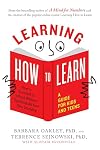
What an excellent book. I read it during a flight from Sydney to Tokyo and it was both easy to read and (because of the various tricks with constant revision), it was also easy to recall). I must say, Barbara captured me very early on with her personal anecdote about how she felt she couldn’t do maths or science but now is a scientist. Actually, they use such personal anecdotes very cleverly throughout.
The book appears to be very well grounded in the current neurology of learning. Yet it show more comes with really practical suggestions.... such as ...”leave your iPhone in the next room”. And use the Pomodoro technique. I’m actually thinking of buying an actual physical Pomodoro timer because I can see that it’s a great idea. (Actually the pomodoro technique is not new to me.... nor are most of the other techniques but they really introduce them in such an interesting way as to make them very memorable.
One exception: I found the description of interleaving confusing. It needs cleaning up. I eventually got the point that instead of just doing all the examples of, say, isosceles triangles.... it’s smart to throw in some examples from the other stuff you have done..... say... linear equations. The point being that it jolts the brain and stimulates the memory and makes both types of examples more memorable.
I also loved the story by one of the authors about how he had avoided Chemistry but then enrolled in the high school chemistry class .... basically proving the point that you can learn new stuff. But also providing a lot of pointers about how to do it.
I would highly recommend this book and have already given it to my son ... with some pressure to actually read it. Five stars from me show less
The book appears to be very well grounded in the current neurology of learning. Yet it show more comes with really practical suggestions.... such as ...”leave your iPhone in the next room”. And use the Pomodoro technique. I’m actually thinking of buying an actual physical Pomodoro timer because I can see that it’s a great idea. (Actually the pomodoro technique is not new to me.... nor are most of the other techniques but they really introduce them in such an interesting way as to make them very memorable.
One exception: I found the description of interleaving confusing. It needs cleaning up. I eventually got the point that instead of just doing all the examples of, say, isosceles triangles.... it’s smart to throw in some examples from the other stuff you have done..... say... linear equations. The point being that it jolts the brain and stimulates the memory and makes both types of examples more memorable.
I also loved the story by one of the authors about how he had avoided Chemistry but then enrolled in the high school chemistry class .... basically proving the point that you can learn new stuff. But also providing a lot of pointers about how to do it.
I would highly recommend this book and have already given it to my son ... with some pressure to actually read it. Five stars from me show less
Uncommon Sense Teaching: Practical Insights in Brain Science to Help Students Learn by Barbara Oakley
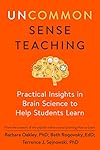
When teaching aligns with how our brains work, learning becomes much more effective and enduring.....The brain doesn’t just “remember” things in a single way–it relies on different memory systems, each with its own strengths, weaknesses, and preferences. By understanding how these systems work, we can unlock strategies that truly stick with our students......Understanding how our brain processes and stores information is crucial to enhancing our teaching and learning.
But first a show more confession: This review is based on reading the Blinkist summary version of the book. So slightly unfair to the author. But, I think, the Blinkist team do a pretty good job of extracting the core arguments from a book. And here’s my summary/review:
The first key player is working memory, which holds information temporarily for immediate use. You can think of working memory like an octopus juggling balls. On average, it can confidently manage four “balls”–pieces of information–at a time....We can easily be lured into thinking we’ve learned something well when, in fact, we’re just juggling that ball momentarily.
Our brain relies on long-term memory for more lasting knowledge, where information is stored more permanently through a network of neural connections. These connections form the foundation of real learning......Information can travel to long-term memory through two pathways: the declarative pathway and the procedural pathway. The declarative pathway is involved in remembering facts, events, and explanations–things like historical dates or scientific theories. This pathway is fast at first, but slower when it comes to recalling or using the information in practice. On the other hand, the procedural pathway deals with skills and habits, like riding a bike or speaking a native language. This system is slower to learn but–once mastered–operates automatically, requiring little conscious effort.
Core instructional strategies: ..effective teaching focuses on techniques that help students actively engage with, process, and consolidate knowledge.
One of the most potent methods for strengthening neural connections is retrieval practice.
retrieval practice challenges students to pull information from their own minds. This process not only deepens conceptual understanding but also accelerates memory consolidation in the brain. Techniques like flashcards, jotting down key ideas–are examples of the technique.
In addition to retrieval practice, active learning is another core strategy. This approach involves students in discussions, problem-solving, and hands-on activities.
The short break offered by a think-pair-share activity–in which students think by themselves for a moment, then pair with a fellow student to share their understanding–can be enough to help the transfer of new information to the neocortex.
For more procedural knowledge–like mastering a skill or task–specific practice techniques are necessary. One of these is interleaving, which involves mixing different topics or types of problems during practice sessions.
Differentiation and direct instruction:.....You’ll find students who process information at varying speeds....The challenge is that all students, regardless of their learning speed, have limited working memory–those four “balls” we unpacked in the first section.....For students with smaller working memory capacity–the “hikers”–scaffolding is a vital tool. This means providing temporary support to help them manage increasingly complex material.
For biologically secondary material–content like layered literature or advanced math that doesn’t come easy and requires effortful learning–direct instruction is essential.
First, the teacher demonstrates, then guides students through practice, before finally releasing them to practice independently......This active, adaptive, hands-on approach contrasts sharply with traditional lecture-based learning.
Rules of engagement:.......Classroom management isn’t just about keeping order–it’s about setting up systems that foster consistent routines and build positive habits.....To this end, you’ll need to be explicit and consistent in how you reinforce classroom procedures, such as how to ask for help or submit assignments.....Another powerful tool is the use of unexpected rewards. These unanticipated reinforcements–like spontaneous praise or a simple high-five–trigger the brain’s release of dopamine, which strengthens neural connections and makes learning more rewarding.
Procrastination, on the other hand, remains a perennial barrier to effective learning....To combat this, break assignments into smaller, more manageable chunks to help make tasks feel less overwhelming......To keep students in the eustress zone [positive stress] , try encouraging collaborative exercises. Group work not only provides opportunities for socio-emotional learning but also reduces distress by creating a sense of connection and support.
It must include clear roles and individual accountability, ensuring that everyone benefits from the collective effort.
The online classroom:......The same principles apply when it comes to online learning and lesson planning......The most important factor in successful online learning is instructor presence. Instructors need to maintain a visible presence through video. Short, well-crafted videos–around three to twelve minutes long–work best.....And redundancy should be avoided. Don’t show text on the screen and read it aloud at the same time, as this can overwhelm students’ cognitive load.
Online students are more easily distracted, so it’s important to capture their attention through unexpected elements, such as movement, sounds, and humour.
Final summary
Learning isn’t passive–it’s an active process requiring the use of diverse systems to create lasting connections.
Techniques like retrieval practice, active learning, and differentiation help move information from short-term to long-term memory, where it truly sticks. This approach doesn’t just improve retention–it empowers students to engage with challenging material in ways that fit their unique learning styles. We can help students break through barriers, tackle procrastination, and unlock their full potential by aligning our lessons with the latest in neuroscience.
What’s my overall take on the book? I really liked the approach. I wished somebody had introduced me to these concepts ...say at high school and re-enforced the concepts in first year university. I always assumed learning was really a matter of reading your notes from a lecture......when clearly my notes were sketchy and frequently missed key information (because I was day-dreaming during the lecture. And I can remember staring at notes afterwards, with my eyes tracking the lines ...but no processing was going on inside the brain. So yes, I could definitely have used this sort of information. But so could my lecturers. I suspect that few of them actively tried to incorporate the kind of information above, into their presentations.
Maybe the full book had more detail but, I felt, the Blinkist version anyway, was a bit sketchy on the actual processes of the brain and techniques for capitalising on this. Still, four stars from me. show less
But first a show more confession: This review is based on reading the Blinkist summary version of the book. So slightly unfair to the author. But, I think, the Blinkist team do a pretty good job of extracting the core arguments from a book. And here’s my summary/review:
The first key player is working memory, which holds information temporarily for immediate use. You can think of working memory like an octopus juggling balls. On average, it can confidently manage four “balls”–pieces of information–at a time....We can easily be lured into thinking we’ve learned something well when, in fact, we’re just juggling that ball momentarily.
Our brain relies on long-term memory for more lasting knowledge, where information is stored more permanently through a network of neural connections. These connections form the foundation of real learning......Information can travel to long-term memory through two pathways: the declarative pathway and the procedural pathway. The declarative pathway is involved in remembering facts, events, and explanations–things like historical dates or scientific theories. This pathway is fast at first, but slower when it comes to recalling or using the information in practice. On the other hand, the procedural pathway deals with skills and habits, like riding a bike or speaking a native language. This system is slower to learn but–once mastered–operates automatically, requiring little conscious effort.
Core instructional strategies: ..effective teaching focuses on techniques that help students actively engage with, process, and consolidate knowledge.
One of the most potent methods for strengthening neural connections is retrieval practice.
retrieval practice challenges students to pull information from their own minds. This process not only deepens conceptual understanding but also accelerates memory consolidation in the brain. Techniques like flashcards, jotting down key ideas–are examples of the technique.
In addition to retrieval practice, active learning is another core strategy. This approach involves students in discussions, problem-solving, and hands-on activities.
The short break offered by a think-pair-share activity–in which students think by themselves for a moment, then pair with a fellow student to share their understanding–can be enough to help the transfer of new information to the neocortex.
For more procedural knowledge–like mastering a skill or task–specific practice techniques are necessary. One of these is interleaving, which involves mixing different topics or types of problems during practice sessions.
Differentiation and direct instruction:.....You’ll find students who process information at varying speeds....The challenge is that all students, regardless of their learning speed, have limited working memory–those four “balls” we unpacked in the first section.....For students with smaller working memory capacity–the “hikers”–scaffolding is a vital tool. This means providing temporary support to help them manage increasingly complex material.
For biologically secondary material–content like layered literature or advanced math that doesn’t come easy and requires effortful learning–direct instruction is essential.
First, the teacher demonstrates, then guides students through practice, before finally releasing them to practice independently......This active, adaptive, hands-on approach contrasts sharply with traditional lecture-based learning.
Rules of engagement:.......Classroom management isn’t just about keeping order–it’s about setting up systems that foster consistent routines and build positive habits.....To this end, you’ll need to be explicit and consistent in how you reinforce classroom procedures, such as how to ask for help or submit assignments.....Another powerful tool is the use of unexpected rewards. These unanticipated reinforcements–like spontaneous praise or a simple high-five–trigger the brain’s release of dopamine, which strengthens neural connections and makes learning more rewarding.
Procrastination, on the other hand, remains a perennial barrier to effective learning....To combat this, break assignments into smaller, more manageable chunks to help make tasks feel less overwhelming......To keep students in the eustress zone [positive stress] , try encouraging collaborative exercises. Group work not only provides opportunities for socio-emotional learning but also reduces distress by creating a sense of connection and support.
It must include clear roles and individual accountability, ensuring that everyone benefits from the collective effort.
The online classroom:......The same principles apply when it comes to online learning and lesson planning......The most important factor in successful online learning is instructor presence. Instructors need to maintain a visible presence through video. Short, well-crafted videos–around three to twelve minutes long–work best.....And redundancy should be avoided. Don’t show text on the screen and read it aloud at the same time, as this can overwhelm students’ cognitive load.
Online students are more easily distracted, so it’s important to capture their attention through unexpected elements, such as movement, sounds, and humour.
Final summary
Learning isn’t passive–it’s an active process requiring the use of diverse systems to create lasting connections.
Techniques like retrieval practice, active learning, and differentiation help move information from short-term to long-term memory, where it truly sticks. This approach doesn’t just improve retention–it empowers students to engage with challenging material in ways that fit their unique learning styles. We can help students break through barriers, tackle procrastination, and unlock their full potential by aligning our lessons with the latest in neuroscience.
What’s my overall take on the book? I really liked the approach. I wished somebody had introduced me to these concepts ...say at high school and re-enforced the concepts in first year university. I always assumed learning was really a matter of reading your notes from a lecture......when clearly my notes were sketchy and frequently missed key information (because I was day-dreaming during the lecture. And I can remember staring at notes afterwards, with my eyes tracking the lines ...but no processing was going on inside the brain. So yes, I could definitely have used this sort of information. But so could my lecturers. I suspect that few of them actively tried to incorporate the kind of information above, into their presentations.
Maybe the full book had more detail but, I felt, the Blinkist version anyway, was a bit sketchy on the actual processes of the brain and techniques for capitalising on this. Still, four stars from me. show less

Here ChatGPT serves as Sejnowski's co-author in that many of its output streams, including chapter and section summaries, are integrated into the narrative. The book's first part covers the types of things Large Language Models (LLMs) can do, areas they are being used in (law, medicine, education, etc), and the art of prompting them to produce the desired kind of output (a possible new job category: Prompt Engineer). There is also some rather philosophical discourse about intelligence, show more thinking, and consciousness. The start of the book's second part delves into the all-important transformer architecture for LLMs. Here, when reading the explanation of the crucial Figure 6.9, I was often not clear about whether the training phase or the operating phase of the LLM was being discussed. Being told that "high-dimensional mathematics" is relevant did not help much, and Sejnowski rather quickly moves on to discuss LLMs' high training and operating costs, superintelligence concerns, and government-regulation quandaries. In the book's third part, he considers whether AGA -- artificial general autonomy -- will ever be realized. This would likely require AIs to have some kind of embodiment and a lot of advances in biological neuroscience to be taken into account. He envisions a possible golden future, but there seems to be no assurance it will be one in which digital tech's seemingly perpetual dark side -- gross neglect of people's privacy rights -- will finally be eliminated. show less
Liars, Lovers, and Heroes: What the New Brain Science Reveals About How We Become Who We Are by Steven R. Quartz
Although I only got about two-thirds of the way through this book, I am very glad that I read to the point that I did wear the idea of changeable and moving intelligence is discussed. sewing notion of Intelligence being fixed which never did sound very reasonable in fact is not reasonable. This is good to know for a variety of reasons. I think this is a good book to read for those who worry about the impact of Intelligence on our society and what we can do about it in terms of making a place show more with dignity for everyone. show less
Lists
You May Also Like


Associated Authors
Statistics
- Works
- 9
- Also by
- 3
- Members
- 783
- Popularity
- #32,505
- Rating
- 3.8
- Reviews
- 10
- ISBNs
- 42
- Languages
- 4