

Laurence P. Pringle
Author of Scholastic Encyclopedia of Animals
About the Author
Laurence Pringle was raised on an isolated farm in western New York. He studied wildlife biology at Cornell University and the University of Massachusetts at Amherst, and had begun to seek a doctorate in that field. But for several reasons, including trouble with some subjects, Pringle decided to show more switch to journalism. In 1962, he was looking for a job as an editor and writer with an outdoor or science magazine. He found an opening with Nature and Science, a children's magazine published by The American Museum of Natural History. Pringle joined that magazine in early 1963 and during the seven years of that magazine's life, learned a lot about writing for young readers. His friend and editor at the magazine encouraged Pringle to write a book for children. His first manuscript was rejected by several publishers but was finally accepted and published in 1968. When Nature and Science was disbanded in the spring of 1970, Pringle had two choices: look for another editing job or try to survive as a freelance writer. He chose to become a writer and is now the highly acclaimed author of over a hundred books. He writes mainly biographical and environmental stories for children and young adults. Pringle is the recipient of two major awards for his body of writing; the Eva L. Gordon Award for Children's Science Literature and the Washington Post/Children's Book Guild Nonfiction Award in 1999. He has won national awards from the American Nature Study Society and the National Wildlife Federation. Many of his books, including Everybody Has a Bellybutton, have been cited by the National Science Teacher's Association/Children's Book Council as "Outstanding Science Trade Book for Children." In 1998, the National Council of Teachers of English selected his book An Extraordinary Life: The Story of a Monarch Butterfly for the Orbis Pictus Award for Outstanding Nonfiction for Children. (Bowker Author Biography) show less
Image credit: via Highlights Foundation
Series
Works by Laurence P. Pringle
Wild Foods: A Beginner's Guide to Identifying, Harvesting and Cooking Safe and Tasty Plants from the Outdoors (1978) 17 copies
Bearman: Exploring the World of Black Bears (Charles Scribner's Sons books for young readers) (1989) 16 copies
Discovering nature indoors; a nature and science guide to investigations with small animals (1967) 15 copies
Discovering the outdoors; a nature and science guide to investigating life in fields, forests, and ponds (1969) 10 copies
Lives at Stake: The Science and Politics of Environmental Health (Science for Survival Series) (1980) 6 copies
From field to forest;: How plants and animals change the land (The Discovering nature series) (1970) 3 copies
Animals 1 copy
Sharks! Strange an Wonderful 1 copy
Associated Works
Cricket Magazine, Vol. 5, No. 10, June 1978 — Contributor — 3 copies
Tagged
Common Knowledge
- Legal name
- Pringle, Laurence Patrick
- Birthdate
- 1935-11-26
- Gender
- male
- Occupations
- writer
photographer
wildlife biologist
teacher
editor - Organizations
- American Museum of Natural History
New School for Social Research
Kean College of New Jersey - Nationality
- USA
- Birthplace
- Rochester, New York, USA
- Places of residence
- Rochester, New York, USA
West Nyack, New York, USA
Mendon, New York, USA
Rush, New York, USA - Associated Place (for map)
- New York, USA
Members
Reviews

Author/illustrator team Laurence Pringle and Joan Paley chronicle the secret life of a woolly bear caterpillar in this charming picture book. The narrative follows one such caterpillar, named Bella, as she makes her way through the world, eating incessantly—wooly bear caterpillars are hungry!—curling up into a protective ball when threatened, and molting a number of times as she grows. Her search in autumn for a safe place to overwinter during the cold months, her creation of a cocoon in show more spring, and her eventual hatching as an Isabella Tiger Moth, are also covered, while a section at the rear gives more detailed information about the species, as well as a glossary...
The Secret Life of the Woolly Bear Caterpillar is the second book I have read from Pringle's Secret Life series chronicling the lives of various animals, following upon The Secret Life of the Red Fox. Like that other title, I found the text here informative and engaging, learning quite a bit. Of course I'm familiar with the woolly bear caterpillar, but it turns out I didn't know much about them. I'm glad to have that gap in my knowledge filled in, and to learn som new vocabulary to boot—who knew, for instance that the various molted stages of a caterpillar's life are called instars? I also enjoyed the artwork here, created using cut paper and mixed media, and found the visuals colorful and very cute. That said, I think I preferred Kate Garchinsky's more realistic paintings, contributed to The Secret Life of the Red Fox and the other books in this series, to Joan Paley's work here. It's not that I didn't like the latter, but somehow I felt her style would have worked better in a more fictional tale, whereas a more realistic style would better suite a more informational book, like this one is. Tastes vary of course, and young readers might even prefer the Paley artwork, so take that as you will. Recommended to young animal lovers, and to any child who has encountered or is curious about these fuzzy-looking caterpillars. show less
The Secret Life of the Woolly Bear Caterpillar is the second book I have read from Pringle's Secret Life series chronicling the lives of various animals, following upon The Secret Life of the Red Fox. Like that other title, I found the text here informative and engaging, learning quite a bit. Of course I'm familiar with the woolly bear caterpillar, but it turns out I didn't know much about them. I'm glad to have that gap in my knowledge filled in, and to learn som new vocabulary to boot—who knew, for instance that the various molted stages of a caterpillar's life are called instars? I also enjoyed the artwork here, created using cut paper and mixed media, and found the visuals colorful and very cute. That said, I think I preferred Kate Garchinsky's more realistic paintings, contributed to The Secret Life of the Red Fox and the other books in this series, to Joan Paley's work here. It's not that I didn't like the latter, but somehow I felt her style would have worked better in a more fictional tale, whereas a more realistic style would better suite a more informational book, like this one is. Tastes vary of course, and young readers might even prefer the Paley artwork, so take that as you will. Recommended to young animal lovers, and to any child who has encountered or is curious about these fuzzy-looking caterpillars. show less

Author Laurence Pringle and illustrator Kate Garchinsky explore the secret life of the red fox in this engaging, beautifully-presented picture book. Following a female fox dubbed Vixen, the narrative explores her hunting habits, her marking of territory, her relationship with her mate, the birth of her kits, and the way she and her mate raise and care for those kits. The book closes with a section offering more information about red foxes, including the ways they are similar to cats, despite show more being a canine species, as well as a glossary and list of further reading...
The Secret Life of the Red Fox is the first book I have read from both Pringle and Garchinsky, but I hope it will not be the last! I found the text engaging and informative, and appreciated the way it imparted information by following Vixen through her days. The accompanying artwork, created using pastels and aqua crayons on sanded paper, is absolutely gorgeous, and enhanced my reading pleasure a great deal. I requested this one because of my love of foxes, but seeing that there are other titles in this same series, will lose no time in tracking some of those down. Recommended to young fox and animals lovers, and to anyone who appreciates beautiful picture book illustrations. show less
The Secret Life of the Red Fox is the first book I have read from both Pringle and Garchinsky, but I hope it will not be the last! I found the text engaging and informative, and appreciated the way it imparted information by following Vixen through her days. The accompanying artwork, created using pastels and aqua crayons on sanded paper, is absolutely gorgeous, and enhanced my reading pleasure a great deal. I requested this one because of my love of foxes, but seeing that there are other titles in this same series, will lose no time in tracking some of those down. Recommended to young fox and animals lovers, and to anyone who appreciates beautiful picture book illustrations. show less
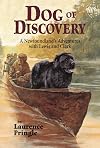
This book is written at a youth level, but has enough good details to make it enjoyable to learn about Lewis and Clark and their dog Seaman. It is written in the format of abbreviated journal entries. It is a quick read, and because of that and the short versions of the entries, you have to pause for a minute to consider all they had to go through, and not just the events and details in the entries, but the days that made up the years to accomplish the task. The details are amazing what they show more saw, and did, and what the land was like back then.
The dog is discussed as a thread for the book and considered what was recorded, covered well. He helps to get food, warns of bears, and was a fascination for the Indians and was even stolen by them. And Seaman also suffers from the cactus, mosquitoes, and hunger along with those in the expedition.
The other great aspect of the story for Lewis and Clark expedition and the settling of the United States is the story of the native Americans. In this book they describe the tribes they passed through and met, and most often were helped by them, although they had some that stole from them. In this book it is just nice to see them helping and interacting with those in the expedition. Sacagawea is also written about in good detail.
The truth of course is that North America was very populated with native Americans before Europeans came here. And with Europeans came diseases that were the prime cause of massive death of untold numbers of native Americans. Then Native Americans were screwed in other ways to be killed or driven off the best lands. We can't change that, but can only do our best now to live our life recognizing each person as important and equal no matter what the race or gender. Hard to know what to say about this when talking about a book that does not go into the topic, but wanted to mention that I understand that part of history too.
Anyway, getting back to the book Dog of Discovery, good history details. Would be a great book for kids the right age. Dogs live in the now, but good for us to remember a dog that was part of an amazing adventure. show less
The dog is discussed as a thread for the book and considered what was recorded, covered well. He helps to get food, warns of bears, and was a fascination for the Indians and was even stolen by them. And Seaman also suffers from the cactus, mosquitoes, and hunger along with those in the expedition.
The other great aspect of the story for Lewis and Clark expedition and the settling of the United States is the story of the native Americans. In this book they describe the tribes they passed through and met, and most often were helped by them, although they had some that stole from them. In this book it is just nice to see them helping and interacting with those in the expedition. Sacagawea is also written about in good detail.
The truth of course is that North America was very populated with native Americans before Europeans came here. And with Europeans came diseases that were the prime cause of massive death of untold numbers of native Americans. Then Native Americans were screwed in other ways to be killed or driven off the best lands. We can't change that, but can only do our best now to live our life recognizing each person as important and equal no matter what the race or gender. Hard to know what to say about this when talking about a book that does not go into the topic, but wanted to mention that I understand that part of history too.
Anyway, getting back to the book Dog of Discovery, good history details. Would be a great book for kids the right age. Dogs live in the now, but good for us to remember a dog that was part of an amazing adventure. show less
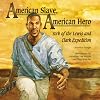
The main issue with the book is that of tone and perspective. We know that, unfortunately, York left nothing in his own words for us to dissect; one of the many tragedies of slavery. (The same is true for Sally Hemings.) Just as unfortunate is the fact that much of the information we do have about York comes from the very people who initiated and benefited from the system that silenced his voice in the first place. I've always been fascinated by York, and because I had never read this book show more before, I was hoping for something different that the usual fare about him. But that was not the case, and I was disappointed as a result, particularly since this is a book for children. I don't think that the book emphasized just how horrible slavery was, even for those who may not have faced especially harsh treatment (but even saying that is problematic.) And the reader still doesn't get anything new or learn at least a sliver of information about York that doesn't fall into familiar patterns. The same is true for other groups. For example, referring to different Native American tribes as "friendly" versus "not friendly" has always been a pet peeve of mine. As a side note, I still find it hilarious that Clark didn't know how to spell. show less
Lists
Awards


You May Also Like


Associated Authors
Statistics
- Works
- 132
- Also by
- 2
- Members
- 4,359
- Popularity
- #5,754
- Rating
- 3.8
- Reviews
- 126
- ISBNs
- 266
- Languages
- 6
- Favorited
- 1