
Rhoda Blumberg (1917–2016)
Author of Commodore Perry in the Land of the Shogun
About the Author
Rhoda Blumberg was born in Crown Heights, Brooklyn, New York on December 14, 1917. She received a B.A. degree from Adelphi University in New York. After graduation, she worked as a freelance writer, researcher, and producer for both CBS Radio and NBC Radio, a talent scout for Simon and Schuster, show more and wrote features for several national publications. She got married in 1945 and spent more than 20 years raising their four children. In 1973, she worked as executive editor of Simon and Schuster's travel guides. She soon decided to try writing children's nonfiction. Her first book, Firefighters, was published in 1975. She wrote more than 25 nonfiction books over the next 30 years. Her books included The Incredible Journey of Lewis and Clark, The Great American Gold Rush, The Remarkable Voyages of Captain Cook, Shipwrecked!: The True Adventures of a Japanese Boy, and York's Adventures with Lewis and Clark: An African-American's Part in the Great Expedition. Commodore Perry in the Land of the Shogun was awarded a 1986 Newbery Honor and won the Boston-Globe-Horn Book Award and the Golden Kite Award. She received the Washington Post/Children's Book Guild Award for her overall contribution to nonfiction. She also collaborated on several books with illustrator Murray Tinkelman including The Truth About Dragons and Backyard Bestiary. She died on June 6, 2016 at the age of 98. (Bowker Author Biography) show less
Image credit: http://www.fmschools.org/eagle-hill.cfm?subpage=3572
Works by Rhoda Blumberg
York's Adventures with Lewis and Clark: An African-American's Part in the Great Expedition (2003) 142 copies, 24 reviews
Tagged
Common Knowledge
- Other names
- Shapiro, Rhoda (birth)
Roder, Rhoda (pseudonym) - Birthdate
- 1917-12-14
- Date of death
- 2016-06-06
- Gender
- female
- Education
- Adelphi College
- Occupations
- radio scriptwriter
- Awards and honors
- Children's Book Guild Award for Nonfiction
- Nationality
- USA
- Birthplace
- Crown Heights, Brooklyn, New York, USA
- Places of residence
- Yorktown Heights, New York, USA
- Place of death
- Yorktown Heights, New York, USA
- Map Location
- New York, USA
Members
Reviews

This profusely illustrated and beautiful book is much more suitable for its intended audience ("GRS 3 UP") than the author's book on Commodore Perry (which won a Newbery Honor medal), because it focuses on an individual, young enough for children to identify with, who showed great courage and resourcefulness in coping with both natural and man-made dangers. Manjiro had a thrilling if highly difficult life and any boy or girl can imagine being in his position, suffering privations, and having show more adventures in a strange world. Commodore Perry, by contrast, is a grown man doing adult things and the book is rather dry. I highly recommend this book, perhaps as a readaloud for the younger end of the age range. One quibble about its design, however -- the font used for the title and chapter headings is very distinctive, related to the Craftsman/Arts & Crafts/Art Nouveau movement, something that Charles Rennie Mackintosh might have used. Its turn-of-the-20th-century character seems unsuitable to either the mid-19th-century story or the present day. I mention it only because every time I encountered it (at the beginning of each chapter, so, constantly) I found it quite distracting and eventually annoying in this context. show less
York's Adventures with Lewis and Clark: An African-American's Part in the Great Expedition by Rhoda Blumberg
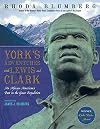
York's Adventures with Lewis and Clark is a chapter book about the Lewis and Clark expedition geared towards late elementary school and early middle school students, but also has a lot to offer adult readers because of its unique and valuable perspective. It features maps, illustrations, a table of contents, end notes, a bibliography, and an index. The writing is clear and fact-oriented, while painting a complex psychological portrait of the expedition and its aftermath.
As more information show more surfaces about York, author Rhoda Blumberg explains, we increasingly realize the absolutely critical role he played in the Lewis and Clark expedition. Additionally, this book frankly states that Sacagawea was, like York, enslaved, and forced to bear children for her captor despite being a child herself. Nonetheless, York and Sacagawea were integrated into the group as a result of the extremely intense nature of the expedition. "York was the first black person to have any kind of recorded vote in North America," Blumberg writes after explaining every single member of the expedition voted on how and where to build the expedition's Pacific coast fort. "Sacagawea voted too -- more than a century before women or Indians were given voting rights by the United States government."
Yet when they returned to civilization, Clark expected York to switch gears and return to the submissive, enslaved servant he had been prior to the expedition. This was psychologically impossible, and York and Clark appear to have each been emotionally ripped apart by post-expedition life. (Of course, Lewis fared the worst, apparently committing suicide in 1809.)
There is ample reason to believe, Blumberg demonstrates, that the expedition would have failed but for York, yet he has remained an obscure footnote in most tellings of this iconic American story. I believe this book can be an excellent and critical component of any unit taught on Lewis and Clark. show less
As more information show more surfaces about York, author Rhoda Blumberg explains, we increasingly realize the absolutely critical role he played in the Lewis and Clark expedition. Additionally, this book frankly states that Sacagawea was, like York, enslaved, and forced to bear children for her captor despite being a child herself. Nonetheless, York and Sacagawea were integrated into the group as a result of the extremely intense nature of the expedition. "York was the first black person to have any kind of recorded vote in North America," Blumberg writes after explaining every single member of the expedition voted on how and where to build the expedition's Pacific coast fort. "Sacagawea voted too -- more than a century before women or Indians were given voting rights by the United States government."
Yet when they returned to civilization, Clark expected York to switch gears and return to the submissive, enslaved servant he had been prior to the expedition. This was psychologically impossible, and York and Clark appear to have each been emotionally ripped apart by post-expedition life. (Of course, Lewis fared the worst, apparently committing suicide in 1809.)
There is ample reason to believe, Blumberg demonstrates, that the expedition would have failed but for York, yet he has remained an obscure footnote in most tellings of this iconic American story. I believe this book can be an excellent and critical component of any unit taught on Lewis and Clark. show less

Divided into two sections, Rhoda Blumberg's The Truth About Dragons offers a comparative analysis of eastern and western dragons - mythological creatures that have a very different meaning, in different cultures. Including sections on physical appearance, size, habitat, social order, diet, reproduction, the relationship with treasure, enemies, and cures and charms, for dragons both east and west, this picture-book outline covers a lot of ground.
I liked the basic premise of the book, its show more comparative approach to one of the world's most recognizable folk icons: the dragon. I also appreciated that Blumberg quoted from historical works that discussed dragons, from Edward Topsell's 1608 The Historie of Serpents, to Father Kircher's 1678 work on earth science, Mundus Subterraneus (The Subterranean World). I did wish she had quoted from similar Asian sources, but can readily imagine that she simply lacked the proper source materials.
But despite my sympathy for her project, and my appreciation of the ways that she worked actual historical documents into her discussion of a mythological creature (demonstrating that the dragon was not always considered mythological), somehow I wasn't that taken, overall, with Blumberg's book. It wasn't detailed enough to tell me anything I didn't already know, but given its length and intended audience, I don't know that it is fair to judge it on that score. I think, in the end, there was just something a little off, in her tone and presentation. I couldn't figure out if she was presenting her information as a straight folkloric investigation - "Here are the beliefs, European and Asian, concerning dragons" - or a tongue-in-cheek field guide - "Here are the different kinds of dragons in the world." Mention, towards the end of the section on eastern dragons, of the sale of dinosaur bones, would point to the latter, but various phrases throughout, would suggest the former.
In the end, Murray Tinkelman's etching-like illustrations were my favorite part of the book. This wasn't a terrible reading experience, but given the fact that The Truth About Dragons is long out-of-print, and there are more current titles on the topic - like the immensely popular Dragonology: The Complete Book of Dragons - I would say that all but the most die-hard dragon lovers can probably afford to skip this one. show less
I liked the basic premise of the book, its show more comparative approach to one of the world's most recognizable folk icons: the dragon. I also appreciated that Blumberg quoted from historical works that discussed dragons, from Edward Topsell's 1608 The Historie of Serpents, to Father Kircher's 1678 work on earth science, Mundus Subterraneus (The Subterranean World). I did wish she had quoted from similar Asian sources, but can readily imagine that she simply lacked the proper source materials.
But despite my sympathy for her project, and my appreciation of the ways that she worked actual historical documents into her discussion of a mythological creature (demonstrating that the dragon was not always considered mythological), somehow I wasn't that taken, overall, with Blumberg's book. It wasn't detailed enough to tell me anything I didn't already know, but given its length and intended audience, I don't know that it is fair to judge it on that score. I think, in the end, there was just something a little off, in her tone and presentation. I couldn't figure out if she was presenting her information as a straight folkloric investigation - "Here are the beliefs, European and Asian, concerning dragons" - or a tongue-in-cheek field guide - "Here are the different kinds of dragons in the world." Mention, towards the end of the section on eastern dragons, of the sale of dinosaur bones, would point to the latter, but various phrases throughout, would suggest the former.
In the end, Murray Tinkelman's etching-like illustrations were my favorite part of the book. This wasn't a terrible reading experience, but given the fact that The Truth About Dragons is long out-of-print, and there are more current titles on the topic - like the immensely popular Dragonology: The Complete Book of Dragons - I would say that all but the most die-hard dragon lovers can probably afford to skip this one. show less
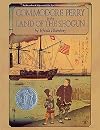
Fat picture-book size. Lots of illustrations, most of Americans as drawn by Japanese witnesses. Sufficient margins and back matter, therefore not terribly intimidating. This would have bored me to tears when I was young... unless a teacher or parent who valued it read it aloud to class or family. Even then, I'd not have absorbed much of it and would have needed it to be only one part of unit.
Now, I am able to appreciate Blumberg's writing and I am managing to find it engaging enough that I show more did finish it. However, I am not sure just how objective is the history. I get the impression that Blumberg firmly believes that it was a very good thing for Japan to open to the West. She seems to be leaving out more information that would show a contrary perspective.
Otoh, it seems as though Japan was ready for the upheaval. Perry's first visit was 1854. By 1872 all classes were abolished, including the samurai. There were no longer rules about where people could live, how they could earn a living, what they could wear. Emperor Meiji adopted Western dress. Wow. And now (well, at least as of 1985) there are annual Black Ship festivals celebrating Perry's accomplishment of opening Japan to the West by negotiated treaty. (All this according to my best understanding of Blumberg's text.)
Is it worthy a Newbery Honor? I don't know. Probably. Showing kids primary history sources is important. Showing them a key point in the history of the country that brought Hello Kitty to their homes is important. Did any of you know about this book when you were in school? show less
Now, I am able to appreciate Blumberg's writing and I am managing to find it engaging enough that I show more did finish it. However, I am not sure just how objective is the history. I get the impression that Blumberg firmly believes that it was a very good thing for Japan to open to the West. She seems to be leaving out more information that would show a contrary perspective.
Otoh, it seems as though Japan was ready for the upheaval. Perry's first visit was 1854. By 1872 all classes were abolished, including the samurai. There were no longer rules about where people could live, how they could earn a living, what they could wear. Emperor Meiji adopted Western dress. Wow. And now (well, at least as of 1985) there are annual Black Ship festivals celebrating Perry's accomplishment of opening Japan to the West by negotiated treaty. (All this according to my best understanding of Blumberg's text.)
Is it worthy a Newbery Honor? I don't know. Probably. Showing kids primary history sources is important. Showing them a key point in the history of the country that brought Hello Kitty to their homes is important. Did any of you know about this book when you were in school? show less
Lists
Sonlight Books (1)
Newbery Adjacent (1)
Awards


You May Also Like


Associated Authors
Statistics
- Works
- 24
- Members
- 2,878
- Popularity
- #8,900
- Rating
- 3.9
- Reviews
- 83
- ISBNs
- 78