
Sam Hurcom
Author of A Shadow on the Lens
Series
Works by Sam Hurcom
Tagged
Common Knowledge
Members
Reviews
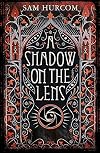
In 1904 forensic photography is in its infancy, but Thomas Bexley is already recognised as one of its foremost exponents. His experience in scene-of-crime examination has also honed his investigative skills such that, despite not being formally an “inspector” (as he will be the first to admit), he has been retained by Scotland Yard as a specialist investigator.
And so it is that on a bright summer’s day in June, he sets off to Dinas Powys, a rural village in South Wales, where he has show more been asked to assist with an inquiry into the gruesome murder of a young woman, Betsan Tilny. Bexley prides himself in being rational and scientific, with much confidence in his skills. He does not believe in God and still less in talk of spirits, ghosts and suchlike nonsense. So, when the villagers start to blame the quasi-ritual killing on the Calon Farw, the monster supposedly roaming the woodlands around the village, Bexley is quick to dismiss this talk as idle superstition. He is also equally unconvinced by the convenient thesis of Robert Cummings, head of the local council, that the murder has been carried out by an elusive “band of gypsies”.
Bexley’s confidence starts to ebb when he falls prey to strange visions and hallucinations which seriously challenge his certainties. Over the course of a feverish week in June, as he searches for the identity of the murder, he will face horrors human and supernatural: “it marked the change in my life, the death of the man I once was”.
My reactions to the novel were not unlike that of its protagonist. From the blurb, I was expecting a cosy, neo-Victorian murder mystery with a hint of the supernatural, my type of light summer read. With Bexley’s arrival at Dinas Powys, however, things take a decidedly sinister turn and the novel quickly moves into folk horror realm: the investigator is a rational outsider in a superstitious village where a young girl has been brutally murdered, a legendary monster is supposedly lurking in the woods, the inn where Bexley is staying could possibly be haunted and, to boot, the villagers clearly know more than they’re letting on. Bexley was not expecting his investigation to become so complicated – in my case, I did not expect the novel to become so unsettling. Shockingly for a supposed jaded fan of ghost stories, I found myself freaking out during a key scene in the crypt of an abandoned hamlet.
Sam Hurcom has published children’s stories. This is his debut novel, and I would suggest keeping it out of the reach of kids – it’s chilling stuff. I must admit that there were some aspects of the book which did not fully convince me. Thus, whilst the style generally has an “authentic” ring to it, there were some anachronisms here and there, including the use of “Ms.” for “Miss”, in a diary supposedly dating from 1904. One should also not expect much character development – as in much crime fiction, the story is mainly plot-driven.
Ultimately, however, the book delivers. And whilst A Shadow on the Lens is enjoyable as a “historical crime” novel, with plenty of red herrings along the way, what marks it from a crowded market is its unexpectedly dark, folk horror element which is conveyed very effectively. Huron, who was raised, and still lives, in Dinas Powys, claims to be inspired by the landscape of the area. If that’s the case, I would rather not roam there at night.
https://endsoftheword.blogspot.com/2019/07/shadow-on-the-lens-sam-hurcom.html show less
And so it is that on a bright summer’s day in June, he sets off to Dinas Powys, a rural village in South Wales, where he has show more been asked to assist with an inquiry into the gruesome murder of a young woman, Betsan Tilny. Bexley prides himself in being rational and scientific, with much confidence in his skills. He does not believe in God and still less in talk of spirits, ghosts and suchlike nonsense. So, when the villagers start to blame the quasi-ritual killing on the Calon Farw, the monster supposedly roaming the woodlands around the village, Bexley is quick to dismiss this talk as idle superstition. He is also equally unconvinced by the convenient thesis of Robert Cummings, head of the local council, that the murder has been carried out by an elusive “band of gypsies”.
Bexley’s confidence starts to ebb when he falls prey to strange visions and hallucinations which seriously challenge his certainties. Over the course of a feverish week in June, as he searches for the identity of the murder, he will face horrors human and supernatural: “it marked the change in my life, the death of the man I once was”.
My reactions to the novel were not unlike that of its protagonist. From the blurb, I was expecting a cosy, neo-Victorian murder mystery with a hint of the supernatural, my type of light summer read. With Bexley’s arrival at Dinas Powys, however, things take a decidedly sinister turn and the novel quickly moves into folk horror realm: the investigator is a rational outsider in a superstitious village where a young girl has been brutally murdered, a legendary monster is supposedly lurking in the woods, the inn where Bexley is staying could possibly be haunted and, to boot, the villagers clearly know more than they’re letting on. Bexley was not expecting his investigation to become so complicated – in my case, I did not expect the novel to become so unsettling. Shockingly for a supposed jaded fan of ghost stories, I found myself freaking out during a key scene in the crypt of an abandoned hamlet.
Sam Hurcom has published children’s stories. This is his debut novel, and I would suggest keeping it out of the reach of kids – it’s chilling stuff. I must admit that there were some aspects of the book which did not fully convince me. Thus, whilst the style generally has an “authentic” ring to it, there were some anachronisms here and there, including the use of “Ms.” for “Miss”, in a diary supposedly dating from 1904. One should also not expect much character development – as in much crime fiction, the story is mainly plot-driven.
Ultimately, however, the book delivers. And whilst A Shadow on the Lens is enjoyable as a “historical crime” novel, with plenty of red herrings along the way, what marks it from a crowded market is its unexpectedly dark, folk horror element which is conveyed very effectively. Huron, who was raised, and still lives, in Dinas Powys, claims to be inspired by the landscape of the area. If that’s the case, I would rather not roam there at night.
https://endsoftheword.blogspot.com/2019/07/shadow-on-the-lens-sam-hurcom.html show less
In 1904 forensic photography is in its infancy, but Thomas Bexley is already recognised as one of its foremost exponents. His experience in scene-of-crime examination has also honed his investigative skills such that, despite not being formally an “inspector” (as he will be the first to admit), he has been retained by Scotland Yard as a specialist investigator.
And so it is that on a bright summer’s day in June, he sets off to Dinas Powys, a rural village in South Wales, where he has show more been asked to assist with an inquiry into the gruesome murder of a young woman, Betsan Tilny. Bexley prides himself in being rational and scientific, with much confidence in his skills. He does not believe in God and still less in talk of spirits, ghosts and suchlike nonsense. So, when the villagers start to blame the quasi-ritual killing on the Calon Farw, the monster supposedly roaming the woodlands around the village, Bexley is quick to dismiss this talk as idle superstition. He is also equally unconvinced by the convenient thesis of Robert Cummings, head of the local council, that the murder has been carried out by an elusive “band of gypsies”.
Bexley’s confidence starts to ebb when he falls prey to strange visions and hallucinations which seriously challenge his certainties. Over the course of a feverish week in June, as he searches for the identity of the murder, he will face horrors human and supernatural: “it marked the change in my life, the death of the man I once was”.
My reactions to the novel were not unlike that of its protagonist. From the blurb, I was expecting a cosy, neo-Victorian murder mystery with a hint of the supernatural, my type of light summer read. With Bexley’s arrival at Dinas Powys, however, things take a decidedly sinister turn and the novel quickly moves into folk horror realm: the investigator is a rational outsider in a superstitious village where a young girl has been brutally murdered, a legendary monster is supposedly lurking in the woods, the inn where Bexley is staying could possibly be haunted and, to boot, the villagers clearly know more than they’re letting on. Bexley was not expecting his investigation to become so complicated – in my case, I did not expect the novel to become so unsettling. Shockingly for a supposed jaded fan of ghost stories, I found myself freaking out during a key scene in the crypt of an abandoned hamlet.
Sam Hurcom has published children’s stories. This is his debut novel, and I would suggest keeping it out of the reach of kids – it’s chilling stuff. I must admit that there were some aspects of the book which did not fully convince me. Thus, whilst the style generally has an “authentic” ring to it, there were some anachronisms here and there, including the use of “Ms.” for “Miss”, in a diary supposedly dating from 1904. One should also not expect much character development – as in much crime fiction, the story is mainly plot-driven.
Ultimately, however, the book delivers. And whilst A Shadow on the Lens is enjoyable as a “historical crime” novel, with plenty of red herrings along the way, what marks it from a crowded market is its unexpectedly dark, folk horror element which is conveyed very effectively. Huron, who was raised, and still lives, in Dinas Powys, claims to be inspired by the landscape of the area. If that’s the case, I would rather not roam there at night.
https://endsoftheword.blogspot.com/2019/07/shadow-on-the-lens-sam-hurcom.html show less
And so it is that on a bright summer’s day in June, he sets off to Dinas Powys, a rural village in South Wales, where he has show more been asked to assist with an inquiry into the gruesome murder of a young woman, Betsan Tilny. Bexley prides himself in being rational and scientific, with much confidence in his skills. He does not believe in God and still less in talk of spirits, ghosts and suchlike nonsense. So, when the villagers start to blame the quasi-ritual killing on the Calon Farw, the monster supposedly roaming the woodlands around the village, Bexley is quick to dismiss this talk as idle superstition. He is also equally unconvinced by the convenient thesis of Robert Cummings, head of the local council, that the murder has been carried out by an elusive “band of gypsies”.
Bexley’s confidence starts to ebb when he falls prey to strange visions and hallucinations which seriously challenge his certainties. Over the course of a feverish week in June, as he searches for the identity of the murder, he will face horrors human and supernatural: “it marked the change in my life, the death of the man I once was”.
My reactions to the novel were not unlike that of its protagonist. From the blurb, I was expecting a cosy, neo-Victorian murder mystery with a hint of the supernatural, my type of light summer read. With Bexley’s arrival at Dinas Powys, however, things take a decidedly sinister turn and the novel quickly moves into folk horror realm: the investigator is a rational outsider in a superstitious village where a young girl has been brutally murdered, a legendary monster is supposedly lurking in the woods, the inn where Bexley is staying could possibly be haunted and, to boot, the villagers clearly know more than they’re letting on. Bexley was not expecting his investigation to become so complicated – in my case, I did not expect the novel to become so unsettling. Shockingly for a supposed jaded fan of ghost stories, I found myself freaking out during a key scene in the crypt of an abandoned hamlet.
Sam Hurcom has published children’s stories. This is his debut novel, and I would suggest keeping it out of the reach of kids – it’s chilling stuff. I must admit that there were some aspects of the book which did not fully convince me. Thus, whilst the style generally has an “authentic” ring to it, there were some anachronisms here and there, including the use of “Ms.” for “Miss”, in a diary supposedly dating from 1904. One should also not expect much character development – as in much crime fiction, the story is mainly plot-driven.
Ultimately, however, the book delivers. And whilst A Shadow on the Lens is enjoyable as a “historical crime” novel, with plenty of red herrings along the way, what marks it from a crowded market is its unexpectedly dark, folk horror element which is conveyed very effectively. Huron, who was raised, and still lives, in Dinas Powys, claims to be inspired by the landscape of the area. If that’s the case, I would rather not roam there at night.
https://endsoftheword.blogspot.com/2019/07/shadow-on-the-lens-sam-hurcom.html show less

I enjoy reading both historical fiction and crime thrillers so my interest was already piqued when I read the blurb of A Shadow on the Lens. Then when I read that the book is set in the small Welsh village of Dinas Powys, which is where my maternal great great great grandfather was born in 1827, I just had to read it. My ancestor had moved to the North East by 1904 (which is when this story is set), maybe leaving brothers and sisters in Dinas Powys, so I was very excited to read a book set show more in the village he left behind; although no Norris's featured in the story.
It took me a little while to get into the rhythm of the book but the murder of Betsan Tilny is so very intriguing that it keeps the pages turning nicely. A forensic photographer is summoned to the village to investigate the crime and this was the first oddity to intrigue me - why a photographer and not a police inspector? It soon becomes clear that the locals want Thomas Bexley to simply take his photos and leave their village without discovering who or what has committed the crime. Everyone in the village appears to be hiding something so the sooner Thomas is gone the better.
We take it for granted these days that we take a photo and see it instantly but there's something so very mystical and magical about developing photographs and back in 1904 (only a few years after the Kodak Brownie was introduced) photos were developed on plates in a dark room. When Thomas develops his photographs he can't believe his eyes as the murder victim appears as a ghostly apparition. When Thomas is suddenly struck down with a fever and his negatives disappear, he wonders if he imagined it all but he remembers clues from the photographs that he couldn't possibly have known about beforehand. This puts him in more danger than he could ever have imagined.
I loved the spooky supernatural element to the story which really makes A Shadow on the Lens something different. Encompassing so many genres means that it will appeal to crime, historical and fantasy readers, which is not something that many books can claim to do. A Shadow on the Lens is a spooky, goosebumpy, gothic-style historical crime thriller and a fantastic debut from Sam Hurcom.
I chose to read an ARC and this is my honest and unbiased opinion. show less
It took me a little while to get into the rhythm of the book but the murder of Betsan Tilny is so very intriguing that it keeps the pages turning nicely. A forensic photographer is summoned to the village to investigate the crime and this was the first oddity to intrigue me - why a photographer and not a police inspector? It soon becomes clear that the locals want Thomas Bexley to simply take his photos and leave their village without discovering who or what has committed the crime. Everyone in the village appears to be hiding something so the sooner Thomas is gone the better.
We take it for granted these days that we take a photo and see it instantly but there's something so very mystical and magical about developing photographs and back in 1904 (only a few years after the Kodak Brownie was introduced) photos were developed on plates in a dark room. When Thomas develops his photographs he can't believe his eyes as the murder victim appears as a ghostly apparition. When Thomas is suddenly struck down with a fever and his negatives disappear, he wonders if he imagined it all but he remembers clues from the photographs that he couldn't possibly have known about beforehand. This puts him in more danger than he could ever have imagined.
I loved the spooky supernatural element to the story which really makes A Shadow on the Lens something different. Encompassing so many genres means that it will appeal to crime, historical and fantasy readers, which is not something that many books can claim to do. A Shadow on the Lens is a spooky, goosebumpy, gothic-style historical crime thriller and a fantastic debut from Sam Hurcom.
I chose to read an ARC and this is my honest and unbiased opinion. show less
I was utterly fascinated by the blurb for A Shadow on the Lens. Thomas Bexley is one of the first forensic photographers and in 1904 is called to a small Welsh village to investigate the grisly death of a young woman, Betsan Tilny. The village of Dinas Powys is a strange place, full of hidden people, curtain twitchers and odd folk. Thomas cannot hope to get anything coherent out of them really.
This is a very atmospheric novel with a nod to the supernatural. The village provides a very show more claustrophobic setting for Thomas' investigations. Despite everyone calling him Inspector, he is not a police officer, but he is engaged by the police to investigate on their behalf. This did strike me as rather unusual but certainly lends a different slant to the usual murder mystery.
Just like Thomas, I had no clue who the murderer was going to turn out to be and the author is certainly skilled in leading the reader down one path only for it to turn out to be a dead end. I can't say I took to any of the characters but I don't think I was supposed to really. They're an odd bunch to say the least.
A Shadow on the Lens is an interesting read, quite an unexpected one from my point of view in that I didn't expect the supernatural aspect or indeed the gothic horror. I certainly wouldn't have wanted to visit Dinas Powys in 1904! This is a great read for the historical fiction fan, especially those who love a creepy and enclosed setting. Oh, and I must just mention that there's a map of the village. I know how much some readers love a map! show less
This is a very atmospheric novel with a nod to the supernatural. The village provides a very show more claustrophobic setting for Thomas' investigations. Despite everyone calling him Inspector, he is not a police officer, but he is engaged by the police to investigate on their behalf. This did strike me as rather unusual but certainly lends a different slant to the usual murder mystery.
Just like Thomas, I had no clue who the murderer was going to turn out to be and the author is certainly skilled in leading the reader down one path only for it to turn out to be a dead end. I can't say I took to any of the characters but I don't think I was supposed to really. They're an odd bunch to say the least.
A Shadow on the Lens is an interesting read, quite an unexpected one from my point of view in that I didn't expect the supernatural aspect or indeed the gothic horror. I certainly wouldn't have wanted to visit Dinas Powys in 1904! This is a great read for the historical fiction fan, especially those who love a creepy and enclosed setting. Oh, and I must just mention that there's a map of the village. I know how much some readers love a map! show less
Statistics
- Works
- 3
- Members
- 101
- Popularity
- #188,709
- Rating
- 3.2
- Reviews
- 6
- ISBNs
- 10