
Christopher Hope
Author of My Mother's Lovers
About the Author
Works by Christopher Hope
21 (BARNES) 1 copy
The Hottentot R.O.O.M 1 copy
Associated Works
Fodor's Berlin [3rd edition] : The complete guide with walking tours and excursions to Dresden, Leipzig and Potsdam (1993) — Seeing is Believing — 2 copies
Tagged
Common Knowledge
- Birthdate
- 1944-02-26
- Gender
- male
- Education
- University of the Witwatersrand
University of Natal - Awards and honors
- Professor Alexander Petrie Award
Thomas Pringle Award (1973) - Birthplace
- Johannesburg, South Africa
- Places of residence
- Johannesburg, South Africa
London, England - Map Location
- South Africa
Members
Reviews
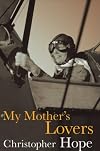
My Mother’s Lovers
Christopher Hope
Grove Press
448 pages
Hardcover $24.00
978-0-8021-1850-9
Alexander is obsessed with air—how to move it, heat it, cool it and clean it. In late twentieth-century South Africa, where millions of people crumble under weighty issues such as race, colonialism, revolution and AIDS, Alex clings to nothing. His mother is none too pleased. “‘Oh dear me,’ she said, ‘Air? I really wish you wouldn’t.’”
Hope’s ninth novel is rife with this kind of overt show more symbolism. White policemen detonate explosives to kill a group of majestic beached whales. A former revolutionary turned conservative inherits a cache of old escape routes as a reminder of his hypocrisy. Fortunately, the author’s humor and inventiveness keep the novel from succumbing to cliché. Alex Healey is a wry and observant narrator, recalling the violent power-grab of the Boer War with the same cynicism that he uses to dissect his cigar-smoking, buffalo-hunting, Stinson-flying mother. As he struggles to understand his elusive national and family heritage, Alex toys with his readers’ stereotypes and challenges their concept of justice, creating a rich psychological history of one of the most troubled regions in the world.
Born in Johannesburg in 1944, Hope won the Whitbread Prize for Fiction for his novel Kruger’s Alp; while Serenity House was short-listed for the Man Booker Prize. Readers accustomed to the South Africa portrayed by authors such as J.M. Coetzee will find that Hope is a different animal altogether. While the former’s storytelling is loaded with silent intensity, Hope’s opinions explode onto the page. He is more of a teller than a shower, and although his ideas are provocative they can also feel digressive and overwhelming at times. The colorful characters that carry this story—including historic personalities such as Ernest Hemmingway, Beryl Markham, Albert Schweitzer, and Karen Blixen—seem more like types than real individuals, and the author uses them accordingly as springboards for various philosophical musings.
Still, one must assume that this exercise is intentional. The fickle nature of identity is a recurring theme throughout the novel as people try on new personas like winter coats to fit the turbulent circumstances of their lives. The Healeys’ conservative gardener turns to boozing and hookers when he discovers that his wife has slept with another man, while Alex’s girlfriend transforms from a jaded suburbanite into a figure of forgiveness after becoming obsessed with rehabilitating her son’s murderers.
The only constants in this shifting landscape of national borders and identities are Alex’s mother Kathleen and Africa herself. Tender and savage, each is blind to race and evokes fierce love in others without overtly giving back. In this context, the title of the book takes on a different meaning. My Mother’s Lovers refers to every merchant, missionary and dreamer in Africa who hunts for a place to call home. (August)
Aimee Sabo show less
Christopher Hope
Grove Press
448 pages
Hardcover $24.00
978-0-8021-1850-9
Alexander is obsessed with air—how to move it, heat it, cool it and clean it. In late twentieth-century South Africa, where millions of people crumble under weighty issues such as race, colonialism, revolution and AIDS, Alex clings to nothing. His mother is none too pleased. “‘Oh dear me,’ she said, ‘Air? I really wish you wouldn’t.’”
Hope’s ninth novel is rife with this kind of overt show more symbolism. White policemen detonate explosives to kill a group of majestic beached whales. A former revolutionary turned conservative inherits a cache of old escape routes as a reminder of his hypocrisy. Fortunately, the author’s humor and inventiveness keep the novel from succumbing to cliché. Alex Healey is a wry and observant narrator, recalling the violent power-grab of the Boer War with the same cynicism that he uses to dissect his cigar-smoking, buffalo-hunting, Stinson-flying mother. As he struggles to understand his elusive national and family heritage, Alex toys with his readers’ stereotypes and challenges their concept of justice, creating a rich psychological history of one of the most troubled regions in the world.
Born in Johannesburg in 1944, Hope won the Whitbread Prize for Fiction for his novel Kruger’s Alp; while Serenity House was short-listed for the Man Booker Prize. Readers accustomed to the South Africa portrayed by authors such as J.M. Coetzee will find that Hope is a different animal altogether. While the former’s storytelling is loaded with silent intensity, Hope’s opinions explode onto the page. He is more of a teller than a shower, and although his ideas are provocative they can also feel digressive and overwhelming at times. The colorful characters that carry this story—including historic personalities such as Ernest Hemmingway, Beryl Markham, Albert Schweitzer, and Karen Blixen—seem more like types than real individuals, and the author uses them accordingly as springboards for various philosophical musings.
Still, one must assume that this exercise is intentional. The fickle nature of identity is a recurring theme throughout the novel as people try on new personas like winter coats to fit the turbulent circumstances of their lives. The Healeys’ conservative gardener turns to boozing and hookers when he discovers that his wife has slept with another man, while Alex’s girlfriend transforms from a jaded suburbanite into a figure of forgiveness after becoming obsessed with rehabilitating her son’s murderers.
The only constants in this shifting landscape of national borders and identities are Alex’s mother Kathleen and Africa herself. Tender and savage, each is blind to race and evokes fierce love in others without overtly giving back. In this context, the title of the book takes on a different meaning. My Mother’s Lovers refers to every merchant, missionary and dreamer in Africa who hunts for a place to call home. (August)
Aimee Sabo show less
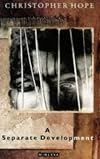
Published in 1981, this novel is a brilliant satire set in late 1950s South Africa that is at its heart an indictment of apartheid. No wonder this book was banned in South Africa, and was controversial in many circles. The author, himself, who later won awards for this work and other books, was exiled from SA since 1975.
The story is a "confession" of Harry Moto, a 15-yr old white boy whose main preoccupation was, as befit his age, his fallen arches, hair that was becoming more crinkly by show more the day, plump breasts, and unusually dark skin. We follow his last days as a "white" person -- as a member of a middle-class family, as a student in a Catholic school, and as a typical teen-ager eager for experience and adventure. His "non-white" features increasingly obvious, more and more get him ridiculed and into very embarrassing situations. Before he could fully grasp it, events overtake him and he is forced to become the unthinkable. He has always known there was something "odd" about him, and so it is without qualm, indeed, it was with great relief and not a little joy, that he "morphed" into invisibility as a coloured individual. As we follow Harry's "descent", we learn, together with him, how it is to be the oppressor, then the oppressed.
I liked very much Hope's intelligent, crisp, unsentimental writing --- the book is very funny, outrageously funny even, it had me laughing off my seat many times, but there is nothing intrinsically funny about the subject matter, that is, Harry's fate and the nature of apartheid. And that is the brilliance of this novel --- he uses to maximum effect ridicule and satire, without ever demeaning into low humor or venturing into moral exhortation, to expose the cruelty and the absurdity of the racial system. And with this device, he gets the message across even more sharply and more effectively.
Hope is one of those breed of authors who write superbly and with incredible acuity and sensitivity, but who aren't a big commercial success because they write about issues that are politically sensitive, even offensive to some. But, for me, all the more reason to search out the works of this lesser-known jewel. show less
The story is a "confession" of Harry Moto, a 15-yr old white boy whose main preoccupation was, as befit his age, his fallen arches, hair that was becoming more crinkly by show more the day, plump breasts, and unusually dark skin. We follow his last days as a "white" person -- as a member of a middle-class family, as a student in a Catholic school, and as a typical teen-ager eager for experience and adventure. His "non-white" features increasingly obvious, more and more get him ridiculed and into very embarrassing situations. Before he could fully grasp it, events overtake him and he is forced to become the unthinkable. He has always known there was something "odd" about him, and so it is without qualm, indeed, it was with great relief and not a little joy, that he "morphed" into invisibility as a coloured individual. As we follow Harry's "descent", we learn, together with him, how it is to be the oppressor, then the oppressed.
I liked very much Hope's intelligent, crisp, unsentimental writing --- the book is very funny, outrageously funny even, it had me laughing off my seat many times, but there is nothing intrinsically funny about the subject matter, that is, Harry's fate and the nature of apartheid. And that is the brilliance of this novel --- he uses to maximum effect ridicule and satire, without ever demeaning into low humor or venturing into moral exhortation, to expose the cruelty and the absurdity of the racial system. And with this device, he gets the message across even more sharply and more effectively.
Hope is one of those breed of authors who write superbly and with incredible acuity and sensitivity, but who aren't a big commercial success because they write about issues that are politically sensitive, even offensive to some. But, for me, all the more reason to search out the works of this lesser-known jewel. show less
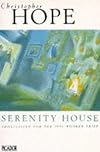
A black comedy set in an old people's home in London, this is the story of Max Montfalcon, the genial giant of Serenity House who might have been left to die in peace, but whose life took on a decidedly new turn when it becomes increasingly evident, helped by the investigation of his son-in-law MP who has a special interest in the War Crimes Bill, that Montfalcon was, in an earlier incarnation, Maximilian von Falkenberg. Falkenberg was known to be a brilliant German anthropologist who in show more 1942 conducted research on genetic racial differences in a Polish facility, possibly killing thousands of Jews and Poles with lethal injection.
Enters Jack, an all-American boy, eccentric and obsessed with violent videos and Chinese takeaways. Max is haunted by dreams of the Holocaust. The occupants of Serenity Hause is haunted by Jack.
The story is entertaining despite the grim and macabre theme (notions of people-disposal). While I did not fall for the story, I still enjoyed very much the satire and his crisp wit, and look forward to another of Hope's books. show less
Enters Jack, an all-American boy, eccentric and obsessed with violent videos and Chinese takeaways. Max is haunted by dreams of the Holocaust. The occupants of Serenity Hause is haunted by Jack.
The story is entertaining despite the grim and macabre theme (notions of people-disposal). While I did not fall for the story, I still enjoyed very much the satire and his crisp wit, and look forward to another of Hope's books. show less
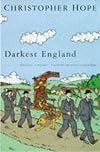
This is the mystery of David Mungo Booi, the orphan child who survived a fire as an infant. He has gone to seek help from the Queen of England and subsequently disappeared. His journals are all that is left. They are returned to the tribe in a brown suitcase carried by a white woman in a blue hat.
The ability to speak English was a well-treasured accomplishment of our narrator. He repeats often that he is the only English speaking individual among the tribe and he is self-taught.
What became show more of the boy after his entire family was burned to death? Where can one find the King of Bongo-Bongo-Land? What is the true color of ostrich bile? Could a settlement in England be established? Can Humpty-Bloody-Dumpty be put back together again? What is the answer to cultural identity if there is only muscular gloom? The belief that if you had been to Cape Town you knew the ways of the world. What is the Great Paper? Does Old Auntie with Diamonds in Her Hair know the truth? Speaking of truth, I wanted to laugh more when reading Darkest England. I wanted the satire to be bitingly funny. Instead I found it to be more dark than snark. In hindsight, the prison scene was kind of funny. Steel bracelets around ones wrist, being taken from one place to another in a "courtesy" vehicle, the stark "apartment", having a toilet next to the bed was a luxury, and best of all, the devotion to privacy - all doors locked behind us.
Maybe if I had bonded with any character it would have made a difference. I'm not sure I liked anyone even a little bit. show less
The ability to speak English was a well-treasured accomplishment of our narrator. He repeats often that he is the only English speaking individual among the tribe and he is self-taught.
What became show more of the boy after his entire family was burned to death? Where can one find the King of Bongo-Bongo-Land? What is the true color of ostrich bile? Could a settlement in England be established? Can Humpty-Bloody-Dumpty be put back together again? What is the answer to cultural identity if there is only muscular gloom? The belief that if you had been to Cape Town you knew the ways of the world. What is the Great Paper? Does Old Auntie with Diamonds in Her Hair know the truth? Speaking of truth, I wanted to laugh more when reading Darkest England. I wanted the satire to be bitingly funny. Instead I found it to be more dark than snark. In hindsight, the prison scene was kind of funny. Steel bracelets around ones wrist, being taken from one place to another in a "courtesy" vehicle, the stark "apartment", having a toilet next to the bed was a luxury, and best of all, the devotion to privacy - all doors locked behind us.
Maybe if I had bonded with any character it would have made a difference. I'm not sure I liked anyone even a little bit. show less
Lists
Awards


You May Also Like


Associated Authors
Statistics
- Works
- 30
- Also by
- 4
- Members
- 694
- Popularity
- #36,475
- Rating
- 3.3
- Reviews
- 20
- ISBNs
- 123
- Languages
- 7
- Favorited
- 1