
Elsa Sjunneson
Author of Being Seen: One Deafblind Woman's Fight to End Ableism
About the Author
Works by Elsa Sjunneson
Uncanny Magazine Issue 24: September/October 2018 (Disabled People Destroy Science Fiction) (2018) — Editor; Contributor — 52 copies
Fate Accessibility Toolkit 2 copies
Seeking Truth [short story] — Author — 1 copy
Dead scare 1 copy
Hugo Packet 1 copy
Being Seen (Excerpt) 1 copy
Associated Works
Disability Visibility: First-Person Stories from the Twenty-First Century (2020) — Contributor — 921 copies, 17 reviews
Up and Coming: Stories by the 2016 Campbell-Eligible Authors (2016) — Contributor, some editions — 24 copies, 1 review
Uncanny Magazine Issue 30: September/October 2019 (Disabled People Destroy Fantasy) (2019) — Contributor — 22 copies, 4 reviews
Uncanny Magazine: The Best of 2018 — Contributor, some editions — 4 copies
Tagged
Common Knowledge
- Canonical name
- Sjunneson, Elsa
- Other names
- Sjunneson, Elsa R.
Sjunneson-Henry, Elsa - Birthdate
- 1985
- Gender
- female
- Occupations
- writer
editor
disability rights activist
media critic - Nationality
- USA
- Places of residence
- Washington, USA
- Associated Place (for map)
- Washington, USA
Members
Reviews

really enlightening with a lot of things to think about. her snark and strong commitment to activism and deconstructing the ableist ways of thinking that pervade society were a welcome change to how (if) this is ever talked about. some of this felt pretty obvious, but plenty was surprising and made me think. i'd love to have a conversation with her about some of the things she brings up, but she'd done enough emotional labor here on my behalf.
"Maybe you won't read it as disability because show more non-disabled society doesn't want to admit that if you need hearing aids at age 60 you're still equally as disabled as a 25 year old who has them."
"If I must be inspiring then let it be the kind of inspiring that makes real change, not New Year's resolutions. Let it be the kind of inspiring that makes you want to call your Congressperson and ask for updates to the Americans with Disabilities Act, that actually matter. Or to ask your favorite restaurant to offer large print menus. Let it cause you to consider the ableism that lives within you."
"The most awkward part of any job interview for me is when the conversation inevitably turns to ask if I need accommodations. Of course I do. I need a number of them. But I don't want the fact that I need accommodations to kill my job opportunities. The hardest part of this book is knowing that any future employer might see it, read about my disabilities, and decide before I get a say, that I am unemployable. There is a risk to being seen."
"When we are afraid of something, we are less likely to feel empathy for it. This is how racism works. This is how antisemitism works. And yes, this is how ableism works. Fear breeds hatred, or vast indifference."
"The message in the vast book of science fiction is that in the future, disability will have a nominal impact of your life because science and technology will have fixed you. This is not the same thing as saying that your disability will have nominal impact on your life because you live in a world that has adapted to you. Why is that important? Because the first one is a form of disability erasure."
"Science fiction should be grappling with questions of corporate culture, colonialism, and the body. But because the genre is too busy erasing disability from the narrative and writing us in as cautionary tales, we haven't been able to ask all the questions that will truly matter to us in twenty years. Disabled people are on the cutting edge of some terrifying revelations. Who owns your hearing? Who owns your sight? Who owns your memory? Who owns your spleen? We want to say that you do, but I'm not sure that's where the world is going, and science fiction could be helping us to untangle those thorny questions through thought experiments instead of testing them out on real people in real time." show less
"Maybe you won't read it as disability because show more non-disabled society doesn't want to admit that if you need hearing aids at age 60 you're still equally as disabled as a 25 year old who has them."
"If I must be inspiring then let it be the kind of inspiring that makes real change, not New Year's resolutions. Let it be the kind of inspiring that makes you want to call your Congressperson and ask for updates to the Americans with Disabilities Act, that actually matter. Or to ask your favorite restaurant to offer large print menus. Let it cause you to consider the ableism that lives within you."
"The most awkward part of any job interview for me is when the conversation inevitably turns to ask if I need accommodations. Of course I do. I need a number of them. But I don't want the fact that I need accommodations to kill my job opportunities. The hardest part of this book is knowing that any future employer might see it, read about my disabilities, and decide before I get a say, that I am unemployable. There is a risk to being seen."
"When we are afraid of something, we are less likely to feel empathy for it. This is how racism works. This is how antisemitism works. And yes, this is how ableism works. Fear breeds hatred, or vast indifference."
"The message in the vast book of science fiction is that in the future, disability will have a nominal impact of your life because science and technology will have fixed you. This is not the same thing as saying that your disability will have nominal impact on your life because you live in a world that has adapted to you. Why is that important? Because the first one is a form of disability erasure."
"Science fiction should be grappling with questions of corporate culture, colonialism, and the body. But because the genre is too busy erasing disability from the narrative and writing us in as cautionary tales, we haven't been able to ask all the questions that will truly matter to us in twenty years. Disabled people are on the cutting edge of some terrifying revelations. Who owns your hearing? Who owns your sight? Who owns your memory? Who owns your spleen? We want to say that you do, but I'm not sure that's where the world is going, and science fiction could be helping us to untangle those thorny questions through thought experiments instead of testing them out on real people in real time." show less
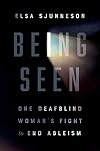
Very interesting book. As if two disabilities weren't enough, the abuse, discrimination and unnecessary obstacles in her way...amazing. Sjunneson grew up in a family unafraid to protest (her father was gay and died from AIDS) and she has continued to use this strength to stand up against ableism. Do I agree with all of her cultural criticisms? No, but many of them and I learned a lot. I enjoyed her amazing vocabulary and obvious intelligence as well as her snarky tone and fighting spirit. show more Worth reading. show less

nonfiction/memoir - Deafblind, incidentally bisexual writer/professor who had become well adapted to living alone (following a bad divorce) suddenly finds herself without both her adaptive aids (an injured guide dog, a hearing aid failing) during the "shelter in place" COVID pandemic days of 2020 Seattle; tackles various (ubiquitous) instances of Ableism, esp. the problematic "representation" of disabled people in the media, her experiences with the police including during Black Lives Matter show more protests, and other topics.
A skilled writer with strong arguments -- things seem obvious when you read them here, but a lot of it would never even have occurred to me otherwise. A valuable book, highly recommended. show less
A skilled writer with strong arguments -- things seem obvious when you read them here, but a lot of it would never even have occurred to me otherwise. A valuable book, highly recommended. show less

Really well written, unsurprisingly uncomfortable in places. There was the odd time when I felt the American perspective as alien, but much of what Sjunneson talks about is all too relatable and cross-cultural.
Lists
Awards


You May Also Like
Associated Authors
Statistics
- Works
- 16
- Also by
- 14
- Members
- 213
- Popularity
- #104,443
- Rating
- 4.0
- Reviews
- 19
- ISBNs
- 10
- Languages
- 1