
Neil White (4) (1960–)
Author of In the Sanctuary of Outcasts: A Memoir
For other authors named Neil White, see the disambiguation page.
About the Author
Neil White has been a newspaper editor, magazine publisher, advertising executive and federal prisoner. His memoir, In the Sanctuary of Outcasts (Morrow/HarperCollins), is about the year he lived with the last victims of leprosy in the continental United States, was released in June of 2009. show more Sanctuary was a finalist in the "Books for a Better Life" Award and was one of three finalists for the 2009 Barnes & Noble "Discover Great New Writers" Award. In 2010, the Southeastern Library Association named Mr. White "Outstanding Author of the Year." Foreign language translations have been published in Germany, Croatia and the Netherlands. He lives in Oxford, Mississippi, where he operates a small publishing company, writes plays and essays, and teaches memoir writing. (Bowker Author Biography) show less
Image credit: Mississippi Writers and Musicians
Works by Neil White
Tagged
Common Knowledge
- Legal name
- White, Neil W., III
- Birthdate
- 1960-12-05
- Places of residence
- Oxford, Mississippi, USA
- Burial location
- Gulfport, Mississippi, USA
- Associated Place (for map)
- Mississippi, USA
Members
Reviews
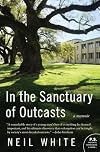
On the surface, Neil White had it all: charming himself with a beauty queen wife, two adorable children, enviable material possessions, owning a successful magazine. But underneath the perfect, wealthy veneer, White was borrowing from Peter to pay Paul. In fact, he was living well beyond his means and was loathe to change his habits so he started kiting checks, courting investors for infusions into the magazine, all while continuing to present an unruffled and untroubled facade to the show more outside world. But eventually he was caught, convicted of bank fraud, and sentenced to 18 months in a low security prison.
The prison he was sent to was not just any prison though, it was the Federal Medical Center in Carville, Louisiana, an isolated federal prison that also functioned as our national leprosarium and housed some of the last leprosy patients in this country to be isolated and confined because of their disease. The 130 patients lived on one side and the several hundred inmates lived on the other. Their close proximity allowed for one of the most unique prison situations in the country. Patients and prisoners, an ancient order of nuns, health care workers, and prison guards and officials all lived, ate, slept, worshipped and worked cheek by jowl, if a bit uneasily, in this beautiful, serene looking setting.
White was a superficial man, concerned with the appearance of things rather than what was right. He was more worried that people would know that his business was struggling than he was about asking people, including his mother, to pour their life savings into his crumbling enterprise. The first time that he was caught kiting checks, his public persona allowed him to bury the incident and relocate to another city where his misdeeds were unknown and where he would, without guilt, engage in exactly the same behaviour as previously. He seemed to believe that he was a shining star and as such was owed success. Getting caught a second time didn't change his entitlement attitude at all or his overwhelming concern for his image, personally or publically. And this same concern and belief that he was above everyone around him carried with him into prison. Initially horrified that he was going to come into close proximity with the patients (what if he was to contract Hansen's disease too?), he decided that his stay in prison would provide fodder for a book. And obviously it has, if not entirely the way he initially thought.
As White put in his time at Carville, he had to start facing who he was under the skin, learning that appearances mean very little, a truth driven home in this place of refuge and sanctuary for the victims of such a disfiguring disease as Hansen's can be. He meets and becomes friends with an assortment of people from patients to other inmates and he learns from each them as he goes through his sentence. The patients are represented as wise and thoughtful, especially one elderly woman in particular, perhaps because of their long isolation from the greater population. The inmates are a more varied lot, ranging from diabolically genius to narrow-minded and prejudiced. White's focus is more on his personal journey and evolution than on anything else though so the reader follows along as he faces the disintegration of his marriage, his unabating ache to see and hold his children, and the dawning realization that the actions that landed him in prison were not in fact victimless as he had blithely convinced himself in his miasma of selfishness.
The stories of the inmates and the patients were interesting but they weren't nearly as in depth as could have been hoped. And the history of Carville itself was very superficially handled. This is primarily White's story and ostensibly the story of his redemption and change from selfish and self-important to aware and grappling with his own weaknesses. It's a very readable book but as an inspirational memoir, it falls a bit short as there is no real indication of White's evolution into a better, less image conscious, more thoughtful himan being. Not quite as comprehensive about the place and the people who populated it in its final years of operation as billed, this is still a quick and interesting book and an inside look at all we can learn from those we first dismiss. show less
The prison he was sent to was not just any prison though, it was the Federal Medical Center in Carville, Louisiana, an isolated federal prison that also functioned as our national leprosarium and housed some of the last leprosy patients in this country to be isolated and confined because of their disease. The 130 patients lived on one side and the several hundred inmates lived on the other. Their close proximity allowed for one of the most unique prison situations in the country. Patients and prisoners, an ancient order of nuns, health care workers, and prison guards and officials all lived, ate, slept, worshipped and worked cheek by jowl, if a bit uneasily, in this beautiful, serene looking setting.
White was a superficial man, concerned with the appearance of things rather than what was right. He was more worried that people would know that his business was struggling than he was about asking people, including his mother, to pour their life savings into his crumbling enterprise. The first time that he was caught kiting checks, his public persona allowed him to bury the incident and relocate to another city where his misdeeds were unknown and where he would, without guilt, engage in exactly the same behaviour as previously. He seemed to believe that he was a shining star and as such was owed success. Getting caught a second time didn't change his entitlement attitude at all or his overwhelming concern for his image, personally or publically. And this same concern and belief that he was above everyone around him carried with him into prison. Initially horrified that he was going to come into close proximity with the patients (what if he was to contract Hansen's disease too?), he decided that his stay in prison would provide fodder for a book. And obviously it has, if not entirely the way he initially thought.
As White put in his time at Carville, he had to start facing who he was under the skin, learning that appearances mean very little, a truth driven home in this place of refuge and sanctuary for the victims of such a disfiguring disease as Hansen's can be. He meets and becomes friends with an assortment of people from patients to other inmates and he learns from each them as he goes through his sentence. The patients are represented as wise and thoughtful, especially one elderly woman in particular, perhaps because of their long isolation from the greater population. The inmates are a more varied lot, ranging from diabolically genius to narrow-minded and prejudiced. White's focus is more on his personal journey and evolution than on anything else though so the reader follows along as he faces the disintegration of his marriage, his unabating ache to see and hold his children, and the dawning realization that the actions that landed him in prison were not in fact victimless as he had blithely convinced himself in his miasma of selfishness.
The stories of the inmates and the patients were interesting but they weren't nearly as in depth as could have been hoped. And the history of Carville itself was very superficially handled. This is primarily White's story and ostensibly the story of his redemption and change from selfish and self-important to aware and grappling with his own weaknesses. It's a very readable book but as an inspirational memoir, it falls a bit short as there is no real indication of White's evolution into a better, less image conscious, more thoughtful himan being. Not quite as comprehensive about the place and the people who populated it in its final years of operation as billed, this is still a quick and interesting book and an inside look at all we can learn from those we first dismiss. show less
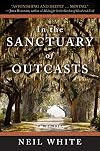
I have to admit now that I have read In the Sanctuary of Outcasts I can officially say I am bummed I didn't receive this as an Early Review back in 2009. This would have been one of my favorites. Not just one of my favorites, but one of my all-time favorites, for sure.
Confessional: I sometimes skip the author's note. I'll admit it - I'm impatient to get to the heart of the story. afterwards. In this case, for some reason I read every word of In the Sanctuary of Outcasts. I started with the show more copyright page and I think that's what convinced me to spend time with every word White wanted to utter.
Leprosarium. Never heard the word before. Who know there was a place on the Mississippi River called Carville, a place under one roof for Hansen's disease patients and prison inmates? Neil White certainly hadn't when he entered the community of Carville on May 3rd, 1993 as a convicted felon. He left behind a wife and two small children to serve eighteen months for check kiting. There is humor to White's arrival. His initial observations of Carville are as touching as they are naive. But, the longer he stays within the walls of Carville the more he understands the people around him. They leave a lasting impression and dare I say, change his life. show less
Confessional: I sometimes skip the author's note. I'll admit it - I'm impatient to get to the heart of the story. afterwards. In this case, for some reason I read every word of In the Sanctuary of Outcasts. I started with the show more copyright page and I think that's what convinced me to spend time with every word White wanted to utter.
Leprosarium. Never heard the word before. Who know there was a place on the Mississippi River called Carville, a place under one roof for Hansen's disease patients and prison inmates? Neil White certainly hadn't when he entered the community of Carville on May 3rd, 1993 as a convicted felon. He left behind a wife and two small children to serve eighteen months for check kiting. There is humor to White's arrival. His initial observations of Carville are as touching as they are naive. But, the longer he stays within the walls of Carville the more he understands the people around him. They leave a lasting impression and dare I say, change his life. show less
 This review was written for LibraryThing Early Reviewers.
Located on a drowsy bend of the Mississippi River in southern Louisiana, Carville is home to the National Hansen's Disease Museum. It was named for political personality James Carville's grandfather and was home to the Federal Medical Center, a minimum security facility for non-violent federal prisoners and inmates with chronic health problems. Carville, more importantly, was also home to the nation's only leprosarium, which in it's latter days - to both White's astonishment and my own - show more served as housing for leprosy patients and Federal inmates in the same building as well as an order of nuns within the grounds.
In the Sanctuary of Outcasts is Neil White's memoir of the time he served as an inmate at the Federal Medical Center at Carville. Written as a series of chronological anecdotes, Sanctuary takes us through the circumstances that led to White's conviction for bank fraud, his sudden introduction to leprosy and his life as an inmate at Carville.
For anyone who is astounded at the very idea of leprosy - or Hansen's disease, as it is now called -- being a malady of the modern era (current US Department of Health statistics estimate that there are 6,500 cases as of this writing), this book will give you some insight into a few patient's experiences as well as dispelling some common myths about the disease. One woman's story is especially touching. Ella Bounds was committed to Carville at the age of 12, delivered to the front gate by her father, never to see her family again. Ella, in her 80's at the time of White's incarceration, had spent the vast majority of her life in the institution.
In the Sanctuary of Outcasts is not a scholarly study of Hansen's disease in America, although it gives patients stricken with the disease a very human face. Moreso this is the story of one man's growth -- a sort of mid-life "coming of age" tale -- and a window into one mans very unique experience. By turns it is funny, intriquing, irreverent, shocking, and profoundly moving. Sanctuary is highly readable and deeply satisfying.
(Review based on complimentary Advance Reader Copy from the publisher.) show less
In the Sanctuary of Outcasts is Neil White's memoir of the time he served as an inmate at the Federal Medical Center at Carville. Written as a series of chronological anecdotes, Sanctuary takes us through the circumstances that led to White's conviction for bank fraud, his sudden introduction to leprosy and his life as an inmate at Carville.
For anyone who is astounded at the very idea of leprosy - or Hansen's disease, as it is now called -- being a malady of the modern era (current US Department of Health statistics estimate that there are 6,500 cases as of this writing), this book will give you some insight into a few patient's experiences as well as dispelling some common myths about the disease. One woman's story is especially touching. Ella Bounds was committed to Carville at the age of 12, delivered to the front gate by her father, never to see her family again. Ella, in her 80's at the time of White's incarceration, had spent the vast majority of her life in the institution.
In the Sanctuary of Outcasts is not a scholarly study of Hansen's disease in America, although it gives patients stricken with the disease a very human face. Moreso this is the story of one man's growth -- a sort of mid-life "coming of age" tale -- and a window into one mans very unique experience. By turns it is funny, intriquing, irreverent, shocking, and profoundly moving. Sanctuary is highly readable and deeply satisfying.
(Review based on complimentary Advance Reader Copy from the publisher.) show less
This review was written for LibraryThing Early Reviewers.Neil White has made a lot of mistakes in his life, some with serious consequences. Very serious consequences. Consequences like spending months in federal prison for kiting checks. While engaging in his financial acrobatics to keep his magazines going, Neil never really considered that what he was doing was wrong, even after being caught once and losing people’s money. He figured that if he could just juggle the money until there was enough to cover everything, nobody would get hurt and show more nobody would mind. Unfortunately, things didn’t work out like that. Neil was caught in his financial indiscretions, hurting his family, friends, and many investors in the process.
When Neil was sentenced to 18 months in prison, he accepted his fate, although he never really seemed to consider that he was on the same level as the ‘criminals’. Because of his acceptance of his punishment, prison in and of itself didn’t seem to be a huge shock to him, what DID surprise him is that federal inmates were not the only ones housed at Carville penitentiary - Carville was also America’s last leprosarium (leper colony).
As one of the inmates who seemed the most open to befriending and talking with the ‘patients’ (as those with leprosy or Hansen’s Disease were called), Neil learned quite a bit of history of leprosy in the United States and about the fascinating and sometimes horrifying circumstances that had brought people to the leprosarium at Carville. Originally, still in his journalism-oriented mindset, White planned to engage in some participatory journalism to write a sort of expose about the state of leprosy in America and the fact that federal inmates were being held in the same institution as a population of people with leprosy.
An expose is not what White ended up writing, however. Instead, “In the Sanctuary of Outcasts” is his personal memoir of growth through his time at Carville. Okay, if I read the line “personal memoir of growth,” that would probably stop me from picking up a book, because those sorts of things usually turn out cheesy in my opinion. That is not “In the Sanctuary of Outcasts” at all. White was very open and straightforward about his thoughts, feelings, and attitudes as he described the events of his year or so in prison. The growth he experienced seemed very genuine and very real and he seemed to be honest about how he arrived at it, he was never flashy or melodramatic.
This was a fantastic book. One might expect that a memoir of this nature would be more about the story than the writing, but as a former journalist Neil got everything right: the pacing, the storytelling, and the writing. In addition to White’s personal story and experience as a federal inmate, which was interesting in itself, I was fascinated to read about Carville as a leprosarium and about the lives of the patients there. I must admit that I’ve never given much (any?) thought sufferers of leprosy in American and definitely had my eyes opened by this book.
This was a great read and one that I would definitely recommend.
Buy this book from: show less
When Neil was sentenced to 18 months in prison, he accepted his fate, although he never really seemed to consider that he was on the same level as the ‘criminals’. Because of his acceptance of his punishment, prison in and of itself didn’t seem to be a huge shock to him, what DID surprise him is that federal inmates were not the only ones housed at Carville penitentiary - Carville was also America’s last leprosarium (leper colony).
As one of the inmates who seemed the most open to befriending and talking with the ‘patients’ (as those with leprosy or Hansen’s Disease were called), Neil learned quite a bit of history of leprosy in the United States and about the fascinating and sometimes horrifying circumstances that had brought people to the leprosarium at Carville. Originally, still in his journalism-oriented mindset, White planned to engage in some participatory journalism to write a sort of expose about the state of leprosy in America and the fact that federal inmates were being held in the same institution as a population of people with leprosy.
An expose is not what White ended up writing, however. Instead, “In the Sanctuary of Outcasts” is his personal memoir of growth through his time at Carville. Okay, if I read the line “personal memoir of growth,” that would probably stop me from picking up a book, because those sorts of things usually turn out cheesy in my opinion. That is not “In the Sanctuary of Outcasts” at all. White was very open and straightforward about his thoughts, feelings, and attitudes as he described the events of his year or so in prison. The growth he experienced seemed very genuine and very real and he seemed to be honest about how he arrived at it, he was never flashy or melodramatic.
This was a fantastic book. One might expect that a memoir of this nature would be more about the story than the writing, but as a former journalist Neil got everything right: the pacing, the storytelling, and the writing. In addition to White’s personal story and experience as a federal inmate, which was interesting in itself, I was fascinated to read about Carville as a leprosarium and about the lives of the patients there. I must admit that I’ve never given much (any?) thought sufferers of leprosy in American and definitely had my eyes opened by this book.
This was a great read and one that I would definitely recommend.
Buy this book from: show less
Awards


You May Also Like


Associated Authors
Statistics
- Works
- 2
- Members
- 627
- Popularity
- #40,190
- Rating
- 3.7
- Reviews
- 41
- ISBNs
- 137
- Languages
- 4
