
Danny Ramadan
Author of Salma the Syrian Chef
About the Author
Series
Works by Danny Ramadan
Associated Works
Tagged
Common Knowledge
- Gender
- male
- Nationality
- Syria (birth)
Canada
Members
Reviews
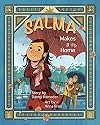
Danny Ramadan’s Salma Makes a Home is a poignant and heartfelt story that beautifully captures the immigrant experience through the eyes of a young girl. Salma’s journey from Damascus, Syria, to Vancouver, Canada, is both deeply personal and universally relatable for anyone who has navigated the challenges of adapting to a new culture while holding on to their roots.
At the heart of the story is Salma’s longing for her Baba, whom she hasn’t seen in almost two years. Her excitement at show more his impending arrival is tempered by anxiety—will he like their new life in Vancouver? Will he feel at home in this unfamiliar place? These questions weigh heavily on Salma, reflecting the complex emotions many immigrants face: the joy of reunion mingled with the fear of rejection or loss of connection to their past.
Ramadan masterfully portrays Salma’s inner conflict as she grapples with the fear of forgetting her life in Damascus. This fear is compounded by her growing fluency in English and her awareness of her accent, a marker of her identity that she shares with her best friend and teacher. The book’s celebration of diversity—through its acknowledgment of accents and cultural differences—is a powerful reminder of the richness that comes from embracing multiple identities.
The turning point in the story comes when Salma’s Baba reassures her that it’s okay to have two homes: “One that you live in and one that lives within you.” This wisdom helps Salma reconcile her love for her new home with her longing for her old one. Baba’s advice to remember the people, traditions, and language that matter most is not only comforting but also empowering, offering a roadmap for maintaining cultural heritage while embracing change.
As an immigrant myself, I found this story deeply resonant. Salma’s fears and joys mirrored my own experiences of adapting to a new country while striving to preserve my cultural identity. Like Salma, I’ve struggled with language—especially when I’m the only one speaking it in my new home—but I’ve learned to cherish it as a vital link to my heritage.
Salma Makes a Home is a tender and hopeful tale that speaks to readers of all ages. It’s a celebration of resilience, family, and the beauty of belonging to more than one place. Danny Ramadan’s storytelling is a gift, offering comfort and understanding to anyone who has ever felt torn between two worlds. show less
At the heart of the story is Salma’s longing for her Baba, whom she hasn’t seen in almost two years. Her excitement at show more his impending arrival is tempered by anxiety—will he like their new life in Vancouver? Will he feel at home in this unfamiliar place? These questions weigh heavily on Salma, reflecting the complex emotions many immigrants face: the joy of reunion mingled with the fear of rejection or loss of connection to their past.
Ramadan masterfully portrays Salma’s inner conflict as she grapples with the fear of forgetting her life in Damascus. This fear is compounded by her growing fluency in English and her awareness of her accent, a marker of her identity that she shares with her best friend and teacher. The book’s celebration of diversity—through its acknowledgment of accents and cultural differences—is a powerful reminder of the richness that comes from embracing multiple identities.
The turning point in the story comes when Salma’s Baba reassures her that it’s okay to have two homes: “One that you live in and one that lives within you.” This wisdom helps Salma reconcile her love for her new home with her longing for her old one. Baba’s advice to remember the people, traditions, and language that matter most is not only comforting but also empowering, offering a roadmap for maintaining cultural heritage while embracing change.
As an immigrant myself, I found this story deeply resonant. Salma’s fears and joys mirrored my own experiences of adapting to a new country while striving to preserve my cultural identity. Like Salma, I’ve struggled with language—especially when I’m the only one speaking it in my new home—but I’ve learned to cherish it as a vital link to my heritage.
Salma Makes a Home is a tender and hopeful tale that speaks to readers of all ages. It’s a celebration of resilience, family, and the beauty of belonging to more than one place. Danny Ramadan’s storytelling is a gift, offering comfort and understanding to anyone who has ever felt torn between two worlds. show less

Newly arrived in Vancouver from a Syrian refugee camp, Salma and her mother are adjusting to life in this strange place, and missing Salma's father, still back in Syria. With a new language to learn, and job training and interviews to attend, Salma's mother always seems tired and dispirited, so the young girl hatches the plan to make her favorite dish for her. But how will she find a recipe for foul shami, and once she does, how will she find the ingredients? Fortunately, some of the people show more at the Welcome Center where Salma and her mother are staying step in to help, and while the foul shami they produce might not be perfect, it has the most important thing of all: love...
Pairing a poignant, ultimately heartwarming tale from Danny Ramadan with lovely, expressive illustrations from Anna Bron, Salma the Syrian Chef addresses a number of important themes, from the stress and strain that newly arrived immigrants face, in their adopted countries, to the importance of staying connected to one's ancestral culture. Food is an important way of doing the latter, and the story here shows how culinary traditions can be maintained, while also sometimes morphing, given the availability of specific foods in new places. Of course, food is also an important way of connecting with family, and that too is explored here. I appreciated the fact that so many people contributed to Salma's project, and that this - the community of friends she discovers - is seen as important, in its own right. My only criticism of the book - and it is a minor point - is the use of the word "broken," when describing the Arabic spoken by Nancy, the Welcome Center volunteer. It felt particularly jarring to me, I suspect, because only a few pages before the author had described Salma's struggle to pronounce the name of her new city correctly, and he certainly didn't describe her English as "broken." Leaving that aside, this was a sweet, emotionally satisfying picture-book, one I would recommend to readers looking for children's stories about the immigrant experience, and about the importance of food in families and in cultures. show less
Pairing a poignant, ultimately heartwarming tale from Danny Ramadan with lovely, expressive illustrations from Anna Bron, Salma the Syrian Chef addresses a number of important themes, from the stress and strain that newly arrived immigrants face, in their adopted countries, to the importance of staying connected to one's ancestral culture. Food is an important way of doing the latter, and the story here shows how culinary traditions can be maintained, while also sometimes morphing, given the availability of specific foods in new places. Of course, food is also an important way of connecting with family, and that too is explored here. I appreciated the fact that so many people contributed to Salma's project, and that this - the community of friends she discovers - is seen as important, in its own right. My only criticism of the book - and it is a minor point - is the use of the word "broken," when describing the Arabic spoken by Nancy, the Welcome Center volunteer. It felt particularly jarring to me, I suspect, because only a few pages before the author had described Salma's struggle to pronounce the name of her new city correctly, and he certainly didn't describe her English as "broken." Leaving that aside, this was a sweet, emotionally satisfying picture-book, one I would recommend to readers looking for children's stories about the immigrant experience, and about the importance of food in families and in cultures. show less

Hussam and Wassim are teenage best friends tentatively falling in love in '00s Damascus when tragedy strikes. A decade later, Wassim is living on the streets while Hussam has made it to Vancouver as a refugee, where he uses sex and drugs to try to muffle the pain he feels.
The Foghorn Echoes is a worthy but clunky book. There are the occasional vivid moments, insights that are clearly drawn from the author's own experiences as a refugee, but they are outnumbered by those which are show more overwrought and unconvincing. This is trauma-by-numbers. Add in the impossibly patient Syrian-Canadian drag queen who appears to spout Tumblr-esque platitudes at Hussam about healing and internalised homophobia, and you've got a Lifetime movie—just one with more poppers and sex swings than normal. show less
The Foghorn Echoes is a worthy but clunky book. There are the occasional vivid moments, insights that are clearly drawn from the author's own experiences as a refugee, but they are outnumbered by those which are show more overwrought and unconvincing. This is trauma-by-numbers. Add in the impossibly patient Syrian-Canadian drag queen who appears to spout Tumblr-esque platitudes at Hussam about healing and internalised homophobia, and you've got a Lifetime movie—just one with more poppers and sex swings than normal. show less
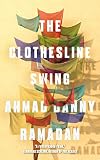
Almost forty years after fleeing war-torn Syria together in 2012 and settling in Vancouver, two old men, one of whom is terminally ill, are facing their final days together. “Tell me a story” says the dying man, and his partner, desperate to delay the loneliness, loss and grief the death of his long-term lover will bring, reflects that when he was a boy he used to write stories to save his own life, so would now tell his partner those same, and other, stories in the hope they would save show more his. Scheherazade-style, Hakawati (the Arabic word for a storyteller) entertains his lover with story after story so that, night by night death is kept at bay. However, black-clad Death becomes a real character as the story develops: he lingers in the corners of every room, ever-present, eavesdropping on the couple’s conversations, sharing their secrets and patiently, and sometimes not so patiently, awaiting the inevitable outcome of this attempt to thwart him.
The quality of the author’s storytelling skills immediately drew me into this moving, disturbing yet ultimately hopeful story. Through Hakawati’s reminiscences I felt I was travelling with him through his experiences of childhood abuse, living with a mentally ill mother, experiencing abandonment, the cruelty and prejudice he faced as a result of his homosexuality, his experiences of war-torn Syria, of being excluded, of being first a refugee and then an immigrant into a very different country and culture, facing all the adjustments necessary to fit in and to secure a settled future. Some of the descriptions of this culture shock, and of the stresses and strains faced by refugees, evocatively captured not only the pain of alienation, of necessarily repressed emotions being gradually revealed and re-experienced, but also of the relief and the healing calm which can follow such a release.
This is a book which at times feels almost unbearably raw and intimate, yet it engenders a sense that if its characters can face all the horrors they are experiencing I, as the reader, should be prepared to remain with them on their journeys, to attempt to capture something of what it must be like to “walk a mile” in their shoes. By engaging with this journey, I feel I have gained a much greater understanding not only of the troubled and tragic history of Syria and the Middle East, which is weaves in and out of the story, but also more insight into what life is like for anyone who doesn’t conform, who dares to be different.
The author’s beautiful, lyrical prose also captures, in a very evocative way, how the incredible beauty of Syria can feel so at odds with the brutality and oppression of the current regime. Much of the sense of optimism, and humour, in the story lies in the fact that, in spite of all the horrors, it is possible to hold onto hope, to find friendship, love, and for all to survive. The autobiographical element to the storytelling (the author is a gay, Syrian refugee who is now settled in Vancouver) means that the story is told with a visceral authenticity which permeates all of Hakawati’s reminiscences. I appreciated the fact that these reminiscences combined magical fantasies and fables with truly horrifying and disturbing accounts of the story teller’s experiences of his troubled life. This felt like a very effective way of exploring some elements of the confusions faced by traumatised people when they attempt to understand what is “real” and what is fantasy in their recollections of past experiences.
Towards the end of the story Hakawati’s partner reflects on the notion that art is “better left incomplete” because this allows the viewer to use their own imagination and experiences to fill in the gaps, to make the picture complete. The power of good storytelling also enables, even invites, the reader to do the same thing. It enables us to gain insights, to take something unique from a story, to allow it to complete a part of ourselves and, by doing so, to expand our experiences of the world, as well as our understanding of the experiences of other people. In this way it becomes possible to fully engage with the true intimacy of the storytelling, that special quality which has its own alchemy.
With his, at times, exquisite and poetic use of language, it’s hard to believe that this is not only the author’s debut novel, but his first using English to tell his story. Less difficult to believe is his previous experience with writing two collections of short stories (in Arabic) because it seems to me that he has managed to use this skill to write what is, in essence, a collection of short stories, but one which he has managed to transform into a coherent whole, to create a very impressive and satisfying novel. He has given a voice not only to Syrian refugees, but also to refugees and persecuted minorities everywhere. I cannot imagine how anyone reading this book won’t gain some new insights into the horrors faced by so many people who face the daily realities of oppression, brutality and alienation.
Apart from finding this a very moving, if at times, harrowing story, I think that the many important themes it encompasses would make it an ideal choice for reading groups. show less
The quality of the author’s storytelling skills immediately drew me into this moving, disturbing yet ultimately hopeful story. Through Hakawati’s reminiscences I felt I was travelling with him through his experiences of childhood abuse, living with a mentally ill mother, experiencing abandonment, the cruelty and prejudice he faced as a result of his homosexuality, his experiences of war-torn Syria, of being excluded, of being first a refugee and then an immigrant into a very different country and culture, facing all the adjustments necessary to fit in and to secure a settled future. Some of the descriptions of this culture shock, and of the stresses and strains faced by refugees, evocatively captured not only the pain of alienation, of necessarily repressed emotions being gradually revealed and re-experienced, but also of the relief and the healing calm which can follow such a release.
This is a book which at times feels almost unbearably raw and intimate, yet it engenders a sense that if its characters can face all the horrors they are experiencing I, as the reader, should be prepared to remain with them on their journeys, to attempt to capture something of what it must be like to “walk a mile” in their shoes. By engaging with this journey, I feel I have gained a much greater understanding not only of the troubled and tragic history of Syria and the Middle East, which is weaves in and out of the story, but also more insight into what life is like for anyone who doesn’t conform, who dares to be different.
The author’s beautiful, lyrical prose also captures, in a very evocative way, how the incredible beauty of Syria can feel so at odds with the brutality and oppression of the current regime. Much of the sense of optimism, and humour, in the story lies in the fact that, in spite of all the horrors, it is possible to hold onto hope, to find friendship, love, and for all to survive. The autobiographical element to the storytelling (the author is a gay, Syrian refugee who is now settled in Vancouver) means that the story is told with a visceral authenticity which permeates all of Hakawati’s reminiscences. I appreciated the fact that these reminiscences combined magical fantasies and fables with truly horrifying and disturbing accounts of the story teller’s experiences of his troubled life. This felt like a very effective way of exploring some elements of the confusions faced by traumatised people when they attempt to understand what is “real” and what is fantasy in their recollections of past experiences.
Towards the end of the story Hakawati’s partner reflects on the notion that art is “better left incomplete” because this allows the viewer to use their own imagination and experiences to fill in the gaps, to make the picture complete. The power of good storytelling also enables, even invites, the reader to do the same thing. It enables us to gain insights, to take something unique from a story, to allow it to complete a part of ourselves and, by doing so, to expand our experiences of the world, as well as our understanding of the experiences of other people. In this way it becomes possible to fully engage with the true intimacy of the storytelling, that special quality which has its own alchemy.
With his, at times, exquisite and poetic use of language, it’s hard to believe that this is not only the author’s debut novel, but his first using English to tell his story. Less difficult to believe is his previous experience with writing two collections of short stories (in Arabic) because it seems to me that he has managed to use this skill to write what is, in essence, a collection of short stories, but one which he has managed to transform into a coherent whole, to create a very impressive and satisfying novel. He has given a voice not only to Syrian refugees, but also to refugees and persecuted minorities everywhere. I cannot imagine how anyone reading this book won’t gain some new insights into the horrors faced by so many people who face the daily realities of oppression, brutality and alienation.
Apart from finding this a very moving, if at times, harrowing story, I think that the many important themes it encompasses would make it an ideal choice for reading groups. show less
Lists
Awards


You May Also Like
Associated Authors
Statistics
- Works
- 8
- Also by
- 1
- Members
- 298
- Popularity
- #78,714
- Rating
- 4.0
- Reviews
- 23
- ISBNs
- 46
- Languages
- 2