
Clark Coolidge
Author of The Crystal Text (Sun and Moon Classics)
About the Author
Works by Clark Coolidge
Counting on Planet Zero 4 copies
Former Figures 2 copies
The So 1 copy
Bond Sonnets 1 copy
Quartz Hearts 1 copy
Lines 1 copy
Clark Coolidge 1 copy
Associated Works
Big Deal #2 — Contributor — 3 copies
ACTS 4, VOL. 1 NO 4, 1985 — Contributor — 2 copies
Sulfur 6: The Literary Tri-Quarterly of the Whole Art. — Contributor — 2 copies
Talisman: A Journal of Contemporary Poetry and Poetics, Number 4, The Susan Howe Issue — Contributor — 1 copy
Fire Exit 4 — Contributor — 1 copy
Lines, No. 6 — Contributor — 1 copy
Tagged
Common Knowledge
- Gender
- male
Members
Reviews

As usual, it's weird writing these reviews. It cd, hypothetically, all depend on my mood. Eg: I cd write: "Who gives a shit? It's poetry, I hate poetry." & it wd be as true as something very different that I might write.
I've been an experimental writer, I probably still am. It's not one of my highest priorities but it still tickles my brain now & then - then my brain sneezes instead of farting. In my days of greater investigation of things that can be done w/ language, I was looking for show more writers whose writing struck me as original, or just struck me - preferably w/o injury.
Coolidge has always been a beacon of originality. It doesn't matter one whit to me if I 'understand' what he's trying to do, what matters to me is that when I read the words they seem fresh - preferably fresh in a way that seems truly distinct to the writer - & that's Coolidge fer ya.
In his poem "CABINET VOLTAIRE", section 3 is roughly as follows:
3.
tradict
theless
it gether
tastic
for
gin tion
and sarily
and
sests
He uses fragments of words. "tradict" cd have a phantom limb 'completing' it as "contradict", "theless" cd be "nonetheless", "gether" -> "together", "tastic" -> "fantastic", "tion" -> "recognition", "sarily" -> "necessarily"; but what about "sests"? The last syllable of this section?
The very title of the bk is a 'mere' suffix. The Guston painting on the front has brush strokes enclosed by the cover, the one on the back has brush strucks enclosed by more brush strokes. By the time one has made it from the front to the back have the fragments become more complete by the process of reading them? show less
I've been an experimental writer, I probably still am. It's not one of my highest priorities but it still tickles my brain now & then - then my brain sneezes instead of farting. In my days of greater investigation of things that can be done w/ language, I was looking for show more writers whose writing struck me as original, or just struck me - preferably w/o injury.
Coolidge has always been a beacon of originality. It doesn't matter one whit to me if I 'understand' what he's trying to do, what matters to me is that when I read the words they seem fresh - preferably fresh in a way that seems truly distinct to the writer - & that's Coolidge fer ya.
In his poem "CABINET VOLTAIRE", section 3 is roughly as follows:
3.
tradict
theless
it gether
tastic
for
gin tion
and sarily
and
sests
He uses fragments of words. "tradict" cd have a phantom limb 'completing' it as "contradict", "theless" cd be "nonetheless", "gether" -> "together", "tastic" -> "fantastic", "tion" -> "recognition", "sarily" -> "necessarily"; but what about "sests"? The last syllable of this section?
The very title of the bk is a 'mere' suffix. The Guston painting on the front has brush strokes enclosed by the cover, the one on the back has brush strucks enclosed by more brush strokes. By the time one has made it from the front to the back have the fragments become more complete by the process of reading them? show less
The progression in Coolidge's bks continues: from stanzas to paragraphs, this is the shortest bk yet. Also, this is the last bk by Coolidge I've read & it's 20 yrs old now. Looking him up online, I see that he's written quite alot more since then. Now, I'm curious again. The fragments of the earlier bks are gone, full sentences (of sorts) are here. But, of course, the sentences are unusual. But this time, the unusualness doesn't necessarily revolve mainly around the way parts of speech are show more used. Now there's 'straight-forward' descriptiveness wch cd almost be described as 'surreal':
"Convicts in independent spangles, discuses flung at their backs. Convicts in lard costume, with yellow goggles to their tin eyes. Convicts at the edges of holes, polishing brass that's a liquid in pits. Convicts beset with priming coats, white British moths at their lips. Convicts in a square grey chamber, moons independent of them."
But I wdn't REALLY call it 'surreal', it's more complex than that usually is. I think of a John Cage comment about Morton Feldman's later thru-notated pieces. He sd something to the effect that they were Feldman playing his earlier graph notation pieces - the ones where register (high, middle, low) was specified rather than partiocular notes. Maybe Coolidge has undergone a similar development, maybe the fragments of the earlier work were his registers & by 1981 he was writing the particulars. show less
"Convicts in independent spangles, discuses flung at their backs. Convicts in lard costume, with yellow goggles to their tin eyes. Convicts at the edges of holes, polishing brass that's a liquid in pits. Convicts beset with priming coats, white British moths at their lips. Convicts in a square grey chamber, moons independent of them."
But I wdn't REALLY call it 'surreal', it's more complex than that usually is. I think of a John Cage comment about Morton Feldman's later thru-notated pieces. He sd something to the effect that they were Feldman playing his earlier graph notation pieces - the ones where register (high, middle, low) was specified rather than partiocular notes. Maybe Coolidge has undergone a similar development, maybe the fragments of the earlier work were his registers & by 1981 he was writing the particulars. show less
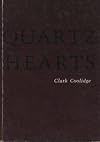
This bk seems to be somewhat of a departure from the earlier 4 bks by Coolidge that I've reviewed so far here ("ING", "SPACE", "THE MAINTAINS", "POLAROID"). That's b/c there's punctuation. Especially PERIODS, some commas, some question marks. It makes it seem so declarative after a while. As if it's all so matter-of-fact. Page 28:
"The location of a diagram is in green on blue.
Next considering a whitish black and the sharp
corner it's near. Olympia beer passing in
the sky and its wall. A show more door space to
further diagrams, white on blue, a window.
That yellow flower, on flat, on white, where's
its shadow, is too big. A sudden crease,
that takes the air 90º back into space. The
various clothes there are in a closet where
this all gets vertical and stops.
What's a cat."
The appearance of a description - but not necessarily a description meant to evoke an exact image in a reader's mind - more likely a description that picks & chooses pieces here & there that can add up to a new whole, like picking yr favorite nuts out of trail mix & eating only those, digesting them, leaving the rest for another writer (if one cares to pick the mix apart further). show less
"The location of a diagram is in green on blue.
Next considering a whitish black and the sharp
corner it's near. Olympia beer passing in
the sky and its wall. A show more door space to
further diagrams, white on blue, a window.
That yellow flower, on flat, on white, where's
its shadow, is too big. A sudden crease,
that takes the air 90º back into space. The
various clothes there are in a closet where
this all gets vertical and stops.
What's a cat."
The appearance of a description - but not necessarily a description meant to evoke an exact image in a reader's mind - more likely a description that picks & chooses pieces here & there that can add up to a new whole, like picking yr favorite nuts out of trail mix & eating only those, digesting them, leaving the rest for another writer (if one cares to pick the mix apart further). show less
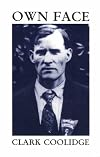
There're 41 ratings to this, now 42, w/ an average of 4.81. Will wonders never cease. Why? As I picked this as my next bk to read I found myself imagining myself thinking: "Why, of all the bks I have laying around to be read, have I picked this?" Maybe b/c it's short & doesn't involve a big investment of time, maybe b/c Coolidge continues to fascinate me even though, in one, sense, I don't really 'get much out of his writing'. As I was reading it, it struck me that, even though I have show more friends who're poets & even though I have friends who're poetry editors & publishers, it's rare to almost nonexistence for my friends to talk about poetry w/ me - except, perhaps, about their own.
ANYWAY, the back-cover blurb & the chronological bio near the end of the bk together inform me that "Own Face" enables one to "glimpse an important shift in Coolidge's remarkable poetic career" b/c it marks the transition from "what some have described as a reductive syntax in order to open the poem to reveal its visual order and the abstract, but quite meaningful, structures of sound" "to a more seemingly biographical and lyrical writing." Having read the early stuff & now "Own Face" (wch, itself, is 31 yrs old now) I can more or less accept that as a description but I do have to ask: What exactly IS THE MEANING that's so "quite meaningful" b/c I suspect that that's an analytical exaggeration.
As for the "more seemingly biographical": ok, there're alotof references to caving [I learned the word "adit": "An almost horizontal entrance to a mine." [Free Dictionary]} & the front cover is a picture of a guy named Floyd Collins "shortly before his death in Sand Cave". Maybe Coolidge has been a spelunker, maybe he's just using it as a metaphor or some such. The bk's dedicated: "For Bernadette Mayer", I like her writing, if it were me writing the dedication it might mean I either had fucked or wanted to fuck her brains out.
Beyond that? Well, I'm back to "Will wonders ever cease."? In other words, why have so many people read this (in esoteric relativity, ie) & rated it so highly? I dunno. Maybe there're a few influential poetry teachers who get their students to read Coolidge & who convince them that he's great. Dunno. For me, Coolidge is distinct & I like distinctness.. but, otherwise, this bk in particular seems somewhat 'ordinary'. That's probably blasphemy.
Thinking about my relationship to this writing makes me wonder about myself: I can find the deepest things in the most abstruse music, I can be bored to yawns by most art - esp art-for-art's-sake, I can find most (bordering on ALL) poetry a waste-of-time to both write & read.. &, YET, in some way, I, at least philosophically, consider all of them to be part of a bigger whole where they're all equally valuable. So why does music speak to me so profoundly & poetry barely at all? At the same time that I strongly disagree w/ even dividing creative activity up into these discipline niches, I feel the discipline niches as a very concrete 'reality'.
ANYANYWAY, the title "Own Face" makes me think of words taken out of context, isolated to call attn to their phrase potential. He scratched his OWN FACE, eg, as a possible context. "Own Face" by itself is loosened from more ordinary narrative context & becomes more evocative as a result. Do we OWN our FACE? Is there a type of face called OWN FACE? Is there a thing called an OWN that has a FACE? Is there a rock FACE in a cave called an OWN? Bruce Andrews' writing reminds me of Coolidge's.. or vice versa.
p.s. I just looked at the other GoodReads 'reviews' of this & only ONE person had anything to say about it: "This is an all-time classic of American poetry, which I have read and re-read constantly for over ten years. I think Coolidge hits his high point here." Now, there's no reason why this particular individual shd say anything more substantial than this - after all, people writing on GoodReads are mostly just providing quickies, BUT, it still surprises me (& DOESN'T) that there's no real criticism of this bk here. I assume there is elsewhere. It brings me back to "it's rare to almost nonexistence for my friends to talk about poetry w/ me". In other words, why do people rate this so highly but have nothing to say about it?! I gave it the lowest rating of all those who rated it (BUT STILL LIKED IT) & I have the MOST to say about it. It's hard to resist finding the intellectual substance of these high ratings suspect - even though I know that many of the names that I recognize are people whose writings & reviews I have a very high respect for. Give me something to go on here people! show less
ANYWAY, the back-cover blurb & the chronological bio near the end of the bk together inform me that "Own Face" enables one to "glimpse an important shift in Coolidge's remarkable poetic career" b/c it marks the transition from "what some have described as a reductive syntax in order to open the poem to reveal its visual order and the abstract, but quite meaningful, structures of sound" "to a more seemingly biographical and lyrical writing." Having read the early stuff & now "Own Face" (wch, itself, is 31 yrs old now) I can more or less accept that as a description but I do have to ask: What exactly IS THE MEANING that's so "quite meaningful" b/c I suspect that that's an analytical exaggeration.
As for the "more seemingly biographical": ok, there're alotof references to caving [I learned the word "adit": "An almost horizontal entrance to a mine." [Free Dictionary]} & the front cover is a picture of a guy named Floyd Collins "shortly before his death in Sand Cave". Maybe Coolidge has been a spelunker, maybe he's just using it as a metaphor or some such. The bk's dedicated: "For Bernadette Mayer", I like her writing, if it were me writing the dedication it might mean I either had fucked or wanted to fuck her brains out.
Beyond that? Well, I'm back to "Will wonders ever cease."? In other words, why have so many people read this (in esoteric relativity, ie) & rated it so highly? I dunno. Maybe there're a few influential poetry teachers who get their students to read Coolidge & who convince them that he's great. Dunno. For me, Coolidge is distinct & I like distinctness.. but, otherwise, this bk in particular seems somewhat 'ordinary'. That's probably blasphemy.
Thinking about my relationship to this writing makes me wonder about myself: I can find the deepest things in the most abstruse music, I can be bored to yawns by most art - esp art-for-art's-sake, I can find most (bordering on ALL) poetry a waste-of-time to both write & read.. &, YET, in some way, I, at least philosophically, consider all of them to be part of a bigger whole where they're all equally valuable. So why does music speak to me so profoundly & poetry barely at all? At the same time that I strongly disagree w/ even dividing creative activity up into these discipline niches, I feel the discipline niches as a very concrete 'reality'.
ANYANYWAY, the title "Own Face" makes me think of words taken out of context, isolated to call attn to their phrase potential. He scratched his OWN FACE, eg, as a possible context. "Own Face" by itself is loosened from more ordinary narrative context & becomes more evocative as a result. Do we OWN our FACE? Is there a type of face called OWN FACE? Is there a thing called an OWN that has a FACE? Is there a rock FACE in a cave called an OWN? Bruce Andrews' writing reminds me of Coolidge's.. or vice versa.
p.s. I just looked at the other GoodReads 'reviews' of this & only ONE person had anything to say about it: "This is an all-time classic of American poetry, which I have read and re-read constantly for over ten years. I think Coolidge hits his high point here." Now, there's no reason why this particular individual shd say anything more substantial than this - after all, people writing on GoodReads are mostly just providing quickies, BUT, it still surprises me (& DOESN'T) that there's no real criticism of this bk here. I assume there is elsewhere. It brings me back to "it's rare to almost nonexistence for my friends to talk about poetry w/ me". In other words, why do people rate this so highly but have nothing to say about it?! I gave it the lowest rating of all those who rated it (BUT STILL LIKED IT) & I have the MOST to say about it. It's hard to resist finding the intellectual substance of these high ratings suspect - even though I know that many of the names that I recognize are people whose writings & reviews I have a very high respect for. Give me something to go on here people! show less
Lists
You May Also Like


Associated Authors
Statistics
- Works
- 52
- Also by
- 8
- Members
- 386
- Popularity
- #62,659
- Rating
- 3.7
- Reviews
- 12
- ISBNs
- 43
- Languages
- 1