
Achim Borchardt-Hume (1965–2021)
Author of Gerhard Richter: Panorama: A Retrospective
About the Author
Works by Achim Borchardt-Hume
Alexander Calder: performing sculpture {catalogue Tate Modern 2015-2016} (2015) — Editor — 47 copies
Cezanne: The EY Exhibition 1 copy
Associated Works
The making of Rodin : Tate Modern : 12 May - 21 Nov 2021 — Curator — 1 copy
Tagged
Common Knowledge
- Birthdate
- 1965-09-25
- Date of death
- 2021-11-01
- Gender
- male
- Education
- Università La Sapienza
Bonn University (MA)
University of Essex (PhD) - Occupations
- exhibition organiser
museum professional
art historian - Organizations
- Serpentine Gallery
Tate Modern
Whitechapel Gallery - Nationality
- Germany
- Birthplace
- Düren, West Germany
- Associated Place (for map)
- Düren, West Germany
Members
Reviews
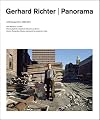
Spanning nearly five decades, and coinciding with the artist's 80th birthday, Gerhard Richter: Panorama is a major chronological retrospective that groups together significant moments of this remarkable painter's career. It includes portraits based on photographs such as the famous Betty 1988, abstractions, subtle landscapes, colour charts, works on paper, mirrors and three important glass constructions.
Gerhard Richter was one of the first German artists to reflect on the history of National show more Socialism, creating paintings of family members who had been members, as well as victims of, the Nazis, as well as canvases reminiscent of images of the bombing of Dresden. In 1988 he produced the 15-part work October 18 1977, a sequence of black and white paintings based on images of the Baader Meinhof group. Richter has continued to respond to significant moments in history. Gerhard Richter (born 1932) is widely regarded as one of the most important painters at work in the world today and has exhibited at many of the world's leading art institutions. He is as well known for his figurative works as he is for his abstract paintings, often combining elements of both in groundbreaking ways. On the occasion of a major, touring, retrospective exhibition, a collaboration between Tate Modern, London, Nationalgalerie, Staatliche Museen zu Berlin and Centre Pompidou, Paris, this important book encompasses Richter's entire career. With texts by leading international authorities on Richter's work, a new interview with the artist and over 300 illustrations, it will remain the most comprehensive survey of Richter's monumental achievements for many years to come. show less
Gerhard Richter was one of the first German artists to reflect on the history of National show more Socialism, creating paintings of family members who had been members, as well as victims of, the Nazis, as well as canvases reminiscent of images of the bombing of Dresden. In 1988 he produced the 15-part work October 18 1977, a sequence of black and white paintings based on images of the Baader Meinhof group. Richter has continued to respond to significant moments in history. Gerhard Richter (born 1932) is widely regarded as one of the most important painters at work in the world today and has exhibited at many of the world's leading art institutions. He is as well known for his figurative works as he is for his abstract paintings, often combining elements of both in groundbreaking ways. On the occasion of a major, touring, retrospective exhibition, a collaboration between Tate Modern, London, Nationalgalerie, Staatliche Museen zu Berlin and Centre Pompidou, Paris, this important book encompasses Richter's entire career. With texts by leading international authorities on Richter's work, a new interview with the artist and over 300 illustrations, it will remain the most comprehensive survey of Richter's monumental achievements for many years to come. show less
The first monograph of Chicago-based Theaster Gates, one of the most exciting and highly regarded contemporary artists at work today.
Theaster Gates has developed an expanded artistic practice that includes space development, object making, performance and critical engagement with many publics. Gates transforms spaces, institutions, traditions, and perceptions.
Gates's training as an urban planner and sculptor, and subsequent time spent studying clay, has given him keen awareness of the show more poetics of production and systems of organizing. Playing with these poetic and systematic interests, Gates has assembled gospel choirs, formed temporary unions, and used systems of mass production as a way of underscoring the need that industry has for the body.
Gates refers to his working method as 'critique through collaboration' and his projects often stretch the form of what we usually understand visual art to be. His focus is also on the availability of information and the cross-fertilization of ideas. His multi-faceted exhibitions investigate themes of race and history through sculpture, installation, performance and two-dimensional works, furthering the artist’s interest in a critique of social practice, shared economies and the question of objects in relation to political and cultural thought.
Gates' recent exhibition and performance venues include the Seattle Art Museum, Art Basel Miami Beach, Milwaukee Art Museum, Contemporary Arts Museum Houston, and the Whitney Biennial in New York. Gates was a participating artist in Documenta 13 in Kassel (2012) with his total-living installation 12 Ballads for Huguenot House. Other notable solo exhibitions include An Epitaph for Civil Rights at the Los Angeles Museum of Contemporary Art (2011) and My Labor Is My Protest, at White Cube Bermondsey, London (2012). Parallel to his artist career, Gates is also Director of Arts and Public Life Initiative at the University of Chicago and a board member of the city's South Side Community Center.
Recently commissioned as the 2012 Armory Show Artist and a Loeb Fellow at Harvard Graduate School of Design in 2011, Gates has received awards and grants from Creative Capital, the Joyce Foundation, Graham Foundation, and the Bemis Center for Contemporary Art. show less
Theaster Gates has developed an expanded artistic practice that includes space development, object making, performance and critical engagement with many publics. Gates transforms spaces, institutions, traditions, and perceptions.
Gates's training as an urban planner and sculptor, and subsequent time spent studying clay, has given him keen awareness of the show more poetics of production and systems of organizing. Playing with these poetic and systematic interests, Gates has assembled gospel choirs, formed temporary unions, and used systems of mass production as a way of underscoring the need that industry has for the body.
Gates refers to his working method as 'critique through collaboration' and his projects often stretch the form of what we usually understand visual art to be. His focus is also on the availability of information and the cross-fertilization of ideas. His multi-faceted exhibitions investigate themes of race and history through sculpture, installation, performance and two-dimensional works, furthering the artist’s interest in a critique of social practice, shared economies and the question of objects in relation to political and cultural thought.
Gates' recent exhibition and performance venues include the Seattle Art Museum, Art Basel Miami Beach, Milwaukee Art Museum, Contemporary Arts Museum Houston, and the Whitney Biennial in New York. Gates was a participating artist in Documenta 13 in Kassel (2012) with his total-living installation 12 Ballads for Huguenot House. Other notable solo exhibitions include An Epitaph for Civil Rights at the Los Angeles Museum of Contemporary Art (2011) and My Labor Is My Protest, at White Cube Bermondsey, London (2012). Parallel to his artist career, Gates is also Director of Arts and Public Life Initiative at the University of Chicago and a board member of the city's South Side Community Center.
Recently commissioned as the 2012 Armory Show Artist and a Loeb Fellow at Harvard Graduate School of Design in 2011, Gates has received awards and grants from Creative Capital, the Joyce Foundation, Graham Foundation, and the Bemis Center for Contemporary Art. show less
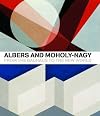
Esta exposición invita a la reflexión y visualmente impresionante es una oportunidad muy atrasados a redescubrir dos pioneros del modernismo: de origen alemán Josef Albers (1888-1976) y de origen húngaro László Moholy-Nagy (1895-1946).
Aunque su carrera se superpone en apenas cinco años, cuando ambos enseñados en la Bauhaus, sus visiones creativas comparten una serie de preocupaciones. Estos incluyen un énfasis en la experimentación, la subversión de los límites show more tradicionales entre el arte elevado y aplicada y una creencia utópica en el arte como una fuerza para el cambio social positivo. show less
Aunque su carrera se superpone en apenas cinco años, cuando ambos enseñados en la Bauhaus, sus visiones creativas comparten una serie de preocupaciones. Estos incluyen un énfasis en la experimentación, la subversión de los límites show more tradicionales entre el arte elevado y aplicada y una creencia utópica en el arte como una fuerza para el cambio social positivo. show less
Sep 17, 2014Spanish
You May Also Like


Associated Authors
Statistics
- Works
- 15
- Also by
- 3
- Members
- 605
- Popularity
- #41,546
- Rating
- 3.8
- Reviews
- 3
- ISBNs
- 41
- Languages
- 4