
Till-Holger Borchert
Author of The Book of Miracles
About the Author
Series
Works by Till-Holger Borchert
The Age of Van Eyck: The Mediterranean World and Early Netherlandish Painting 1430-1530 (2002) 73 copies
'Om iets te weten van de oude meesters' : de Vlaamse Primitieven : herontdekking, waardering en onderzoek (1995) — Author — 12 copies
Tagged
Common Knowledge
- Birthdate
- 1967
- Gender
- male
- Education
- University of Bonn
Indiana University - Occupations
- museum director
curator - Organizations
- Musea Brugge
- Nationality
- Germany
- Birthplace
- Hamburg, Germany
- Places of residence
- Brussels, Belgium
- Associated Place (for map)
- Germany
Members
Reviews
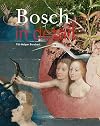
Actually, the Dutch painter Jeroen Bosch doesn't really need an introduction, and yet I must admit that many elements in this book surprised me. To begin with, I didn’t know that he belonged to the wealthy elite of the city of 's Hertogenbosch in what is now the Netherlands, while I thought he led a marginal existence. That was clearly a romanticization of me. Moreover, his exuberant apocalyptic images appear to be clearly placed in a long pictorial tradition in which monsters, devils and show more semi-human creatures predominate. Still, I have the impression that he took this genre to a much "higher" level, although that is a "tongue in cheek" expression in this context. This booklet is wonderfully enjoyable, although the explanation of Bosch's technique remained a bit on the surface. show less
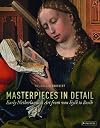
Till-Holger Borchert's "Masterpieces in Detail: Early Netherlandish Art from van Eyck to Bosch" is a feast for the eyes and a meal for the mind. Elegantly written and stunningly presented, Borchert's gorgeous book is a must read for those interested in art. The details are extraordinary and provide visual clues to the secrets hidden within the artworks of the Early Netherlandish Masters from the 15th to the 17th centuries. For those in question of the title, "Early Netherlandish" does not show more refer to the current country of The Netherlands but instead is an historical term referring to art produced in Flanders, Brabant, and the Hainault which include the cities of Bruges, Ghent, Antwerp, Brussels and Leuven. For me, Borchert's volume provides an important companion guide to the museums of Bruges and Flemish painting. "Masterpieces in Detail: Early Netherlandish Art from van Eyck to Bosch" is a large format book from Prestel, comparable to the wonderful Taschen editions. show less
aside from some art books I've picked up, this is my first serious Taschen purchase. its a beautiful work, but I am somewhat disappointed. A slavish purism in the facsimile reproduction has hurt the cohesion. even blank pages are reproduced along with the dingy and stained back sides. translation, introduction, index, etc. are compiled into a separate paperback volume with both enclosed in a box. This makes a close reading a back and forth procedure requiring much table space. I wish show more commentary and research and interpretation was present. but this prompted me to do my own research and learn such things as the biological basis of blood snow and that centuries ago seldom seen northern lights were mislabeled as comets.
The amazing work recreated here recounts eclipses, parhelions, novas, plagues of locusts, sea monsters, and more. All are artfully depicted in painting. The art is most of each page with a short caption in German. The historical events are bookended with biblical references. As all is chronological, the beginning is biblical miracles, such as The Flood and destruction of Sodom. at the end is Revelation completing a theological narrative to this incredible compendium of the 1550s. show less
The amazing work recreated here recounts eclipses, parhelions, novas, plagues of locusts, sea monsters, and more. All are artfully depicted in painting. The art is most of each page with a short caption in German. The historical events are bookended with biblical references. As all is chronological, the beginning is biblical miracles, such as The Flood and destruction of Sodom. at the end is Revelation completing a theological narrative to this incredible compendium of the 1550s. show less
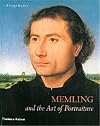
This is a catalogue of the exhibition organized by the Frick, the Thyssen and the Groeningemuseum back in 2005. I visited the exhibit then, but bought and read the catalogue recently.
Most of the twenty-something portraits are free standing, but there are some imbedded in altarpieces as praying donors. They come from a good array of Museums, and that is always a sign of a worth-while exhibition.
Hans Memling was of German origin but settled in the Netherlands at an early age. He probably show more learnt his craft in Van der Weyden’s workshop in Brussels, and then moved to Bruges around 1465. There he eventually occupied Van Eycks’s position as the leading artist, about three decades after the latter’s death (1441). Memling belongs to the second generation of the Flemish Renaissance School.
Bruges was probably the most cosmopolitan city in Europe at that time. There were many “expats” from the various Italian states (or from Burgundy, or from Castilla and Aragón, etc…), working for either trading houses or bank subsidiaries. These foreigners were aware of their living in “the place to be” and took advantage of what the city could offer. Amongst the local attractions there was art. About a third of Memling’s patrons and sitters belonged to this international community. The Italians in particular chose him, which is remarkable given how very novel and attractive was the alternative offering they had at home.
Not only the Italians living in Bruges but those still at home were requesting works to Memling. The amazing The Last Judgment, was commissioned by Angelo Tani (a Medici banker), and destined to hang in Fiesole, but the painting was stolen by Danzig pirates when they attacked the ship that was carrying it to Italy. The altarpiece is still in Danzig (National Museum --which means that I will have to include a detour to this coastal city whenever I can finally visit Poland).
There was then a great deal more interchange between the two main centers of artistic production during the Renaissance (Flanders and Italy) that is normally acknowledged. The essays in this catalogue as well as Susie Nash in her [b:Northern Renaissance Art|9585322|Northern Renaissance Art|Susie Nash|http://d.gr-assets.com/books/1288208162s/9585322.jpg|6267598], make this very clear.
As for the portrait genre, Memling came up with a very successful formula for single portraits. They normally are of portable size, increasingly with landscape in the background (great novelty), seen at an angle, and with the hands resting on a parapet or the frame. Portraits in pure profile, favored by the Italians and based upon Roman medals, can be very unflattering and therefore not recommended for all sitters (unless the sitter has one missing eye – Federico de Montefeltro – painted by Della Francesca). Pure frontal positions can be very harsh and is generally found in self-portraits (Dürer). Memling often uses the ¾ angle. It allows the profile of the nose to stay within the face and not break the facial contour, and to show the distant eye complete. But Memling’s mark is the choice of the 7/8 position, since it allows an even better modeling of the head and with a fuller view of the face, the expression of the sitter will be richer.
This formula was happily assimilated by Italian art. Look at Da Vinci’s Mona Lisa. show less
Most of the twenty-something portraits are free standing, but there are some imbedded in altarpieces as praying donors. They come from a good array of Museums, and that is always a sign of a worth-while exhibition.
Hans Memling was of German origin but settled in the Netherlands at an early age. He probably show more learnt his craft in Van der Weyden’s workshop in Brussels, and then moved to Bruges around 1465. There he eventually occupied Van Eycks’s position as the leading artist, about three decades after the latter’s death (1441). Memling belongs to the second generation of the Flemish Renaissance School.
Bruges was probably the most cosmopolitan city in Europe at that time. There were many “expats” from the various Italian states (or from Burgundy, or from Castilla and Aragón, etc…), working for either trading houses or bank subsidiaries. These foreigners were aware of their living in “the place to be” and took advantage of what the city could offer. Amongst the local attractions there was art. About a third of Memling’s patrons and sitters belonged to this international community. The Italians in particular chose him, which is remarkable given how very novel and attractive was the alternative offering they had at home.
Not only the Italians living in Bruges but those still at home were requesting works to Memling. The amazing The Last Judgment, was commissioned by Angelo Tani (a Medici banker), and destined to hang in Fiesole, but the painting was stolen by Danzig pirates when they attacked the ship that was carrying it to Italy. The altarpiece is still in Danzig (National Museum --which means that I will have to include a detour to this coastal city whenever I can finally visit Poland).
There was then a great deal more interchange between the two main centers of artistic production during the Renaissance (Flanders and Italy) that is normally acknowledged. The essays in this catalogue as well as Susie Nash in her [b:Northern Renaissance Art|9585322|Northern Renaissance Art|Susie Nash|http://d.gr-assets.com/books/1288208162s/9585322.jpg|6267598], make this very clear.
As for the portrait genre, Memling came up with a very successful formula for single portraits. They normally are of portable size, increasingly with landscape in the background (great novelty), seen at an angle, and with the hands resting on a parapet or the frame. Portraits in pure profile, favored by the Italians and based upon Roman medals, can be very unflattering and therefore not recommended for all sitters (unless the sitter has one missing eye – Federico de Montefeltro – painted by Della Francesca). Pure frontal positions can be very harsh and is generally found in self-portraits (Dürer). Memling often uses the ¾ angle. It allows the profile of the nose to stay within the face and not break the facial contour, and to show the distant eye complete. But Memling’s mark is the choice of the 7/8 position, since it allows an even better modeling of the head and with a fuller view of the face, the expression of the sitter will be richer.
This formula was happily assimilated by Italian art. Look at Da Vinci’s Mona Lisa. show less
You May Also Like


Associated Authors
Statistics
- Works
- 42
- Members
- 712
- Popularity
- #35,610
- Rating
- 4.2
- Reviews
- 6
- ISBNs
- 78
- Languages
- 7