
M.D. David Perlmutter
Author of Grain Brain: The Surprising Truth about Wheat, Carbs, and Sugar--Your Brain's Silent Killers
About the Author
Works by M.D. David Perlmutter
Grain Brain: The Surprising Truth about Wheat, Carbs, and Sugar--Your Brain's Silent Killers (2013) 1,131 copies, 35 reviews
Brain Maker: The Power of Gut Microbes to Heal and Protect Your Brain for Life (2015) 558 copies, 14 reviews
The Better Brain Book: The Best Tool for Improving Memory and Sharpness and Preventing Aging of the Brain (2004) 151 copies
Brain Wash: Detox Your Mind for Clearer Thinking, Deeper Relationships, and Lasting Happiness (2020) 129 copies
The Grain Brain Whole Life Plan: Boost Brain Performance, Lose Weight, and Achieve Optimal Health (2016) 125 copies
Drop Acid: The Surprising New Science of Uric Acid―The Key to Losing Weight, Controlling Blood Sugar, and Achieving Extraordinary Health (2022) 95 copies, 1 review
The Grain Brain Cookbook: More Than 150 Life-Changing Gluten-Free Recipes to Transform Your Health (2014) 92 copies
Raise a Smarter Child by Kindergarten: Build a Better Brain and Increase IQ up to 30 Points (2006) 45 copies
Drop Acid: The Surprising New Science of Uric Acid - The Key to Losing Weight, Controlling Blood Sugar, and Achieving Extraordinary Health (2022) 2 copies
Amigos da mente: Nutrientes e bactérias que vão curar e proteger seu cérebro (Portuguese Edition) (2015) 2 copies
Brain Wash: Detox Your Mind for Clearer Thinking, Deeper Relationships, and Lasting Happiness 2 copies
Brain Maker Extended Edition 1 copy
Dumm wie Brot - Das Kochbuch: So verhindern Sie, dass Weizen Ihr Gehirn zerstört - Über 150 glutenfreie Rezepte (2017) 1 copy
Brain Maker 1 copy
Cérebro de Fibra 1 copy
Limpeza Cerebral 1 copy
Tagged
Common Knowledge
Members
Reviews
Drop Acid: The Surprising New Science of Uric Acid―The Key to Losing Weight, Controlling Blood Sugar, and Achieving Extraordinary Health by M.D. David Perlmutter
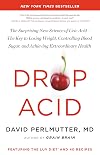
I should have known better. Spent far too long reading the "science" (i.e. a bunch of rat studies, selectively interpreted) only to finally arrive at the diet: an extremely restrictive variation on paleo, but with even more foods cut out. No gluten, no grains, no GMOs, no sugar, no processed foods obvs!, limit "underground" veg, limit dairy, limit most seafood and many meats. You can have green veg, low-sugar fruit, olive oil, eggs, and some meat. What all of this has to do with uric acid is show more left as an exercise for the reader. Oh, and you can also buy a uric acid home testing kit ($70), a continuous glucose monitor ($400+), and hundreds of dollars a month in supplements. Don't get sucked in! Save your sanity and read a novel instead. show less
Grain Brain: The Surprising Truth about Wheat, Carbs, and Sugar--Your Brain's Silent Killers by David Perlmutter
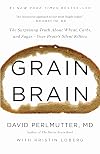
This is an important book, almost on a par with Uffe Ravnskov’s and Malcolm Kendrick’s books on the cholesterol myth, and Dr. Natasha Campbell-McBride’s books, the one refuting the diet-heart hypothesis and the other on “gut and psychology syndrome”. The author is telling us that if we continue to eat as we are doing – living on a diet of grains and carbohydrates, we will destroy our brain and develop Alzheimer’s or another form of dementia. Or we may develop diabetes (because show more of the carbohyrates), which in itself doubles the risk of Alzheimer’s.
We need to get rid of our bread and exchange it with butter and eggs. Saturated fats and high cholesterol are not the problem. We need to adopt a high-fat diet, including saturated fats. The author explains how our food choices can bring inflammation under control by changing the expression of our genes.
The two biggest myths are 1) a low-fat, high carb diet is good and 2) cholesterol is bad.
It turns out that many of us, though not suffering from celiac disease, are in fact gluten-sensitive. The author is of the opinion that this “represents the greatest and most under-recognized threat to humanity”. Gluten triggers “not just dementia but epilepsy, headache, depression, schizophrenia, ADHD and even decreased libido”. Gluten, and a high-carbohydrate diet, for that matter, stimulates “inflammatory pathways that reach the brain”.
Cholesterol, far from being the villain of the piece, is one of the most important players in maintaining brain health and function. “Study after study shows that high cholesterol reduces your risk for brain disease and increases longevity.” High levels of dietary fat have been proven to be the key to health and peak brain function.
As also pointed out in the afore-mentioned books, statins are death-bringing, since they reduce your cholesterol level, and cholesterol, also LDL, the fallaciously termed “bad” cholesterol, is a critical brain nutrient, essential for the function of neurons, and plays a fundamental role as a building block of the cell membrane.
Chapter 2 of the book is devoted to gluten’s role in brain inflammation. Many people with debilitating symptoms such as migraine, bipolar disorder, uncontrollable shaking, and so on, experience great relief when eliminating gluten from their diet. The author considers gluten a modern poison.
We now know that we can grow new neurons throughout our life. Something called BDNF (brain-derived neurotrophic factor) plays a key role in creating new neurons and protecting existing neurons. Calorie restriction is an epigenetic factor that turns on the gene for BDNF production. Also physical exercise, particularly aerobic exercise, targets the BDNF gene, reverses memory decline in the elderly and increases growth of new brain cells in the brain’s memory centre.
The consumption of ketones, found in coconut oil, gives significant improvement in cognitive function in Alzheimer’s patients (see the books of Bruce Fife). Ketosis (acquiring energy from our fat cells), instead of the process whereby we acquire it from the carbohydrates and protein we eat, is a healthful condition.
There is much valuable information in this book – life-saving information, if you follow Dr. Perlmutter’s advice, that is. We are told of the power of fasting, and what fasting and ketogenic diets have in common. We are advised to take DHA capsules (DHA is an omega-3 fatty acid), reservatrol, turmeric, probiotics, coconut oil, alpha-lipoic acid and Vitamin D.
The final chapters are devoted to “A new way of life, The Four-Week Plan of Action”. The focus is on food, exercise and sleep. We are provided with meal plans and recipes.
My only reservation is the author’s apparent ignorance about the dangers of microwave ovens. He also recommends that we eat canned tomatoes, whereas the illustrious Dr. Mercola (my hero) warns us to stay well clear of these, since the acidity in tomatoes can provoke leaching of the harmful BPA (biphenol-A) in the lining of the can into the food.
But, notwithstanding, to sum up, I would highly recommend that you read this well-written, highly informative, ground-breaking book. The information it contains is basic, essential and perhaps live-saving. show less
We need to get rid of our bread and exchange it with butter and eggs. Saturated fats and high cholesterol are not the problem. We need to adopt a high-fat diet, including saturated fats. The author explains how our food choices can bring inflammation under control by changing the expression of our genes.
The two biggest myths are 1) a low-fat, high carb diet is good and 2) cholesterol is bad.
It turns out that many of us, though not suffering from celiac disease, are in fact gluten-sensitive. The author is of the opinion that this “represents the greatest and most under-recognized threat to humanity”. Gluten triggers “not just dementia but epilepsy, headache, depression, schizophrenia, ADHD and even decreased libido”. Gluten, and a high-carbohydrate diet, for that matter, stimulates “inflammatory pathways that reach the brain”.
Cholesterol, far from being the villain of the piece, is one of the most important players in maintaining brain health and function. “Study after study shows that high cholesterol reduces your risk for brain disease and increases longevity.” High levels of dietary fat have been proven to be the key to health and peak brain function.
As also pointed out in the afore-mentioned books, statins are death-bringing, since they reduce your cholesterol level, and cholesterol, also LDL, the fallaciously termed “bad” cholesterol, is a critical brain nutrient, essential for the function of neurons, and plays a fundamental role as a building block of the cell membrane.
Chapter 2 of the book is devoted to gluten’s role in brain inflammation. Many people with debilitating symptoms such as migraine, bipolar disorder, uncontrollable shaking, and so on, experience great relief when eliminating gluten from their diet. The author considers gluten a modern poison.
We now know that we can grow new neurons throughout our life. Something called BDNF (brain-derived neurotrophic factor) plays a key role in creating new neurons and protecting existing neurons. Calorie restriction is an epigenetic factor that turns on the gene for BDNF production. Also physical exercise, particularly aerobic exercise, targets the BDNF gene, reverses memory decline in the elderly and increases growth of new brain cells in the brain’s memory centre.
The consumption of ketones, found in coconut oil, gives significant improvement in cognitive function in Alzheimer’s patients (see the books of Bruce Fife). Ketosis (acquiring energy from our fat cells), instead of the process whereby we acquire it from the carbohydrates and protein we eat, is a healthful condition.
There is much valuable information in this book – life-saving information, if you follow Dr. Perlmutter’s advice, that is. We are told of the power of fasting, and what fasting and ketogenic diets have in common. We are advised to take DHA capsules (DHA is an omega-3 fatty acid), reservatrol, turmeric, probiotics, coconut oil, alpha-lipoic acid and Vitamin D.
The final chapters are devoted to “A new way of life, The Four-Week Plan of Action”. The focus is on food, exercise and sleep. We are provided with meal plans and recipes.
My only reservation is the author’s apparent ignorance about the dangers of microwave ovens. He also recommends that we eat canned tomatoes, whereas the illustrious Dr. Mercola (my hero) warns us to stay well clear of these, since the acidity in tomatoes can provoke leaching of the harmful BPA (biphenol-A) in the lining of the can into the food.
But, notwithstanding, to sum up, I would highly recommend that you read this well-written, highly informative, ground-breaking book. The information it contains is basic, essential and perhaps live-saving. show less
Grain Brain: The Surprising Truth about Wheat, Carbs, and Sugar--Your Brain's Silent Killers by David Perlmutter
The author has an interesting combination of expertise in that he is a neurologist at a nutrition expert. He has some information that is counter to the mainstream thinking on diet. I plan to significantly decrease my gluten intake and increase my healthy fat intake. The book is well written and understandable. I think that in some points the recommendations are rather extreme. I strongly recommend this book.
Grain Brain: The Surprising Truth About Wheat, Carbs, and Sugar—Your Brain's Silent Killers by David Perlmutter

I've been doing the keto diet for several months (now doing a "cyclical keto," I guess). I've lost 25+ pounds, eat less, crave less, and feel more energetic and better. This book provided some of the scientific underpinnings to explain why the keto diet has worked for me.
In a nutshell: carbs, sugar, and gluten are bad. They encourage fat growth, mess with insulin and blood sugar levels, and are poor fuel for the brain.
The book, of course, goes into greater detail. There are references to show more Dr. Perlmutter's own patients and protocols, there are references to scientific/medical studies, and there are numerous sources. Now, I know that many doctors and dieticians poo poo this type of low carb and high fat diet. But, I can say it has worked for me. I will remind everybody that eggs were once considered the worst, but now they are seen as nutritious. I will, as a historian, note that we eat far more carbs, gluten, and sugar in the 20th and 21st centuries than we ever did in previous centuries and we've gotten fatter. I don't think one could or should do this type of diet at all times, or forever, or with no breaks. But, I think that this type of diet is the wave of the future (and of the past). show less
In a nutshell: carbs, sugar, and gluten are bad. They encourage fat growth, mess with insulin and blood sugar levels, and are poor fuel for the brain.
The book, of course, goes into greater detail. There are references to show more Dr. Perlmutter's own patients and protocols, there are references to scientific/medical studies, and there are numerous sources. Now, I know that many doctors and dieticians poo poo this type of low carb and high fat diet. But, I can say it has worked for me. I will remind everybody that eggs were once considered the worst, but now they are seen as nutritious. I will, as a historian, note that we eat far more carbs, gluten, and sugar in the 20th and 21st centuries than we ever did in previous centuries and we've gotten fatter. I don't think one could or should do this type of diet at all times, or forever, or with no breaks. But, I think that this type of diet is the wave of the future (and of the past). show less
Lists
You May Also Like
Associated Authors
Statistics
- Works
- 29
- Members
- 2,456
- Popularity
- #10,435
- Rating
- 3.5
- Reviews
- 51
- ISBNs
- 167
- Languages
- 11