
About the Author
Image credit: Nina Jaffe
Series
Works by Nina Jaffe
While Standing on One Foot: Puzzle Stories and Wisdom Tales from the Jewish Tradition (1993) 265 copies, 6 reviews
The Cow of No Color: Riddle Stories and Justice Tales from Around the World (1998) 135 copies, 2 reviews
Tagged
Common Knowledge
- Canonical name
- Jaffe, Nina
- Birthdate
- 1952-10-10
- Gender
- female
- Occupations
- writer
professor - Organizations
- Bank Street College of Education
- Short biography
- Nina Jaffe is an award-winning author and storyteller who is nationally known for her retellings of Jewish and world folklore. Ms. Jaffe is a member of the graduate faculty at Bank Street College of Education. She lives in New York City with her husband, Bob, and their son, Louis. [adapted from The Way Meat Loves Salt (1998)]
- Nationality
- USA
- Places of residence
- New York, New York, USA
- Associated Place (for map)
- New York, USA
Members
Reviews

King Lear meets Cinderella in this engaging picture book presentation of a traditional Eastern European Jewish folktale from author Nina Jaffe and illustrator Louise August. When a rabbi asks each of his three daughters how much they love him, the answer of Mireleh, the youngest and most beloved, that she loves him the way meat loves salt, enrages him. Not understanding her, he banishes Mireleh from the house, and she flees town. Meeting a kindly old man on the road—none other than Elijah show more the Prophet—she is given a magic stick, which comes in very handy in her new life in the home of another rabbi, in a different town. Mistaken for a beggar girl, she is taken in and given refuge, and when her host family heads to a wedding, she uses the stick to create beautiful clothing in order to attend herself. It is at the weddings feast that Mireleh wins the heart of the rabbi's son, and leaves behind her slipper. But it is only at her wedding feast that she can finally reveal her true meaning to her father, leading to a reconciliation and a true happy ending...
The Way Meat Loves Salt: A Cinderella Tale from the Jewish Tradition is the second picture book I have read from this author/illustrator team, following upon their In the Month of Kislev: A Story for Hanukkah, and the third from both author and illustrator individually. It was quite engaging, pairing two tales I didn't expect to see combined, and utilizing story elements both familiar—the enchanted clothing, the midnight limit to the spell, and the slipper left behind—and others that were new. I appreciated the fact that here the fairy godmother role is played by Elijah, and the religious significance this added to the story, which is as much about healing from family misunderstandings and quarrels as it is about finding true love. I also appreciated the artwork, done using linocuts, oil and pastel, all on rice paper. My only critique of the book, and it is a critique I find myself making often with Cinderella retellings, is that the author's note at the beginning of the book incorrectly maintains that the first recorded variant of this story was in 9th-century China. In point of fact, the ancient Egyptian variant predates the Chinese one by many centuries. The tale of Rhodopis—see Shirley Climo's The Egyptian Cinderella for a picture book presentation—was recorded in the work of the Greek geographer Strabo some time in the late first century BC, or early first century AD. Another retelling can be found in the work of Roman author Aelian (ca. 175–235 AD). It's very, very frustrating to see this misinformation shared again and again, especially in children's books! Leaving that issue aside, this is one I would recommend to young folk and fairy-tale lovers, and to any picture book reader seeking new Cinderella variants and/or stories with a Jewish cultural background. show less
The Way Meat Loves Salt: A Cinderella Tale from the Jewish Tradition is the second picture book I have read from this author/illustrator team, following upon their In the Month of Kislev: A Story for Hanukkah, and the third from both author and illustrator individually. It was quite engaging, pairing two tales I didn't expect to see combined, and utilizing story elements both familiar—the enchanted clothing, the midnight limit to the spell, and the slipper left behind—and others that were new. I appreciated the fact that here the fairy godmother role is played by Elijah, and the religious significance this added to the story, which is as much about healing from family misunderstandings and quarrels as it is about finding true love. I also appreciated the artwork, done using linocuts, oil and pastel, all on rice paper. My only critique of the book, and it is a critique I find myself making often with Cinderella retellings, is that the author's note at the beginning of the book incorrectly maintains that the first recorded variant of this story was in 9th-century China. In point of fact, the ancient Egyptian variant predates the Chinese one by many centuries. The tale of Rhodopis—see Shirley Climo's The Egyptian Cinderella for a picture book presentation—was recorded in the work of the Greek geographer Strabo some time in the late first century BC, or early first century AD. Another retelling can be found in the work of Roman author Aelian (ca. 175–235 AD). It's very, very frustrating to see this misinformation shared again and again, especially in children's books! Leaving that issue aside, this is one I would recommend to young folk and fairy-tale lovers, and to any picture book reader seeking new Cinderella variants and/or stories with a Jewish cultural background. show less

Author and storyteller Nina Jaffe and illustrator Enrique O. Sánchez join forces in this picture-book presentation of a Taino creation myth from the island of Puerto Rico. In an ancient world with no water, a young boy finds some seeds, and plants them on a mountaintop, where a lush jungle grows. From this jungle a huge pumpkin in turn grows, a pumpkin that, when split open, disgorges all of the waters of the oceans and rivers, and all of the creatures within those waters. So the jungle show more mountaintop became an island, and Boriquén (Puerto Rico) came to be...
Although I have encountered Taino stories before, in such collections as Pura Belpré's Once in Puerto Rico, I have never before read a picture-book retelling of an individual tale from this people, making The Golden Flower: A Taino Myth from Puerto Rico a distinct pleasure. The story here is matter-of-factly magical, in that way that myths so often are, and the accompanying artwork, done in acrylic and gouache, is lovely. One must suspend disbelief in stories such as this, of course, but a part of me couldn't help but wonder how the forest and pumpkin grew in the first place, when water wasn't released into the world until the pumpkin split open. Leaving that aside, this was an enjoyable tale, and is one I would recommend to young folklore enthusiasts, and to readers seeking traditional Puerto Rican and/or Taino tales. show less
Although I have encountered Taino stories before, in such collections as Pura Belpré's Once in Puerto Rico, I have never before read a picture-book retelling of an individual tale from this people, making The Golden Flower: A Taino Myth from Puerto Rico a distinct pleasure. The story here is matter-of-factly magical, in that way that myths so often are, and the accompanying artwork, done in acrylic and gouache, is lovely. One must suspend disbelief in stories such as this, of course, but a part of me couldn't help but wonder how the forest and pumpkin grew in the first place, when water wasn't released into the world until the pumpkin split open. Leaving that aside, this was an enjoyable tale, and is one I would recommend to young folklore enthusiasts, and to readers seeking traditional Puerto Rican and/or Taino tales. show less

The family of Mendel the peddler find themselves in terrible need one Hanukkah season, with no money to buy food - not even the makings for a single latke! - and little fuel to keep their tiny hut warm. Returning home from the synagogue on the first night of the holiday, his three young daughters - Leah, Gittel and Devorah - stop beneath the kitchen window of the wealthy merchant Feivel, and briefly enjoy the scent of good food. Comforted by this, they begin to make the same stop each night, show more going to bed with smiles on their faces. Their parents think at first that it is a Hanukkah miracle, but when the greedy Feivel discovers what is going on, they find themselves brought before Rabbi Yonah. Will they be made to pay for the scent of Feivel's food? And if so, what is the appropriate price...?
The story of the scent of food being paid for with the sound of money is one that can be found in many folk traditions around the world. From the Japanese stories of Ōoka Tadasuke, a samurai and judge who once adjudicated "The Case of the Stolen Smell" (see the collection Ooka the Wise: Tales of Old Japan for one retelling), to the Turkish tales concerning the Nasreddin Hodja, a famous trickster and wise man who once had to value "The Smell of Soup" (see Nearly Nonsense: Hoja Tales from Turkey for a telling of the tale), there are many examples to be found. For a story collected in the United States, see Sharon Creeden's Fair Is Fair: World Folktales of Justice. This Jewish variant, told to Nina Jaffe by her father, makes for a lovely Hanukkah story, but also has relevance throughout the year. I liked the fact that the Rabbi's judgment is not the conclusion here, but that Feivel is allowed to learn his lesson, and is shown to have reformed. This adds a nice touch, I think, making the lesson one about sharing, but also forgiveness, as Mendel and his family join the Feivel family for their next Hanukkah celebration.
All in all, In the Month of Kislev: A Story for Hanukkah is a wonderful folkloric retelling, and an appealing holiday story. The narrative is involving, and the artwork - wood-cuttings that are then painted - is lovely. Highly recommended to all young folklore enthusiasts, as well as to anyone looking for good Hanukkah stories for children. show less
The story of the scent of food being paid for with the sound of money is one that can be found in many folk traditions around the world. From the Japanese stories of Ōoka Tadasuke, a samurai and judge who once adjudicated "The Case of the Stolen Smell" (see the collection Ooka the Wise: Tales of Old Japan for one retelling), to the Turkish tales concerning the Nasreddin Hodja, a famous trickster and wise man who once had to value "The Smell of Soup" (see Nearly Nonsense: Hoja Tales from Turkey for a telling of the tale), there are many examples to be found. For a story collected in the United States, see Sharon Creeden's Fair Is Fair: World Folktales of Justice. This Jewish variant, told to Nina Jaffe by her father, makes for a lovely Hanukkah story, but also has relevance throughout the year. I liked the fact that the Rabbi's judgment is not the conclusion here, but that Feivel is allowed to learn his lesson, and is shown to have reformed. This adds a nice touch, I think, making the lesson one about sharing, but also forgiveness, as Mendel and his family join the Feivel family for their next Hanukkah celebration.
All in all, In the Month of Kislev: A Story for Hanukkah is a wonderful folkloric retelling, and an appealing holiday story. The narrative is involving, and the artwork - wood-cuttings that are then painted - is lovely. Highly recommended to all young folklore enthusiasts, as well as to anyone looking for good Hanukkah stories for children. show less
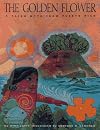
This is a retelling of the Taino creation myth of how their island came to be. The art is bright and dynamic with many overlapping flowing lines. The story is simple but layered with deep mythical imagery.
Lists
Awards


You May Also Like


Associated Authors
Statistics
- Works
- 19
- Members
- 1,713
- Popularity
- #14,988
- Rating
- 3.8
- Reviews
- 69
- ISBNs
- 65
- Languages
- 2
- Favorited
- 1