
About the Author
Works by Robert de Boron
Merlin and the Grail: Joseph of Arimathea, Merlin, Perceval: The Trilogy of Arthurian Prose Romances attributed to Robert de Boron (2001) — Author — 141 copies, 1 review
Tagged
Common Knowledge
- Birthdate
- 1200 circa
- Date of death
- 1200s
- Gender
- male
- Occupations
- poet
- Nationality
- France
- Associated Place (for map)
- France
Members
Reviews
Merlin and the Grail: Joseph of Arimathea . Merlin . Perceval: The Trilogy of Arthurian Romances Attributed to ROBERT DE BORON by Robert de Boron
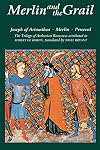
It’s a bloody masterpiece. In three short romances, Robert (or his redactor) creates an origin story for the Grail, tells the quest for it, and then the death of Arthur. In the process he creates something that we can recognise as the Arthurian legend today, not just rumours and whispering of it.
How he does this is very clever. Before you dive in to Joseph of Arimathea, it’s worth reading the Gospel of Nicodemus and some of the Pilate Cycle. These are all short works. Bear in mind that show more at the time people thought they were actual historical documents. Our author has wound his story around this history. It opens with an orthodox statement of faith. In the introduction (short but excellent), Bryant mentions a theory that this may be to counter accusations of Catharism. Well, possibly, but Robert is on dangerous ground anyway, playing around with truth.
In Merlin Robert switches to the Canonical Gospels and Geoffrey of Monmouth’s History of the Kings of Britain. Again, it’s worth having read these beforehand; and again they were all thought at the time to be genuine historical documents on the one had and an actual history on the other. Merlin is a kind of anti-Christ, as it were – not evil, but his life a reflection of Jesus’. I particularly enjoyed how Bryant translates his direct speech into the same rhythms and tone as Nicol Williamson uses in Boorman’s Excalibur. He does a similar thing in one of his other Arthurian translations where he quotes Monty Python’s Quest for the Holy Grail as often as he can.
Perceval opens in a sort of dreamland. Castles that move about, in a forest that can’t be mapped, though which lone knights can quest. A land bound with enchantments. Perceval’s achieving of the Grail is a sort of double-edged sword. On the one hand the enchantments are unbound, but on the other time starts. We’re suddenly in the 13th Century where knights are not lone superheroes but soldiers who can be killed.
I enjoyed this all the more for having read the other books mentioned above, but really you’re ready for this if you’ve read Chrétien de Troyes. As they say in blurbs, if you only read one Arthurian romance this year... show less
How he does this is very clever. Before you dive in to Joseph of Arimathea, it’s worth reading the Gospel of Nicodemus and some of the Pilate Cycle. These are all short works. Bear in mind that show more at the time people thought they were actual historical documents. Our author has wound his story around this history. It opens with an orthodox statement of faith. In the introduction (short but excellent), Bryant mentions a theory that this may be to counter accusations of Catharism. Well, possibly, but Robert is on dangerous ground anyway, playing around with truth.
In Merlin Robert switches to the Canonical Gospels and Geoffrey of Monmouth’s History of the Kings of Britain. Again, it’s worth having read these beforehand; and again they were all thought at the time to be genuine historical documents on the one had and an actual history on the other. Merlin is a kind of anti-Christ, as it were – not evil, but his life a reflection of Jesus’. I particularly enjoyed how Bryant translates his direct speech into the same rhythms and tone as Nicol Williamson uses in Boorman’s Excalibur. He does a similar thing in one of his other Arthurian translations where he quotes Monty Python’s Quest for the Holy Grail as often as he can.
Perceval opens in a sort of dreamland. Castles that move about, in a forest that can’t be mapped, though which lone knights can quest. A land bound with enchantments. Perceval’s achieving of the Grail is a sort of double-edged sword. On the one hand the enchantments are unbound, but on the other time starts. We’re suddenly in the 13th Century where knights are not lone superheroes but soldiers who can be killed.
I enjoyed this all the more for having read the other books mentioned above, but really you’re ready for this if you’ve read Chrétien de Troyes. As they say in blurbs, if you only read one Arthurian romance this year... show less
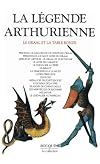
A massive collection of Arthurian romances (15 in all), though Arthur himself appears seldom.

EL MAGO MERLÍN
El mago Merlín, el "nacido sin padre», es una de las
figuras más fascinantes del ciclo artúrico. Robert de
Boron, un clérigo nacido cerca de Montbéliard,
escribió, a mediados del siglo XII, un Romance de
Merlin, una de las obras claves que contribuyeron al
desarrollo y extensión de la leyenda.
Inspirado, posiblemente, en leyendas célticas
desarrolló una abundante obra, de la cual por
desgracia sólo conocemos un romance sobre el Santo
Grial y la obra de Merlín.
Impresa show more por primera vez en París en 3 volúmenes
in-folio, la versión que presentamos fue vertida al
francés moderno por M. S. Boulard en el siglo XVIII. show less
El mago Merlín, el "nacido sin padre», es una de las
figuras más fascinantes del ciclo artúrico. Robert de
Boron, un clérigo nacido cerca de Montbéliard,
escribió, a mediados del siglo XII, un Romance de
Merlin, una de las obras claves que contribuyeron al
desarrollo y extensión de la leyenda.
Inspirado, posiblemente, en leyendas célticas
desarrolló una abundante obra, de la cual por
desgracia sólo conocemos un romance sobre el Santo
Grial y la obra de Merlín.
Impresa show more por primera vez en París en 3 volúmenes
in-folio, la versión que presentamos fue vertida al
francés moderno por M. S. Boulard en el siglo XVIII. show less
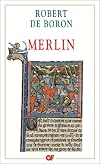
> Où retrouver Merlin? Quelques pistes bibliographiques.
Se reporter à l’article de Tusseau, J.-P. In: Nuit blanche, no. 60 (Juin–Juillet–Août 1995), pp. 40–41. … ; (en ligne),
URL : https://id.erudit.org/iderudit/19694ac
> Babelio : https://www.babelio.com/livres/Boron-Merlin--Roman-du-XIIIe-siecle/21841
Se reporter à l’article de Tusseau, J.-P. In: Nuit blanche, no. 60 (Juin–Juillet–Août 1995), pp. 40–41. … ; (en ligne),
URL : https://id.erudit.org/iderudit/19694ac
> Babelio : https://www.babelio.com/livres/Boron-Merlin--Roman-du-XIIIe-siecle/21841
You May Also Like


Associated Authors
Statistics
- Works
- 9
- Members
- 327
- Popularity
- #72,481
- Rating
- 4.2
- Reviews
- 6
- ISBNs
- 30
- Languages
- 7