
Rudolf Koch (1) (1876–1934)
Author of The Book of Signs
For other authors named Rudolf Koch, see the disambiguation page.
Works by Rudolf Koch
Ein Deutscher Kleine Schriften 2 copies
Kniha znamení : která obsahuje nejrůznější druhy symbolů používané primitivními národy a ranými křesťany od… (1997) 2 copies
Fette Kabal 1 copy
Grobe Kabel-Kursiv 1 copy
Das Zeichenbuch 1 copy
Neuland 1 copy
Die Zeitgemasse Schrift 1 copy
Schrift und Handwerk 1 copy
Marathon 1 copy
Jeffen-Schrift 1 copy
Leichte Kabel-Kursiv 1 copy
Leichte Kabel 1 copy
Schmale halbfette Kabel 1 copy
Tagged
Common Knowledge
- Canonical name
- Koch, Rudolf
- Birthdate
- 1876-11-20
- Date of death
- 1934-04-09
- Gender
- male
- Education
- Akademie der Bildenden Künste Nürnberg
- Occupations
- type designer
calligrapher - Organizations
- Klingspor Type Foundry
- Short biography
- Koch spent his teenage years working in Hanau as an apprentice in a metal goods workshop, whilst also attending art school, where he learned to draw, and soon after went to the Academy of Fine Arts, Nuremberg. Between 1897 and 1906 he worked for various businesses in the book trade in Leipzig, illustrating and designing book covers in the Art Nouveau style that was popular at the time.[1] In 1906 Koch began working for the Rudhard Type foundry in Offenbach, later known as the Klingspor Type foundry. Other notable designers who worked for the foundry include Otto Eckmann and Peter Behrens.[2]
Koch was deeply spiritual and a devout Lutheran, spending much of his time working on religious publications and manuscripts, of which he completed nearly a hundred in his lifetime. Koch viewed the alphabet as humanity's ultimate achievement.[3] He died prematurely of a heart attack in 1934, aged 57. - Cause of death
- heart attack
- Nationality
- Germany
- Birthplace
- Nuremberg, Bavaria, Germany
- Places of residence
- Offenbach, Hesse, Germany
- Place of death
- Offenbach, Hesse, Germany
- Associated Place (for map)
- Hesse, Germany
Members
Reviews

This strange and fascinating little book was in my library for longer than I recall.
It's mostly filled with Christian and European and Middle East sources. Nothing from Asia, Oceana, the Americas. It has a patriarchal, religious slant, and I don't know how it stands up to contemporary interpretation of symbol meanings.
Still, I've thumbed through it many times with pleasure and curiosity.
It's mostly filled with Christian and European and Middle East sources. Nothing from Asia, Oceana, the Americas. It has a patriarchal, religious slant, and I don't know how it stands up to contemporary interpretation of symbol meanings.
Still, I've thumbed through it many times with pleasure and curiosity.
The Book of Signs: Which Contains All Manner of Symbols Used from the Earliest Times to the Middle Ages by Primitive Peoples and Early Christians by Rudolf Koch

A book of symbols, explained by one Rudolf Koch and illustrated with woodblock prints by one Fritz Kredel. The translation into English is done by Vyvyan Holland, the son of Oscar Wilde, which makes it a strange peice to have. The font is also by Kredel, and not a user friendly type. The capital A's are odd, and it takes awhile for you to train yourself on all the letter shapes. The symbols are split into various sections, and the text is quite informative, though sometimes a tad mystical. show more Good set of Christian monograms—a whole section on Christograms. Good sections on alchemical symbols, astrological symbols, and runes. A decent reference work and quick read. Odd bit of trivia with this book, it is the book that the band Led Zeppelin got some of their symbols out of for the untitled fourth album. show less
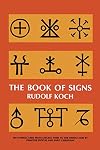
Excellent book, beuatifully rendered. Translated from German by Vyvyan Holland, Oscar Wilde's son. Excellent summary of many common symbol systems, beautifully illustrated with woodblock prints by Fritz Kredel. This English edition dates from 1930. This book was a great source of joy during my childhood.--AMK
The Book of Signs: Which Contains all Manner of Symbols used from the Earliest Times to the Middle Ages by Primitive Peoples and Early Christians by Rudolf Koch
Does what it says on the tin, really. A collection of nicely reproduced drawings of early symbols (religious/alchemical/astronomical/masonic/runic), with some possible readings of each. The typeface takes a bit of getting used to.
Lists
You May Also Like


Associated Authors
Statistics
- Works
- 21
- Members
- 619
- Popularity
- #40,645
- Rating
- 3.8
- Reviews
- 7
- ISBNs
- 32
- Languages
- 7