
Sim Kern
Author of The Free People's Village
Works by Sim Kern
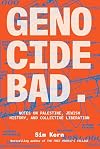
Genocide Bad: Notes on Palestine, Jewish History, and Collective Liberation (2025) 74 copies, 4 reviews
Tagged
Common Knowledge
- Gender
- nonbinary
- Education
- Oberlin College (BA|English and Creative Writing)
- Agent
- Kerstin Wolf (D4EO Literary)
- Nationality
- USA
- Places of residence
- Houston, Texas, USA
- Associated Place (for map)
- Texas, USA
Members
Reviews
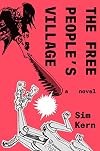
I've struggled to write a review of this queer alternate history novel, ever since I read it, and that's for one simple reason: Sim Kern is a powerhouse voice, and this is a book which everyone should be reading and talking about.
Encapsulating what's best and worst about our world, taking a real look at social justice initiatives on a local level, and building a wonderfully queer world of believable characters and meaningful interaction, this book is one of those which comes across as show more deceptively straight-forward and page-turning. But with each page and each emotion, the impact grows, until one wishes they could turn away from the book, with all its horror and humor, but simply cannot.
I'm not doing justice to this book, but I can tell you that it's a work of nature, and whatever Sim Kern writes next, I'll be in line for it. I hope everyone will read this book and share it with a friend, or a hundred friends. This is a book that needs to be read. But if this review leaves you thinking it's just a thought book, or just a message book, think again: the story here is as fantastic as Kern's voice, and it's the truth and the heart and the characters that make it all ring out with power. show less
Encapsulating what's best and worst about our world, taking a real look at social justice initiatives on a local level, and building a wonderfully queer world of believable characters and meaningful interaction, this book is one of those which comes across as show more deceptively straight-forward and page-turning. But with each page and each emotion, the impact grows, until one wishes they could turn away from the book, with all its horror and humor, but simply cannot.
I'm not doing justice to this book, but I can tell you that it's a work of nature, and whatever Sim Kern writes next, I'll be in line for it. I hope everyone will read this book and share it with a friend, or a hundred friends. This is a book that needs to be read. But if this review leaves you thinking it's just a thought book, or just a message book, think again: the story here is as fantastic as Kern's voice, and it's the truth and the heart and the characters that make it all ring out with power. show less
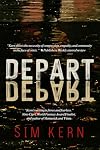
In a work that sits at intersections of climate justice, prejudice, queerness, and social justice, Kern brings together a number of issues that would seem to be far too much for a slim work like this. Yet, Depart Depart is a powerful and beautifully told story, and as difficult as it is to read, the humor and empathy of the central character, Noah Mishner, make it all but impossible to put down and walk away from. Instead, Noah is a character who will carry readers through the journey told show more in the book, and then accompany them outside of the pages to demand that more thought be given to his story.
What makes this book work so well is that no one issue monopolizes either story or reader. What would probably be chaos in another book works here because it is all telescoped into the continuous, lived experience of a single trans man and his found family as they live through the aftermath of a an unprecedented hurricane. Is it overwhelming? Often--for the reader as well as Noah. And that's why it works--because the reader is brought so close to Noah that they cannot deny the way all of these issues are brought together in his life during these days after the storm.
As such, this is one of those books that I know will stick with me. It's a book that ought to be carried around and passed on and talked about--that's how timely and necessary it is, difficult as parts of it may be.
There's a lot here, and readers should be aware that the book doesn't flinch away from confronting lived experiences of transphobia, anti-Semitism, and trauma. But at the same time, this book has such an incredible amount of heart--packed into every page--that it is one I would absolutely recommend to every reader out there. show less
What makes this book work so well is that no one issue monopolizes either story or reader. What would probably be chaos in another book works here because it is all telescoped into the continuous, lived experience of a single trans man and his found family as they live through the aftermath of a an unprecedented hurricane. Is it overwhelming? Often--for the reader as well as Noah. And that's why it works--because the reader is brought so close to Noah that they cannot deny the way all of these issues are brought together in his life during these days after the storm.
As such, this is one of those books that I know will stick with me. It's a book that ought to be carried around and passed on and talked about--that's how timely and necessary it is, difficult as parts of it may be.
There's a lot here, and readers should be aware that the book doesn't flinch away from confronting lived experiences of transphobia, anti-Semitism, and trauma. But at the same time, this book has such an incredible amount of heart--packed into every page--that it is one I would absolutely recommend to every reader out there. show less

Bleeding with intelligence and trauma, Kern's stories are ones to read, enjoy, and live with to share and re-read. Each story is more unique and fresh than the one that came before it, and while Kern's sensibility for social justice and ecological awareness come through in every one, the lives and worlds of their characters are so real that everything works in tandem. Some of these stories will live with me for ages, and this is the first book in a long time that's made me wish I were still show more teaching so that I could share this work with my students. Kern's language and creativity show what it means to be an author in tune not only with their art, but the world around them, and the results are magnificent.
Among my favorites in the collection are "The Listener", "Unwhole", and "What Can't Be Undone"--and I would recommend all of them, along with the rest of the stories in the collection.
Note that there are some extremely sensitive themes and subjects discussed in the book, and that detailed content warnings can be found at the end of the book, organized by story. (On a side note, I really appreciate Kern's choice to make a note in the beginning that this is the case, alerting readers up front that content warnings are in place, and where to find them, but not putting them at the forefront for readers who may want to go in 'blind'.)
Really, though, there are no words to write an adequate review here. This is a fantastic collection, and it deserves to be read. show less
Among my favorites in the collection are "The Listener", "Unwhole", and "What Can't Be Undone"--and I would recommend all of them, along with the rest of the stories in the collection.
Note that there are some extremely sensitive themes and subjects discussed in the book, and that detailed content warnings can be found at the end of the book, organized by story. (On a side note, I really appreciate Kern's choice to make a note in the beginning that this is the case, alerting readers up front that content warnings are in place, and where to find them, but not putting them at the forefront for readers who may want to go in 'blind'.)
Really, though, there are no words to write an adequate review here. This is a fantastic collection, and it deserves to be read. show less
Best for:
Those interested in how to respond to some of the accusations that come when one is fully supportive of a free Palestine and opposed to the occupation and genocide.
In a nutshell:
Sim Kern (they/them) is a Jewish author interested in debunking some of the common talking points people use to justify what Israel is doing in Palestine.
Worth quoting:
“When the oppressed call for ‘liberation,’ colonizers hear ‘genocide,’ because that’s all they know — they can only conceive show more of violent, oppressive relations between enslaver and enslaved. But decolonization is not genocide.”
“If Palestine can get free, then anyone, anywhere can get free, And a certain class of people are willing to bun down the world rather than let that happen.”
Why I chose it:
Even though so many of us have seen the horrors of the past two years and have spoken out, there are some arguments that often come up that can be challenging to respond to, especially when emotions are running high. I was interested in a book that could address some of these issues, backed up by research and an understanding of the history of Palestine and Israel.
Review:
As I type this review, I’ve just received the following BBC breaking news alert: “UK and 25 nations condemn Gaza aid killings as Israel launches new ground offensive.”
I’m kind of shocked they bothered to say anything, as so many western countries have done fuck all to help Palestinians in Gaza over the many decades that they have been displaced, or even in the last two years, depending on how one chooses to view things.
This book is a very easy read (in as much as a book about the history and genocide in a region can be ‘easy’), Author Sim Kern is an organizer with Jewish Voice for Peace who has done loads of reading on the topic of Palestine. I recognize that many Zionist Jewish individuals disregard anything said by the Jewish individuals in JVP as being unrepresentative of Jewish people as a whole, with some going so far as to say JVP support terrorism. The latter is frankly a ridiculous claim, but everyone is allowed their own opinion (though not their own facts).
Kern addresses right up front the fact that we should be centering Palestinian voices in these discussions, and provides many suggested readings. Interestingly, the book is published by a Palestinian-owned imprint run by a Palestinian woman, who reached out to Kern to suggest they write this book as a natural follow-on to the work Kern has been doing for the past few years to educate folks on Palestine on social media.
The book is broken into three parts - an introduction (‘How I Became a Reluctant Influencer for a Free Palestine”), a wrap-up (“Towards Collective Liberation - What Does ‘Free Palestine’ Even Mean?), and the heart of the book, called Answering Hasbara. The topics Kern takes on include ones that I think many folks who have opposed the occupation and ongoing genocide in Palestine but who are not scholars of the area have struggled with.
The chapter I was most interested in addresses the idea that criticizing Israel is antisemitic. It is obvious to me that there are quite a few people who are indeed antisemitic who have taken advantage of this moment to express those antisemitic views. However, I strongly disagree with the idea that opposition to the Israeli government and the Israeli occupation of Palestine is inherently antisemitic.
It also does a great job of framing the occupation, displacement, and genocide of Palestinian people in a much larger historical picture, exploring how it is connected to bigger questions about colonizing, capitalism, and oppression. I found the final section to be especially inspiring, because it looks beyond where we are into what actually could be possible. I often find myself thinking ‘This? This is what society has decided is what we should be doing with our lives?’ when I look at military action, and governmental actions that harm the most vulnerable among us. It doesn’t have to be that way.
As I am not an expert in this area, I am sure that there is information in the book that is simplified, or perhaps missing details others would have included. Kern includes a link to a site where they said they will be posting any errata or changing information that is no longer accurate, which I appreciate. And this won’t be the last book I read on the topic, though I do think it is a decent starting point.
I think it’s important to read more, and especially more Palestinian voices. Kern in fact ends with three letters from families who have given birth since the latest violence. They are heartbreaking. And they are such a good reminder that yes we can have endless debates, discussions, and book clubs, but in the end, there are real people being burned alive, starved, and forcibly displaced, and all with US and UK taxpayer money. It’s horrifying to see in real time,, and we as humanity owe it to Palestinians - and victims of the other genocides taking place right now across the world - to listen to their voices and actually do something to help them. show less
Those interested in how to respond to some of the accusations that come when one is fully supportive of a free Palestine and opposed to the occupation and genocide.
In a nutshell:
Sim Kern (they/them) is a Jewish author interested in debunking some of the common talking points people use to justify what Israel is doing in Palestine.
Worth quoting:
“When the oppressed call for ‘liberation,’ colonizers hear ‘genocide,’ because that’s all they know — they can only conceive show more of violent, oppressive relations between enslaver and enslaved. But decolonization is not genocide.”
“If Palestine can get free, then anyone, anywhere can get free, And a certain class of people are willing to bun down the world rather than let that happen.”
Why I chose it:
Even though so many of us have seen the horrors of the past two years and have spoken out, there are some arguments that often come up that can be challenging to respond to, especially when emotions are running high. I was interested in a book that could address some of these issues, backed up by research and an understanding of the history of Palestine and Israel.
Review:
As I type this review, I’ve just received the following BBC breaking news alert: “UK and 25 nations condemn Gaza aid killings as Israel launches new ground offensive.”
I’m kind of shocked they bothered to say anything, as so many western countries have done fuck all to help Palestinians in Gaza over the many decades that they have been displaced, or even in the last two years, depending on how one chooses to view things.
This book is a very easy read (in as much as a book about the history and genocide in a region can be ‘easy’), Author Sim Kern is an organizer with Jewish Voice for Peace who has done loads of reading on the topic of Palestine. I recognize that many Zionist Jewish individuals disregard anything said by the Jewish individuals in JVP as being unrepresentative of Jewish people as a whole, with some going so far as to say JVP support terrorism. The latter is frankly a ridiculous claim, but everyone is allowed their own opinion (though not their own facts).
Kern addresses right up front the fact that we should be centering Palestinian voices in these discussions, and provides many suggested readings. Interestingly, the book is published by a Palestinian-owned imprint run by a Palestinian woman, who reached out to Kern to suggest they write this book as a natural follow-on to the work Kern has been doing for the past few years to educate folks on Palestine on social media.
The book is broken into three parts - an introduction (‘How I Became a Reluctant Influencer for a Free Palestine”), a wrap-up (“Towards Collective Liberation - What Does ‘Free Palestine’ Even Mean?), and the heart of the book, called Answering Hasbara. The topics Kern takes on include ones that I think many folks who have opposed the occupation and ongoing genocide in Palestine but who are not scholars of the area have struggled with.
The chapter I was most interested in addresses the idea that criticizing Israel is antisemitic. It is obvious to me that there are quite a few people who are indeed antisemitic who have taken advantage of this moment to express those antisemitic views. However, I strongly disagree with the idea that opposition to the Israeli government and the Israeli occupation of Palestine is inherently antisemitic.
It also does a great job of framing the occupation, displacement, and genocide of Palestinian people in a much larger historical picture, exploring how it is connected to bigger questions about colonizing, capitalism, and oppression. I found the final section to be especially inspiring, because it looks beyond where we are into what actually could be possible. I often find myself thinking ‘This? This is what society has decided is what we should be doing with our lives?’ when I look at military action, and governmental actions that harm the most vulnerable among us. It doesn’t have to be that way.
As I am not an expert in this area, I am sure that there is information in the book that is simplified, or perhaps missing details others would have included. Kern includes a link to a site where they said they will be posting any errata or changing information that is no longer accurate, which I appreciate. And this won’t be the last book I read on the topic, though I do think it is a decent starting point.
I think it’s important to read more, and especially more Palestinian voices. Kern in fact ends with three letters from families who have given birth since the latest violence. They are heartbreaking. And they are such a good reminder that yes we can have endless debates, discussions, and book clubs, but in the end, there are real people being burned alive, starved, and forcibly displaced, and all with US and UK taxpayer money. It’s horrifying to see in real time,, and we as humanity owe it to Palestinians - and victims of the other genocides taking place right now across the world - to listen to their voices and actually do something to help them. show less
Lists
Awards


Statistics
- Works
- 5
- Members
- 292
- Popularity
- #80,151
- Rating
- 4.4
- Reviews
- 19
- ISBNs
- 15
