
Gina Rae La Cerva
Author of Feasting Wild: In Search of the Last Untamed Food
About the Author
Gina Rae La Cerva is a geographer, environmental anthropologist, award-winning writer, and National Science Foundation Graduate Research Fellow.
Works by Gina Rae La Cerva
Tagged
Common Knowledge
- Gender
- female
Members
Reviews
“Perhaps the frontiers were imaginary the whole time, phantoms we chased to mark the measure of our wandering. Perhaps, in the end, I know nothing.”
These are pretty damning words with which to sum up her journey.
You mean, I read your book and now you’re admitting you — and by extension me — learned nothing?
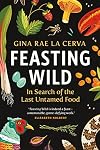
In Feasting Wild: In Search of the Last Untamed Food, author Gina Rae La Cerva takes us to a variety of frontiers including the frontiers of what we consider edible, the show more frontiers of civilization, the frontiers of the climate crisis, the frontiers of emotion, and to some degree the frontiers of knowledge.
There’s something thrilling about pulling your fresh meat and mushrooms from the wild, and sticking to our supermarkets our taste buds have been somewhat dulled.
However popular the traffic in African bushmeat and Asian bird nests (made from the spit of the bird — I kid you not), this business is bad news.
This book is to a large degree a love-letter to the animal kingdom disappearing before our eyes as we rapidly destroy the biodiversity of the planet.
Our impact on the planet is courting a 6th extinction, as Elizabeth Kolbert so wisely warned us. But we are exacerbating the situation with our trapping and consuming the last wild creatures on the planet and in the oceans.
The human destruction for La Cerva, however, is built upon ambiguity.
On the one hand she mourns the ever-declining numbers of large mammals, such as monkeys, gorillas, elephants, and amphibians being literally consumed by us to oblivion.
And there is a coda on the buffalo which, I learned, was extinguished from the frontiers of Eastern Europe much as it had been hunted to extinction across the Prairies.
But at the same time she waxes equally sentimental about the death of communal events like the hunt of large game in our manufactured futures. We now kill on an industrial level. We kill what is natural and we kill to feed billions of souls.
To complicate things further, during her travels La Cerva falls in love with one of her subjects, a man tasked with arresting poachers in the wilds of the Democratic Republic of the Congo and yet who in defines himself in the hunting of big game in his native Sweden.
She is at once appalled by the destruction of the large animals and fatally attracted to the hunter, attracted by his authenticity, much as she is attracted to the Congolese women themselves victims and disciplined participants in the traffic for bushmeat, a generic term for whatever is edible under the sun.
(This is one of those books where you wish Anthony Bourdain was sitting next to you to tell you what’s ok what’s not such a good idea.)
La Cerva seems to eat everything. She eats to understand the new fad of foraging cuisine, she eats to understand the mindset of the locals, she eats to recover the experiences of her youth, and sometimes she eats because that’s all that’s on the plate and she’s hungry.
There are vertebrates and invertebrates. There are bugs and worms and more monkeys than I knew existed. There are foods in various states of decomposition.
The story is also framed by the experiences of her Jewish grandmother, a forager in her own right as an orphaned refugee of Nazi aggression.
As a reader I was introduced to many, many new words of flora and fauna and I always appreciate a writer who takes me to the frontiers of the English language.
Contrary to her musings, La Cerva, does not know nothing at the end of her journeys. She may have lost her innocence and came to understand the nuance of the commercialization of bushmeat in Africa, but she and we are eminently more wise about the subject.
And this is critical to how we deal with the future.
Richard Attenborough has wisely counselled us to end the killing. There clearly is an alternative. And if we cannot return to the halcyon days before the industrial revolution, we must stop the wanton destruction of the oceans and the plains, and the forests. show less
These are pretty damning words with which to sum up her journey.
You mean, I read your book and now you’re admitting you — and by extension me — learned nothing?
In Feasting Wild: In Search of the Last Untamed Food, author Gina Rae La Cerva takes us to a variety of frontiers including the frontiers of what we consider edible, the show more frontiers of civilization, the frontiers of the climate crisis, the frontiers of emotion, and to some degree the frontiers of knowledge.
There’s something thrilling about pulling your fresh meat and mushrooms from the wild, and sticking to our supermarkets our taste buds have been somewhat dulled.
However popular the traffic in African bushmeat and Asian bird nests (made from the spit of the bird — I kid you not), this business is bad news.
This book is to a large degree a love-letter to the animal kingdom disappearing before our eyes as we rapidly destroy the biodiversity of the planet.
Our impact on the planet is courting a 6th extinction, as Elizabeth Kolbert so wisely warned us. But we are exacerbating the situation with our trapping and consuming the last wild creatures on the planet and in the oceans.
The human destruction for La Cerva, however, is built upon ambiguity.
On the one hand she mourns the ever-declining numbers of large mammals, such as monkeys, gorillas, elephants, and amphibians being literally consumed by us to oblivion.
And there is a coda on the buffalo which, I learned, was extinguished from the frontiers of Eastern Europe much as it had been hunted to extinction across the Prairies.
But at the same time she waxes equally sentimental about the death of communal events like the hunt of large game in our manufactured futures. We now kill on an industrial level. We kill what is natural and we kill to feed billions of souls.
To complicate things further, during her travels La Cerva falls in love with one of her subjects, a man tasked with arresting poachers in the wilds of the Democratic Republic of the Congo and yet who in defines himself in the hunting of big game in his native Sweden.
She is at once appalled by the destruction of the large animals and fatally attracted to the hunter, attracted by his authenticity, much as she is attracted to the Congolese women themselves victims and disciplined participants in the traffic for bushmeat, a generic term for whatever is edible under the sun.
(This is one of those books where you wish Anthony Bourdain was sitting next to you to tell you what’s ok what’s not such a good idea.)
La Cerva seems to eat everything. She eats to understand the new fad of foraging cuisine, she eats to understand the mindset of the locals, she eats to recover the experiences of her youth, and sometimes she eats because that’s all that’s on the plate and she’s hungry.
There are vertebrates and invertebrates. There are bugs and worms and more monkeys than I knew existed. There are foods in various states of decomposition.
The story is also framed by the experiences of her Jewish grandmother, a forager in her own right as an orphaned refugee of Nazi aggression.
As a reader I was introduced to many, many new words of flora and fauna and I always appreciate a writer who takes me to the frontiers of the English language.
Contrary to her musings, La Cerva, does not know nothing at the end of her journeys. She may have lost her innocence and came to understand the nuance of the commercialization of bushmeat in Africa, but she and we are eminently more wise about the subject.
And this is critical to how we deal with the future.
Richard Attenborough has wisely counselled us to end the killing. There clearly is an alternative. And if we cannot return to the halcyon days before the industrial revolution, we must stop the wanton destruction of the oceans and the plains, and the forests. show less
I believe this was meant to be a companion to "The Omnivore's Dilemma" but instead it is a companion to "Eat, Pray, Love". The historical research included is interesting but cursory, the personal anecdotes boring and uninspiring (most involve the author's dating life), and in a couple of chapters the author doesn't even eat the wild food she is searching for - and these aren't hard categories! One is just.... 'BIRDS' (chapter 4). The best chapter is probably (the first half of) chapter show more nine, the only one where she gets real access to her research subject, in this case edible birds nests. show less
Part memoir, geography and cultural anthropology, I had a mistaken expectation when i began reading. Thought this was going to be about foraging for wild food, and though there was some of that it became much more. How our food sources have changed, partly due to climate change and environmental changes, but also due to breed. She travels to different countries, talking, sampling food, interspersed with her current relationship and bits of her past.
My favorite part was right here on the east show more coast of the USA. She walks through a deserted and drinking Winchester factory and shows how the factory was used at one time and how nature has retaken much. What nature did and could not reclaim was the land the pilgrims found when they arrived, a land the American Indians had taken care of for hundreds of years. The plentiful birds, a skynfilked with carrier pigeons, twelve different types of ducks. So many wild turkeys. Many no longer in existence, we have not been good caretakers of our home.
The Congo was heartbreaking. Bush meat and poaching a way of life. No easy answers, trying to balance conservation with the need of people to eat and of course the trees of other countries who pay top dollar for parts of the animals and the bush meat. Some tough reading there.
A valuable book showing us how damaging we have been, how the animals, and other forms of wildlife have suffered or been wiped out completely.
ARC from Edelweiss. show less
My favorite part was right here on the east show more coast of the USA. She walks through a deserted and drinking Winchester factory and shows how the factory was used at one time and how nature has retaken much. What nature did and could not reclaim was the land the pilgrims found when they arrived, a land the American Indians had taken care of for hundreds of years. The plentiful birds, a skynfilked with carrier pigeons, twelve different types of ducks. So many wild turkeys. Many no longer in existence, we have not been good caretakers of our home.
The Congo was heartbreaking. Bush meat and poaching a way of life. No easy answers, trying to balance conservation with the need of people to eat and of course the trees of other countries who pay top dollar for parts of the animals and the bush meat. Some tough reading there.
A valuable book showing us how damaging we have been, how the animals, and other forms of wildlife have suffered or been wiped out completely.
ARC from Edelweiss. show less
Awards

Statistics
- Works
- 1
- Members
- 69
- Popularity
- #250,751
- Rating
- 3.2
- Reviews
- 3
- ISBNs
- 5