
Judy Tatchell
Author of How Do Your Senses Work?
About the Author
Works by Judy Tatchell
Hvordan virker datamaskinen 1 copy
Tagged
Common Knowledge
- Gender
- female
Members
Reviews

Now this book is a real blast from the past. I remember borrowing it multiple times from the library and reading through it multiple times (as well as a number of other books in the series, which I will get around to commenting on in time). Before I continue though I will outline one major flaw that I found in this book, and that is the question for whom the book was written. Now, as far as I can tell, this book was written for children, however there are a number of pages about buying show more microcomputers and accessories, and at that time (and even now) most of the products that were available were priced out of reach of the average child, and unless you had parents that were willing to fork out the cash for such machines, the chance of a child buying a computer was slim (and the friends of mine who did have computers had them because their parents, like my Dad, worked in the industry).
Now this book, as you can tell, was written in the very early Eighties, which means that they deal with computers that, as far as we are concerned, are ancient.
As I read through this book though it makes me realise how much has changed, but in many cases, how much actually hasn't changed. In fact there is a section in this book that deals with the internet as it was in 1982 (There was no such thing as Wi-Fi in those days). However, what is really interesting is how Tatchell talks about how in the future you will be able to do your shopping over the computer, and guess what one of the biggest retailers in the world today is? That's right: Amazon.
In fact, it has come to pass that while email has pretty much undermined the good old letter, the movement of consumerism online has pretty much kept the parcel services in business. In fact, the amount of consumer goods sent by parcel has risen dramatically, especially with the development of online shopping one does not have to wonder from store to store looking for a specific item, all you have to do is to jump online, type it into one of the many sites that are available, enter your credit card details (into Pay Pal preferably) and bingo, within a few days it is sitting on your doorstep.
However, what that has undermined is the ability for us to 'window shop' and browse. A lot of stores make an awful lot of money out of people simply wondering into shops, looking around, seeing something that catches their attention, and then purchasing it. What the internet does is that it means that we can look for what we specifically want without being distracted by a myriad of other things.
It is also interesting that Tatchell flags the existence of email in this book. Email is a basic fact of life today and pretty much everybody has their own email address (and I actually have three, one for my computer, one for my smartphone, and one for work). The email address that I give out is my computer one, and the smartphone one is for sending emails to that I may not want to read at the moment, but may want to store for a later time when I am wondering around the city and want to continue to stare at a screen.
As for this book, well clearly it is pretty obsolete, but still, reading it once again brings back a lot of memories of my childhood. show less
Now this book, as you can tell, was written in the very early Eighties, which means that they deal with computers that, as far as we are concerned, are ancient.
As I read through this book though it makes me realise how much has changed, but in many cases, how much actually hasn't changed. In fact there is a section in this book that deals with the internet as it was in 1982 (There was no such thing as Wi-Fi in those days). However, what is really interesting is how Tatchell talks about how in the future you will be able to do your shopping over the computer, and guess what one of the biggest retailers in the world today is? That's right: Amazon.
In fact, it has come to pass that while email has pretty much undermined the good old letter, the movement of consumerism online has pretty much kept the parcel services in business. In fact, the amount of consumer goods sent by parcel has risen dramatically, especially with the development of online shopping one does not have to wonder from store to store looking for a specific item, all you have to do is to jump online, type it into one of the many sites that are available, enter your credit card details (into Pay Pal preferably) and bingo, within a few days it is sitting on your doorstep.
However, what that has undermined is the ability for us to 'window shop' and browse. A lot of stores make an awful lot of money out of people simply wondering into shops, looking around, seeing something that catches their attention, and then purchasing it. What the internet does is that it means that we can look for what we specifically want without being distracted by a myriad of other things.
It is also interesting that Tatchell flags the existence of email in this book. Email is a basic fact of life today and pretty much everybody has their own email address (and I actually have three, one for my computer, one for my smartphone, and one for work). The email address that I give out is my computer one, and the smartphone one is for sending emails to that I may not want to read at the moment, but may want to store for a later time when I am wondering around the city and want to continue to stare at a screen.
As for this book, well clearly it is pretty obsolete, but still, reading it once again brings back a lot of memories of my childhood. show less
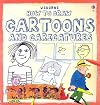
How to Draw Cartoons and Caricatures by Judy Tatchell is page for page, pound for pound as good of a beginning cartooning book that one can buy.
On 40 8x8 pages, Tatchell instructs on how to draw faces, bodies, expressions, caricatures, perspective, action, stereotypes, age, scenery, objects, and animals. She also tells how to write jokes, do strip cartoons (comic strips), and make special effects, and she explains how comic books and cartoon films are made. Whew!
The book may be brief in show more size, but it is not incomplete. Tachell provides a lot of information by pointing out the distinctive features of each drawing.
Anyone can enjoy using this book, but it is an excellent choice for children because it will not overwhelm them., yet they will gain a sense of accomplishment. This would be a good book to give to children who want to draw. show less
On 40 8x8 pages, Tatchell instructs on how to draw faces, bodies, expressions, caricatures, perspective, action, stereotypes, age, scenery, objects, and animals. She also tells how to write jokes, do strip cartoons (comic strips), and make special effects, and she explains how comic books and cartoon films are made. Whew!
The book may be brief in show more size, but it is not incomplete. Tachell provides a lot of information by pointing out the distinctive features of each drawing.
Anyone can enjoy using this book, but it is an excellent choice for children because it will not overwhelm them., yet they will gain a sense of accomplishment. This would be a good book to give to children who want to draw. show less
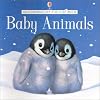
Lift the flaps in this book and you'll find baby animals playing, snoozing and snuggling up together.
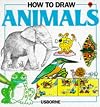
Step-by-step directions about drawing animals
You May Also Like


Statistics
- Works
- 35
- Members
- 1,602
- Popularity
- #16,093
- Rating
- 3.9
- Reviews
- 9
- ISBNs
- 123
- Languages
- 11