
Ray Gibson (1)
Author of I Can Draw Animals (Usborne Playtime)
For other authors named Ray Gibson, see the disambiguation page.
Series
Works by Ray Gibson
Usborne Learning Games : Reading and Counting Activities for Young Children (1993) 48 copies, 1 review
What Shall I Do Now? Ideas for Things to Cook, Be and Grow (What Shall I Do Today Series) (1998) 22 copies
Make & Play: Combined Volume: Play Ideas / Paint Fun / Christmas / Parties (You & Your Child) (1992) 5 copies
You and Your Child: Make & Play: Combined Volume: Play Ideas / Paint Fun / Christmas / Parties (You & Your Child) (1992) 5 copies
Papier Maché 1 copy
O Que É Que Vou Pintar? 1 copy
Tagged
Common Knowledge
- Gender
- male
Members
Reviews

Simple instructions to draw some very simplified animals. I don't think I've ever seen the word "crayon" used so much as a verb before.
FOR REFERENCE:
Contents: I can draw . . . -- . . . a lion -- . . . a cat -- . . . a dolphin -- . . . a lizard -- . . . a rabbit -- . . . a hen -- . . . a teddy -- . . . a tiger -- . . . a fish -- . . . a monkey -- . . . a frog -- . . . a horse -- . . . a turtle -- . . . a flamingo -- . . . a reindeer -- . . . a bee
FOR REFERENCE:
Contents: I can draw . . . -- . . . a lion -- . . . a cat -- . . . a dolphin -- . . . a lizard -- . . . a rabbit -- . . . a hen -- . . . a teddy -- . . . a tiger -- . . . a fish -- . . . a monkey -- . . . a frog -- . . . a horse -- . . . a turtle -- . . . a flamingo -- . . . a reindeer -- . . . a bee
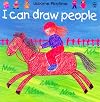
Simple instructions and illustrations to teach kids how to draw people the way kids usually end up drawing people even without instructions. It's a step up from stick figures at least.
FOR REFERENCE:
Contents: I can draw . . . -- a workman -- an angel -- a giant -- a pirate -- a queen -- a ballerina -- a soccer player -- a scuba diver -- an astronaut -- a parachutist -- a skier -- an ice skater -- a cowboy -- faces -- a horse and rider
FOR REFERENCE:
Contents: I can draw . . . -- a workman -- an angel -- a giant -- a pirate -- a queen -- a ballerina -- a soccer player -- a scuba diver -- an astronaut -- a parachutist -- a skier -- an ice skater -- a cowboy -- faces -- a horse and rider

Great book for you artists. Step by step directions on how to draw 16 different types of animals.

Summary:
The book starts off explaining how to add and gives easy examples. It asks how many butterflies have spots, then it wants you to cut out some paper to add spots to the ones that don’t have any! Then wants to know how many butterflies have spots now! The book goes on like this and starts to get harder. By the end of the book they are also getting them started on subtraction!
Personal Reaction:
I really enjoy this story because it is not just a book, but also teaches them math in a show more hands on activity way! I would love to use this book when teaching younger students to add and subtract!
Classroom Extension Ideas:
1. When teaching children to add I would use this book as a group activity. Spilt the students into centers making this one of them for them to get there hands on the book and practicing!
2. I would then use the book as a review and a transition into subtraction! show less
The book starts off explaining how to add and gives easy examples. It asks how many butterflies have spots, then it wants you to cut out some paper to add spots to the ones that don’t have any! Then wants to know how many butterflies have spots now! The book goes on like this and starts to get harder. By the end of the book they are also getting them started on subtraction!
Personal Reaction:
I really enjoy this story because it is not just a book, but also teaches them math in a show more hands on activity way! I would love to use this book when teaching younger students to add and subtract!
Classroom Extension Ideas:
1. When teaching children to add I would use this book as a group activity. Spilt the students into centers making this one of them for them to get there hands on the book and practicing!
2. I would then use the book as a review and a transition into subtraction! show less
You May Also Like


Associated Authors
Statistics
- Works
- 68
- Members
- 4,440
- Popularity
- #5,637
- Rating
- 3.7
- Reviews
- 21
- ISBNs
- 256
- Languages
- 12