
Will Weaver
Author of Memory Boy
About the Author
Will Weaver is a professor of English at Bemidji State University.
Image credit: Will Weaver [credit: Sigurd Redpath 2016]
Series
Works by Will Weaver
Associated Works
No Easy Answers: Short Stories About Teenagers Making Tough Choices (1997) — Contributor — 153 copies, 1 review
Ultimate Sports: Short Stories by Outstanding Writers for Young Adults (1995) — Contributor — 78 copies
Time Capsule: Short Stories About Teenagers Throughout the Twentieth Century (1999) — Contributor — 61 copies
Tagged
Common Knowledge
- Canonical name
- Weaver, Will
- Other names
- Weller, William (birth name)
- Birthdate
- 1950
- Gender
- male
- Occupations
- English teacher (Bemidji State University)
author
novelist - Organizations
- Bemidji State University
- Nationality
- USA
- Birthplace
- Park Rapids, Minnesota, USA
- Places of residence
- Batchtown, Illinois, USA
- Associated Place (for map)
- USA
Members
Reviews
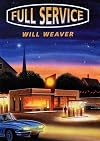
Wow, I am so sorry this title sat on my "to read" list for so long. But what a treat to experience it at last. This coming-of-age-in-the-1960s story is funny, evocative, has the most memorable characters, and is hands down one of the most well-written YAs I've read. Nothing extraneous here; every word, every scene counts.
In the summer of 1965, the world is on the verge of change and so is
16-year-old Paul Sutton, a farm boy and fundamentalist Christian. His
mother encourages him to get a show more summer job in town and "meet the public" although his father disagrees; Paul is needed on the farm. Paul gets a job at the Shell gas station and there meets more different kinds of "the public" than he ever knew before: Kirk, his co-worker who has affairs with various women in town; Harry Blomenfeld, a former Chicago gangster; a hippie family in a broken down van; high school hotties Dale and Peggy; and assorted tourists and pretty girls. Funny novel; characters pop off the pages; fluid descriptive prose that just absorbed me. show less
In the summer of 1965, the world is on the verge of change and so is
16-year-old Paul Sutton, a farm boy and fundamentalist Christian. His
mother encourages him to get a show more summer job in town and "meet the public" although his father disagrees; Paul is needed on the farm. Paul gets a job at the Shell gas station and there meets more different kinds of "the public" than he ever knew before: Kirk, his co-worker who has affairs with various women in town; Harry Blomenfeld, a former Chicago gangster; a hippie family in a broken down van; high school hotties Dale and Peggy; and assorted tourists and pretty girls. Funny novel; characters pop off the pages; fluid descriptive prose that just absorbed me. show less
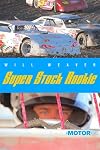
Even if you're not a race fan and may not understand all the lingo, you'll be drawn into Trace Bonham's racing world. Author Will Weaver is a racer himself and his knowledge shows as he masterfully portrays the culture while also enriching it with an emotional story. Trace gains the opportunity of a lifetime when he is selected by a corporate sponsor to race their Super Stock. However there's a dark sense of Trace having sold his soul as conflicts arise. Corporate representatives treat Trace show more as a product, while his professional racing crew clashes with the homegrown racers, many of whom are Trace's friends. Trace feels conflicted himself, even lonely, but at book's end he determines to press on. I am actually interested in reading the next installment to see how he handles the pressure. show less

It’s strange that I have not read Red Earth, White Earth by Will Weaver years ago. After all, it takes place where I grew up, on White Earth Indian Reservation, and focuses on the controversy that inflamed racial tensions on the Reservation for many of my school years.
It tells the story of a friendship that began and childhood and stayed strong and true despite a ten year absence. It is also a story of a son finding a way to love his father. There’s another story, a romance between a show more laid-back California guy and an ambitious, buttoned-up East Coast woman. And all of these stories are framed by the conflict between the white farmers and the Anishinaabe Indians of White Earth whose lands were fraudulently taken and sold to white farmers early in the 1900s in response to intense lobbying by banks and farmers. Eighty years later, the Indians sought justice through the courts and all hell broke loose.
Guy Pehrsson grew up on White Earth. His father, Martin, and grandfather, Helmer, were farmers and there was an expectation he would be a farmer, too. His mother, Madeline, wanted more for him. His best friend was Tom LittleWolf. They began their friendship when they were five with Madeline’s blessing and Martin’s disapproval, even antipathy. That friendship remained strong until their junior year when a school trip to the state basketball championships reveals the despair of the urban Indian to Tom, setting him on a different track than Guy.
Guy, too, had ambitions, to get away and go to college. He hoped to earn his tuition and escape the farm by growing flax, a risky but high profit venture, if it would succeed. Guy, though, is forced to choose between family and success and chose family in a heartbreaking chapter early in the book. This sets him off, though, to California where he made his fortune which is where we find him in the prologue, a rich capitalist going home for a visit after his grandfather writes a letter saying they need help.
And he comes home to the big land controversy. This story reminded me so much of growing up. My neighbor’s farms and home titles were in question. For farmers, that meant no collateral for seed loans and farm equipment. It meant unscrupulous bankers calling in loans to foreclose on those who were unable to find the capital to keep going. For many families, it means fathers going to work on the pipeline in Alaska, the good pay there keeping farm and families afloat. Our land was legally purchased so is was easier for my dad to see both sides of the issue, leading to his ouster from the township board for being insufficiently anti-Indian.
One significant difference between the real history and the book is that there was no singular lawyer driving the White Earth Tribal Council’s strategy, but an entire group of Native American lawyers and activists. After all, Clyde and Vernon Bellecourt, two of the founders of the American Indian Movement were White Earth members. Winona LaDuke is from White Earth as well. White Earth produced many activists and their resistance had many leaders, not one. While it makes the story more dramatic to focus the resistance in the fictional Tom LittleWolf, there is more power and agency in the real history of many activists seeking power and the salvation of their tribe.
There were at times I loved this book and times it made me squirm. The young MaryAnn reminds me of a girl who was shunned by all of us, without exception, because of her appalling hygiene, though when we reached adulthood, we learned she like young MaryAnn, was sexually abused by her father and brothers, something no that occurred to none of us. While this scandal came out after the book was written, so it cannot be her, it is so uncomfortably close to home.
The story itself is wonderful. I liked the people, the compassion for everyone, even for Martin, Guy’s difficult father. There’s an understanding of how people work, how racism works and how conflict can build. It rings true. Some of the events happened and I remember them, our neighbor’s cattle being slaughtered in the night, “customs checkpoints” on the reservation border, though that only happened in response to one town setting up a checkpoint at the city limits on Hwy 2, only stopping Indians, a shameful response to a hoax perpetrated by an addict who robbed his grandparents and falsely claimed that he was robbed by Indians with rifles. But the anger was real and people did die, among them one of my classmates when racial animus broke out into a fight at a bar. Actually, maybe I do know why I have not read this book earlier.
https://tonstantweaderreviews.wordpress.com/2016/09/05/red-earth-white-earth-by-... show less
It tells the story of a friendship that began and childhood and stayed strong and true despite a ten year absence. It is also a story of a son finding a way to love his father. There’s another story, a romance between a show more laid-back California guy and an ambitious, buttoned-up East Coast woman. And all of these stories are framed by the conflict between the white farmers and the Anishinaabe Indians of White Earth whose lands were fraudulently taken and sold to white farmers early in the 1900s in response to intense lobbying by banks and farmers. Eighty years later, the Indians sought justice through the courts and all hell broke loose.
Guy Pehrsson grew up on White Earth. His father, Martin, and grandfather, Helmer, were farmers and there was an expectation he would be a farmer, too. His mother, Madeline, wanted more for him. His best friend was Tom LittleWolf. They began their friendship when they were five with Madeline’s blessing and Martin’s disapproval, even antipathy. That friendship remained strong until their junior year when a school trip to the state basketball championships reveals the despair of the urban Indian to Tom, setting him on a different track than Guy.
Guy, too, had ambitions, to get away and go to college. He hoped to earn his tuition and escape the farm by growing flax, a risky but high profit venture, if it would succeed. Guy, though, is forced to choose between family and success and chose family in a heartbreaking chapter early in the book. This sets him off, though, to California where he made his fortune which is where we find him in the prologue, a rich capitalist going home for a visit after his grandfather writes a letter saying they need help.
And he comes home to the big land controversy. This story reminded me so much of growing up. My neighbor’s farms and home titles were in question. For farmers, that meant no collateral for seed loans and farm equipment. It meant unscrupulous bankers calling in loans to foreclose on those who were unable to find the capital to keep going. For many families, it means fathers going to work on the pipeline in Alaska, the good pay there keeping farm and families afloat. Our land was legally purchased so is was easier for my dad to see both sides of the issue, leading to his ouster from the township board for being insufficiently anti-Indian.
One significant difference between the real history and the book is that there was no singular lawyer driving the White Earth Tribal Council’s strategy, but an entire group of Native American lawyers and activists. After all, Clyde and Vernon Bellecourt, two of the founders of the American Indian Movement were White Earth members. Winona LaDuke is from White Earth as well. White Earth produced many activists and their resistance had many leaders, not one. While it makes the story more dramatic to focus the resistance in the fictional Tom LittleWolf, there is more power and agency in the real history of many activists seeking power and the salvation of their tribe.
There were at times I loved this book and times it made me squirm. The young MaryAnn reminds me of a girl who was shunned by all of us, without exception, because of her appalling hygiene, though when we reached adulthood, we learned she like young MaryAnn, was sexually abused by her father and brothers, something no that occurred to none of us. While this scandal came out after the book was written, so it cannot be her, it is so uncomfortably close to home.
The story itself is wonderful. I liked the people, the compassion for everyone, even for Martin, Guy’s difficult father. There’s an understanding of how people work, how racism works and how conflict can build. It rings true. Some of the events happened and I remember them, our neighbor’s cattle being slaughtered in the night, “customs checkpoints” on the reservation border, though that only happened in response to one town setting up a checkpoint at the city limits on Hwy 2, only stopping Indians, a shameful response to a hoax perpetrated by an addict who robbed his grandparents and falsely claimed that he was robbed by Indians with rifles. But the anger was real and people did die, among them one of my classmates when racial animus broke out into a fight at a bar. Actually, maybe I do know why I have not read this book earlier.
https://tonstantweaderreviews.wordpress.com/2016/09/05/red-earth-white-earth-by-... show less
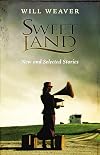
Will Weaver is my favorite Minnesota author and Sweet Land: New and Selected Stories is a great collection of short stories. This book includes several stories from a previous collection called A Gravestone Made of Wheat. A Gravestone Made of Wheat (the title story) was adapted into a lovely film called Sweet Land. This book was released as a tie-in to the movie. The book contains A Gravestone Made of Wheat as well as several other stories found in the earlier book as well as some new show more stories. To me, the newer stories are good though perhaps not as good as the ones that come from the original anthology.
Weaver is intimately familiar with the geography and feel of western Minnesota, a familiarity that is evident in his work. As a native, the small towns and fields that Weaver describes are instantly recognizable. Weaver brings the same eye for detail to the people that inhabit the land. Weaver's best stories deal with the intertwining of the land and the people who live on it and how the two shape each other over time. For example, A Gravestone Made of Wheat traces the love affair of an immigrant Norwegian man and his mail-order German bride and how the two of them built a life together farming Minnesota's western prairie.
These are quiet stories about life that still moves to seasonal rhythms. Maybe my opinion is colored by nostalgia now that I live in suburbia but if you are drawn to the open prairie, consider trying Will Weaver's stories. show less
Weaver is intimately familiar with the geography and feel of western Minnesota, a familiarity that is evident in his work. As a native, the small towns and fields that Weaver describes are instantly recognizable. Weaver brings the same eye for detail to the people that inhabit the land. Weaver's best stories deal with the intertwining of the land and the people who live on it and how the two shape each other over time. For example, A Gravestone Made of Wheat traces the love affair of an immigrant Norwegian man and his mail-order German bride and how the two of them built a life together farming Minnesota's western prairie.
These are quiet stories about life that still moves to seasonal rhythms. Maybe my opinion is colored by nostalgia now that I live in suburbia but if you are drawn to the open prairie, consider trying Will Weaver's stories. show less
Lists
Sonlight Books (1)
Awards


You May Also Like


Associated Authors
Statistics
- Works
- 19
- Also by
- 10
- Members
- 1,600
- Popularity
- #16,111
- Rating
- 3.8
- Reviews
- 46
- ISBNs
- 77
- Favorited
- 2