
Andrew Joseph White
Author of Hell Followed with Us
About the Author
Image credit: Author promo photo from his website
Works by Andrew Joseph White
Associated Works
Transcendent 4: The Year's Best Transgender Speculative Fiction (4) (2019) — Contributor — 24 copies
Tagged
Common Knowledge
- Legal name
- White, Andrew Joseph Marie
- Birthdate
- 1990s
- Gender
- male
- Education
- George Mason University (Bx, MFA|Creative writing)
- Agent
- Jennifer March Soloway
- Relationships
- Scott, Alice (spouse)
- Short biography
- White has a double first name, Andrew Joseph.
- Nationality
- USA
- Places of residence
- Virginia, USA
- Associated Place (for map)
- Virginia, USA
Members
Reviews
First, read the trigger warnings and take heed. He has not come to play with this book. If you think you'll be fine, I encourage you to read the first three chapters before deciding to buy it or before reading the whole thing.
Underneath all the gore are raw emotions that cut deep. It put words to feelings I've had for many years, but have never quite been able to explain. It was personal and upsetting. Yet, it explored so deeply the feelings many trans people, including myself, experience show more about what it is like to exist in a body; have other people make decisions for you about who or what you are or how you should feel. If I'd had the time, I absolutely would have read the whole book in one sitting. show less
Underneath all the gore are raw emotions that cut deep. It put words to feelings I've had for many years, but have never quite been able to explain. It was personal and upsetting. Yet, it explored so deeply the feelings many trans people, including myself, experience show more about what it is like to exist in a body; have other people make decisions for you about who or what you are or how you should feel. If I'd had the time, I absolutely would have read the whole book in one sitting. show less
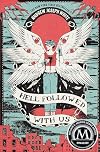
Set in a post-apocalyptic world in which a group of fundamentalists create a virus that kills most people it infects, leaves ‘God’s chosen few’ unscathed, and turns the rest into fleshy, bone-scaly monsters (called Graces), the novel follows Benji, a trans boy who is the son of one of the most prominent faithful, and who is infected with a special version of the virus, which will turn him into a Seraph, and give him power over the Graces mentally to command them to do his bidding. The show more cult believe the Seraph will lead them to victory over the remaining faithless, but Benji escapes and finds other survivors like him at a nearby LGBTQ center. Together they form a plan to fight back.
White writes absolutely gut-punchingly grim stuff, but his metaphors for trans people being seen as monsters is always spot on and brilliant. He’s quickly becoming one of my favorite authors. show less
White writes absolutely gut-punchingly grim stuff, but his metaphors for trans people being seen as monsters is always spot on and brilliant. He’s quickly becoming one of my favorite authors. show less
Rating: 4* of five
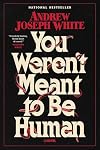
The Publisher Says: Alien meets Midsommar in this chilling debut adult novel from award-winning author Andrew Joseph White about identity, survival, and transformation amidst an alien invasion in rural West Virginia.
Festering masses of worms and flies have taken root in dark corners across Appalachia. In exchange for unwavering loyalty and fresh corpses, these hives offer a few struggling humans salvation. A fresh start. It’s an offer that none refuse.
Crane is grateful. show more Among his hive’s followers, Crane has found a chance to transition, to never speak again, to live a life that won’t destroy him. He even met Levi: a handsome ex-Marine and brutal killer who treats him like a real man, mostly. But when Levi gets Crane pregnant—and the hive demands the child’s birth, no matter the cost—Crane’s desperation to make it stop will drive the community that saved him into a devastating spiral that can only end in blood.
You Weren’t Meant to Be Human is a deeply personal horror; a visceral statement about the lives of marginalized people in a hostile world, echoing the works of Stephen Graham Jones and Eric LaRocca.
I RECEIVED A DRC FROM THE PUBLISHER VIA NETGALLEY. THANK YOU.
My Review: Is this story literally intended to be about a hive...powerfully coded culturally as an insect-related word...that controls people to their detriment? Are the hives metaphors for the horrors of cishet society demanding conformity of people not like them? Are the hives infestations of the criminal organizations demanding obedience of the Appalachian people in exchange for the smallest amount of human dignity...or else?
Yes.
The answer is none/all/a combination of these and more. This is why I rate the body horror story as highly as I do. Author White is avowedly transmasc. The story could've been his own; he could be Crane; the body horror could be, is, intensely personal. It is laid out in terms of Crane's quest for bodily autonomy, its various phases and faces of denial and deprivation of this great, fundamental freedom. Trading transphobia for misogyny is not trading up. It is still the imposition of ignorance on top of your own knowledge, the unwillingness of the uneducated to do the work of acquiring the information needed to distinguish between discomfort and threat.
The hive isn't precise or even visible, it's a shifting...space...delineated by rotten stinking meat and a control mechanism brutally physical and insidiously psychological. This is the essence of horror to me. The ugly inner workings of systems of control and brutalization for dominance assertion. The denial of the fundamental freedom, autonomy...self-determination...that all Others endure. That is, throughout time and space, the one sin qua non of horror stories. It gives me shivers even conceptualizing it.
What Author White does best in this story is mobilize all the tropes of horror to embody the reality of an authoritarian world. What the alluring promises of it devolve into. What the systems of oppression will resort to in order to accomplish their hidden aims. Are they even hidden, or are we simply discouraged from noticing them? Accused of being paranoid, thereby handily Othered in an uncontestable way?
The way the story ends, I won't say "wraps up" it's too easy, isn't heartening or triumphal or celebratory. It is instructive. It is condign. It does not spare a thought for the offense against "nice"ness it's made you endure. And surprisingly made you...appreciate, since enjoy is a completely wrong stop to pull on Literature's pipe-organ.
I think this read will titillate the horror seeker, educate the knowledge seeker, and validate the entomophobic person's visceral rejection of reeking, rotting things for what they harbor. show less
The Publisher Says: Alien meets Midsommar in this chilling debut adult novel from award-winning author Andrew Joseph White about identity, survival, and transformation amidst an alien invasion in rural West Virginia.
Festering masses of worms and flies have taken root in dark corners across Appalachia. In exchange for unwavering loyalty and fresh corpses, these hives offer a few struggling humans salvation. A fresh start. It’s an offer that none refuse.
Crane is grateful. show more Among his hive’s followers, Crane has found a chance to transition, to never speak again, to live a life that won’t destroy him. He even met Levi: a handsome ex-Marine and brutal killer who treats him like a real man, mostly. But when Levi gets Crane pregnant—and the hive demands the child’s birth, no matter the cost—Crane’s desperation to make it stop will drive the community that saved him into a devastating spiral that can only end in blood.
You Weren’t Meant to Be Human is a deeply personal horror; a visceral statement about the lives of marginalized people in a hostile world, echoing the works of Stephen Graham Jones and Eric LaRocca.
I RECEIVED A DRC FROM THE PUBLISHER VIA NETGALLEY. THANK YOU.
My Review: Is this story literally intended to be about a hive...powerfully coded culturally as an insect-related word...that controls people to their detriment? Are the hives metaphors for the horrors of cishet society demanding conformity of people not like them? Are the hives infestations of the criminal organizations demanding obedience of the Appalachian people in exchange for the smallest amount of human dignity...or else?
Yes.
The answer is none/all/a combination of these and more. This is why I rate the body horror story as highly as I do. Author White is avowedly transmasc. The story could've been his own; he could be Crane; the body horror could be, is, intensely personal. It is laid out in terms of Crane's quest for bodily autonomy, its various phases and faces of denial and deprivation of this great, fundamental freedom. Trading transphobia for misogyny is not trading up. It is still the imposition of ignorance on top of your own knowledge, the unwillingness of the uneducated to do the work of acquiring the information needed to distinguish between discomfort and threat.
The hive isn't precise or even visible, it's a shifting...space...delineated by rotten stinking meat and a control mechanism brutally physical and insidiously psychological. This is the essence of horror to me. The ugly inner workings of systems of control and brutalization for dominance assertion. The denial of the fundamental freedom, autonomy...self-determination...that all Others endure. That is, throughout time and space, the one sin qua non of horror stories. It gives me shivers even conceptualizing it.
What Author White does best in this story is mobilize all the tropes of horror to embody the reality of an authoritarian world. What the alluring promises of it devolve into. What the systems of oppression will resort to in order to accomplish their hidden aims. Are they even hidden, or are we simply discouraged from noticing them? Accused of being paranoid, thereby handily Othered in an uncontestable way?
The way the story ends, I won't say "wraps up" it's too easy, isn't heartening or triumphal or celebratory. It is instructive. It is condign. It does not spare a thought for the offense against "nice"ness it's made you endure. And surprisingly made you...appreciate, since enjoy is a completely wrong stop to pull on Literature's pipe-organ.
I think this read will titillate the horror seeker, educate the knowledge seeker, and validate the entomophobic person's visceral rejection of reeking, rotting things for what they harbor. show less

I was excited about this one and thrilled to get an advanced copy. The history and culture of Appalachia interest me a lot, in part because of my proximity to it. There’s been a history of socialist movements and worker solidarity in many areas that still permeates the culture, but also a strongly conservative lean in the impoverished rural communities that could (and have in patches of history) benefit most from these movements. The book description seemed to promise a nuanced exploration show more of these elements without glorification or erasure of the bigotry just because the people perpetuating it are victims in their own right. The cycle of violence, and the lofty ideals struggling to manifest in a dirty reality, all weaved through a thriller/horror plot line literally haunted by the bloody, cyclic history (not to mention the bonus of exploring trans and queer culture and identity in this environment through a gay, aromantic trans protagonist), what a pitch.
It just didn’t fully stick the landing in my opinion. While Miles has a strong sense of his principles, politically, and awareness of the large-scale issues in his community, the morality and motivations for the violence done in the story proper by him and his generation were shallower. A lot of complexity was left to the past and to infodumps about history, culture, and ideologies, rather than deeply integrated into the narrative.
It came to a head with the ending where I felt the underlying problems of Miles’ community that went beyond the sheriff and his abuse of power were somewhat brushed off.All the handful of bad people who were really seduced by violence (unlike Miles who only liked it a little) were gone and so the conservative populace would rally behind the socialists and queers? I know that’s not exactly what the ending wants to say. It’s trying to be a hard-won, but hopeful look at the cycle of violence finally ending and a marginalized person being able to carve out space for himself in a home he cares for. But (despite the literal gore and death) it was maybe too clean for a story that paid lip service to many complexities. There are acknowledgments of the racism, misogyny, queerphobia, and all the hatred, trauma, and pain that go far beyond and far deeper than the feud that gets the main focus and the resolution in the end. With all that put out in the open earlier in the story, but not worked on, I’m wondering where it all went.
Sometimes I think I’m asking the wrong thing from a story when I’m unsatisfied with the direction or the ending, but in this case, I do believe I wanted mostly the same thing the story was trying to give, I just wanted it to go deeper and to give more.
There was a lot to like — the portrayal of the setting, the political awareness, Miles’ journey to understanding himself as autistic, his pride in his home and insistence on making it better, the realistic writing of his family’s imperfect yet unconditional love — but also potential left untouched. show less
It just didn’t fully stick the landing in my opinion. While Miles has a strong sense of his principles, politically, and awareness of the large-scale issues in his community, the morality and motivations for the violence done in the story proper by him and his generation were shallower. A lot of complexity was left to the past and to infodumps about history, culture, and ideologies, rather than deeply integrated into the narrative.
It came to a head with the ending where I felt the underlying problems of Miles’ community that went beyond the sheriff and his abuse of power were somewhat brushed off.
Sometimes I think I’m asking the wrong thing from a story when I’m unsatisfied with the direction or the ending, but in this case, I do believe I wanted mostly the same thing the story was trying to give, I just wanted it to go deeper and to give more.
There was a lot to like — the portrayal of the setting, the political awareness, Miles’ journey to understanding himself as autistic, his pride in his home and insistence on making it better, the realistic writing of his family’s imperfect yet unconditional love — but also potential left untouched. show less
Lists
High Priority (1)
QLAP (1)
Awards


You May Also Like


Associated Authors
Statistics
- Works
- 5
- Also by
- 3
- Members
- 2,910
- Popularity
- #8,799
- Rating
- 4.2
- Reviews
- 94
- ISBNs
- 40
- Languages
- 4
- Favorited
- 6