
Alisa Childers
Author of Another Gospel?: A Lifelong Christian Seeks Truth in Response to Progressive Christianity
About the Author
Alisa Childers is a wife, a mom, an author, a blogger, a speaker and a worship leader. She was a member of the award-winning CCM recording group ZOEgirl. She is a popular speaker at apologetics and Christian worldview conferences, including reTHINK. Alisa has been published at The Gospel Coalition, show more The Christian Post, Crosswalk, The Stream, For Every Mom, and Decision magazine, and her blog post "Girl, Wash Your Face? What Rachel Mollis Gets Right and Wrong" received more than one million views. You can connect with Alisa online at alisachilders.com. show less
Works by Alisa Childers
Another Gospel?: A Lifelong Christian Seeks Truth in Response to Progressive Christianity (2020) 495 copies, 5 reviews
The Deconstruction of Christianity: What It Is, Why It’s Destructive, and How to Respond (2024) 187 copies, 4 reviews
Live Your Truth and Other Lies: Exposing Popular Deceptions That Make Us Anxious, Exhausted, and Self-Obsessed (2022) 172 copies, 4 reviews
Another Gospel? Participant’s Guide: Six Sessions on the Search for Truth in Response to the Claims of Progressive Christianity (2022) 11 copies
The Deconstruction of Christianity Study Guide: Six Sessions on Understanding and Responding to the Faith Deconstruction Movement (2024) 7 copies
Another Gospel? Student Edition: A Lifelong Christian Seeks Truth in Response to Progressive Christianity (2025) 5 copies
Leb deine Wahrheit und andere Lügen: Typische Täuschungen, die unser Leben in die Enge treiben (2023) 1 copy, 1 review
Tagged
Common Knowledge
- Canonical name
- Childers, Alisa
- Legal name
- Childers, Alisa Noelle
- Birthdate
- 1975-04-17
- Gender
- female
- Occupations
- youth worker
singer-songwriter
author - Relationships
- Childers, Mike (husband)
- Nationality
- USA
- Birthplace
- Pacoima, California, USA
- Associated Place (for map)
- California, USA
Members
Reviews
The Deconstruction of Christianity: What It Is, Why It’s Destructive, and How to Respond by Alisa Childers
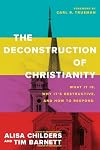
First sentence: I (Alisa) was standing in the foyer of a church where I had just spoken at a Christian worldview conference when I was approached by an elderly couple with downcast faces. Without wasting time on pleasantries, the man said, “Our son . . .” Surprised by his own tears, he stopped short. The gray-haired woman next to him laid her hand on his shoulder and continued. “Our son deconstructed. He isn’t a Christian anymore. We don’t know what to do.”
Chances are high that show more you've heard either the term deconstructing, deconstruction, or exvangelical. But do those words have precise meanings--uniform meanings in that everyone uses the words in the same way, assigns the same meanings to those words? That's just one of the things these two discuss in their new book. This book is essentially a deep-dive into a movement. They--general, vague, ambiguous "they"--may want you to think deconstructing is NEW. But no, you can find deconstruction right there in the first few chapters of the Bible.
The two authors walk you through--often quoting those who have deconstructed or almost deconstructed--the new trendy [ideological] movement of deconstruction. It is almost an anything goes movement rejecting even the slightest hint of absolute truth. The only absolute truth they accept is that there is no absolute truth. Other than that, you do you.
Here is how Barnett and Childers (alphabetical arrangement) describe their book:
In part 1, we identify deconstruction as it manifests in our homes, in our churches, and on social media. We define the word and give a thirty-thousand-foot view of how it has grown from a hashtag into a phenomenon, complete with conferences, coaches, and countless social media accounts. Then in part 2, we dig down into the details. We pull it all apart and analyze the many reasons why people are deconstructing, how they are deconstructing, and what they are deconstructing. We also consider who is going through it—the very real people undergoing deconstruction. We offer what we think is a better solution to the nagging doubts, difficult questions, and false ideas that haunt many Christians. Finally, in part 3, we focus on how we can best love and help those in our lives who might be in deconstruction.
I found the book an interesting, informative, compassionate read. The authors have a heart for those who are deconstructing. They are not rejoicing or mocking. The points they make are solid and well-organized. This is a book about a tough topic--emotionally--that is clear and concise. It is a PRACTICAL book first and foremost. Yet it isn't shy on theology.
Quotes:
When it comes to faith, some questions seek answers, and some questions seek exits. There are questions that seek after truth, but other questions seek to avoid truth.
Deconstruction is nothing new. People have been abandoning the standard of God’s Word and engaging in a process of rethinking—and often abandoning—their faith since the beginning. That’s why the biblical record contains so many warnings about leaving or redefining the faith. show less
Chances are high that show more you've heard either the term deconstructing, deconstruction, or exvangelical. But do those words have precise meanings--uniform meanings in that everyone uses the words in the same way, assigns the same meanings to those words? That's just one of the things these two discuss in their new book. This book is essentially a deep-dive into a movement. They--general, vague, ambiguous "they"--may want you to think deconstructing is NEW. But no, you can find deconstruction right there in the first few chapters of the Bible.
The two authors walk you through--often quoting those who have deconstructed or almost deconstructed--the new trendy [ideological] movement of deconstruction. It is almost an anything goes movement rejecting even the slightest hint of absolute truth. The only absolute truth they accept is that there is no absolute truth. Other than that, you do you.
Here is how Barnett and Childers (alphabetical arrangement) describe their book:
In part 1, we identify deconstruction as it manifests in our homes, in our churches, and on social media. We define the word and give a thirty-thousand-foot view of how it has grown from a hashtag into a phenomenon, complete with conferences, coaches, and countless social media accounts. Then in part 2, we dig down into the details. We pull it all apart and analyze the many reasons why people are deconstructing, how they are deconstructing, and what they are deconstructing. We also consider who is going through it—the very real people undergoing deconstruction. We offer what we think is a better solution to the nagging doubts, difficult questions, and false ideas that haunt many Christians. Finally, in part 3, we focus on how we can best love and help those in our lives who might be in deconstruction.
I found the book an interesting, informative, compassionate read. The authors have a heart for those who are deconstructing. They are not rejoicing or mocking. The points they make are solid and well-organized. This is a book about a tough topic--emotionally--that is clear and concise. It is a PRACTICAL book first and foremost. Yet it isn't shy on theology.
Quotes:
When it comes to faith, some questions seek answers, and some questions seek exits. There are questions that seek after truth, but other questions seek to avoid truth.
Deconstruction is nothing new. People have been abandoning the standard of God’s Word and engaging in a process of rethinking—and often abandoning—their faith since the beginning. That’s why the biblical record contains so many warnings about leaving or redefining the faith. show less
The Deconstruction of Christianity: What It Is, Why It’s Destructive, and How to Respond by Alisa Childers
Summary: A study of what the authors term the “deconstruction movement.” why this needs to be taken seriously, and how to respond to loved ones who are “deconstructing.”
As I read some of the copy associated with this book, I was initially inclined to be somewhat skeptical of the contention that there is a “deconstruction movement.” I’ve worked in collegiate ministry for over forty years and have witnessed alarmist scares over a series of “movements”: scientism, show more postmodernism, New Age Aquarian conspiracies, the new atheism, Critical Race Theory, and more. We get people in the pews very concerned with “be afraid, be very afraid” rhetoric. And it sells–at least until the next scare arises. In a few years to a decade, the prominence of these ideologies tends to recede into the melange of ideas that shape our cultural mindset. None of these has been a “slate wiper” for the Christian community but rather an intellectual challenge to be met and engaged in the lives of real people who hold these ideas and embrace these beliefs.
The authors of this book made a case for me that faith deconstruction is more than merely a personal experience a number of Christians are undergoing, one that may actually lead to a deeper walk with Christ. For one thing, it encourages a mindset that goes beyond asking questions, expressing doubts, or processing negative, even abusive experiences with the hope of reformation, coming to a deeper grasp of what one believes, discerning what was a false expression of biblical faith, and more deeply loving God. Rather, it pursues a route of not only denouncing abuses but dismissing the Bible, rightly understood, as the authoritative source for our lives, first questioning and then deny what God has said, making the only authority in our lives the autonomous self. There are not toxic aspects of Christianity. Christianity as an undifferentiated whole is dismissed as toxic. And young people who once identified as Christian are walking away in droves.
The other aspect is the network of communication channels, podcasts, and figures who self-syle themselves as deconstruction coaches. They document the number of figures in the Christian celebrity culture who have “deconstructed” and proclaim their deconstruction as vigorously (and sometime profitably) as they proclaimed their faith. One of the authors, Alisa, was part of the girl group, ZOEgirl and describes the corrosive aspects of that culture that could be disillusioning and more.
The authors’ suggest that we not use a distinction between “good” and “bad” deconstruction. They propose instead, the idea of reformation for a process of winnowing out cultural falsehoods, wrongful abuses from the truth of the gospel. They freely admit to a number of the problems that many exiting churches note: biblical literalism, patriarchy, homophobia, political conservatism, and nationalism. They note how many were discouraged from asking questions by leaders but also the thin veneer of instruction and formation in the faith many received. Reformation brings all this to God, examines all of this in the light of scripture, brings lamentations of trauma and hurt to Christ. Deconstruction is different, not only leaving behind toxic elements, but branding it all toxic, including God.
The authors look at the rhetoric used on social media. They observe how scripture is distorted, often in convenient meme statements. The identify the methodology behind deconstruction of identifying a societal problem, showing ways the church was complicit, and concluding that the cause is warped evangelical theology. They explore what we mean by “true” and “faith.”
The book concludes on a note of hope. The authors explore the importance of questions but also of helping questioners be honest about whether they are seeking answers or exits. They offer wise counsel for loved ones of those amid deconstruction, including prayer, being a safe presence, doing triage (are they truly deconstructing or simply asking questions, are they moving away from or toward God, and they set and respect boundaries. They tell stories of those who have returned to a deeper, vibrant faith.
I think the one place where the book weakens its argument is in its attempt to defend complementarianism against charges of patriarchy in the church and its brief attempt to refute Beth Allison Barr’s critique in The Making of Biblical Womanhood. Complementarianism as it has been lived out in many churches, including the ways it was reflected in purity culture, has contributed to the disillusionment of many with the church. I can envision some putting down the book at this point, which is unfortunate because it is ancillary to the basic argument of the book.
That argument, what people are doing when they deconstruct, the complex of ideas that undergird deconstruction, and the network of speakers, media channels, and coaches advocating and supporting deconstruction, needs to be reckoned with as we try to understand what is happening with youth who are walking away from not only from churches but the Christian faith. The alternative, reformation, is one we would hope many would take. But it is not only disillusioned youth in need of reformation. The deconstruction the authors describe can point to toxic practice and theology, albeit distorted and exaggerated by deconstructors in their rhetoric, for which the church is also desperately in need of reformation. Even as we hope to point those questioning back to scripture and to King Jesus, so we need to join them to hear what the Lord would say to us all.
________________________________
Disclosure of Material Connection: I received a complimentary review copy of this book from the publisher. show less
As I read some of the copy associated with this book, I was initially inclined to be somewhat skeptical of the contention that there is a “deconstruction movement.” I’ve worked in collegiate ministry for over forty years and have witnessed alarmist scares over a series of “movements”: scientism, show more postmodernism, New Age Aquarian conspiracies, the new atheism, Critical Race Theory, and more. We get people in the pews very concerned with “be afraid, be very afraid” rhetoric. And it sells–at least until the next scare arises. In a few years to a decade, the prominence of these ideologies tends to recede into the melange of ideas that shape our cultural mindset. None of these has been a “slate wiper” for the Christian community but rather an intellectual challenge to be met and engaged in the lives of real people who hold these ideas and embrace these beliefs.
The authors of this book made a case for me that faith deconstruction is more than merely a personal experience a number of Christians are undergoing, one that may actually lead to a deeper walk with Christ. For one thing, it encourages a mindset that goes beyond asking questions, expressing doubts, or processing negative, even abusive experiences with the hope of reformation, coming to a deeper grasp of what one believes, discerning what was a false expression of biblical faith, and more deeply loving God. Rather, it pursues a route of not only denouncing abuses but dismissing the Bible, rightly understood, as the authoritative source for our lives, first questioning and then deny what God has said, making the only authority in our lives the autonomous self. There are not toxic aspects of Christianity. Christianity as an undifferentiated whole is dismissed as toxic. And young people who once identified as Christian are walking away in droves.
The other aspect is the network of communication channels, podcasts, and figures who self-syle themselves as deconstruction coaches. They document the number of figures in the Christian celebrity culture who have “deconstructed” and proclaim their deconstruction as vigorously (and sometime profitably) as they proclaimed their faith. One of the authors, Alisa, was part of the girl group, ZOEgirl and describes the corrosive aspects of that culture that could be disillusioning and more.
The authors’ suggest that we not use a distinction between “good” and “bad” deconstruction. They propose instead, the idea of reformation for a process of winnowing out cultural falsehoods, wrongful abuses from the truth of the gospel. They freely admit to a number of the problems that many exiting churches note: biblical literalism, patriarchy, homophobia, political conservatism, and nationalism. They note how many were discouraged from asking questions by leaders but also the thin veneer of instruction and formation in the faith many received. Reformation brings all this to God, examines all of this in the light of scripture, brings lamentations of trauma and hurt to Christ. Deconstruction is different, not only leaving behind toxic elements, but branding it all toxic, including God.
The authors look at the rhetoric used on social media. They observe how scripture is distorted, often in convenient meme statements. The identify the methodology behind deconstruction of identifying a societal problem, showing ways the church was complicit, and concluding that the cause is warped evangelical theology. They explore what we mean by “true” and “faith.”
The book concludes on a note of hope. The authors explore the importance of questions but also of helping questioners be honest about whether they are seeking answers or exits. They offer wise counsel for loved ones of those amid deconstruction, including prayer, being a safe presence, doing triage (are they truly deconstructing or simply asking questions, are they moving away from or toward God, and they set and respect boundaries. They tell stories of those who have returned to a deeper, vibrant faith.
I think the one place where the book weakens its argument is in its attempt to defend complementarianism against charges of patriarchy in the church and its brief attempt to refute Beth Allison Barr’s critique in The Making of Biblical Womanhood. Complementarianism as it has been lived out in many churches, including the ways it was reflected in purity culture, has contributed to the disillusionment of many with the church. I can envision some putting down the book at this point, which is unfortunate because it is ancillary to the basic argument of the book.
That argument, what people are doing when they deconstruct, the complex of ideas that undergird deconstruction, and the network of speakers, media channels, and coaches advocating and supporting deconstruction, needs to be reckoned with as we try to understand what is happening with youth who are walking away from not only from churches but the Christian faith. The alternative, reformation, is one we would hope many would take. But it is not only disillusioned youth in need of reformation. The deconstruction the authors describe can point to toxic practice and theology, albeit distorted and exaggerated by deconstructors in their rhetoric, for which the church is also desperately in need of reformation. Even as we hope to point those questioning back to scripture and to King Jesus, so we need to join them to hear what the Lord would say to us all.
________________________________
Disclosure of Material Connection: I received a complimentary review copy of this book from the publisher. show less
Live Your Truth and Other Lies: Exposing Popular Deceptions That Make Us Anxious, Exhausted, and Self-Obsessed by Alisa Childers
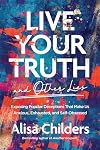
The statements we often hear now such as “live your truth” and “you do you” are ones I have heard and know are unbiblical, but Alisa Childers’ new book deeply unpacks the nuances behind them and the problems with these lies in a helpful way.
She does not hold back in sharing the truth, as well as underlining again and again the importance of the Bible as the foundation of truth and the standard of measure for our lives.
Some key understandings the book shares are the consequences of show more basing whether something is true on if it feels good and comfortable versus negative, harmful or uncomfortable. The author writes:
“The truth is that some biblical teachings are difficult. They make us uncomfortable. They call us to deny ourselves and prefer Jesus even over our family and friends. They get all up in our sex lives, our relationships, and our identities. . . . it’s not brave or revolutionary to deny *the* truth in order to speak *your* truth. . . . It might feel good for a while, but in the end it will simply bring anxiety, pain, depression, and exhaustion.”
The charts used in most chapters are a goldmine. One question I had never thought of before was especially key for discerning if something isn’t THE truth: “Is truth in this situation dependent on how it makes you or someone else feel?” or “Is truth in this situation dependent on what the Word of God says?”
This book truly hits the target, addressing the lying “truths” of our current society and the actual truth of God’s Word and ways. With such truths, this book is a must read for believers and unbelievers alike.
Lastly, I was unexpectedly touched by how she shared her own challenges and story in various chapters.
I received a review copy of this book for free from Netgalley, and I am leaving this review voluntarily. All opinions are my own. show less
She does not hold back in sharing the truth, as well as underlining again and again the importance of the Bible as the foundation of truth and the standard of measure for our lives.
Some key understandings the book shares are the consequences of show more basing whether something is true on if it feels good and comfortable versus negative, harmful or uncomfortable. The author writes:
“The truth is that some biblical teachings are difficult. They make us uncomfortable. They call us to deny ourselves and prefer Jesus even over our family and friends. They get all up in our sex lives, our relationships, and our identities. . . . it’s not brave or revolutionary to deny *the* truth in order to speak *your* truth. . . . It might feel good for a while, but in the end it will simply bring anxiety, pain, depression, and exhaustion.”
The charts used in most chapters are a goldmine. One question I had never thought of before was especially key for discerning if something isn’t THE truth: “Is truth in this situation dependent on how it makes you or someone else feel?” or “Is truth in this situation dependent on what the Word of God says?”
This book truly hits the target, addressing the lying “truths” of our current society and the actual truth of God’s Word and ways. With such truths, this book is a must read for believers and unbelievers alike.
Lastly, I was unexpectedly touched by how she shared her own challenges and story in various chapters.
I received a review copy of this book for free from Netgalley, and I am leaving this review voluntarily. All opinions are my own. show less
Live Your Truth and Other Lies: Exposing Popular Deceptions That Make Us Anxious, Exhausted, and Self-Obsessed by Alisa Childers
First sentence: My finger was literally on the button. Everything in me wanted to click Like and Share. Why am I not doing it? I thought. The author of the meme was a Christian, the quote sounded positive and life-affirming, and it would surely encourage and uplift my social media friends. I still can't do it. But why?
Live Your Truth and Other Lies is a book that challenges so-called "truths" of society and culture. Childers is encouraging her readers to logically, reasonably, thoughtfully show more examine their world views and beliefs, the truths by which they live. To do so in light of Scripture I might add. This whole book is essentially be discerning at all times, don't just soak up any and every "truth" that you hear--especially if it comes in a bite-size quote shared on social media. Not that lies can only be found on social media. Lies, half-truths, barely-truths can be found anywhere and everywhere in our lives, our cultures, our circles. Childers encourages--promotes--study of God's Word and reliance on it.
This book is not unique. There are probably a few each year along these same lines. Books that are calling out the LIES and half-truths of our culture and society. Books that encourage living in the Word and by the Word. Books that promote living counterculturally, not compromising with the world but holding to Scripture. This one is in some ways basic. But here's the thing, there doesn't have to be one and only one book on this subject. Just because it's been said before doesn't mean it's less important if said another time. There are people who will pick this one up and be blessed by it.
I liked the conversational tone of this one. I do love her YouTube channel and podcast. This was a pleasant, enjoyable read for me. I did like some of the charts within the chapters. I do wish it was easier to see which "lie" was being addressed in each chapter. The chapter titles could be more helpful. It isn't that they were horrible the first time through--when reading cover to cover. But if I wanted to use this as a reference, to come back to specific chapters to find something again, or to try to find a specific quote to share with someone, the chapter titles are not going to be helpful. show less
Live Your Truth and Other Lies is a book that challenges so-called "truths" of society and culture. Childers is encouraging her readers to logically, reasonably, thoughtfully show more examine their world views and beliefs, the truths by which they live. To do so in light of Scripture I might add. This whole book is essentially be discerning at all times, don't just soak up any and every "truth" that you hear--especially if it comes in a bite-size quote shared on social media. Not that lies can only be found on social media. Lies, half-truths, barely-truths can be found anywhere and everywhere in our lives, our cultures, our circles. Childers encourages--promotes--study of God's Word and reliance on it.
This book is not unique. There are probably a few each year along these same lines. Books that are calling out the LIES and half-truths of our culture and society. Books that encourage living in the Word and by the Word. Books that promote living counterculturally, not compromising with the world but holding to Scripture. This one is in some ways basic. But here's the thing, there doesn't have to be one and only one book on this subject. Just because it's been said before doesn't mean it's less important if said another time. There are people who will pick this one up and be blessed by it.
I liked the conversational tone of this one. I do love her YouTube channel and podcast. This was a pleasant, enjoyable read for me. I did like some of the charts within the chapters. I do wish it was easier to see which "lie" was being addressed in each chapter. The chapter titles could be more helpful. It isn't that they were horrible the first time through--when reading cover to cover. But if I wanted to use this as a reference, to come back to specific chapters to find something again, or to try to find a specific quote to share with someone, the chapter titles are not going to be helpful. show less
You May Also Like


Statistics
- Works
- 10
- Members
- 895
- Popularity
- #28,622
- Rating
- 4.3
- Reviews
- 16
- ISBNs
- 25
- Languages
- 2