
Gregory Koukl
Author of Tactics: A Game Plan for Discussing Your Christian Convictions
About the Author
Gregory Koukl holds MA degrees in both apologetics and philosophy. He's spoken on over 70 university campuses and hosted his own radio talk show for 26 years defending "Christianity Worth Thinking About." Greg is founder and president of Stand to Reason (str.org) and serves as adjunct professor of show more Christian apologetics at Biola University. show less
Works by Gregory Koukl
The Story of Reality: How the World Began, How It Ends, and Everything Important that Happens in Between (2017) — Author — 404 copies, 3 reviews
Tactics Study Guide, Updated and Expanded: A Guide to Effectively Discussing Your Christian Convictions (2020) 42 copies
Street Smarts Study Guide: Using Questions to Answer Christianity's Toughest Challenges (2023) 19 copies
The Story of Reality Study Guide: How the World Began, How it Ends, and Everything Important that Happens in Between (2020) 15 copies
Tactics Study Guide with DVD: A Guide to Effectively Discussing Your Christian Convictions (2017) 7 copies
Tactics Video Study: A Game Plan for Discussing Your Christian Convictions, Updated and Expanded (2020) 3 copies
The Story of Reality Video Study: How the World Began, How It Ends, and Everything Important that Happens in Between (2020) 3 copies
La verdadera historia: cómo comenzó el mundo, cómo terminará y todo lo importante que sucede en medio (Spanish Edition) (2019) 2 copies
Ambassador Insights 2 copies
Tactics Study Guide with DVD, Updated and Expanded: A Guide to Effectively Discussing Your Christian Convictions (2021) 2 copies
Tactics Study Guide plus Streaming Video, Updated and Expanded: A Guide to Effectively Discussing Your Christian Convictions (2025) 2 copies
Tactics 1 copy
The Bible - Fast Forward 1 copy
Tactics, With Dvd 1 copy
story of reality (The) 1 copy
3 Tough Questions (3 CD Set) 1 copy
Answering the New Atheists 1 copy
Tagged
Common Knowledge
Members
Reviews
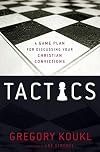
Even though this book is focused on how Christians can discuss their worldview with others, you don't have to be a believer to get a treasure trove of methods to hold discussions with people who hold opposing views to your own.
Greg's premise is to think of yourself as an ambassador for what you believe and not as a marauder trying to club someone over the head with your convictions. He says something in the beginning that I've been trying to keep in mind during my own discussions; if you're show more in an argument (meaning a difference of an opinion. It doesn't have to devolve into bickering and posturing), trying to persuade someone on your point of view, and you get upset, you lose. If the other person gets upset, you lose. You need to remain calm, ask more questions than you make assertions, and have a civil tone that represents how much you want them to understand you.
The book is chalk full of examples on how people use poor logic, make self defeating statements, hold opposing viewpoints, and have never really thought through some of the things they say. He gives ways to point out the flaws in this - in a way that isn't offensive - so you can plant a stone in their shoe and give them something to think about. As Greg says, the goal isn't to hit a home run with every encounter, just getting up to bat is sometimes the objective. Someone else will advance the runners.
Even though this book is focused on Christianity, anyone could take the principles he oulines here and use them when discussing the hot button issues that surround us today. When debating matters of politics and public policy, many people just throw out slogans and lines they've heard from other places without taking the time to think them through. Helping people to see this, in the way of an ambassador, would do a lot to calm the level of frustration and bickering that usually turns out to be the result of one of these discussions show less
Greg's premise is to think of yourself as an ambassador for what you believe and not as a marauder trying to club someone over the head with your convictions. He says something in the beginning that I've been trying to keep in mind during my own discussions; if you're show more in an argument (meaning a difference of an opinion. It doesn't have to devolve into bickering and posturing), trying to persuade someone on your point of view, and you get upset, you lose. If the other person gets upset, you lose. You need to remain calm, ask more questions than you make assertions, and have a civil tone that represents how much you want them to understand you.
The book is chalk full of examples on how people use poor logic, make self defeating statements, hold opposing viewpoints, and have never really thought through some of the things they say. He gives ways to point out the flaws in this - in a way that isn't offensive - so you can plant a stone in their shoe and give them something to think about. As Greg says, the goal isn't to hit a home run with every encounter, just getting up to bat is sometimes the objective. Someone else will advance the runners.
Even though this book is focused on Christianity, anyone could take the principles he oulines here and use them when discussing the hot button issues that surround us today. When debating matters of politics and public policy, many people just throw out slogans and lines they've heard from other places without taking the time to think them through. Helping people to see this, in the way of an ambassador, would do a lot to calm the level of frustration and bickering that usually turns out to be the result of one of these discussions show less
For a long time, I have taken a great interest in apologetics. I have a formal qualification in formal logic and, even if I didn't, it's a passion I cultivate in my spare time. I also take an avid interest in analytical philosophy, broader philosophy and world history between 500 BC to 500 AD.
These things I have tried to cultivate to the end of defending my faith for anyone who asks for an account of what I believe (1 Peter 3:15).
But apologetics doesn't work that way, as I learnt the hard show more way. When you are trying to love God with your mind (Luke 10:27) it doesn't help to simply know the facts. It definitely doesn't help to just give the facts (although I suppose there may be times when that is all that's required but no-one likes an info-dump).
So this book could not have come sooner. The skills presented here are simple and practical methods to navigate spiritual conversations without needlessly upsetting people when opposing views are at play. show less
These things I have tried to cultivate to the end of defending my faith for anyone who asks for an account of what I believe (1 Peter 3:15).
But apologetics doesn't work that way, as I learnt the hard show more way. When you are trying to love God with your mind (Luke 10:27) it doesn't help to simply know the facts. It definitely doesn't help to just give the facts (although I suppose there may be times when that is all that's required but no-one likes an info-dump).
So this book could not have come sooner. The skills presented here are simple and practical methods to navigate spiritual conversations without needlessly upsetting people when opposing views are at play. show less

Using questions to engage in conversation
This is a book about engaging in conversations about faith, especially applied to apologetics. Koukl provides a number of tactical techniques to take control of a conversation (in the sense of guiding it, not dominating it) in order to help reveal the deeper beliefs and assumptions held by others, in hopes that this will open people to the truth of the gospel. In many ways, the techniques taught here could be applied to many types of conversations, show more and not just apologetic ventures. But applied to apologetics and evangelism, with sensitivity, these conversation tools hold promise of opening, rather than closing ears.
While very helpful, I did find Koukl's approach to be terse at times. But this is likely in part due to his offering digested accounts of the conversations he records for illustration purposes. Another minor weakness in the book is Koukl's reference to Darwinian evolution almost as a view without merit, when contrasted to his apparently preferred ID view. Holding this position is fine, but I suspect what he means by Darwinism is primarily a rejection of naturalistic Darwinism as a worldview. It would help for him to nuance this point a bit more, since the topic is raised a number of times.
That said, Koukl does much to help elevate the Christian's confidence to be able to gently but firmly ask questions of others leading to opportunities to speak about Jesus. show less
This is a book about engaging in conversations about faith, especially applied to apologetics. Koukl provides a number of tactical techniques to take control of a conversation (in the sense of guiding it, not dominating it) in order to help reveal the deeper beliefs and assumptions held by others, in hopes that this will open people to the truth of the gospel. In many ways, the techniques taught here could be applied to many types of conversations, show more and not just apologetic ventures. But applied to apologetics and evangelism, with sensitivity, these conversation tools hold promise of opening, rather than closing ears.
While very helpful, I did find Koukl's approach to be terse at times. But this is likely in part due to his offering digested accounts of the conversations he records for illustration purposes. Another minor weakness in the book is Koukl's reference to Darwinian evolution almost as a view without merit, when contrasted to his apparently preferred ID view. Holding this position is fine, but I suspect what he means by Darwinism is primarily a rejection of naturalistic Darwinism as a worldview. It would help for him to nuance this point a bit more, since the topic is raised a number of times.
That said, Koukl does much to help elevate the Christian's confidence to be able to gently but firmly ask questions of others leading to opportunities to speak about Jesus. show less
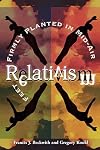
If you don't read another book, you must read this one. Not only do the authors deal with the self-contradicting nature of a relativistic worldview, but they then show relativism and Christianity stack up with regard to practical issues such as education, marriage, law, etc. Lastly, they offer methods for refuting relativism.
Lists
Awards

You May Also Like


Associated Authors
Statistics
- Works
- 52
- Members
- 3,167
- Popularity
- #8,064
- Rating
- 4.4
- Reviews
- 17
- ISBNs
- 65
- Languages
- 2
- Favorited
- 1