
Thaddeus John Williams
Author of Confronting Injustice without Compromising Truth: 12 Questions Christians Should Ask About Social Justice
About the Author
Thaddeus Williams (PhD, Vrije Universiteit Amsterdam) is associate professor of theology at Biola University in La Mirada, California, and author of Reflect and Confronting Injustice without Compromising Truth. He has taught literature at Saddleback College, jurisprudence at Trinity Law School, show more philosophy at L'Abri Fellowships in Switzerland and Holland, and ethics for Blackstone Legal Fellowship and the Federalist Society in Washington, DC. Williams is a frequent speaker at churches and conferences and resides in Orange County. California, with his wife and four children. show less
Works by Thaddeus John Williams
Confronting Injustice without Compromising Truth: 12 Questions Christians Should Ask About Social Justice (2020) 364 copies, 6 reviews
Love, Freedom, and Evil: Does Authentic Love Require Free Will? (Currents of Encounter) (2011) 28 copies
Tagged
Common Knowledge
- Canonical name
- Williams, Thaddeus John
- Birthdate
- 1978-12-23
- Gender
- male
- Short biography
- American Christian theologian
Members
Reviews
Confronting Injustice without Compromising Truth: 12 Questions Christians Should Ask About Social Justice by Thaddeus John Williams
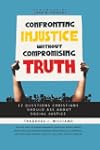
Social justice is one of the most important topics today but also one of the least understood. This is the keyword used to signify that we care about lives and rights and yet there is so much fighting in society over these two words. What can we do to seek peace and justice amid such division?
Thaddeus Williams provides the best path forward by actually seeking justice on the very concept of social justice. With great charity and greater clarity, Thaddeus weaves together both personal show more testimony and established evidence to clearly separate real justice from an impostor masquerading under the name. Rather than submitting to the popular polemic practices of today’s world, Mr. Williams instead graciously explains the foundations of “Social Justice B” (as he defines it) and shows that, however well-intentioned its adherents may be, that path is fraught with as much injustice as “Social Justice B” attempts to fight. Alongside exposing such foundations, Mr. Williams makes a strong case for a better view, a better approach to justice, one that actually answers questions rather than only making accusations.
One of the unique features Mr. Williams includes that testifies to his thorough treatment of the subject is the testimonies of various individuals in their struggles with injustice. As often as not, these individuals come from their own histories of being racist or intolerant, having to learn the dangers and failures of such perspectives, growing and learning how to love their neighbor, and now standing firmly against such discrimination.
In opposing polemics and vitriol, Mr. Williams has crafted a book that guides without demanding, educates without indoctrinating, and drives for truth without driving away others. This is a book that will stand firm for years to come as a benchmark in the discussion of justice and inequality and is an invaluable resource in these times both nebulous and tumultuous. show less
Thaddeus Williams provides the best path forward by actually seeking justice on the very concept of social justice. With great charity and greater clarity, Thaddeus weaves together both personal show more testimony and established evidence to clearly separate real justice from an impostor masquerading under the name. Rather than submitting to the popular polemic practices of today’s world, Mr. Williams instead graciously explains the foundations of “Social Justice B” (as he defines it) and shows that, however well-intentioned its adherents may be, that path is fraught with as much injustice as “Social Justice B” attempts to fight. Alongside exposing such foundations, Mr. Williams makes a strong case for a better view, a better approach to justice, one that actually answers questions rather than only making accusations.
One of the unique features Mr. Williams includes that testifies to his thorough treatment of the subject is the testimonies of various individuals in their struggles with injustice. As often as not, these individuals come from their own histories of being racist or intolerant, having to learn the dangers and failures of such perspectives, growing and learning how to love their neighbor, and now standing firmly against such discrimination.
In opposing polemics and vitriol, Mr. Williams has crafted a book that guides without demanding, educates without indoctrinating, and drives for truth without driving away others. This is a book that will stand firm for years to come as a benchmark in the discussion of justice and inequality and is an invaluable resource in these times both nebulous and tumultuous. show less
Confronting Injustice without Compromising Truth: 12 Questions Christians Should Ask About Social Justice by Thaddeus John Williams
The further I got through this book, the more disappointed I became. I was expecting an even handed look at issues of social justice from a biblical perspective. I was expecting to see the left and the right equally criticized, much like what I have seen in some of Tim Keller's writings. Instead I found a critique what the author refers to as social justice "B"... a version of social justice driven by the extreme. While the author made a number of good points, he was often (especially in the show more appendixes) arguing against straw man. In his focus on the left, failed to properly address the failures on the right.
What he gets right is the we are too focused on our "tribes", us against them, and too quick to take our tribes position rather than asking "What does God think?". I am disappoint that the book didn't have more constructive solutions. show less
What he gets right is the we are too focused on our "tribes", us against them, and too quick to take our tribes position rather than asking "What does God think?". I am disappoint that the book didn't have more constructive solutions. show less
Confronting Injustice without Compromising Truth: 12 Questions Christians Should Ask About Social Justice by Thaddeus John Williams
Not a bad book, but it only felt like half a book. The book kept on giving examples of how Social Justice was not Biblical Justice, but it didn't give examples of how to use Biblical Justice to address the problems Social Justice is trying to address.
Confronting Injustice without Compromising Truth: 12 Questions Christians Should Ask About Social Justice by Thaddeus John Williams
Excellent. Very spot on and so well thought through. If you are looking for a balance in the social justice debate, this is where you want to start. Excellent treatment of justice from a biblical perspective. Not exhaustive, but exactly what we all need. Read this!
You May Also Like


Statistics
- Works
- 10
- Members
- 561
- Popularity
- #44,551
- Rating
- 4.2
- Reviews
- 7
- ISBNs
- 23
- Languages
- 1