
Randolph Silliman Bourne (1886–1918)
Author of War and the Intellectuals: Collected Essays, 1915-1919
About the Author
Randolph Bourne (1886-1918) studied with Charles Beard and John Dewey at Columbia University. He was a regular contributor to New Republic, Dial, and The Seven Arts, and active in the protest movement against American entry into the first world war
Works by Randolph Silliman Bourne
Anarchy 31 1 copy
Associated Works
World War I and America: Told by the Americans Who Lived It (1918) — Contributor — 226 copies, 1 review
The Glorious American Essay: One Hundred Essays from Colonial Times to the Present (2020) — Contributor — 119 copies
War No More: Three Centuries of American Antiwar and Peace Writing (2016) — Contributor — 109 copies, 2 reviews
The Heath Anthology of American Literature, Concise Edition (2003) — Contributor — 73 copies, 1 review
Tagged
Common Knowledge
- Legal name
- Bourne, Randolph Silliman
- Birthdate
- 1886-05-30
- Date of death
- 1918-12-22
- Gender
- male
- Education
- Columbia University
- Occupations
- writer
public intellectual - Nationality
- USA
- Associated Place (for map)
- USA
Members
Reviews

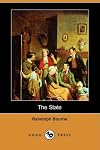
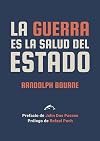
This important volume includes Bourne's landmark article, "War is the Health of the State." This is part of a larger article, called "The State," which was left unfinished at the time of Bourne's death in 1918. (He died shortly after the Armistice, in the flu epidemic, at the pitifully young age of 32.) It was Bourne who not only distinguished between one's country and the State (nation-state), but connected the State intimately with the drumbeat of war.
He said:
"War is the health of the show more state. It automatically sets in motion throughout society those irresistable forces for uniformity, for passionate cooperation with the Government in coercing into obedience the minority groups and individuals which lack the larger herd sense...the nation in war-time attains a uniformity of feeling, a hierarchy of values culminating at the undisputed apex of the State ideal, which could not possibly be produced through any other agency than war...The State is intimately connected with war, for it is the organization of the collective community when it acts in a political manner; and to act in a political manner towards a rival group has meant, throughout all history - war..."
Bourne follows this with a cogent argument that is several pages long. Since it's in the public domain, you can also read this article online, for example at: http://struggle.ws/hist_texts/warhealthstate1918.html. show less
He said:
"War is the health of the show more state. It automatically sets in motion throughout society those irresistable forces for uniformity, for passionate cooperation with the Government in coercing into obedience the minority groups and individuals which lack the larger herd sense...the nation in war-time attains a uniformity of feeling, a hierarchy of values culminating at the undisputed apex of the State ideal, which could not possibly be produced through any other agency than war...The State is intimately connected with war, for it is the organization of the collective community when it acts in a political manner; and to act in a political manner towards a rival group has meant, throughout all history - war..."
Bourne follows this with a cogent argument that is several pages long. Since it's in the public domain, you can also read this article online, for example at: http://struggle.ws/hist_texts/warhealthstate1918.html. show less
So much of his analysis about WWI resembles the past decade. It is truly uncanny!
You May Also Like


Associated Authors
Statistics
- Works
- 15
- Also by
- 8
- Members
- 199
- Popularity
- #110,456
- Rating
- 4.0
- Reviews
- 3
- ISBNs
- 26
- Languages
- 2
- Favorited
- 2