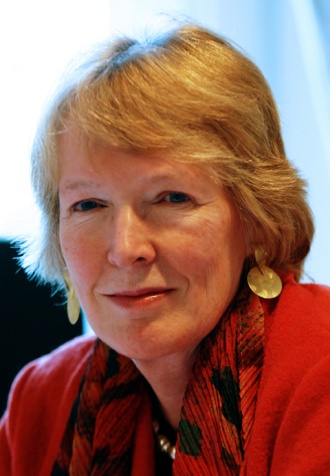
Margaret MacMillan
Author of Paris 1919: Six Months That Changed the World
About the Author
Margaret MacMillan is the award-winning author of Paris 1919, Nixon and Mao, and Women of the Raj. A past provost of Trinity College at the University of Toronto, MacMillan is the warden of St. Antony's College at Oxford University.
Works by Margaret MacMillan
Dangerous Games: The Uses and Abuses of History (Modern Library Chronicles) (2008) 711 copies, 26 reviews
Women of the Raj: The Mothers, Wives, and Daughters of the British Empire in India (1988) 321 copies, 6 reviews
Sei mesi che cambiarono il mondo 2 2 copies
Associated Works
Forschung Spezial. Journal für Wissenschaft, Technologie und Entwicklung (4.4.2018) — Interviewee — 1 copy
Tagged
Common Knowledge
- Canonical name
- MacMillan, Margaret
- Legal name
- MacMillan, Margaret Olwen
- Birthdate
- 1943-12-23
- Gender
- female
- Education
- University of Toronto (BA)
St Hilda's College, Oxford (B.Phil)
St Antony's College, Oxford (D.Phil|1974) - Occupations
- historian
professor
academic administrator - Organizations
- University of Oxford
University of Toronto
Ryerson University - Awards and honors
- Order of Canada (Companion, 2015)
Royal Society of Literature (Fellow, 2003)
Companion of Honour (2018)
Order of Merit (2022)
British Academy (Honorary Fellow, 2019)
Learned Society of Wales (Honorary Fellow, 2020) (show all 14)
Royal Society of Canada (Fellow, 2015)
Symons Medal (2018)
Samuel Johnson Prize (2002)
Hessell-Tiltman Prize (2002)
Order of Canada (Officer, 2006)
Governor General's Literary Award (2003)
Pritzker Military Library Literature Award (2021)
Royal Geographical Society of Canada (Fellow) - Agent
- Caroline Dawnay
- Relationships
- Snow, Dan (nephew)
Carey Evans, Olwen (grandmother)
Lloyd George, David (great-grandfather)
MacMillan, Ann (sister) - Nationality
- Canada
- Birthplace
- Toronto, Ontario, Canada
- Places of residence
- Toronto, Ontario, Canada
Oxford, Oxfordshire, England, UK - Map Location
- Canada
Members
Reviews
It was going to be a short war…forty days beginning to end…a blip on the way to bragging rights for the nations that came out on top. Of course it didn’t work out that way but then nothing in the years that led up to WWI worked out as planned.
Margaret MacMillan’s recently published book is a tour de force of narrative non-fiction that provides a very readable history of the people who ultimately made the decisions and the events that took place in the decades before 1914 that show more ultimately led to war. As a reader who knows very little about the intricacies of the war, I came away with a much more cogent view of what happened. Consensus has always been that the Germans were to blame but MacMillan takes the idea that the German Kaiser, Wilhelm II, caused the war and turns it on its head by showing how the Germans were hemmed in by the alliance formed by Great Britain, France and Russia.
I was struck by the step by step account that MacMillan laid out: the alliances formed, the development of war plans years ahead of time, the build-up of naval forces and the development of dreadnoughts, the arms race, the divergent political views, the increased importance of the oil fields in the Middle East, the growth of Socialism and the peace movement, the secret pacts, the amplified significance of public opinion, the role of accident in history and the fascinating figures that were brought vividly to life. Those characters included, on the British side a young Winston Churchill, the Prime Minister Herbert Asquith, King Edward VII, and Queen Victoria; in Germany Kaiser Wilhelm II, vonMoltke the Younger, the Chief of Staff and Alfred von Tirpitz who oversaw a massive naval building program; in Russia, the Tsar Nicholas II and his wife; and in Austria-Hungary Emperor Franz-Joseph and the Archduke Franz Ferdinand, whose assassination proved to be the tipping point. All of these people contributed to the long lasting peace that Europe had been enjoying during the 19th century and the final demise of that peace in 1914, when Europe began the process that “laid waste to itself.”
In her introduction, MacMillan opines:
”Most of the copious literature on the events of 1914 understandably ask why the Great War, broke out. Perhaps we need to ask another sort of question: why did the long peace not continue? Why did the forces pushing towards peace---and they were strong ones---not prevail? They had done so before, after all. Why did the system fail this time? One way of getting at an answer is to see how Europe’s options had narrowed down in the decades before 1914.” (Page xxxiii)
She goes a long way toward making the case for what might have been had cooler heads prevailed and she does so in a very engaging narrative. Very highly recommended. show less
Margaret MacMillan’s recently published book is a tour de force of narrative non-fiction that provides a very readable history of the people who ultimately made the decisions and the events that took place in the decades before 1914 that show more ultimately led to war. As a reader who knows very little about the intricacies of the war, I came away with a much more cogent view of what happened. Consensus has always been that the Germans were to blame but MacMillan takes the idea that the German Kaiser, Wilhelm II, caused the war and turns it on its head by showing how the Germans were hemmed in by the alliance formed by Great Britain, France and Russia.
I was struck by the step by step account that MacMillan laid out: the alliances formed, the development of war plans years ahead of time, the build-up of naval forces and the development of dreadnoughts, the arms race, the divergent political views, the increased importance of the oil fields in the Middle East, the growth of Socialism and the peace movement, the secret pacts, the amplified significance of public opinion, the role of accident in history and the fascinating figures that were brought vividly to life. Those characters included, on the British side a young Winston Churchill, the Prime Minister Herbert Asquith, King Edward VII, and Queen Victoria; in Germany Kaiser Wilhelm II, vonMoltke the Younger, the Chief of Staff and Alfred von Tirpitz who oversaw a massive naval building program; in Russia, the Tsar Nicholas II and his wife; and in Austria-Hungary Emperor Franz-Joseph and the Archduke Franz Ferdinand, whose assassination proved to be the tipping point. All of these people contributed to the long lasting peace that Europe had been enjoying during the 19th century and the final demise of that peace in 1914, when Europe began the process that “laid waste to itself.”
In her introduction, MacMillan opines:
”Most of the copious literature on the events of 1914 understandably ask why the Great War, broke out. Perhaps we need to ask another sort of question: why did the long peace not continue? Why did the forces pushing towards peace---and they were strong ones---not prevail? They had done so before, after all. Why did the system fail this time? One way of getting at an answer is to see how Europe’s options had narrowed down in the decades before 1914.” (Page xxxiii)
She goes a long way toward making the case for what might have been had cooler heads prevailed and she does so in a very engaging narrative. Very highly recommended. show less
This book is especially timely given the proposed changes to history textbooks by the Texas Commission on Education that would increase the visibility of Newt Gingrinch and Phyllis Schlafly at the expense of Thurgood Marshall. (This problem is not new. Frances Fitzgerald wrote a terrific book several years ago about the problem of textbooks in [b:America Revised|310842|America Revised|Frances Fitzgerald|http://www.goodreads.com/images/nocover-60x80.jpg|283208].)
Nations use history as a way show more to inspire nationalistic feeling. They do so by selectively inculcating "lessons" gleaned from the past to illustrate some political agenda. No one was better at this than George (I wanna be King) W Bush and Dick (I really am one) Cheney. Both often cited the experience of WW II as justification for their actions in Iraq. They confused the experience of defeated peoples, e.g. Germany and Japan whose societies were rebuilt from the bottom up whether they liked it or not (they could be "treated with arbitrary ruthlessness,") with that of liberated nations (Greece, Yugoslavia, Belgium and Italy which were allowed, with mixed success and often considerable violence and conflict, to rebuild their own societies the way they thought they wanted.) "George W. Bush liked to compare the challenge he faced from America's foes with that which Winston Churchill confronted seventy years ago. Vice President Dick Cheney once said that global terrorism represents the gravest threat Western civilization has ever faced. Such assertions exposed the awesome magnitude of both men's ignorance." But it's all nations who engage in such dis-ingenuousness. She cites examples from Israel, Hindus in India, China, Ireland, Britain, and even Canada.
Americans (see [b:History Wars: The Enola Gay and Other Battles for the American Past|178302|History Wars The Enola Gay and Other Battles for the American Past|Tom Engelhardt|http://photo.goodreads.com/books/1172460968s/178302.jpg|172243]) are not the only ones who suffer from an overdeveloped sense of righteousness when it comes to their actions in wartime. Apparently, a firestorm of protest broke out in Canada in 1992 following the CBC documentary The Valour and the Horror which discussed the effectiveness and morality of strategic bombing. Some 20,000 Canadian airmen had participated and about 50% died. Veterans organizations were outraged that the issue could be framed in anything other than "black and white, good and evil." MacMillan was asked to testify and said, "History should not be written to make the present generation feel good but to remind us that human affairs are complicated." "The idea that those who actually took part in great events or lived through particular times have a superior understanding to those who come later is a deeply held yet wrong-headed one," as Charles Pellegrino is learning to his chagrin. National myths are too cherished to be troubled by facts. I doubt if southerners will ever discontinue viewing the Civil War as anything other than the War of Northern Aggression.
China, Japan, Israel, Russia, all have whitewashed views of their more sordid actions. Macmillan describes Hindu disregard for Muslim contributions to Indian history. And we are all familiar with Mormon attempts to rewrite their forbearer's actions in a more favorable light. MacMillan rightly notes that those present at an event do not necessarily have an accurate view of what happened and the recent travails of author Charles Pelligrino who is being pilloried for relying too much on the fictitious memory of an airman who apparently wasn't even where he said he was should make all of us a little wary of anecdotal accounts. ([b:The Last Train from Hiroshima: The Survivors Look Back|7094599|The Last Train from Hiroshima The Survivors Look Back|Charles Pellegrino|http://ecx.images-amazon.com/images/I/51flTefvl2L._SL75_.jpg|7351460] - see http://www.nytimes.com/2010/03/05/movies/05arts-JAMESCAMERON_BRF.html)
"Historians, however are not scientists, and if they do not make what they are doing intelligible to the public, then others will rush in to fill the void. Political and other leaders too often get away with misusing or abusing history for their own ends because the rest of us do not know enough to challenge them. " [a:Susan Jacoby|259719|Susan Jacoby|http://www.goodreads.com/images/nophoto/nophoto-F-50x66.jpg] tells the story of visiting a bar in New York the evening of 9/11. One fellow says to another that the WTC attack was like Pearl Harbor. "What was Pearl Harbor?" the other asked. "It was when the Vietnamese dropped some bombs in a harbor and started the Vietnam War," was the reply. MacMillan argues that such woeful ignorance has much more serious repercussions than just a display of stupidity. The Bush administration was using an attack by a few idealists and fundamentalists to justify a war against a state and a continuing -- some might argue infinite --war against a tactic and idea.
Sometimes, institutional memory fails us and the example she cites was totally unfamiliar to me. In 1979, rumors circulated that the Soviets had begun stationing troops in Cuba. Tensions increased and people recalled the Cuban Missile Crisis of 1962. Kennedy had secretly agreed not to invade Cuba if the missiles were withdrawn and now it appeared the Soviets were violently an agreement not to station troops there again. The intelligence services were asked to investigate and sure enough, there were Russkies in Cuba. What the intelligence services had forgotten was that Kennedy had backed down on his initial demand that the Soviets remove all Russian troops from the island. Tensions and rhetoric increased in volume and disaster was averted on by Dobrynin's shuttle diplomacy between the two countries assuring the Russians that it was an honest mistake and that the U.S. had simply forgotten the earlier agreement. Cyrus Vance wrote that the incident as "Appalling. Awareness of the Soviet ground force units had faded from the institutional memories of the intelligence agencies."
In another example of institutional myopia, T.X. Hames, a Marine colonel wrote a book analyzing counter-insurgency tactics learned from the Vietnam War, an episode the military preferred to leave forgotten. Unable to find a publisher, because no one was interested, his book [b:The Sling and the Stone: On War in the 21st Century|6323017|The Sling and the Stone On War in the 21st Century|USMC, Colonel Thomas X. Hammes|http://ecx.images-amazon.com/images/I/51tSZHdgJXL._SL75_.jpg|6508481] was finally released in 2004 when the United States was having to relearn the difficult lessons of insurgency in Iraq.
The last few decades have seen a rise in the need of nations to apologize for actions committed by governments during wartime that, in retrospect, appear to be unfeeling and/or discriminatory. Should we pay reparations to the ancestors of slaves or Native American tribes. Is it necessary to review decisions made in the context of the time? Japanese and Germans were interned or had property confiscated even they they might have been generations removed from their "homeland." Given that people at the time did not know that the Axis Powers would lose, was the paranoia justified? If we don't have accurate historical review, can we avoid making the same mistakes in the future?
For several of my comments I am indebted to an excellent review of Macmillan's fascinating book written by Max Hastings, ironically one of those "amateur" historians, in the March 11, 2010 New York Review of Books. (It's worth the $3 and can be read here http://www.nybooks.com/articles/article-preview?article_id=23706) show less
Nations use history as a way show more to inspire nationalistic feeling. They do so by selectively inculcating "lessons" gleaned from the past to illustrate some political agenda. No one was better at this than George (I wanna be King) W Bush and Dick (I really am one) Cheney. Both often cited the experience of WW II as justification for their actions in Iraq. They confused the experience of defeated peoples, e.g. Germany and Japan whose societies were rebuilt from the bottom up whether they liked it or not (they could be "treated with arbitrary ruthlessness,") with that of liberated nations (Greece, Yugoslavia, Belgium and Italy which were allowed, with mixed success and often considerable violence and conflict, to rebuild their own societies the way they thought they wanted.) "George W. Bush liked to compare the challenge he faced from America's foes with that which Winston Churchill confronted seventy years ago. Vice President Dick Cheney once said that global terrorism represents the gravest threat Western civilization has ever faced. Such assertions exposed the awesome magnitude of both men's ignorance." But it's all nations who engage in such dis-ingenuousness. She cites examples from Israel, Hindus in India, China, Ireland, Britain, and even Canada.
Americans (see [b:History Wars: The Enola Gay and Other Battles for the American Past|178302|History Wars The Enola Gay and Other Battles for the American Past|Tom Engelhardt|http://photo.goodreads.com/books/1172460968s/178302.jpg|172243]) are not the only ones who suffer from an overdeveloped sense of righteousness when it comes to their actions in wartime. Apparently, a firestorm of protest broke out in Canada in 1992 following the CBC documentary The Valour and the Horror which discussed the effectiveness and morality of strategic bombing. Some 20,000 Canadian airmen had participated and about 50% died. Veterans organizations were outraged that the issue could be framed in anything other than "black and white, good and evil." MacMillan was asked to testify and said, "History should not be written to make the present generation feel good but to remind us that human affairs are complicated." "The idea that those who actually took part in great events or lived through particular times have a superior understanding to those who come later is a deeply held yet wrong-headed one," as Charles Pellegrino is learning to his chagrin. National myths are too cherished to be troubled by facts. I doubt if southerners will ever discontinue viewing the Civil War as anything other than the War of Northern Aggression.
China, Japan, Israel, Russia, all have whitewashed views of their more sordid actions. Macmillan describes Hindu disregard for Muslim contributions to Indian history. And we are all familiar with Mormon attempts to rewrite their forbearer's actions in a more favorable light. MacMillan rightly notes that those present at an event do not necessarily have an accurate view of what happened and the recent travails of author Charles Pelligrino who is being pilloried for relying too much on the fictitious memory of an airman who apparently wasn't even where he said he was should make all of us a little wary of anecdotal accounts. ([b:The Last Train from Hiroshima: The Survivors Look Back|7094599|The Last Train from Hiroshima The Survivors Look Back|Charles Pellegrino|http://ecx.images-amazon.com/images/I/51flTefvl2L._SL75_.jpg|7351460] - see http://www.nytimes.com/2010/03/05/movies/05arts-JAMESCAMERON_BRF.html)
"Historians, however are not scientists, and if they do not make what they are doing intelligible to the public, then others will rush in to fill the void. Political and other leaders too often get away with misusing or abusing history for their own ends because the rest of us do not know enough to challenge them. " [a:Susan Jacoby|259719|Susan Jacoby|http://www.goodreads.com/images/nophoto/nophoto-F-50x66.jpg] tells the story of visiting a bar in New York the evening of 9/11. One fellow says to another that the WTC attack was like Pearl Harbor. "What was Pearl Harbor?" the other asked. "It was when the Vietnamese dropped some bombs in a harbor and started the Vietnam War," was the reply. MacMillan argues that such woeful ignorance has much more serious repercussions than just a display of stupidity. The Bush administration was using an attack by a few idealists and fundamentalists to justify a war against a state and a continuing -- some might argue infinite --war against a tactic and idea.
Sometimes, institutional memory fails us and the example she cites was totally unfamiliar to me. In 1979, rumors circulated that the Soviets had begun stationing troops in Cuba. Tensions increased and people recalled the Cuban Missile Crisis of 1962. Kennedy had secretly agreed not to invade Cuba if the missiles were withdrawn and now it appeared the Soviets were violently an agreement not to station troops there again. The intelligence services were asked to investigate and sure enough, there were Russkies in Cuba. What the intelligence services had forgotten was that Kennedy had backed down on his initial demand that the Soviets remove all Russian troops from the island. Tensions and rhetoric increased in volume and disaster was averted on by Dobrynin's shuttle diplomacy between the two countries assuring the Russians that it was an honest mistake and that the U.S. had simply forgotten the earlier agreement. Cyrus Vance wrote that the incident as "Appalling. Awareness of the Soviet ground force units had faded from the institutional memories of the intelligence agencies."
In another example of institutional myopia, T.X. Hames, a Marine colonel wrote a book analyzing counter-insurgency tactics learned from the Vietnam War, an episode the military preferred to leave forgotten. Unable to find a publisher, because no one was interested, his book [b:The Sling and the Stone: On War in the 21st Century|6323017|The Sling and the Stone On War in the 21st Century|USMC, Colonel Thomas X. Hammes|http://ecx.images-amazon.com/images/I/51tSZHdgJXL._SL75_.jpg|6508481] was finally released in 2004 when the United States was having to relearn the difficult lessons of insurgency in Iraq.
The last few decades have seen a rise in the need of nations to apologize for actions committed by governments during wartime that, in retrospect, appear to be unfeeling and/or discriminatory. Should we pay reparations to the ancestors of slaves or Native American tribes. Is it necessary to review decisions made in the context of the time? Japanese and Germans were interned or had property confiscated even they they might have been generations removed from their "homeland." Given that people at the time did not know that the Axis Powers would lose, was the paranoia justified? If we don't have accurate historical review, can we avoid making the same mistakes in the future?
For several of my comments I am indebted to an excellent review of Macmillan's fascinating book written by Max Hastings, ironically one of those "amateur" historians, in the March 11, 2010 New York Review of Books. (It's worth the $3 and can be read here http://www.nybooks.com/articles/article-preview?article_id=23706) show less
A really wonderful book that goes through each of the "problems" that faced the Allies when they convened in Paris at the end of WW I. It brings the characters alive (Lloyd George the sly, Woodrow Wilson the idealist and Clemenceau the grizzly veteran) and does a great job of illustrating the impossible job that they had in front of them.
Those six months were pregnant with possibilities to guide Europe and the rest of the world away from the mess of hyper-nationalism, secret agreements, show more naval race and a scramble for Africa that had caused the world to walk into a pointless war that apparently none of them wanted. And to their credit, the big 3 seem to have genuinely grappled with this possibility. Ultimately two things doomed them and caused the whole shit show to repeat itself with more advanced killing machines a mere 20 years later - 1) the inability of Britain and France (and to a lesser extent, Italy) to not think in imperialistic terms and 2) their supercilious assumption that they can draw imaginary lines on maps where the now vanished Austria-Hungary and Ottoman empires were and people would automatically respect those lines. Despite their "noble" intentions, these two forces kept pulling the allies back into the same sordid mess of secret agreements and shameless land-grabs (couched in new language as "mandates") that had been a primary impetus for the Great War. The book goes through each of the impacted regions in turn giving a very convincing account of the enormous complexities facing the big 3 along every step of the way. As one can imagine, there is a lot of local politics that the reader has to wade through but to the book's credit, it sustains its pace very well.
Almost every single region created or substantially modified by the Paris conference has been a source of violence and bloodshed over the past 100 years (Germany/Austria in WW II, the Balkans during the Cold War and in the 1990s and the Middle East even today). The League of Nations, supposedly the crown jewel of the peace conference that would make war obsolete, died a still birth. Germany was left fuming by the perceived harshness of the terms and by being made to assume sole responsibility for the war making the country a powder keg for the Nazis to exploit. The betrayal of China to satisfy Japanese imperialist ambitions turned China away from democracy towards Soviet Russia and communism.
Despite these damning records, MacMillan argues convincingly that it wasn't all the fault of the peacemakers - they weren't always Machiavellian. They really tried as best as they knew how (within the parameters of their 19th century world-view with all its attendant racist and imperialistic assumptions). It just wasn't good enough. show less
Those six months were pregnant with possibilities to guide Europe and the rest of the world away from the mess of hyper-nationalism, secret agreements, show more naval race and a scramble for Africa that had caused the world to walk into a pointless war that apparently none of them wanted. And to their credit, the big 3 seem to have genuinely grappled with this possibility. Ultimately two things doomed them and caused the whole shit show to repeat itself with more advanced killing machines a mere 20 years later - 1) the inability of Britain and France (and to a lesser extent, Italy) to not think in imperialistic terms and 2) their supercilious assumption that they can draw imaginary lines on maps where the now vanished Austria-Hungary and Ottoman empires were and people would automatically respect those lines. Despite their "noble" intentions, these two forces kept pulling the allies back into the same sordid mess of secret agreements and shameless land-grabs (couched in new language as "mandates") that had been a primary impetus for the Great War. The book goes through each of the impacted regions in turn giving a very convincing account of the enormous complexities facing the big 3 along every step of the way. As one can imagine, there is a lot of local politics that the reader has to wade through but to the book's credit, it sustains its pace very well.
Almost every single region created or substantially modified by the Paris conference has been a source of violence and bloodshed over the past 100 years (Germany/Austria in WW II, the Balkans during the Cold War and in the 1990s and the Middle East even today). The League of Nations, supposedly the crown jewel of the peace conference that would make war obsolete, died a still birth. Germany was left fuming by the perceived harshness of the terms and by being made to assume sole responsibility for the war making the country a powder keg for the Nazis to exploit. The betrayal of China to satisfy Japanese imperialist ambitions turned China away from democracy towards Soviet Russia and communism.
Despite these damning records, MacMillan argues convincingly that it wasn't all the fault of the peacemakers - they weren't always Machiavellian. They really tried as best as they knew how (within the parameters of their 19th century world-view with all its attendant racist and imperialistic assumptions). It just wasn't good enough. show less

So there’s that humorous moment out there: someone asking about how World War I started, and how the explanation would take many hours or days.
It’s funny because it’s true, and it’s true because of the sheer futility of the whole enterprise. World War I started because of diplomatic failures and fears about dishonor, weakness, and good old-fashioned prejudice juiced by the newer phenomenon of nationalism.
And so it takes a book of over 800 pages to describe what brought Europe to war show more in 1914, well described by Margaret MacMillan in the well titled The War That Ended Peace: The Road to 1914.
The author began by describing Europe’s situation in the late nineteenth century. She then considers each major participant and their experience of the late nineteenth and early twentieth centuries, and the relationships among them. She describes a world in which the various powers are all run by a small elite coterie who know each other well, are often related to each other, and could present a picture of a broadly cosmopolitan continent. She focuses on certain characters who reflect the cosmopolitan attitudes of the day, people who maintain friendships and good times with people throughout Europe. She is able to speak of how many were vacationing in areas which would soon become enemy territory within weeks in the summer of 1914.
She then describes the various crises which arose in the late 19th and early 20th century which, in retrospect, set up the conditions for war in 1914: twice about Morocco, Bosnia-Herzegovina, and the Balkan wars. In each of these situations some felt they were dishonored or shown as weak. Over time Germany convinced itself it was being encircled for nefarious reasons; France and Russia likewise looked warily on Germany and its belligerence; Austria-Hungary is always on the precipice of breaking apart.
The assassination of Franz Ferdinand in late June 1914 is described as well as its immediate aftereffects. Almost no one, at the time, expected this to be the catalyst for war. And yet, with decision after decision, war became inevitable. When it came it did so more suddenly than anyone had imagined. And it would prove more horrible than anyone could have ever feared.
World War I was truly the war that ended peace. Cosmopolitan Europe was shattered; the age of progress was irretrievably reversed. The German, Austro-Hungarian, Ottoman, and Russian Empires would not survive the war. World War II, in many respects, was a continuation of World War I, the German attempt at retrieving the honor they lost in the first conflict. Even in victory Britain and France would be exhausted twice and would ultimately lose their empires. Europe remains industrialized and among the advanced nations but destroyed their power and influence in these conflicts. The difference between Europe in 1913 and 1919 is stark; all the more so by 1953.
So what caused the war? Yes, Germany declared war on Russia since Russia was mobilizing since Austria-Hungary had declared war on Serbia. Austria-Hungary went for broke to either absorb the South Slavs or collapse in a blaze of glory, fueled by the conservative aristocracy fearing dishonor and weakness more than anything else. Germany proved overly confident in their war plans and believed their own rhetoric about themselves, the French, the British, and ultimately the Americans (and would do so again twenty-five years later). Everyone was convinced they could go on the offensive and overpower their enemies quickly even though all available evidence demonstrated the defensive advantage thanks to advanced armament technology. They were too proud to learn from the experience of the “savages” in the American Civil War or the Boer War.
Untold millions suffered because of the hubris of that elite coterie of the fin de siècle. Modern democratic Europe arose from its ashes.
Such things could happen again. And it always starts with an aggrieved elite concerned about prospective irrelevance perceived as dishonor and weakness. Economic ties are not sufficient to avoid it. And, apparently, we never learn. show less
It’s funny because it’s true, and it’s true because of the sheer futility of the whole enterprise. World War I started because of diplomatic failures and fears about dishonor, weakness, and good old-fashioned prejudice juiced by the newer phenomenon of nationalism.
And so it takes a book of over 800 pages to describe what brought Europe to war show more in 1914, well described by Margaret MacMillan in the well titled The War That Ended Peace: The Road to 1914.
The author began by describing Europe’s situation in the late nineteenth century. She then considers each major participant and their experience of the late nineteenth and early twentieth centuries, and the relationships among them. She describes a world in which the various powers are all run by a small elite coterie who know each other well, are often related to each other, and could present a picture of a broadly cosmopolitan continent. She focuses on certain characters who reflect the cosmopolitan attitudes of the day, people who maintain friendships and good times with people throughout Europe. She is able to speak of how many were vacationing in areas which would soon become enemy territory within weeks in the summer of 1914.
She then describes the various crises which arose in the late 19th and early 20th century which, in retrospect, set up the conditions for war in 1914: twice about Morocco, Bosnia-Herzegovina, and the Balkan wars. In each of these situations some felt they were dishonored or shown as weak. Over time Germany convinced itself it was being encircled for nefarious reasons; France and Russia likewise looked warily on Germany and its belligerence; Austria-Hungary is always on the precipice of breaking apart.
The assassination of Franz Ferdinand in late June 1914 is described as well as its immediate aftereffects. Almost no one, at the time, expected this to be the catalyst for war. And yet, with decision after decision, war became inevitable. When it came it did so more suddenly than anyone had imagined. And it would prove more horrible than anyone could have ever feared.
World War I was truly the war that ended peace. Cosmopolitan Europe was shattered; the age of progress was irretrievably reversed. The German, Austro-Hungarian, Ottoman, and Russian Empires would not survive the war. World War II, in many respects, was a continuation of World War I, the German attempt at retrieving the honor they lost in the first conflict. Even in victory Britain and France would be exhausted twice and would ultimately lose their empires. Europe remains industrialized and among the advanced nations but destroyed their power and influence in these conflicts. The difference between Europe in 1913 and 1919 is stark; all the more so by 1953.
So what caused the war? Yes, Germany declared war on Russia since Russia was mobilizing since Austria-Hungary had declared war on Serbia. Austria-Hungary went for broke to either absorb the South Slavs or collapse in a blaze of glory, fueled by the conservative aristocracy fearing dishonor and weakness more than anything else. Germany proved overly confident in their war plans and believed their own rhetoric about themselves, the French, the British, and ultimately the Americans (and would do so again twenty-five years later). Everyone was convinced they could go on the offensive and overpower their enemies quickly even though all available evidence demonstrated the defensive advantage thanks to advanced armament technology. They were too proud to learn from the experience of the “savages” in the American Civil War or the Boer War.
Untold millions suffered because of the hubris of that elite coterie of the fin de siècle. Modern democratic Europe arose from its ashes.
Such things could happen again. And it always starts with an aggrieved elite concerned about prospective irrelevance perceived as dishonor and weakness. Economic ties are not sufficient to avoid it. And, apparently, we never learn. show less
Lists
Awards


You May Also Like


Associated Authors
Statistics
- Works
- 18
- Also by
- 4
- Members
- 7,498
- Popularity
- #3,264
- Rating
- 4.0
- Reviews
- 167
- ISBNs
- 163
- Languages
- 12
- Favorited
- 8