
Adam W. Shepard
Author of Scratch Beginnings: Me, $25, and the Search for the American Dream
About the Author
Works by Adam W. Shepard
Tagged
Common Knowledge
- Gender
- male
Members
Reviews
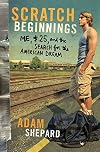
Fresh out of college, Adam Shepard set out with $25, a sleeping bag, and the clothes on his back to prove that the American Dream is alive and well. Shepard was concerned by the pessimistic attitude of many of his friends – an attitude he thought was fostered by the popular but gloomy Nickel and Dimed: On (Not) Getting By in America and Bait and Switch: The (Futile) Pursuit of the American Dream, both by Barbara Ehrenreich. He wanted to learn for himself whether it is still possible to show more pull yourself up by your own bootstraps.
Using the same “undercover” approach as Ehrenreich, Shepard got off the train in Charleston with his meager possessions and a down-and-out cover story that did not involve a college degree. He also had the goal of obtaining a car, a place to live with furniture, $2,500 in savings, and career-advancing opportunities (either through school or business) by the end of one year. Scratch Beginnings chronicles this adventure from Shepard’s first night in a homeless shelter, through job searches, setbacks, conflict, and accomplishment.
There is no denying that this is an adventure tale. Yes, Shepherd addresses weighty issues, but he is not a sociologist and his book is not a policy polemic. This is the story of one young man’s year spent building a decent life from scratch. His hands-on approach to experiencing and then explaining things for himself brings to mind bygone explorers or early journalists like Mark Twain.
It would be easy to pick on Shepard’s premise and poke holes in his arguments. But Shepard is quick to acknowledge this his is just one man’s story, not a comprehensive analysis of poverty in America. And he admits that his experience was made easier because he was not encumbered by children, addiction, or mental illness. To fault the book for not providing scholarly economic analysis is to intentionally ignore its value and deny its charm.
In fact, Shepard’s few attempts to address larger policy issues are the weak spots in the book. The book is not political – Shepard goes out of his way to disavow any particular political affiliation or ideology. But his lack of political clarity shows in the fuzzy thinking apparent in his few policy suggestions. A couple of his ideas – like why raising the minimum wage will not help poor people – show some original thought. But others, such as, “Affordable housing needs additional support from both the legislative and executive branches at the federal and state level” is political pablum, demonstrating neither insight nor innovation.
Fortunately, Shepard keeps his policy suggests to a minimum. He concentrates on explaining the personal lessons he learned from finding and keeping a difficult job as a house mover, making the most of difficult living accommodations, and denying himself easy and immediate pleasures in order to save his money and energy for a better future. These lessons range from the amusing (“Broccoli Au Gratin” is the best flavor of Rice-A-Roni and a one dollar box is enough for two meals) to the avuncular:
We adjust. That’s what we do. We seize the opportunities that are given to us, and we adjust to make up for what is kept from us. In some cases, . . . we don’t have a choice. We embrace change or we fight it off. In the end, they say, change makes us stronger. Even if we deny the change and retreat back to the norm, the experience has helped us to grow and understand what is on the other side, and it has given us the freedom to make more informed decisions in the future.
The appeal of all Shepard’s lessons is that he culled them from his own experience; he did not learn them on a theoretical level from a college seminar or a self-help book, he lived them. He accepted advice from other men at the shelter about how to look for work and get a job. He learned the skills of house moving from the men he worked with. There were times when Shepard’s credulity and open-eyed wonder show him to still be a little wet behind the ears, but that is a big part of the appeal of his book – these life-lessons seem fresh coming from him because they were fresh to him.
In the end, Shepard learned from observing the people around him just how difficult life can be, what a difference culture and upbringing can make in a person’s life, and that personal responsibility is the key to achieving goals. As he explained:
All the while, we have to be more focused, keeping our eye on what we really want to do with our lives: move up. Or not. We’re either on a mission or keeping our flight grounded. Either way, we are the pilots.
Scratch Beginnings is exuberant and refreshing, especially when Shepard sticks with describing his own experiences and impressions. Shepard’s was a brash experiment and its very undertaking proves his premise: the American Dream is still kicking.
This review is also posted on my book blog, Rose City Reader. show less
Using the same “undercover” approach as Ehrenreich, Shepard got off the train in Charleston with his meager possessions and a down-and-out cover story that did not involve a college degree. He also had the goal of obtaining a car, a place to live with furniture, $2,500 in savings, and career-advancing opportunities (either through school or business) by the end of one year. Scratch Beginnings chronicles this adventure from Shepard’s first night in a homeless shelter, through job searches, setbacks, conflict, and accomplishment.
There is no denying that this is an adventure tale. Yes, Shepherd addresses weighty issues, but he is not a sociologist and his book is not a policy polemic. This is the story of one young man’s year spent building a decent life from scratch. His hands-on approach to experiencing and then explaining things for himself brings to mind bygone explorers or early journalists like Mark Twain.
It would be easy to pick on Shepard’s premise and poke holes in his arguments. But Shepard is quick to acknowledge this his is just one man’s story, not a comprehensive analysis of poverty in America. And he admits that his experience was made easier because he was not encumbered by children, addiction, or mental illness. To fault the book for not providing scholarly economic analysis is to intentionally ignore its value and deny its charm.
In fact, Shepard’s few attempts to address larger policy issues are the weak spots in the book. The book is not political – Shepard goes out of his way to disavow any particular political affiliation or ideology. But his lack of political clarity shows in the fuzzy thinking apparent in his few policy suggestions. A couple of his ideas – like why raising the minimum wage will not help poor people – show some original thought. But others, such as, “Affordable housing needs additional support from both the legislative and executive branches at the federal and state level” is political pablum, demonstrating neither insight nor innovation.
Fortunately, Shepard keeps his policy suggests to a minimum. He concentrates on explaining the personal lessons he learned from finding and keeping a difficult job as a house mover, making the most of difficult living accommodations, and denying himself easy and immediate pleasures in order to save his money and energy for a better future. These lessons range from the amusing (“Broccoli Au Gratin” is the best flavor of Rice-A-Roni and a one dollar box is enough for two meals) to the avuncular:
We adjust. That’s what we do. We seize the opportunities that are given to us, and we adjust to make up for what is kept from us. In some cases, . . . we don’t have a choice. We embrace change or we fight it off. In the end, they say, change makes us stronger. Even if we deny the change and retreat back to the norm, the experience has helped us to grow and understand what is on the other side, and it has given us the freedom to make more informed decisions in the future.
The appeal of all Shepard’s lessons is that he culled them from his own experience; he did not learn them on a theoretical level from a college seminar or a self-help book, he lived them. He accepted advice from other men at the shelter about how to look for work and get a job. He learned the skills of house moving from the men he worked with. There were times when Shepard’s credulity and open-eyed wonder show him to still be a little wet behind the ears, but that is a big part of the appeal of his book – these life-lessons seem fresh coming from him because they were fresh to him.
In the end, Shepard learned from observing the people around him just how difficult life can be, what a difference culture and upbringing can make in a person’s life, and that personal responsibility is the key to achieving goals. As he explained:
All the while, we have to be more focused, keeping our eye on what we really want to do with our lives: move up. Or not. We’re either on a mission or keeping our flight grounded. Either way, we are the pilots.
Scratch Beginnings is exuberant and refreshing, especially when Shepard sticks with describing his own experiences and impressions. Shepard’s was a brash experiment and its very undertaking proves his premise: the American Dream is still kicking.
This review is also posted on my book blog, Rose City Reader. show less
College-educated, middle class, ablebodied, heterosexual white guy proves to himself that he can start with nothing and end up with something in contemporary America.Which as you may have guessed, does not mean to me that EVERYONE could, or even MOST PEOPLE could.He picks a random city in the south, puts 25$ in his pocket, and decides to challenge himself. In a year, can he have his own place to live, a car, and something like 2K in his bank account. He says he won't rely on his family and show more other contacts. And he won't use his education to get a job.Except that it's one thing to not put your education on a job application. To go for generally unskilled labor. It's another thing to not actually HAVE the education. He does mention now and then that he realizes it would be much harder if he was a single mother, or this and that. But while he intellectually might understand that, I don't feel that he gets it. I don't think he realizes how privileged he is as this homeless-by-choice man he's made himself into.Still and all, it's an interesting look into the lives and culture of homeless people in the US. (Well, homeless men in this one city in America.) I can't say I didn't learn a few things. I can't say I won't look at the world a little different after having read it.But I don't think anyone should take it as proof that the American Dream is alive and well for everyone. Even if it does work for young, fit white guys. Or at least this one white guy. show less
Is the American Dream still alive or has it, in fact, been drowned out by a clashing of the classes? Is the upper class destined to rule forever while the lower classes are forced to live in the same cyclical misery? Millions of Americans fight for the answers to these questions every day, and here, in Scratch Beginnings, one man makes the attempt at discovering the answers for himself. Carrying only a sleeping bag, $25, and the clothes on his back, and restricted from using his contacts or show more his education, Adam Shepard sets out for a randomly selected city with one goal on his mind: work his way out of the realities of homelessness and into a life that will offer him the opportunity for success. Scratch Beginnings is Shepard's response to the now-famous books Nickel and Dimed and Bait and Switch, where Barbara Ehrenreich has written on the hopeless pursuit of the American Dream. This book offers his observation of what it is like for so many people on the lower end of the spectrum, the blunt end of the stick. In this poignant account, Shepard goes on a search for the vitality of the American Dream, and, in turn, discovers so much more. Scratch Beginnings is unquestionably one of the most engaging works of the social science genre. No matter your reading interest, Shepard's facile writing style is sure to keep you turning the pages. show less
Една книга много ме издразни: Nickel and Dimed: On (Not) Getting by in America
И авторът на настоятаща го е издразнила, затова в неин отговор прави собствен експеримент - опитва се да види дали ако почне от нулата, ще успее да се оправи с нормална работа, кола и апартамент за 1 година. И успява, за show more разлика от дебелата, богата лелка от предишната книга, която се отказва от експеримента си и решава че не, никой не може да успее да се издигне сам с много работа в САЩ.
За да е истински експеримента, авторът заминава в случайно избран град с 25 долара в джоба, без да познава никой, без телефон, само с дрехите на гърба си и малка чанта. Спи първоначално в приют за бездомни, мъчи се, работи смотани и зле заплатени работи, но постепенно си намира стабилна работа като хамалин, спеставя пари, наема апартамент, купува си кола (25 годишен пикап, но все пак...) и разбира, че ако човек е склонен да изтърпи лишения и да работи здраво, може да успее в Америка.
Когато започвах книгата, разказвах за нея на двама приятели (момче и момиче), ходили заедно на бригада в САЩ и им обяснявам, че целта на автора е била след 1 година да има стабилна работа, 1000 долара в банката и кола на старо, те и двамата се захилиха и единия каза пренебрежително "Пфффф тва в Америка за 3 месеца може да го направи."
Оказаха се прави :) Авторът се оправи горе долу за толкова. show less
И авторът на настоятаща го е издразнила, затова в неин отговор прави собствен експеримент - опитва се да види дали ако почне от нулата, ще успее да се оправи с нормална работа, кола и апартамент за 1 година. И успява, за show more разлика от дебелата, богата лелка от предишната книга, която се отказва от експеримента си и решава че не, никой не може да успее да се издигне сам с много работа в САЩ.
За да е истински експеримента, авторът заминава в случайно избран град с 25 долара в джоба, без да познава никой, без телефон, само с дрехите на гърба си и малка чанта. Спи първоначално в приют за бездомни, мъчи се, работи смотани и зле заплатени работи, но постепенно си намира стабилна работа като хамалин, спеставя пари, наема апартамент, купува си кола (25 годишен пикап, но все пак...) и разбира, че ако човек е склонен да изтърпи лишения и да работи здраво, може да успее в Америка.
Когато започвах книгата, разказвах за нея на двама приятели (момче и момиче), ходили заедно на бригада в САЩ и им обяснявам, че целта на автора е била след 1 година да има стабилна работа, 1000 долара в банката и кола на старо, те и двамата се захилиха и единия каза пренебрежително "Пфффф тва в Америка за 3 месеца може да го направи."
Оказаха се прави :) Авторът се оправи горе долу за толкова. show less
You May Also Like


Statistics
- Works
- 4
- Members
- 337
- Popularity
- #70,619
- Rating
- 3.5
- Reviews
- 13
- ISBNs
- 14