
Lara Parker (1) (1937–2023)
Author of Dark Shadows: Angelique's Descent
For other authors named Lara Parker, see the disambiguation page.
About the Author
Image credit: Lara Parker
Series
Works by Lara Parker
Associated Works
Hauntings in the Garden: Volume One — Contributor — 1 copy
Tagged
Common Knowledge
- Other names
- Hawkins, Mary Lamar Rickey
Rickey, Mary Lamar (birth name) - Birthdate
- 1937-10-27
- Date of death
- 2023-10-12
- Gender
- female
- Education
- Southwestern at Memphis / Rhodes College (BA | Philosophy)
University of Iowa (masters coursework | Speech and drama) - Occupations
- actor
teacher
writer - Cause of death
- cancer
- Nationality
- USA
- Birthplace
- Knoxville, Tennessee, USA
- Places of residence
- Knoxville, Tennessee, USA
Memphis, Tennessee, USA
New York, New York, USA
Los Angeles, California, USA - Place of death
- Topanga, California, USA
- Associated Place (for map)
- USA
Members
Reviews
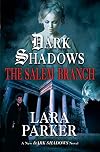
The prologue is quite effective, especially the implication at the end. It's pretty good. It's also obvious that this should be considered a parallel time [alternate universe] version of Dark Shadows.
Still, it works as a horror story and as an alternate universe Dark Shadows story. So, if you were never a fan of the show, you can enjoy it as a horror story. If you always thought that Roger Collins was a jerk, he's still a jerk. More than that, he's as bad as his 17th Century Collins show more ancestors. If you didn't like Amy Jennings, she's not in this book! (My sibs and I disliked the character so much we loved it when her actress met disaster in the original Charlie and the Chocolate Factory movie)
The viewpoint swings from Barnabas Collins in 1971 Collinsport, Maine, to Miranda du Val in 1692 Salem, Massachusetts. I remembered when the show revealed that Angelique, the 18th century witch responsible for turning Barnabas Collins into a vampire, was really a 17th century witch named Miranda Duval. We didn't learn that much about her life as Miranda, other than her dealings with the warlock who was the Big Bad in the 1840 flashback storyline.
We get much more of Miranda's past here. It's not a happy one. She has ample reason to hate the Salem Branch of the Collins family. The infamous Salem Witch Trials are a part of the story. Ms. Parker is not kind to the judges, especially Cotton Mather (yay!).
Roger Collins has sold the land containing the burned-down Old House to a woman named Antoinette Harpignies, who happens to be the spitting image of Angelique. Well, we old DS fans know what that means. Barnabas is just as suspicious as we are. How is Antoinette managing to restore the Old House so perfectly? Is it being done from photos or memory?
Roger is outraged that Antoinette is allowing hippies to camp on her land. He expects Barnabas to do something about it. Barnabas doesn't care. He has more important things on his mind: wondering what Angelique has planned for him and the side effects of the injections Dr. Julia Hoffman has been giving him to cure him of his vampirism. Yes, he likes being able to go about in the sunlight. He hates aging, having to go to the bathroom, the burning heat he sometimes feels, and his difficulties eating. He misses the superhuman strength and senses a vampire possesses -- especially when he and his servant, Willie, find the dead victim of a vampire. Can he stop the monster from claiming more victims?
The other members of the present-day Collins family: Elizabeth, Carolyn, David, and Quentin, make appearances. The ladies have cameos. Quentin has a minor role. David has the most Collins time next to Barnabas.
My favorite character on the show was Julia. For the period, she was special: a doctor, an institution head, and as the show went on, one of the main fighters against the evils that beset the Collins. Unlike Barnabas and Quentin, she was only human. During the Leviathan storyline, when Barnabas was in thrall to them, Julia took over as leader of the resistance, so to speak. I got so tired of Barnabas pursuing other women and taking Julia for granted as his best buddy that I was rooting for her to give up on the clueless twit and hook up with Prof. Stokes. Sure, he was portly and not terribly attractive, but he was smart, well educated, cultured, and decent.
Julia is not treated well during much of the book, but I'm satisfied with how things work out for her in the end. Actually, I'm satisfied with how things work out for all the main characters in the end. The seance in Salem was a particularly good scene for an old DS fan.
Quibbles:
chapter 3: what would an crocheted antimacassar be doing in the Old House? They were used in the 19th century, but not, so far as I know, the 18th.
chapters 3 & 6: That's twice so far that David has been referred to as Barnabas' nephew, and without the quotation marks that would let us know that it's being used in a courtesy sense. Unless the present-day Collins family are all descended from a brother of Barnabas -- a relative he didn't have in the TV show -- they're only distant cousins.
Had to snicker at Barnabas finding it strange to hear a hint of bigotry coming from Elizabeth. Considering the period in which he was born and reared, not to mention the fact that it's only 1971, it shouldn't be strange to find Elizabeth prejudiced against hippies. show less
Still, it works as a horror story and as an alternate universe Dark Shadows story. So, if you were never a fan of the show, you can enjoy it as a horror story. If you always thought that Roger Collins was a jerk, he's still a jerk. More than that, he's as bad as his 17th Century Collins show more ancestors. If you didn't like Amy Jennings, she's not in this book! (My sibs and I disliked the character so much we loved it when her actress met disaster in the original Charlie and the Chocolate Factory movie)
The viewpoint swings from Barnabas Collins in 1971 Collinsport, Maine, to Miranda du Val in 1692 Salem, Massachusetts. I remembered when the show revealed that Angelique, the 18th century witch responsible for turning Barnabas Collins into a vampire, was really a 17th century witch named Miranda Duval. We didn't learn that much about her life as Miranda, other than her dealings with the warlock who was the Big Bad in the 1840 flashback storyline.
We get much more of Miranda's past here. It's not a happy one. She has ample reason to hate the Salem Branch of the Collins family. The infamous Salem Witch Trials are a part of the story. Ms. Parker is not kind to the judges, especially Cotton Mather (yay!).
Roger Collins has sold the land containing the burned-down Old House to a woman named Antoinette Harpignies, who happens to be the spitting image of Angelique. Well, we old DS fans know what that means. Barnabas is just as suspicious as we are. How is Antoinette managing to restore the Old House so perfectly? Is it being done from photos or memory?
Roger is outraged that Antoinette is allowing hippies to camp on her land. He expects Barnabas to do something about it. Barnabas doesn't care. He has more important things on his mind: wondering what Angelique has planned for him and the side effects of the injections Dr. Julia Hoffman has been giving him to cure him of his vampirism. Yes, he likes being able to go about in the sunlight. He hates aging, having to go to the bathroom, the burning heat he sometimes feels, and his difficulties eating. He misses the superhuman strength and senses a vampire possesses -- especially when he and his servant, Willie, find the dead victim of a vampire. Can he stop the monster from claiming more victims?
The other members of the present-day Collins family: Elizabeth, Carolyn, David, and Quentin, make appearances. The ladies have cameos. Quentin has a minor role. David has the most Collins time next to Barnabas.
My favorite character on the show was Julia. For the period, she was special: a doctor, an institution head, and as the show went on, one of the main fighters against the evils that beset the Collins. Unlike Barnabas and Quentin, she was only human. During the Leviathan storyline, when Barnabas was in thrall to them, Julia took over as leader of the resistance, so to speak. I got so tired of Barnabas pursuing other women and taking Julia for granted as his best buddy that I was rooting for her to give up on the clueless twit and hook up with Prof. Stokes. Sure, he was portly and not terribly attractive, but he was smart, well educated, cultured, and decent.
Julia is not treated well during much of the book, but I'm satisfied with how things work out for her in the end. Actually, I'm satisfied with how things work out for all the main characters in the end. The seance in Salem was a particularly good scene for an old DS fan.
Quibbles:
chapter 3: what would an crocheted antimacassar be doing in the Old House? They were used in the 19th century, but not, so far as I know, the 18th.
chapters 3 & 6: That's twice so far that David has been referred to as Barnabas' nephew, and without the quotation marks that would let us know that it's being used in a courtesy sense. Unless the present-day Collins family are all descended from a brother of Barnabas -- a relative he didn't have in the TV show -- they're only distant cousins.
Had to snicker at Barnabas finding it strange to hear a hint of bigotry coming from Elizabeth. Considering the period in which he was born and reared, not to mention the fact that it's only 1971, it shouldn't be strange to find Elizabeth prejudiced against hippies. show less
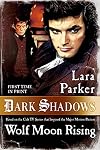
I'm not sure that I've ever read anything quite like LARA PARKER's new DARK SHADOWS novel, WOLF MOON RISING. Opening with a brief abstract illustrating the star-crossed relationships of its major players, the novel feels like a relic from the past. Not because of its period setting, but because it embraces the kind of fanatical pursuit of ideas that has fallen out of fashion in modern literature. The story is told with the unbridled, slightly unhinged energy of a writer who doesn't believe show more she's got the luxury of a do-over in her next book.
Even though WOLF MOON RISING would qualify as a gothic romance by anyone's definition, I was constantly reminded of PHILIP K. DICK throughout. Summarizing this novel is going to be a nightmare for critics, because there are no fewer than four stories humming along concurrently, each one of them laced with social and political satire that ranges from subtle to horrendously violent. There's a ton of backstory involved, not only from Parker's previous novel, but from the television series, as well. And GRAYSON HALL fans are probably going to be pissed.
In other words, there’s a lot happening in the book. Possibly enough to fill a year's worth of stories in the original series.
Minor spoilers follow.
Picking up a few weeks after the conclusion of THE SALEM BRANCH, we’re introduced to a new status quo at Collinwood. Barnabas Collins is again a vampire, as is Dr. Julia Hoffman. As you might expect, Barnabas isn't entirely happy with the situation. He not only hates what he’s (again) become, but despises Hoffman’s submissive new role. The more she tries to please him, the more he resents her, leading to a shockingly cruel resolution to this conflict in the book’s early pages.
If that wasn’t enough, Barnabas decides to follow through on his plan to sabotage the happiness of Quentin Collins by destroying the magical painting that keeps his werewolf curse at bay, and provides him a unique form of immortality. Meanwhile, a man claiming to be the relative of Nicholas Blair arrives at Collinwood in search of a vampire, while David Collins and his haunted companion, Jackie Harpignies, take an expected trip back to Collinwood’s heyday in the Roaring Twenties.
While it all sounds simple enough, the level of absurd mayhem in WOLF MOON RISING is sometimes astonishing. While Parker has literary goals, she never lets go of the bizarre elements that made DARK SHADOWS special. The book can be quiet and lean when it wants to be, such as in Jackie’s increasingly lonely encounters with school bullies. But it can also go full CHAN-WOOK PARK, sometimes to its own detriment. The “1920s Flashback” doesn’t so much climax as it cascades, as bootleggers, organized crime and the Ku Klux Klan leave permanent scars on Collinwood in quick order. With DARK SHADOWS, it’s always hard to tell when too much is too much, and this leg of the story might actually bend credulity past its breaking point.
Then again, it might all have been worth it for the moment of a young Elizabeth (not-yet-Stoddard) Collins riding the sideboard of a luxury car, blasting away at mobsters with a revolver.
The novel also touches on some of the favorite themes of the original television series. While the daytime program had to abide by the nebulous standards of network censors, Parker's under no such restraints. As it turns out, Louis Edmonds' famous "incestors" blooper had some basis in fact. Yeah, the relationship between Barnabas and Carolyn (not to mention his relationship with Victoria Winters, since we were lead to believe she was also a Collins) was always icky. In WOLF MOON RISING, though, Parker calls it what it is. Jameson Collins, played in the 1897 story by a young DAVID HENESY, is a grown man in the 1920s flashback, and is furious by the previously unrevealed affair between his daughter, Elizabeth, and his immortal uncle, Quentin. The "I" word is used, and it's not not pretty.
And it's not even the biggest WTF?! moment in the novel.
The flashback sequence plays like a loose sequel to the 1897 story and is the novel's centerpiece. I suspect it's also going to be the most troublesome section for some readers. There are moments that contradict exiting canon, but the continuity of DARK SHADOWS got messier and messier in the years leading to its cancellation. Edith Collins, for example, died twice on the show. Her second death was either a product of editorial oversight, or was collateral damage created by the show's many timeslips.
The continuity errors present in WOLF MOON RISING suggest a third possibility: Parker had something she wanted to say with the characters and valued her story more than she did fan service.
As an author, Parker gets DARK SHADOWS better than anyone who's been allowed a crack at the material since it left the airwaves in 1971. She gets it better than Tim Burton, who loves the show without really understanding how it works. She gets it better than the various writers who have worked on the tie-in novels, comics and audio dramas over the years, even though some of those products have had moments of brilliance. And, I dare say, Parker gets it better the show's original mastermind, DAN CURTIS, who arguably began to misunderstand the appeal of his own show before it was even cancelled.
WOLF MOON RISING has some continuity issues, which a few fans of the show will unironically take issue with. It can be a little unfocused at times as its ensemble cast fights among each other for prominence in the story. And it’s got a nightmarish sense of reality and structure that wouldn’t be out of place in a DAVID LYNCH movie. These elements might be a problem other novel, but only made it feel more like DARK SHADOWS to me.
Source: http://www.collinsporthistoricalsociety.com/2013/08/review-wolf-moon-rising.html show less
Even though WOLF MOON RISING would qualify as a gothic romance by anyone's definition, I was constantly reminded of PHILIP K. DICK throughout. Summarizing this novel is going to be a nightmare for critics, because there are no fewer than four stories humming along concurrently, each one of them laced with social and political satire that ranges from subtle to horrendously violent. There's a ton of backstory involved, not only from Parker's previous novel, but from the television series, as well. And GRAYSON HALL fans are probably going to be pissed.
In other words, there’s a lot happening in the book. Possibly enough to fill a year's worth of stories in the original series.
Minor spoilers follow.
Picking up a few weeks after the conclusion of THE SALEM BRANCH, we’re introduced to a new status quo at Collinwood. Barnabas Collins is again a vampire, as is Dr. Julia Hoffman. As you might expect, Barnabas isn't entirely happy with the situation. He not only hates what he’s (again) become, but despises Hoffman’s submissive new role. The more she tries to please him, the more he resents her, leading to a shockingly cruel resolution to this conflict in the book’s early pages.
If that wasn’t enough, Barnabas decides to follow through on his plan to sabotage the happiness of Quentin Collins by destroying the magical painting that keeps his werewolf curse at bay, and provides him a unique form of immortality. Meanwhile, a man claiming to be the relative of Nicholas Blair arrives at Collinwood in search of a vampire, while David Collins and his haunted companion, Jackie Harpignies, take an expected trip back to Collinwood’s heyday in the Roaring Twenties.
While it all sounds simple enough, the level of absurd mayhem in WOLF MOON RISING is sometimes astonishing. While Parker has literary goals, she never lets go of the bizarre elements that made DARK SHADOWS special. The book can be quiet and lean when it wants to be, such as in Jackie’s increasingly lonely encounters with school bullies. But it can also go full CHAN-WOOK PARK, sometimes to its own detriment. The “1920s Flashback” doesn’t so much climax as it cascades, as bootleggers, organized crime and the Ku Klux Klan leave permanent scars on Collinwood in quick order. With DARK SHADOWS, it’s always hard to tell when too much is too much, and this leg of the story might actually bend credulity past its breaking point.
Then again, it might all have been worth it for the moment of a young Elizabeth (not-yet-Stoddard) Collins riding the sideboard of a luxury car, blasting away at mobsters with a revolver.
The novel also touches on some of the favorite themes of the original television series. While the daytime program had to abide by the nebulous standards of network censors, Parker's under no such restraints. As it turns out, Louis Edmonds' famous "incestors" blooper had some basis in fact. Yeah, the relationship between Barnabas and Carolyn (not to mention his relationship with Victoria Winters, since we were lead to believe she was also a Collins) was always icky. In WOLF MOON RISING, though, Parker calls it what it is. Jameson Collins, played in the 1897 story by a young DAVID HENESY, is a grown man in the 1920s flashback, and is furious by the previously unrevealed affair between his daughter, Elizabeth, and his immortal uncle, Quentin. The "I" word is used, and it's not not pretty.
And it's not even the biggest WTF?! moment in the novel.
The flashback sequence plays like a loose sequel to the 1897 story and is the novel's centerpiece. I suspect it's also going to be the most troublesome section for some readers. There are moments that contradict exiting canon, but the continuity of DARK SHADOWS got messier and messier in the years leading to its cancellation. Edith Collins, for example, died twice on the show. Her second death was either a product of editorial oversight, or was collateral damage created by the show's many timeslips.
The continuity errors present in WOLF MOON RISING suggest a third possibility: Parker had something she wanted to say with the characters and valued her story more than she did fan service.
As an author, Parker gets DARK SHADOWS better than anyone who's been allowed a crack at the material since it left the airwaves in 1971. She gets it better than Tim Burton, who loves the show without really understanding how it works. She gets it better than the various writers who have worked on the tie-in novels, comics and audio dramas over the years, even though some of those products have had moments of brilliance. And, I dare say, Parker gets it better the show's original mastermind, DAN CURTIS, who arguably began to misunderstand the appeal of his own show before it was even cancelled.
WOLF MOON RISING has some continuity issues, which a few fans of the show will unironically take issue with. It can be a little unfocused at times as its ensemble cast fights among each other for prominence in the story. And it’s got a nightmarish sense of reality and structure that wouldn’t be out of place in a DAVID LYNCH movie. These elements might be a problem other novel, but only made it feel more like DARK SHADOWS to me.
Source: http://www.collinsporthistoricalsociety.com/2013/08/review-wolf-moon-rising.html show less
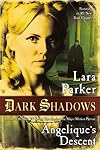
Barnabas Collins and the rest of the Collins family have been plagued by the witch Angelique for centuries. Just as Barnabas starts a new life free from her vampire curse he is again drawn to the old house on the Collinwood estate. There he finds Angelique's diary. His curiosity overwhelms him and he starts to read her bizarre life story.
On the tv show Dark Shadows, Angelique is the cause of all of the Collins families woes. Barnabas spurned her for Josette, so she cursed him and his family. show more This novel gives Angelique a back ground story. It explains how she became a witch and what motivated her actions. It also retells the 1795 storyline from the show from her point of view.
The author, Lara Parker, is the actress that played Angelique. I was worried about reading a book written by an actress and not a professional author. Turns out she is a pretty good writer. She has a degree is creative writing from Antioch University in Los Angeles.
This is a must read for die hard Dark Shadows fans. The only problem I had with it were the romance elements. I have never been a fan of "bodice rippers." Fortunately those moments were few. I enjoyed it enough that I will read the next book in the series. show less
On the tv show Dark Shadows, Angelique is the cause of all of the Collins families woes. Barnabas spurned her for Josette, so she cursed him and his family. show more This novel gives Angelique a back ground story. It explains how she became a witch and what motivated her actions. It also retells the 1795 storyline from the show from her point of view.
The author, Lara Parker, is the actress that played Angelique. I was worried about reading a book written by an actress and not a professional author. Turns out she is a pretty good writer. She has a degree is creative writing from Antioch University in Los Angeles.
This is a must read for die hard Dark Shadows fans. The only problem I had with it were the romance elements. I have never been a fan of "bodice rippers." Fortunately those moments were few. I enjoyed it enough that I will read the next book in the series. show less
I enjoyed this book quite a bit. It felt like watching the old TV series, which makes sense as Lara Parker was a key member of that series. She understands Dark Shadows, and it shows in her writing - the people who made the latest movie version of Dark Shadows would have done well to have asked her to write the script, as it would have made a much better movie. Anyway, this was a good book, and it captured the feel of the characters. I could even hear the voices of the old actors and show more actresses as the characters spoke. It was nice to revisit Collinwood - the real Collinwood. show less
You May Also Like


Associated Authors
Statistics
- Works
- 6
- Also by
- 8
- Members
- 364
- Popularity
- #66,013
- Rating
- 3.6
- Reviews
- 14
- ISBNs
- 28
- Languages
- 4