
Zakiya Dalila Harris
Author of The Other Black Girl
About the Author
Image credit: Nicole Mondestin
Works by Zakiya Dalila Harris
Associated Works
Tagged
Common Knowledge
- Birthdate
- 1992
- Gender
- female
- Education
- University of North Carolina, Chapel Hill (BA)
The New School (MFA) - Occupations
- Harris, Aisha (sister)
- Nationality
- USA
- Birthplace
- Connecticut, USA
- Places of residence
- Brooklyn, New York, USA
- Map Location
- USA
Members
Reviews
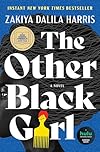
Welcome to Stepford Wives for a new era and ethnicity! This is a stunner of a book, based on the crabs-in-a-barrel metaphor, rather than each-one-teach-one. Nella is a Black editorial assistant at a blindingly white publishing house who has been stymied for two years by bias and macro-aggressions at her job. When one of their popular authors submits a manuscript with the most wretched stupid stereotype of a "crack 'ho", updated for the opioid epidemic, Nella objects strenuously and seems to show more be on the verge of getting fired when in walks Hazel, an impeccably dressed and groomed Black woman who wins immediate approval from everyone at Wagner's, including the iconic founder Richard Wagner, and slides effortlessly into the company and moves to the front of the two person Black woman line, in front of Nella. Then threatening notes appear on Nella's desk, telling her to leave Wagner's, and Hazel's reaction of disapproval creates a small bond between them. In between the 2018 Nella story timeframe, we meet Shani and Kendra Rae, who had their own literary careers blown up in similar instances back in 1983. What do they all have in common? Is there “a river of Uncle Toms flowing through the shiny plastic surface of white America?” There's a mystery to be unraveled here, but the strength is in the author's remarkable ability to see and amplify Nella's struggle to rise while maintaining her outrage and her belief in her own talent. There are a few not-minor plot holes here involving Nella’s white boyfriend and her dear best friend Malaika, but there’s also going to be a great movie/TV series here if the Black truth portrayed so vividly here can be sustained in other media.
Quotes: “They rarely asked her about “Black issues” – either because they didn’t want to offend her by doing so, or because they simply didn’t care enough to ask.”
“At a historically Black college, she’d been blessed with the ability to forget white people existed, if only for a little while.”
“It was in seemingly mundane moments like those – when she told a white man something so basic about herself that made his eyes boggle out of his head – that she felt closest to all of the enslaved Black people who were Black long before she was: all of the enslaved Black men and women who impressed white people with their reading abilities; all the Black men and women who had impressed a white person simply by existing.”
“She picked her battles, if she dared pick any, wisely. That was what she had been taught: to stand still for so long that when you started to run, they’d be so dumbfounded that they wouldn’t even follow.” show less
Quotes: “They rarely asked her about “Black issues” – either because they didn’t want to offend her by doing so, or because they simply didn’t care enough to ask.”
“At a historically Black college, she’d been blessed with the ability to forget white people existed, if only for a little while.”
“It was in seemingly mundane moments like those – when she told a white man something so basic about herself that made his eyes boggle out of his head – that she felt closest to all of the enslaved Black people who were Black long before she was: all of the enslaved Black men and women who impressed white people with their reading abilities; all the Black men and women who had impressed a white person simply by existing.”
“She picked her battles, if she dared pick any, wisely. That was what she had been taught: to stand still for so long that when you started to run, they’d be so dumbfounded that they wouldn’t even follow.” show less
I requested this from the library after reading a review in the LA Times. The queue was long!
I was all in for the first half of the book. It was good--the frustrations of being an assistant, the microaggressions, the annoying coffee maker, the new girl (the other black girl) coming in and seeming to step in front of an established assistant. Everything. And then it went off the rails with a big dose of magical realism and lost me. It went from being real and interesting to fantasy and meh.
I show more am sure the magical realism crowd will love this. I am not part of that crowd. I love it when it is done well, but this did not work for me at all. show less
I was all in for the first half of the book. It was good--the frustrations of being an assistant, the microaggressions, the annoying coffee maker, the new girl (the other black girl) coming in and seeming to step in front of an established assistant. Everything. And then it went off the rails with a big dose of magical realism and lost me. It went from being real and interesting to fantasy and meh.
I show more am sure the magical realism crowd will love this. I am not part of that crowd. I love it when it is done well, but this did not work for me at all. show less
Normally I’m fairly immune to the hype surrounding books, but I can confidently tell you that any hype you read regarding The Other Black Girl is 100% justified. This novel is an incredible debut with everything you would want in a story – drama, friendship, mystery and a twist on a twist that you couldn’t possibly see coming. It’s electrifying how detailed the plot, characters and writing is. Zakiya Dalila Harris is now firmly on my ‘I’ll read anything by this author list’.
The show more novel has been described as an ‘edgier The Devil Wears Prada’ but it’s much more than a workplace story (it’s also set in a publishing office rather than a magazine). Nella has always wanted to work in publishing and now she’s an assistant at Wagner, with a promotion hopefully on the horizon. Nella is the only Black employee there, and even though she’s been disappointed at their middling attempts at diversity, she’s tried to ignore it. She has a great boyfriend and best friend to discuss race issues with outside of work, plus she really wants to be an editor. Enter Hazel, another Black woman and assistant to another editor. At first Nella is thrilled to have another person of colour in the office, but Hazel seems to be taking over the office. Nella’s editor asks Hazel for advice, people want Hazel to do sensitivity reads…it’s all Hazel. Nella also starts receiving anonymous notes telling her to leave Wagner. Is it Hazel? Who can Nella trust? And what if it all turns out to be much, much bigger than a workplace drama…?
The Other Black Girl has a lot going on but it’s done so well that the reader never feels lost. There’s a historical thread running through the book which starts to make sense early on and then another complicating factor is added to the mix which really just makes you want to read on more. The mystery of who is trying to get Nella to leave is much more than it seems at first and this makes it more enjoyable as more players and motivations come into the mix. The mystery mixes in well with the novel’s themes of race, class and diversity as well as the need to ‘fit in’ and be something you are not – not even to get ahead, but just to stay in the race. Nella’s experience with racial bias was portrayed well, making clear the hurdles she had to jump to even be seen at Wagner and in life. This made the decision she is presented with at the end of the novel clearer as to why she would choose one option over another, but it’s not an easy one to make. The novel also tackles the lack of diversity in publishing and the lack of Own Voices with a satirical subplot of a white male author writing about a Black woman during the opioid crisis. He sees no problem with giving the Black characters ridiculous names and stereotypical backgrounds, yet when Nella calls it out, nobody sees the problem. It’s frustrating but it’s also revealing.
I loved that The Other Black Girl made me think and entertained me. It’s satirical, thrilling, bold and unique. Well worth reading – just do it on a weekend so you can continue reading non-stop.
Thank you to Bloomsbury for the copy of this book. My review is honest.
http://samstillreading.wordpress.com show less
The show more novel has been described as an ‘edgier The Devil Wears Prada’ but it’s much more than a workplace story (it’s also set in a publishing office rather than a magazine). Nella has always wanted to work in publishing and now she’s an assistant at Wagner, with a promotion hopefully on the horizon. Nella is the only Black employee there, and even though she’s been disappointed at their middling attempts at diversity, she’s tried to ignore it. She has a great boyfriend and best friend to discuss race issues with outside of work, plus she really wants to be an editor. Enter Hazel, another Black woman and assistant to another editor. At first Nella is thrilled to have another person of colour in the office, but Hazel seems to be taking over the office. Nella’s editor asks Hazel for advice, people want Hazel to do sensitivity reads…it’s all Hazel. Nella also starts receiving anonymous notes telling her to leave Wagner. Is it Hazel? Who can Nella trust? And what if it all turns out to be much, much bigger than a workplace drama…?
The Other Black Girl has a lot going on but it’s done so well that the reader never feels lost. There’s a historical thread running through the book which starts to make sense early on and then another complicating factor is added to the mix which really just makes you want to read on more. The mystery of who is trying to get Nella to leave is much more than it seems at first and this makes it more enjoyable as more players and motivations come into the mix. The mystery mixes in well with the novel’s themes of race, class and diversity as well as the need to ‘fit in’ and be something you are not – not even to get ahead, but just to stay in the race. Nella’s experience with racial bias was portrayed well, making clear the hurdles she had to jump to even be seen at Wagner and in life. This made the decision she is presented with at the end of the novel clearer as to why she would choose one option over another, but it’s not an easy one to make. The novel also tackles the lack of diversity in publishing and the lack of Own Voices with a satirical subplot of a white male author writing about a Black woman during the opioid crisis. He sees no problem with giving the Black characters ridiculous names and stereotypical backgrounds, yet when Nella calls it out, nobody sees the problem. It’s frustrating but it’s also revealing.
I loved that The Other Black Girl made me think and entertained me. It’s satirical, thrilling, bold and unique. Well worth reading – just do it on a weekend so you can continue reading non-stop.
Thank you to Bloomsbury for the copy of this book. My review is honest.
http://samstillreading.wordpress.com show less
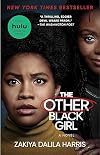
Nella has been the only Black employee at a boutique publishing company since she started two years ago at her dream employer. Wagner Books has few opportunities for promotion for anyone, pays poorly, and it can't seem to retain employees of color. Nella hopes she'll have an ally when she meets her newly hired Black peer Hazel -- but then she starts getting anonymous notes telling her to leave Wagner.
This book was billed as a thriller, but it's more genre-bending than that. There's a lot of show more psychological thriller-style doubt of motives, as in Jordan Peele's 2017 movie Get Out or the book Lovecraft Country, but it's also got workplace chicklit vibes and speculative fiction/magical realism vibes. It's a book with something serious & substantive to say about race and the workplace, which delivers heartily though it struggles a bit in execution (this is Harris's first book, and I suspect a lot of content was written and then cut, trying to get the story to say what she wanted, causing some uneven pacing). I particularly appreciated how well the author developed even side characters into distinct personalities. There's a lot to think about or discuss in this book (like howthe main plot device has to be cast in "consent" terms to make sure all readers perceive it as evil ) -- a good choice for a book club. show less
This book was billed as a thriller, but it's more genre-bending than that. There's a lot of show more psychological thriller-style doubt of motives, as in Jordan Peele's 2017 movie Get Out or the book Lovecraft Country, but it's also got workplace chicklit vibes and speculative fiction/magical realism vibes. It's a book with something serious & substantive to say about race and the workplace, which delivers heartily though it struggles a bit in execution (this is Harris's first book, and I suspect a lot of content was written and then cut, trying to get the story to say what she wanted, causing some uneven pacing). I particularly appreciated how well the author developed even side characters into distinct personalities. There's a lot to think about or discuss in this book (like how
Lists
Diverse Horror (1)
Buddy Reads (1)
READ IN 2021 (1)
stories at work (1)
Female Author (1)
Black Authors (1)
Five star books (1)
Awards


You May Also Like


Associated Authors
Statistics
- Works
- 2
- Also by
- 2
- Members
- 1,891
- Popularity
- #13,597
- Rating
- 3.4
- Reviews
- 80
- ISBNs
- 28
- Languages
- 6