
Marcel Duchamp (1887–1968)
Author of Dialogues with Marcel Duchamp
About the Author
Image credit: Leon Hartt, Marcel Duchamp (center), and Mrs. Hartt: Library of Congress Prints and Photographs Division, George Grantham Bain Collection
(REPRODUCTION NUMBER: LC-USZ62-63273)
Works by Marcel Duchamp
Marcel Duchamp : the art of making art in the age of mechanical reproduction : an exhibition catalog (1999) 16 copies
De bruid gestript door haar vrijgezellen, zelfs (De groene doos) & In de onbepaalde wijs (De witte doos) (1998) 12 copies
Duchamp : mayo-junio 1984, Sala de Esposiciones de la Caja de Pensiones, Paseo de la Castellana, 51, Madrid : exposición (1984) 8 copies
The Almost complete works of Marcel Duchamp [exhibition] Tate gallery, 18 June-31 July 1966 3 copies
Duchamp: Exposicio organitzada per la Fundacio Joan Miro i la Fundacio Caixa de Pensions : Barcelona, febrer-marc, 1984 (Catalan Edition) (1984) 3 copies
Duchamp 2 copies
Francis Picabia 2 copies
Marcel Duchamp: Briefe an Marcel Jean (in English French and German) (English, French and German Edition) (1987) 1 copy
Mercante del segno 1 copy
Catalogue des tableaux, aquarelles et dessins par Francis Picabia appartenant à M. Marcel Duchamp. 1 copy, 1 review
O Acto Criador 1 copy
LIBRO-MALETA. 1 copy
From the green box 1 copy
Fontaine 1 copy
Apropos of "Readymades" 1 copy
[Propos] 1 copy
Respirer est un problème 1 copy
Marcel Duchamp Cards 1 copy
Rotoreliefs 1 copy
Marcel Duchamp. Notes and Projects for the Large Glass. Selected, Ordered and with an Introduction By Arturo Schwarz (1969) 1 copy
Yves Tanguy 1 copy
Wooden box with multiples 1 copy
L.H.O.O.Q. 1 copy
First Papers of Surrealism. 1 copy
XXe Siecle No.4 NOEL 1938 1 copy
Associated Works
Theories of Modern Art: A Source Book by Artists and Critics (1968) — Contributor — 854 copies, 5 reviews
Theories and Documents of Contemporary Art: A Sourcebook of Artists' Writings (1995) — Contributor — 418 copies, 1 review
The Bride and the Bachelors : Duchamp with Cage, Cunningham, Rauschenberg and Johns : 14 Feb-9 June 2013. (2013) — Illustrator — 1 copy
Tagged
Common Knowledge
- Legal name
- Duchamp, Henri-Robert-Marcel
- Other names
- Sélavy, Rrose (pseudonym)
- Birthdate
- 1887-07-28
- Date of death
- 1968-10-02
- Gender
- male
- Education
- Académie Julian
Lycée Pierre-Corneille, Rouen - Occupations
- filmmaker
chess grandmaster
painter
sculptor - Organizations
- Oulipo
The Puteaux Group, - Awards and honors
- Marcel Duchamp Prize (in French: Prix Marcel Duchamp)
American Academy of Arts and Letters (Art ∙ 1960) - Relationships
- Buffet-Picabia, Gabriële (friend, lover)
- Short biography
- Marcel Duchamp was raised in Normandy, one of seven children in a family of artists. One of his earliest works, Landscape at Blainville (1902), painted at age 15, reflected his family's love of Claude Monet. Marcel was close to his two older brothers, and in 1904 he joined them in Paris to study painting at Academie Julian. Duchamp studied all the modern trends in painting in Paris of the era, including Fauvism, Cubism, and Impressionism. He was attracted to avant-garde notions of the artist as an anti-academic and the mysterious allure of Symbolism. He first gained wide recognition as an artist in 1913 when he submitted his painting Nude Descending a Staircase, No. 2 to the Armory Show in New York City. Duchamp devoted seven years (1915-1923) to planning and executing one of his other major works, The Bride Stripped Bare by Her Bachelors, Even, or The Large Glass. In 1915, Duchamp emigrated to the USA while finishing his Bride. As Surrealism became popular in France, Duchamp traveled between New York and Paris, participating in printed textual projects, sculptural installations, and collaborations in all mediums with Dadaists and Surrealists. In 1920, Duchamp adopted an alternate female persona, "Rrose Selavy," to fully explore ideas of sexual identity. He continued to make "readymades" (his own term) and exhibited his famous Bottle Rack series in 1936. He belonged to a tight-knit group of friends and fellow artists, including Man Ray, and preferred to work in complete secrecy until his death in 1968.
- Nationality
- France
USA (1955) - Birthplace
- Blainville-Crevon, France
- Places of residence
- Blainville, France
Paris, France
New York, New York, USA - Place of death
- Neuilly-sur-Seine, France
- Burial location
- Rouen Cemetery, Rouen, Normandy, France
- Associated Place (for map)
- France
Members
Reviews
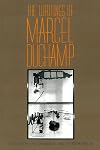
Sometime in the mid-'10s (2015?), reading this collection of Duchamp's hard-to-classify texts was for me a revelation on par with my then recent discovery of Gertrude Stein (also roughly in that period) and of conceptual poetry - late discoveries, as I spent most of my high school and college years "worshipping" instead the likes of Tristan Tzara, whom I revered for his colorful quasi-noise poetry of his Dada period...
As I was becoming increasingly neurotic in the mid-'10s, even before show more gaining awareness of my autism, my tastes have changed. I like to read this volume as a collection of poetry (except, for instance, those articles on fellow artists), poetry in the expanded field, if you will. Unlike Tzara, Duchamp was never interested in anything resembling traditional poetry. But texts such as the one on "the" or the four cards with supposed extracts from a bigger text that does not actually exist - these can be read as conceptual poetry today (alongside stuff from Fluxus and Oulipo).
The notes around the "Bride", which include opaque technical instructions full of dry humor (and stuff that I am not sure to what degree passes acceptable nowadays according to feminists, with or without trusting the likes of Deleuze) but also other miscellaneous stuff, remain still so puzzling to me - at the time, I was still not completely aware of Ulises Carrión, despite having some notion of what an artist's book is, so I found here an amazing example of how a traditional book needs not to be always the way to publish, and that writing can not only jump between functional genres, but also refuse to settle on particular ones.
6 years later, I still return occasionally to this - its novelty is still fairly enduring, despite my tastes perhaps slowly making way for a slant return of more lyrical or traditionally literary approaches. show less
As I was becoming increasingly neurotic in the mid-'10s, even before show more gaining awareness of my autism, my tastes have changed. I like to read this volume as a collection of poetry (except, for instance, those articles on fellow artists), poetry in the expanded field, if you will. Unlike Tzara, Duchamp was never interested in anything resembling traditional poetry. But texts such as the one on "the" or the four cards with supposed extracts from a bigger text that does not actually exist - these can be read as conceptual poetry today (alongside stuff from Fluxus and Oulipo).
The notes around the "Bride", which include opaque technical instructions full of dry humor (and stuff that I am not sure to what degree passes acceptable nowadays according to feminists, with or without trusting the likes of Deleuze) but also other miscellaneous stuff, remain still so puzzling to me - at the time, I was still not completely aware of Ulises Carrión, despite having some notion of what an artist's book is, so I found here an amazing example of how a traditional book needs not to be always the way to publish, and that writing can not only jump between functional genres, but also refuse to settle on particular ones.
6 years later, I still return occasionally to this - its novelty is still fairly enduring, despite my tastes perhaps slowly making way for a slant return of more lyrical or traditionally literary approaches. show less

First edition of the facsimile of the 1966 Manual of Instructions for Etant Donnés: 1° La chute d'eau, 2° Le gaz d'éclairage, made by Marcel Duchamp to direct the work's eventual move to the Philadelphia Museum of Art after his death. Although the Manual is not intended to decipher or explain Étant donnés, its unexpected conjunctions of word and image, startling photocollages, and delicate drawings in graphite and colored inks transcend the notebook's practical purpose. In doing so, show more the Manual provides a wealth of detail concerning Duchamp's laborious construction of the tableau assemblage, as well as its history and evolution.
This mythical book brilliantly imitates the folding and transparent effects of the original binder. show less
This mythical book brilliantly imitates the folding and transparent effects of the original binder. show less
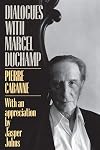
With an introduction by Robert Motherwell, a foreword by Salvador Dali, and an appreciation by Jasper Johns
"Marcel Duchamp, one of this century's pioneer artists, moved his work through the retinal boundaries which had been established with Impressionism into a field where language, thought and vision act upon one another. There it changed form through a complex interplay of new mental and physical materials, heralding many of the technical, mental and visual details to be found in more show more recent art. . .
"In the 1920s Duchamp gave up, quit painting. He allowed, perhaps encouraged, the attendant mythology. One thought of his decision, his willing this stopping. Yet on one occasion, he said it was not like that. He spoke of breaking a leg. 'You don't mean to do it,' he said.
"The Large Glass. A greenhouse for his intuition. Erotic machinery, the Bride, held in a see-through cage-'a Hilarious Picture.' Its cross references of sight and thought, the changing focus of the eyes and mind, give fresh sense to the time and space we occupy, negate any concern with art as transportation. No end is in view in this fragment of a new perspective. 'In the end you lose interest, so I didn't feel the necessity to finish it.'
"He declared that he wanted to kill art ('for myself') but his persistent attempts to destroy frames of reference altered our thinking, established new units of thought, 'a new thought for that object.'
"The art community feels Duchamp's presence and his absence. He has changed the condition of being here."--Jasper Johns, from Marcel Duchamp: An Appreciation show less
"Marcel Duchamp, one of this century's pioneer artists, moved his work through the retinal boundaries which had been established with Impressionism into a field where language, thought and vision act upon one another. There it changed form through a complex interplay of new mental and physical materials, heralding many of the technical, mental and visual details to be found in more show more recent art. . .
"In the 1920s Duchamp gave up, quit painting. He allowed, perhaps encouraged, the attendant mythology. One thought of his decision, his willing this stopping. Yet on one occasion, he said it was not like that. He spoke of breaking a leg. 'You don't mean to do it,' he said.
"The Large Glass. A greenhouse for his intuition. Erotic machinery, the Bride, held in a see-through cage-'a Hilarious Picture.' Its cross references of sight and thought, the changing focus of the eyes and mind, give fresh sense to the time and space we occupy, negate any concern with art as transportation. No end is in view in this fragment of a new perspective. 'In the end you lose interest, so I didn't feel the necessity to finish it.'
"He declared that he wanted to kill art ('for myself') but his persistent attempts to destroy frames of reference altered our thinking, established new units of thought, 'a new thought for that object.'
"The art community feels Duchamp's presence and his absence. He has changed the condition of being here."--Jasper Johns, from Marcel Duchamp: An Appreciation show less

"Everything important that I have done can be put into a little suitcase," Duchamp said in 1952: finally that suitcase is available to all
One of the most important and enigmatic pieces of modernist art, "Boîte-en-valise" (Box in a Valise) was assembled by Marcel Duchamp between 1935 and 1941. The portable suitcase contains "the sum of his artistic work" up to that point. Perhaps in premonition of the coming war, and over years without a fixed address, Duchamp reproduced his work in a format show more that enabled him to easily transport his "complete works" at any time. Though the artist eventually made 300 copies of his box, many are behind glass in museums and private collections.
This is the first ever reinterpretation of the legendary book-object, conceptualized by French artist Mathieu Mercier and now available to a broader audience. At once a work in and of itself, and a reproduction in the Duchampian spirit, this miniature museum contains 69 reproductions of Duchamp's most celebrated creations, including the famous "Fountain," "Nude Descending a Staircase" and the "Large Glass." Mercier has reproduced the bulk of the contents of Duchamp's original box in paper form, designing everything to scale. Playful and accessible, the "Boîte" reflects Duchamp's desire to display his works outside the museum and gallery system.
Marcel Duchamp (1887–1968) studied painting in Paris. In 1912 he exhibited his controversial "Nude Descending a Staircase," and by 1913 he had abandoned traditional painting and drawing for more experimental forms, including mechanical drawings, studies and notations. In 1914 he introduced his readymades. Duchamp became associated with the Dada movement in Paris and in New York, where he settled permanently in 1942. show less
One of the most important and enigmatic pieces of modernist art, "Boîte-en-valise" (Box in a Valise) was assembled by Marcel Duchamp between 1935 and 1941. The portable suitcase contains "the sum of his artistic work" up to that point. Perhaps in premonition of the coming war, and over years without a fixed address, Duchamp reproduced his work in a format show more that enabled him to easily transport his "complete works" at any time. Though the artist eventually made 300 copies of his box, many are behind glass in museums and private collections.
This is the first ever reinterpretation of the legendary book-object, conceptualized by French artist Mathieu Mercier and now available to a broader audience. At once a work in and of itself, and a reproduction in the Duchampian spirit, this miniature museum contains 69 reproductions of Duchamp's most celebrated creations, including the famous "Fountain," "Nude Descending a Staircase" and the "Large Glass." Mercier has reproduced the bulk of the contents of Duchamp's original box in paper form, designing everything to scale. Playful and accessible, the "Boîte" reflects Duchamp's desire to display his works outside the museum and gallery system.
Marcel Duchamp (1887–1968) studied painting in Paris. In 1912 he exhibited his controversial "Nude Descending a Staircase," and by 1913 he had abandoned traditional painting and drawing for more experimental forms, including mechanical drawings, studies and notations. In 1914 he introduced his readymades. Duchamp became associated with the Dada movement in Paris and in New York, where he settled permanently in 1942. show less
Lists
You May Also Like


Associated Authors
Statistics
- Works
- 104
- Also by
- 10
- Members
- 990
- Popularity
- #26,013
- Rating
- 3.9
- Reviews
- 14
- ISBNs
- 74
- Languages
- 9
- Favorited
- 3
