

Pierre Cabanne (1921–2007)
Author of Dialogues with Marcel Duchamp
About the Author
Series
Works by Pierre Cabanne
1000 trésors de France 4 copies
Gespräche mit Marcel Duchamp 3 copies
Antonello 2 copies
Dictionnaire des Arts 1 copy
O Cubismo Livro 1 1 copy
Paris vous regarde 1 copy
Ποιός σκότωσε τον Βαν Γκογκ; 1 copy
Grandes Artistas - Van Gohg 1 copy
A Arte Clássica e o Barroco 1 copy
Picasso 1 copy
Rembrandt 1 copy
Kniha o velkých sběratelích 1 copy
Erotik in Der Kunst 1 copy
Le scandale dans l'art 1 copy
l'art du XVIIIème siècle 1 copy
Degas danseuses 1 copy
L'épopée du cubisme 1 copy
Associated Works
Michaël Lechner: Traitements de gestes. — Preface — 1 copy
Tagged
Common Knowledge
- Birthdate
- 1921-09-23
- Date of death
- 2007-01-24
- Gender
- male
- Occupations
- art historian
art critic - Nationality
- France
- Birthplace
- Carcassonne, France
- Place of death
- Meudon, France
- Associated Place (for map)
- France
Members
Reviews
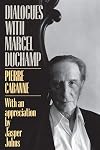
With an introduction by Robert Motherwell, a foreword by Salvador Dali, and an appreciation by Jasper Johns
"Marcel Duchamp, one of this century's pioneer artists, moved his work through the retinal boundaries which had been established with Impressionism into a field where language, thought and vision act upon one another. There it changed form through a complex interplay of new mental and physical materials, heralding many of the technical, mental and visual details to be found in more show more recent art. . .
"In the 1920s Duchamp gave up, quit painting. He allowed, perhaps encouraged, the attendant mythology. One thought of his decision, his willing this stopping. Yet on one occasion, he said it was not like that. He spoke of breaking a leg. 'You don't mean to do it,' he said.
"The Large Glass. A greenhouse for his intuition. Erotic machinery, the Bride, held in a see-through cage-'a Hilarious Picture.' Its cross references of sight and thought, the changing focus of the eyes and mind, give fresh sense to the time and space we occupy, negate any concern with art as transportation. No end is in view in this fragment of a new perspective. 'In the end you lose interest, so I didn't feel the necessity to finish it.'
"He declared that he wanted to kill art ('for myself') but his persistent attempts to destroy frames of reference altered our thinking, established new units of thought, 'a new thought for that object.'
"The art community feels Duchamp's presence and his absence. He has changed the condition of being here."--Jasper Johns, from Marcel Duchamp: An Appreciation show less
"Marcel Duchamp, one of this century's pioneer artists, moved his work through the retinal boundaries which had been established with Impressionism into a field where language, thought and vision act upon one another. There it changed form through a complex interplay of new mental and physical materials, heralding many of the technical, mental and visual details to be found in more show more recent art. . .
"In the 1920s Duchamp gave up, quit painting. He allowed, perhaps encouraged, the attendant mythology. One thought of his decision, his willing this stopping. Yet on one occasion, he said it was not like that. He spoke of breaking a leg. 'You don't mean to do it,' he said.
"The Large Glass. A greenhouse for his intuition. Erotic machinery, the Bride, held in a see-through cage-'a Hilarious Picture.' Its cross references of sight and thought, the changing focus of the eyes and mind, give fresh sense to the time and space we occupy, negate any concern with art as transportation. No end is in view in this fragment of a new perspective. 'In the end you lose interest, so I didn't feel the necessity to finish it.'
"He declared that he wanted to kill art ('for myself') but his persistent attempts to destroy frames of reference altered our thinking, established new units of thought, 'a new thought for that object.'
"The art community feels Duchamp's presence and his absence. He has changed the condition of being here."--Jasper Johns, from Marcel Duchamp: An Appreciation show less

This is a fine overview of this 19th century American artist who spent most of his time in the United Kingdom and France. His New England roots, very prominent in Whistler's Mother, always shine through. I love Whistler's Peacock Room, which during my two visits to its present location in the Freer Art Gallery in Washington, D.C., has always been empty of visitors. Perhaps I picked a lucky time to visit. I also prefer the room emptied of most of the porcelain it currently features in its show more overstuffed reenactment of early 20th century bad taste. A return to the artist's conception instead of that of its fat cat owner would be welcome. As they threaten to keep this installation up until 2013, I fear I can't help seeing it in its present state during my next visit.
Whistler's Nocturnes and landscapes look very Turneresque to me. It is strange that John Ruskin, who was a major Turner fan in his youth, though age cooled his ardor, reacted so negatively to them then. The trial made a big splash, confirming Whistler's status as an enfant terrible and dandy. The rich people he portrayed in his paintings do not look very happy. Perhaps one reason why many preferred his colleague John Singer Sargent. One day I will finish reading his wonderfully titled book "The Gentle Art of Making Enemies" (that unfortunately does not fulfill its titular aspirations). show less
Whistler's Nocturnes and landscapes look very Turneresque to me. It is strange that John Ruskin, who was a major Turner fan in his youth, though age cooled his ardor, reacted so negatively to them then. The trial made a big splash, confirming Whistler's status as an enfant terrible and dandy. The rich people he portrayed in his paintings do not look very happy. Perhaps one reason why many preferred his colleague John Singer Sargent. One day I will finish reading his wonderfully titled book "The Gentle Art of Making Enemies" (that unfortunately does not fulfill its titular aspirations). show less
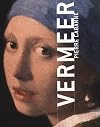
Présentation de l'éditeur Objet de l'un des plus grands mystères de l'histoire de l'art, Vermeer est sans aucun doute le maître de la peinture intimiste hollandaise du Siècle d'or. La rareté de son œuvre - il n'en reste que 36 tableaux - n'en rend que plus précieuse la récente authentification de la Jeune Femme assise au virginal. Sa vie elle-même est une énigme dont ne subsistent que peu de traces. Mais c'est au cœur de chacune de ses toiles que se logent les interrogations les show more plus subtiles et les plus passionnantes autour du maître de Delft. Qui se cache derrière ce personnage secret ? Comment chaque peinture, aux sujets pourtant simples, devient-elle sous la main de l'artiste un immense chef-d'œuvre ? Resituée dans le contexte historique, religieux et social de cette ville de marchands et d'industries de luxe qu'est Delft au XVIIe siècle, présentée dans sa globalité et mise en parallèle avec les toiles de ses contemporains, l'œuvre de Vermeer prend, dans cet ouvrage, toute sa dimension et sa grâce. Elle place son auteur parmi les plus grands génies de la peinture occidentale. Biographie de l'auteur PIERRE CABANNE, historien d'art, est l'auteur de deux ouvrages de référence, Entretiens avec Marcel Duchamp et Le Siècle de Picasso. Il a également conçu un Guide des musées de France et un Dictionnaire des arts. Il a publié aux éditions Terrail de nombreuses monographies d'artistes parmi lesquelles Duchamp, Brancusi, Van Gogh. Grand spécialiste de l'art moderne, critique renommé, il est aussi professeur émérite à l'École des arts décoratifs de Paris. show less

> Babelio : https://www.babelio.com/livres/Duchamp-Entretiens-avec-Pierre-Cabanne/637476
> ENTRETIENS AVEC PIERRE CABANNE, par Marcel Duchamp (Allia, 2014, Broché, 176 pages). — C'est sur le ton de la confidence et avec simplicité que Marcel Duchamp se livre à Pierre Cabanne. Nous sommes en 1966, deux ans avant sa disparition. Il retrace sa vie, celle d'un artiste qui n'a voulu ni plaire ni choquer. Celui qui a pu affirmer que "c'est le regardeur qui fait le tableau" montre une show more disponibilité à autrui, répond avec la plus grande honnêteté à son interviewer. Ce qui n'exclut pas les pirouettes et les traits d'ironie. Duchamp fut féru de calembours, un amoureux de l’œuvre de Jean-Pierre Brisset et des Impressions d'Afrique de Raymond Roussel. Il reste que l'on est ici loin des commentaires abscons que son œuvre a inspirés. Se tenant à l'écart du monde artistique, Duchamp déclare avoir une "vie de garçon de café". Après l'abandon de la peinture, il s'intéresse à des questions de dynamique, de mouvement et d'optique. Il cherche à "capturer le hasard" et à se détacher du pouvoir rétinien de l'œuvre. Surtout, il avoue sa "paresse énorme", bien qu'il soit un touche-à-tout et un bricoleur sans égal, comme le montre ce parcours que l'on traverse au pas de course. Ce témoignage authentique, souvent déconcertant, permet de découvrir près d'un demi-siècle d'une vie et d'une œuvre parmi les plus subversives, mais aussi leurs dessous. Car il y est aussi question des amitiés et des relations amoureuses, loin d'être innocentes pour comprendre l'œuvre du Grand Perturbateur.
—Johnny Gimenez (Culturebox) show less
> ENTRETIENS AVEC PIERRE CABANNE, par Marcel Duchamp (Allia, 2014, Broché, 176 pages). — C'est sur le ton de la confidence et avec simplicité que Marcel Duchamp se livre à Pierre Cabanne. Nous sommes en 1966, deux ans avant sa disparition. Il retrace sa vie, celle d'un artiste qui n'a voulu ni plaire ni choquer. Celui qui a pu affirmer que "c'est le regardeur qui fait le tableau" montre une show more disponibilité à autrui, répond avec la plus grande honnêteté à son interviewer. Ce qui n'exclut pas les pirouettes et les traits d'ironie. Duchamp fut féru de calembours, un amoureux de l’œuvre de Jean-Pierre Brisset et des Impressions d'Afrique de Raymond Roussel. Il reste que l'on est ici loin des commentaires abscons que son œuvre a inspirés. Se tenant à l'écart du monde artistique, Duchamp déclare avoir une "vie de garçon de café". Après l'abandon de la peinture, il s'intéresse à des questions de dynamique, de mouvement et d'optique. Il cherche à "capturer le hasard" et à se détacher du pouvoir rétinien de l'œuvre. Surtout, il avoue sa "paresse énorme", bien qu'il soit un touche-à-tout et un bricoleur sans égal, comme le montre ce parcours que l'on traverse au pas de course. Ce témoignage authentique, souvent déconcertant, permet de découvrir près d'un demi-siècle d'une vie et d'une œuvre parmi les plus subversives, mais aussi leurs dessous. Car il y est aussi question des amitiés et des relations amoureuses, loin d'être innocentes pour comprendre l'œuvre du Grand Perturbateur.
—Johnny Gimenez (Culturebox) show less
Dec 29, 2018 (Edited)French
Lists
You May Also Like


Associated Authors
Statistics
- Works
- 118
- Also by
- 1
- Members
- 926
- Popularity
- #27,711
- Rating
- 3.8
- Reviews
- 6
- ISBNs
- 146
- Languages
- 11