
Ayana Gray
Author of Beasts of Prey
About the Author
Series
Works by Ayana Gray
Tagged
Common Knowledge
- Birthdate
- 20th Century
- Gender
- female
- Short biography
- Ayana Gray is a New York Times bestselling young adult fantasy author and a lover of all things monsters, mythos, and magic. Originally from Atlanta, she now lives in Little Rock, Arkansas.
- Nationality
- USA
- Birthplace
- Atlanta, Georgia, USA
- Places of residence
- Atlanta, Georgia, USA
Little Rock, Arkansas, USA - Associated Place (for map)
- USA
Members
Reviews
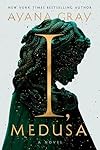
I had high hopes for Ayana Gray's reimagining of the Medusa myth. In recent years, there has been a shift from viewing Medusa as a monster to seeing her as yet another wronged woman, doomed to bear punishment for something that was not her fault. I thought I, MEDUSA would show this switch in detail with a bonus of a more diverse Ancient Greece than what we typically get in any Greek myth retelling. We do get that from Ms. Gray, but I, MEDUSA is not so much a groundbreaking reimaging as it is show more another cautionary tale regarding powerful men and the utter lack of punishment they do not receive for any of their crimes.
What bothers me the most about Ms. Gray's Medusa is how meek and beaten down she is. Medusa does not become a Gorgon until the end of the novel, so most of the plot revolves around Medusa's upbringing, her sheltered isolation from the rest of Greece, the abuse she suffered under her parents, and her longing for love and belonging as part of her trauma response. More importantly, we see the hero worship she has for the Olympian gods and goddesses, as her parents frequently hosted them on their island in hopes of obtaining more power and a return of their prestige, as is their due as deposed Titans.
At the same time, there is a bit of The Country Mouse and the City Mouse to Medusa's story. Her time in Athens is nothing but one misstep after another, simply because she knows nothing about life off her little family island. Ms. Gray uses Medusa's time in Athens to highlight the racism that existed even back then, which is a good lesson to learn. It also becomes a convenient reason for her fellow initiates to mock her for her ignorance and allow her to remain clueless about the dangers of the city. Watching the small-town girl bumble her way in and around the big city of Athens is frustrating because you can practically write the rest of her story before anything happens. It is a tale as old as humankind, and all you can do is watch it happen because she is not savvy enough to recognize the dangers before her.
I could handle that part if it meant Medusa got angry at her fate and used her punishment for revenge. That's what I wanted because it fits with the angry monster we already know. Instead, Ms. Gray's Medusa doesn't like killing anyone with her powers. She remains meek despite her new strength. She remains desperate for love even after what happened to her at her first two attempts to find love and belonging. She doesn't want revenge; she wants to live in peace. For some reason, it is an image of Medusa that does not sit well with me.
I, MEDUSA isn't a bad story. My feelings for the novel have nothing to do with Ms. Gray's writing prowess. Ms. Gray does an excellent job of presenting ancient Athens in detail, including life at the top of the Acropolis in Athena's temple. I have a much clearer image of what life was like for a wealthy young woman back then, thanks to this book. How Ms. Gray presents Medusa, what she does with her tale, and how she acts as a Gorgon are the causes of my disappointment with the novel, and that's all on me. show less
What bothers me the most about Ms. Gray's Medusa is how meek and beaten down she is. Medusa does not become a Gorgon until the end of the novel, so most of the plot revolves around Medusa's upbringing, her sheltered isolation from the rest of Greece, the abuse she suffered under her parents, and her longing for love and belonging as part of her trauma response. More importantly, we see the hero worship she has for the Olympian gods and goddesses, as her parents frequently hosted them on their island in hopes of obtaining more power and a return of their prestige, as is their due as deposed Titans.
At the same time, there is a bit of The Country Mouse and the City Mouse to Medusa's story. Her time in Athens is nothing but one misstep after another, simply because she knows nothing about life off her little family island. Ms. Gray uses Medusa's time in Athens to highlight the racism that existed even back then, which is a good lesson to learn. It also becomes a convenient reason for her fellow initiates to mock her for her ignorance and allow her to remain clueless about the dangers of the city. Watching the small-town girl bumble her way in and around the big city of Athens is frustrating because you can practically write the rest of her story before anything happens. It is a tale as old as humankind, and all you can do is watch it happen because she is not savvy enough to recognize the dangers before her.
I could handle that part if it meant Medusa got angry at her fate and used her punishment for revenge. That's what I wanted because it fits with the angry monster we already know. Instead, Ms. Gray's Medusa doesn't like killing anyone with her powers. She remains meek despite her new strength. She remains desperate for love even after what happened to her at her first two attempts to find love and belonging. She doesn't want revenge; she wants to live in peace. For some reason, it is an image of Medusa that does not sit well with me.
I, MEDUSA isn't a bad story. My feelings for the novel have nothing to do with Ms. Gray's writing prowess. Ms. Gray does an excellent job of presenting ancient Athens in detail, including life at the top of the Acropolis in Athena's temple. I have a much clearer image of what life was like for a wealthy young woman back then, thanks to this book. How Ms. Gray presents Medusa, what she does with her tale, and how she acts as a Gorgon are the causes of my disappointment with the novel, and that's all on me. show less
**ARC received from ALA 2025 for free in exchange for a review**
What a thrilling and enraging read!
This version of Medusa’s story was filled with feminine rage and injustice. I often found myself so pissed off whenever women, including Medusa and the others surrounding her, were used as tools and their grievances were dismissed. It is so frustrating that the possessors of dicks are automatically given deference and authority over women, just like in real life!
Medusa was certainly not show more without her faults and her actions absolutely caused problems, and often grave ones, for everyone around her. I can’t say much without landing fully in spoiler territory, but she is not 100% pure victim, though she is certainly worthy of pity and empathy.
The other women, namely the goddesses, were also not without their faults. The goddesses had their powers clouding their abilities to fairly judge those without powers at all and were often just as dismissive as the male characters, which certainly added to the unfair rage I felt throughout this story.
I ultimately took a star off this rating because I felt that a good chunk of the book just went way too fast and things “just happened” before the story moved on. I felt that this left a bit too many loose threads.
Overall though, I adored this take on the Medusa myth and I feel that it is certainly a worthy addition to any mythology lover’s shelf. show less
What a thrilling and enraging read!
This version of Medusa’s story was filled with feminine rage and injustice. I often found myself so pissed off whenever women, including Medusa and the others surrounding her, were used as tools and their grievances were dismissed. It is so frustrating that the possessors of dicks are automatically given deference and authority over women, just like in real life!
Medusa was certainly not show more without her faults and her actions absolutely caused problems, and often grave ones, for everyone around her. I can’t say much without landing fully in spoiler territory, but she is not 100% pure victim, though she is certainly worthy of pity and empathy.
The other women, namely the goddesses, were also not without their faults. The goddesses had their powers clouding their abilities to fairly judge those without powers at all and were often just as dismissive as the male characters, which certainly added to the unfair rage I felt throughout this story.
I ultimately took a star off this rating because I felt that a good chunk of the book just went way too fast and things “just happened” before the story moved on. I felt that this left a bit too many loose threads.
Overall though, I adored this take on the Medusa myth and I feel that it is certainly a worthy addition to any mythology lover’s shelf. show less

This novel is one of those classified as Young Adult (YA) that should be on adult reading lists. Beasts of Prey by Ayana Gray is the first book in a planned trilogy that has the possibility of finding a secure niche in the YA lexicon as a must-read.
What intrigues this reader is how both the good, the bad, and the ugly characters who populate Gray's story are fully realized and interesting. The best of the good characters is Koffi, who can channel the splendor (AKA magic) to do her bidding; show more the best of the bad characters is the morally compromised Ekon whose worldview has been shaped by an evil priest; and the worst of the bad is Fedu a dark god with ill-intent especially toward humans.
These characters all inhabit the mythical world of Eshoza post-rupture, an event that occurred a hundred years previously and shook the continent to its foundation. As you might suspect, present-day Eshoza has hardly improved.
As a reader I was swept into the author's creative concoction of a damaged world, filled with fantastical and, sometimes, dangerous creatures, and gods who either ignore the plight of humans or who are playing a dangerous game of one-upmanship.
As a debut novel, Beasts of Prey by Ayana Gray far exceeds any expectation. show less
What intrigues this reader is how both the good, the bad, and the ugly characters who populate Gray's story are fully realized and interesting. The best of the good characters is Koffi, who can channel the splendor (AKA magic) to do her bidding; show more the best of the bad characters is the morally compromised Ekon whose worldview has been shaped by an evil priest; and the worst of the bad is Fedu a dark god with ill-intent especially toward humans.
These characters all inhabit the mythical world of Eshoza post-rupture, an event that occurred a hundred years previously and shook the continent to its foundation. As you might suspect, present-day Eshoza has hardly improved.
As a reader I was swept into the author's creative concoction of a damaged world, filled with fantastical and, sometimes, dangerous creatures, and gods who either ignore the plight of humans or who are playing a dangerous game of one-upmanship.
As a debut novel, Beasts of Prey by Ayana Gray far exceeds any expectation. show less

The tale of Medusa from Greek mythology generally depicts her as a fearsome snake-headed gorgon who certainly merits no sympathy. But this poignant and tragic retelling and origin story offers a radically different perspective. Gray’s reimagining tells how Medusa was turned into a monster from her point of view, focusing on the exploitation of girls and women, and how it is the female, rather than the abuser, who often pays a steep price [not only mythically, sadly].
The book begins with a show more chapter called “After” which describes an event at the end of the story’s timeline, when Medusa, about to be sexually victimized (yet again), turns a priest into stone. The author then takes us back to “Before” when Medusa was just a 17-year-old mortal girl with lovely, normal hair rather than having a head full of snakes that could turn men to stone. She was called Meddy by those who loved her.
Meddy lived on an island with her sisters, Euryale and Stheno, and her parents, formerly powerful sea gods who were overthrown during the rise of the Olympians and confined to an island.
Although Medusa was mortal, her sisters were immortal; yet the three were bound together by love for each other and a shared fear of their parents.
Their father Phorcys was prone to violence, and their mother Ceto drank too much. Both cared more about regaining power than about the welfare of their daughters. It was not a pleasant existence.
When the girls reached marriageable age, they hoped marriage might provide the means to get away from the island. Suitors began arriving, and they were optimistic. The first was Prince Maheer, the mortal son of the god Ares. He chose Euryale, and Phorcys was delighted, not for Euryale but for the prestige it would bring to him. Stheno could see Maheer was abusive to both his slaves and to women, and was lying to them about his character and intentions. When she shared her observations with Meddy, Meddy was horrified that she had not seen through Maheer's facade. Stheno wasn't surprised however, explaining to Meddy: "Prince Maheer is a man with power, and men with power are always the first to be believed.”
When Meddy thought about abuse (the girls often witnessed their father’s brutality toward their mother), she was filled with rage. She became determined to stop Maheer from marrying her sister, but acting upon that anger toward Prince Maheer led to a change in fate for her as well as her family.
From here, the phenomenon of rape culture dominates the story. Rape culture is one in which sexual violence and abuse are normalized, played down, excused, doubted, and/or accepted as just “how men are.” Rape culture means the victim is blamed even when there is a power differential, a size differential, when a woman is too intimidated to say no, or has been rendered less capable by alcohol or drugs. Rape culture means a woman claiming she was raped is scrutinized for her dress, make-up, mental state, and relationship history. Rape culture encourages the objectification of women’s bodies, ignores misogynistic language, and censures women for “promiscuous” behavior or "loose" morals or not sufficiently hiding their bodies, rather than punishing the men who had to fight all that debauched "temptation."
The gods in particular had significant advantages over young women when it came to rape, and to meting out their version of "justice," as Medusa ultimately found. Their huge imbalance of power was augmented by a supernatural ability to transform victims - or even those who angered them for whatever reason - into something monstrous.
Meddy's intention was to remain a virgin. She had been selected by Athena herself to come to her temple at the Acropolis in Athens and undergo the tests to serve as her priestess, a great honor. One of the requirements was chastity. But after trying to resist, Meddy capitulated to pressure from Poseidon, one of the most powerful gods in both person and position (and who could have killed her instantly). When their sexual encounter was revealed to a furious Athena, everyone but Meddy's sisters thought Meddy must not have really “resisted” as she claimed - Poseidon himself asserted (falsely) that she “begged” for him. Like survivors of sexual assault throughout time, she was denigrated and disbelieved.
This turn of events made her not only deemed unworthy of serving at the Acropolis, but deserving [sic] of severe punishment.
Stheno said to Meddy:
“I’m afraid the truth doesn’t matter, Meddy. I warned you that men with power are always the first to be believed. You should have listened. In these situations, it isn’t the truth that holds weight. What matters is power and those who wield it, because they’re the ones who get to decide what’s true and what’s a lie.”
And in the end, it was Medusa who was turned into a horrible monster for her “crime,” as were her sisters for defending her, and it was the rapist, Poseidon, who remained unpunished. Thus it was ever so.
Discussion: Like the fairytale “Beauty and the Beast,” sometimes a story comes down to figuring out who the real monster is behind all the labels. Because history is not “herstory,” it is oh so predictable to have Meddy appear throughout time as the repulsive monster when the men involved were the real villains in the story.
Evaluation: This is everything one could want from a retelling. The story is full of nuance; Meddy is no angel, but nor is she the monster tradition makes her out to be. She is a girl who was abused, and paid the price in spite of being the victim. Her hurt and rage allowed her to turn the outrageous nature of her punishment into a means to carry out some retribution, although that too was short-lived; stymied by yet more injustice.
The author’s compassionate perspective allows readers to see through the oft-employed male characterization of angry females as crazy, hysterical, unreliable, and/or mentally suspect when they challenge men's narratives or control over their lives. Perhaps, the story suggests, women are reacting rationally and constructively to the abuses they have endured, which have been minimized over the centuries by the gender that has most often gotten to frame the stories. show less
The book begins with a show more chapter called “After” which describes an event at the end of the story’s timeline, when Medusa, about to be sexually victimized (yet again), turns a priest into stone. The author then takes us back to “Before” when Medusa was just a 17-year-old mortal girl with lovely, normal hair rather than having a head full of snakes that could turn men to stone. She was called Meddy by those who loved her.
Meddy lived on an island with her sisters, Euryale and Stheno, and her parents, formerly powerful sea gods who were overthrown during the rise of the Olympians and confined to an island.
Although Medusa was mortal, her sisters were immortal; yet the three were bound together by love for each other and a shared fear of their parents.
Their father Phorcys was prone to violence, and their mother Ceto drank too much. Both cared more about regaining power than about the welfare of their daughters. It was not a pleasant existence.
When the girls reached marriageable age, they hoped marriage might provide the means to get away from the island. Suitors began arriving, and they were optimistic. The first was Prince Maheer, the mortal son of the god Ares. He chose Euryale, and Phorcys was delighted, not for Euryale but for the prestige it would bring to him. Stheno could see Maheer was abusive to both his slaves and to women, and was lying to them about his character and intentions. When she shared her observations with Meddy, Meddy was horrified that she had not seen through Maheer's facade. Stheno wasn't surprised however, explaining to Meddy: "Prince Maheer is a man with power, and men with power are always the first to be believed.”
When Meddy thought about abuse (the girls often witnessed their father’s brutality toward their mother), she was filled with rage. She became determined to stop Maheer from marrying her sister, but acting upon that anger toward Prince Maheer led to a change in fate for her as well as her family.
From here, the phenomenon of rape culture dominates the story. Rape culture is one in which sexual violence and abuse are normalized, played down, excused, doubted, and/or accepted as just “how men are.” Rape culture means the victim is blamed even when there is a power differential, a size differential, when a woman is too intimidated to say no, or has been rendered less capable by alcohol or drugs. Rape culture means a woman claiming she was raped is scrutinized for her dress, make-up, mental state, and relationship history. Rape culture encourages the objectification of women’s bodies, ignores misogynistic language, and censures women for “promiscuous” behavior or "loose" morals or not sufficiently hiding their bodies, rather than punishing the men who had to fight all that debauched "temptation."
The gods in particular had significant advantages over young women when it came to rape, and to meting out their version of "justice," as Medusa ultimately found. Their huge imbalance of power was augmented by a supernatural ability to transform victims - or even those who angered them for whatever reason - into something monstrous.
Meddy's intention was to remain a virgin. She had been selected by Athena herself to come to her temple at the Acropolis in Athens and undergo the tests to serve as her priestess, a great honor. One of the requirements was chastity. But after trying to resist, Meddy capitulated to pressure from Poseidon, one of the most powerful gods in both person and position (and who could have killed her instantly). When their sexual encounter was revealed to a furious Athena, everyone but Meddy's sisters thought Meddy must not have really “resisted” as she claimed - Poseidon himself asserted (falsely) that she “begged” for him. Like survivors of sexual assault throughout time, she was denigrated and disbelieved.
This turn of events made her not only deemed unworthy of serving at the Acropolis, but deserving [sic] of severe punishment.
Stheno said to Meddy:
“I’m afraid the truth doesn’t matter, Meddy. I warned you that men with power are always the first to be believed. You should have listened. In these situations, it isn’t the truth that holds weight. What matters is power and those who wield it, because they’re the ones who get to decide what’s true and what’s a lie.”
And in the end, it was Medusa who was turned into a horrible monster for her “crime,” as were her sisters for defending her, and it was the rapist, Poseidon, who remained unpunished. Thus it was ever so.
Discussion: Like the fairytale “Beauty and the Beast,” sometimes a story comes down to figuring out who the real monster is behind all the labels. Because history is not “herstory,” it is oh so predictable to have Meddy appear throughout time as the repulsive monster when the men involved were the real villains in the story.
Evaluation: This is everything one could want from a retelling. The story is full of nuance; Meddy is no angel, but nor is she the monster tradition makes her out to be. She is a girl who was abused, and paid the price in spite of being the victim. Her hurt and rage allowed her to turn the outrageous nature of her punishment into a means to carry out some retribution, although that too was short-lived; stymied by yet more injustice.
The author’s compassionate perspective allows readers to see through the oft-employed male characterization of angry females as crazy, hysterical, unreliable, and/or mentally suspect when they challenge men's narratives or control over their lives. Perhaps, the story suggests, women are reacting rationally and constructively to the abuses they have endured, which have been minimized over the centuries by the gender that has most often gotten to frame the stories. show less
Lists
Awards


You May Also Like


Associated Authors
Statistics
- Works
- 5
- Members
- 2,145
- Popularity
- #11,994
- Rating
- 4.0
- Reviews
- 31
- ISBNs
- 50
- Languages
- 3