
T. A. Heppenheimer (1947–2015)
Author of Colonies in Space
About the Author
T. A. Heppenheimer is a well-known author who has published extensively on aviation and aerospace, business, and the history of technology. He holds a Ph.D. in aerospace engineering from the University of Michigan and is an associate fellow of the American Institute of Aeronautics and Aerospace
Image credit: T.A. Heppenheimer
Series
Works by T. A. Heppenheimer
Coming Quake: Science and Trembling on the California Earthquake Frontier (1988) 16 copies, 1 review
Associated Works
Arthur C. Clarke's July 20, 2019: Life in the 21st Century (Omni Book) (1986) — Contributor — 194 copies, 5 reviews
A Positron Named Priscilla: Scientific Discovery at the Frontier (1994) — Author, some editions — 9 copies, 1 review
Tagged
Common Knowledge
- Canonical name
- Heppenheimer, T. A.
- Legal name
- Heppenheimer, Thomas Adolph
- Other names
- Heppenheimer, Thomas A.
Heppenheimer, Tom - Birthdate
- 1947-01-01
- Date of death
- 2015-09-09
- Gender
- male
- Education
- University of Michigan
- Occupations
- freelance writer
aerospace engineer
historian of technology - Organizations
- American Institute of Aeronautics and Astronautics
- Nationality
- USA
- Places of residence
- Fountain Valley, California, USA
- Associated Place (for map)
- California, USA
Members
Reviews

There is a bittersweet quality to this book. It's nonfiction, so it has no engaging characters, no suspenseful plot, but it does tell a story. It's more of a snapshot, really, of a hopeful era in which humanity seemed on the verge of venturing out into space, building colonies, and expanding its reach throughout the galaxy. It seemed inevitable, a near certainty, almost right around the temporal corner. The first step would happen soon. Large colonies would be built in space. Initially, show more these would produce and maintain solar power stations, which would beam their energy back to Earth via microwave transmission. This would make the space colonies economically self-sustaining, possibly even highly profitable.
Published in 1978 (copyright 1977), the author's predictions about what would happen over the next forty years are often incorrect. He did not foresee, for example, the stunning advances that have been achieved in solar voltaic cells, artificial intelligence, 3D printing, or the possibility of cultured meat (his colonies would raise chickens and goats). He was extrapolating from the proven technology of the time, and all of these areas were still quite speculative.
He was also extrapolating from current culture and politics, prior to Reaganomics or the collapse of the Soviet Union. I found the following rather poignant:
Barring a catastrophic epidemic of human stupidity, the decades ahead are likely to see the foundations solidly laid for a world without large-scale poverty or hopelessness, a world of opportunity, rising living standards and widely shared middle-class levels of affluence. Such a world will endure into the indefinite future. (pages 250-251 of the 1st edition Warner mass market paperback)
Obviously, the world he envisioned didn't come about. One can argue whether this is good or bad, but the political motivation and the governmental financial capacity to fund large-scale space development no longer exists. We didn't build space colonies. Perhaps, some day, we will. If humanity is to survive into the distant future, I believe we must.
This review is also being published on the Avery Slom Philosophical Laboratory show less
Published in 1978 (copyright 1977), the author's predictions about what would happen over the next forty years are often incorrect. He did not foresee, for example, the stunning advances that have been achieved in solar voltaic cells, artificial intelligence, 3D printing, or the possibility of cultured meat (his colonies would raise chickens and goats). He was extrapolating from the proven technology of the time, and all of these areas were still quite speculative.
He was also extrapolating from current culture and politics, prior to Reaganomics or the collapse of the Soviet Union. I found the following rather poignant:
Barring a catastrophic epidemic of human stupidity, the decades ahead are likely to see the foundations solidly laid for a world without large-scale poverty or hopelessness, a world of opportunity, rising living standards and widely shared middle-class levels of affluence. Such a world will endure into the indefinite future. (pages 250-251 of the 1st edition Warner mass market paperback)
Obviously, the world he envisioned didn't come about. One can argue whether this is good or bad, but the political motivation and the governmental financial capacity to fund large-scale space development no longer exists. We didn't build space colonies. Perhaps, some day, we will. If humanity is to survive into the distant future, I believe we must.
This review is also being published on the Avery Slom Philosophical Laboratory show less

Beginning with a look at rocketry under Stalin and Hitler and concluding with cooperative United States-Soviet Union space ventures of the 1990s, this book offers readers a comprehensive historical account of the development of both American and Russian space activities.
Written for the layman, it is detailed, insightful, and filled with fascinating stories. Drawings and photographs accompany the text; author notes and an extensive bibliography are also included.
Highly recommended.
Written for the layman, it is detailed, insightful, and filled with fascinating stories. Drawings and photographs accompany the text; author notes and an extensive bibliography are also included.
Highly recommended.
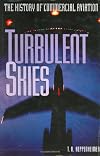
Once you realize that the words “in the United States” is missing from the History of Commercial Aviation subtitle then it gets easier to ignore what isn’t covered and focus on a well researched look at the development of the American commercial aviation industry.
I found the reasoning behind the setting up of the original major airlines (United, TWA, American, Eastern, & PanAm) and their operational parameters particularly interesting.
What makes this different from other similar texts show more I’ve read is that it doesn’t just focus on the airlines and aircraft developments but also gives equal weight to the evolution of the airports and air traffic control systems that allow air travel to work at the incredible traffic volumes we have come to take for granted. show less
I found the reasoning behind the setting up of the original major airlines (United, TWA, American, Eastern, & PanAm) and their operational parameters particularly interesting.
What makes this different from other similar texts show more I’ve read is that it doesn’t just focus on the airlines and aircraft developments but also gives equal weight to the evolution of the airports and air traffic control systems that allow air travel to work at the incredible traffic volumes we have come to take for granted. show less

The amazing chronicle of our passion for the sky Flight-subject of poetry, art, scientific inquiry, and war-continues to fascinate us. From the days before ballooning to the development of the Boeing 777, flight has fired our imaginations and transformed our lives. Meticulously researched and filled with entertaining first-person anecdotes, little-known historical facts, and offbeat humor, A Brief History of Flight puts into context the social, political, and economic factors that have show more stoked our passion for flight. You'll see how big business has helped the most daring-and expensive-inventions get off the ground, laugh at some of history's most bizarre flight attempts, and even get a rare peek inside some of the earliest passenger "flight kits." show less
Lists
You May Also Like


Associated Authors
Statistics
- Works
- 15
- Also by
- 3
- Members
- 649
- Popularity
- #38,890
- Rating
- 3.6
- Reviews
- 7
- ISBNs
- 36
- Languages
- 1