
Kathy Stinson
Author of Red is Best
About the Author
Image credit: School Services of Canada
Series
Works by Kathy Stinson
The Lady with the Books: A Story Inspired by the Remarkable Work of Jella Lepman (2020) 33 copies, 5 reviews
Love Every Leaf: The Life of Landscape Architect Cornelia Hahn Oberlander (2008) 16 copies, 1 review
O Homem do Violino 2 copies
Associated Works
Tagged
Common Knowledge
- Canonical name
- Stinson, Kathy
- Birthdate
- 1952
- Gender
- female
- Occupations
- teacher
writer-in-residence - Organizations
- The Writers' Union of Canada
CANSCAIP
IBBY-Canada
Canadian Children's Book Centre
PEN Canada - Awards and honors
- Bicentennial Civic Award of Merit from the City of Scarborough, 1996
- Nationality
- Canada
- Places of residence
- Rockwood, Ontario, Canada
- Associated Place (for map)
- Ontario, Canada
Members
Reviews
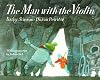
Kathy Stinson's story of a boy who is interested in his surroundings and captivated by the music of a performing violinist is perfectly complemented by the illustrations of Dušan Petričić. Targeted use of watercolors highlight the flow of music and joy emanating from the violinist and the spirited observations of the child. Wanting to linger, the boy is instead pulled along, forced to adhere to the busy schedule of his mother who hurries obliviously through the crowd. In a satisfying show more conclusion, the mother later finds the time to appreciate and savor the music that so captivated her young son in the transit station.
Sure to be counted among one of 2013's best picture books, The Man with the Violin is a reminder that the world is often seen and heard best through the eyes and ears of a child.
While this is not actually a nonfiction book, it is based on a true story, an experiment done by the Washington Post. Read the Washington Post article by Gene Weingarten and watch the actual footage of violin virtuoso Joshua Bell playing in the L'Enfant Metro Station in Washington, DC. For almost 45 minutes, harried commuters passed by, barely noticing the music of Joshua Bell. There was indeed, a young boy who wanted so badly to watch the performance, but his mother was too pressed for time. It's a lesson for us all.
Links available at http://shelf-employed.blogspot.com/2013/10/the-man-with-violin-review.html show less
Sure to be counted among one of 2013's best picture books, The Man with the Violin is a reminder that the world is often seen and heard best through the eyes and ears of a child.
While this is not actually a nonfiction book, it is based on a true story, an experiment done by the Washington Post. Read the Washington Post article by Gene Weingarten and watch the actual footage of violin virtuoso Joshua Bell playing in the L'Enfant Metro Station in Washington, DC. For almost 45 minutes, harried commuters passed by, barely noticing the music of Joshua Bell. There was indeed, a young boy who wanted so badly to watch the performance, but his mother was too pressed for time. It's a lesson for us all.
Links available at http://shelf-employed.blogspot.com/2013/10/the-man-with-violin-review.html show less
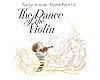
The Dance of the Violin
Written by: Kathy Stinson
Illustrated by: Dusan Petricic
I received an e-ARC from NetGalley in exchange for my honest review.
This book is a follow up to to the Stinson/ Petricic award winning book "Man With a Violin".
Plot:
As in "Man With a Violin", this story is taken from a real experience in famous violinist Joshua Bell's life. He chooses a difficult piece to play on the violin in his very first competition. His teacher warns him that it is a difficult selection, even show more for an adult. Joshua explains that he likes the soft and loud parts. His teacher insists it is too hard. Joshua explains, "I hear a story in it - about dancers being chased by a bear. A bear! Their ship gets lost at sea! I have to learn this piece!" His teacher simply responds, "In that case, Joshua, let's begin." I love this as it shows the young violinist's passion and how he sees, hears, and feels music. The book follows Joshua as he learns the piece and goes to the competition in Kalamazoo, Michigan. The young musician is nervous and messes up almost immediately. He has failed! Joshua is devastated and angry.
"The notes wobbled and - splat! - out tumbled a dancer, flat on her face". He is prepared to exit the stage as a failure when he remembers how he felt about the music and the story. Joshua bravely asks to start again. This time, the piece is perfect. What a lovely lesson in finding your passion and persevering in the face of failure.
The story is written in a flowing, almost poetical style that perfectly coordinates with the pictures (see below).
Illustrations:
The illustrations are central to the story and help the reader see the story that Joshua hears. Joshua himself is drawn very simply with an adorable tuft of yellow hair sprouting out of his head and glowy pink cheeks. His violin is colored with warm, textured chocolate. The bow is flexible and bends and flows with the music. The music itself creates color in the illustrations. When he is first experimenting with sound, we see crunchy zigzags which vividly invite the reader to "hear" the sound. When Joshua first picks up a violin and starts to play, a star appears above his head (in color). That moment is magical and transformative for the character and for the reader as well. As the story progresses, the illuststrstons develop as well. Joshua says he can hear stories in the music. His motivations for picking this particular piece is that he can hear the story of dancers being chased by a bear and then their ship is lost at sea! I love that! It is so vivid. I wish so much that every child reading this book could start to think of music in this way. The illustrations are brilliant swirls of color. When you take time to examine the swirls, the reader is rewarded by seeing images (just as Joshua himself must see them) of bears, dancers, waves, and ships. At the end, after Joshua has started his piece again, the waves of color and music literally blow across the page and over the judge. Such a triumphant feeling for the end of this magical story!
Just as a side note, I did take a day before reviewing to listen to lots of Joshua Bell's music. It was beautiful and I feel sure that any child reading this story would be able to hear the passion in his playing.
In conclusion - I highly recommend this vivid book! show less
Written by: Kathy Stinson
Illustrated by: Dusan Petricic
I received an e-ARC from NetGalley in exchange for my honest review.
This book is a follow up to to the Stinson/ Petricic award winning book "Man With a Violin".
Plot:
As in "Man With a Violin", this story is taken from a real experience in famous violinist Joshua Bell's life. He chooses a difficult piece to play on the violin in his very first competition. His teacher warns him that it is a difficult selection, even show more for an adult. Joshua explains that he likes the soft and loud parts. His teacher insists it is too hard. Joshua explains, "I hear a story in it - about dancers being chased by a bear. A bear! Their ship gets lost at sea! I have to learn this piece!" His teacher simply responds, "In that case, Joshua, let's begin." I love this as it shows the young violinist's passion and how he sees, hears, and feels music. The book follows Joshua as he learns the piece and goes to the competition in Kalamazoo, Michigan. The young musician is nervous and messes up almost immediately. He has failed! Joshua is devastated and angry.
"The notes wobbled and - splat! - out tumbled a dancer, flat on her face". He is prepared to exit the stage as a failure when he remembers how he felt about the music and the story. Joshua bravely asks to start again. This time, the piece is perfect. What a lovely lesson in finding your passion and persevering in the face of failure.
The story is written in a flowing, almost poetical style that perfectly coordinates with the pictures (see below).
Illustrations:
The illustrations are central to the story and help the reader see the story that Joshua hears. Joshua himself is drawn very simply with an adorable tuft of yellow hair sprouting out of his head and glowy pink cheeks. His violin is colored with warm, textured chocolate. The bow is flexible and bends and flows with the music. The music itself creates color in the illustrations. When he is first experimenting with sound, we see crunchy zigzags which vividly invite the reader to "hear" the sound. When Joshua first picks up a violin and starts to play, a star appears above his head (in color). That moment is magical and transformative for the character and for the reader as well. As the story progresses, the illuststrstons develop as well. Joshua says he can hear stories in the music. His motivations for picking this particular piece is that he can hear the story of dancers being chased by a bear and then their ship is lost at sea! I love that! It is so vivid. I wish so much that every child reading this book could start to think of music in this way. The illustrations are brilliant swirls of color. When you take time to examine the swirls, the reader is rewarded by seeing images (just as Joshua himself must see them) of bears, dancers, waves, and ships. At the end, after Joshua has started his piece again, the waves of color and music literally blow across the page and over the judge. Such a triumphant feeling for the end of this magical story!
Just as a side note, I did take a day before reviewing to listen to lots of Joshua Bell's music. It was beautiful and I feel sure that any child reading this story would be able to hear the passion in his playing.
In conclusion - I highly recommend this vivid book! show less
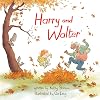
What an absolutely sweet story. I'm going to start by addressing the elephant in the room, since I know eventually it's bound to come up: As described, this story features a best-friendship between a young child and an elderly gentleman. No, there is no indication of "predatory" or "inappropriate" behavior... at all... whatsoever. And this is coming from a Criminal Minds/Law and Order SVU addict who is paranoid about creeps. There is nothing untoward about the relationship presented in this show more book; given that the two protagonists spend all their depicted time together playing outside in broad daylight, any reasonably intelligent reader will surmise that the elderly gentleman also has been vetted by the boy's parents. There are no warning signs of doom - implicit or otherwise - present in this story, so I really hope the pearl-clutchers leave this lovely work alone.
That being said, I also really enjoy that Walter and Harry are of different skin colors, yet it is never mentioned or emphasized in the story. They are just two people existing in harmony with their ethnic backgrounds not being of any relevance. Highlighting ethnic differences is definitely important in children's literature to ensure proper sensitivity is taught, but it's just as important for various skin colors to be depicted "nonchalantly" so that light-skinned is not the prevailing "default" of children's literature in the U.S. There shouldn't be a default.
Walter and Harry are also both very positive influences on each other. Harry obviously encourages Walter to be active and use his imagination, while Walter subtly teaches Harry correct speech patterns and has no qualms about drawing personal boundaries with what he's comfortable doing with his age's physical limitations. I received a digital copy of this book via NetGalley to review, but I definitely intend on adding a physical copy of this one to my kiddos' home library and encourage you to do the same. show less
That being said, I also really enjoy that Walter and Harry are of different skin colors, yet it is never mentioned or emphasized in the story. They are just two people existing in harmony with their ethnic backgrounds not being of any relevance. Highlighting ethnic differences is definitely important in children's literature to ensure proper sensitivity is taught, but it's just as important for various skin colors to be depicted "nonchalantly" so that light-skinned is not the prevailing "default" of children's literature in the U.S. There shouldn't be a default.
Walter and Harry are also both very positive influences on each other. Harry obviously encourages Walter to be active and use his imagination, while Walter subtly teaches Harry correct speech patterns and has no qualms about drawing personal boundaries with what he's comfortable doing with his age's physical limitations. I received a digital copy of this book via NetGalley to review, but I definitely intend on adding a physical copy of this one to my kiddos' home library and encourage you to do the same. show less
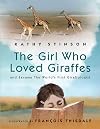
This is a stunning and educational book.
When this book was published in 2021 Anne Innis Dagg was alive and the author knew her and had interviewed her for this book and went over the book with her as she was writing it. I notice that Innis Dagg has since died, only a couple of months ago. I’d like to read more about her and more about giraffes. I assume that books by and about her might have longer than usual queues at libraries because of her recent death. Then again, I had not known of show more her until I saw a friend’s review of this book so maybe she isn’t well known or that well known outside of Canada. That is a shame if true.
I’ve always loved giraffes. They’re gentle herbivores and they’re beautiful and fascinating creatures. Sadly, I’ve never seen any in the wild. I’ve seen them only in zoos and only when I was much younger because it’s been decades (all but the first decade and a half or so of my life) since I’ve been generally willing to visit captive animals because I don’t believe in zoos and zoo-like places. I was gratified to read that both the subject and author of this book feel the same way and know that seeing giraffes in their natural habitat is entirely different from seeing them in captivity.
This is a book whose story is important and entertaining yet I still first have to say something about its illustrations. They are magnificent. They’re amazing. My favorite ones are of the giraffes. They’re special and while not as good as seeing giraffes in the wild they made me feel as though I was there with them.
I’m always curious about and intrigued by people who know what they’re interested in and what they want to do with their lives from a very young age. Anne was remarkable in being so single minded in her pursuit of seeing and studying giraffes just because of seeing them in a zoo at the tender age of six. She was able to travel to Africa to study giraffes for a full year when she was only 23 and she did earn her PhD in animal behavior.
This is a text heavy long (56 pages) picture book. It has many titled “chapters” of one or two pages each, though there isn’t that much text on the pages; a lot of the room is devoted to pictures, many of them full page illustrations. This book is suitable for young elementary school children, and just about everyone else too.
This is a fabulous picture book biography. It exceeded my already high expectations. It works well on so many levels. It’s a biography about a woman meriting of the attention. It’s about giraffes and I learned a lot about them. It’s about conservation and why it’s needed. It’s about women’s rights. It’s an well told history book showing today’s children how many things were different back in the 1950s+-. I got a kick out of the asides in the text about how women were not given equal rights for employment and other activities, about how instead of email there were typewritten letters that could take a very long time to get to their destinations and then take a very long time to receive any reply. I grew up in that era and all the “no girls allowed” sections were things I vividly remember. I greatly admire Anne Innis Dagg. Not only did she care about giraffes and protecting them but she cared about younger people and about women’s rights. She worked one to one with young people and with her students & her readers. She also participated in the 2017 Women’s March in Washington.
In the book proper there is the biographical story and also there are factoids on the pages. In the back of the book there is a wonderful author’s note with more information. Included are two photos of Anne. One is taken in the mid-50s when she was in Africa studying giraffes and one was taken when she was an older women. I like how it tells how some amends were made for the past. “In 2019 one of the universities that didn’t hire Anne granted her an honorary degree. Another apologized for having treated her and other women unfairly, announced a scholarship for female science students in Anne’s name, and made a generous donation to giraffe conservation.” She also eventually received awards for her accomplishments. There is also a glossary but all the words are already defined in the story proper. There is also a list of books by Anne Innis Dagg, a list of three films, and there is a link to her foundation, the Anne Innis Dag (AID) Foundation: https://anneinnisdaggfoundation.org/.
When a 2016 book by Anne won a prize for “Best in Canadian Science Writing” she donated all the prize money to giraffe conservation work. A portion of the royalties for this book was also donated to giraffe conservation. show less
When this book was published in 2021 Anne Innis Dagg was alive and the author knew her and had interviewed her for this book and went over the book with her as she was writing it. I notice that Innis Dagg has since died, only a couple of months ago. I’d like to read more about her and more about giraffes. I assume that books by and about her might have longer than usual queues at libraries because of her recent death. Then again, I had not known of show more her until I saw a friend’s review of this book so maybe she isn’t well known or that well known outside of Canada. That is a shame if true.
I’ve always loved giraffes. They’re gentle herbivores and they’re beautiful and fascinating creatures. Sadly, I’ve never seen any in the wild. I’ve seen them only in zoos and only when I was much younger because it’s been decades (all but the first decade and a half or so of my life) since I’ve been generally willing to visit captive animals because I don’t believe in zoos and zoo-like places. I was gratified to read that both the subject and author of this book feel the same way and know that seeing giraffes in their natural habitat is entirely different from seeing them in captivity.
This is a book whose story is important and entertaining yet I still first have to say something about its illustrations. They are magnificent. They’re amazing. My favorite ones are of the giraffes. They’re special and while not as good as seeing giraffes in the wild they made me feel as though I was there with them.
I’m always curious about and intrigued by people who know what they’re interested in and what they want to do with their lives from a very young age. Anne was remarkable in being so single minded in her pursuit of seeing and studying giraffes just because of seeing them in a zoo at the tender age of six. She was able to travel to Africa to study giraffes for a full year when she was only 23 and she did earn her PhD in animal behavior.
This is a text heavy long (56 pages) picture book. It has many titled “chapters” of one or two pages each, though there isn’t that much text on the pages; a lot of the room is devoted to pictures, many of them full page illustrations. This book is suitable for young elementary school children, and just about everyone else too.
This is a fabulous picture book biography. It exceeded my already high expectations. It works well on so many levels. It’s a biography about a woman meriting of the attention. It’s about giraffes and I learned a lot about them. It’s about conservation and why it’s needed. It’s about women’s rights. It’s an well told history book showing today’s children how many things were different back in the 1950s+-. I got a kick out of the asides in the text about how women were not given equal rights for employment and other activities, about how instead of email there were typewritten letters that could take a very long time to get to their destinations and then take a very long time to receive any reply. I grew up in that era and all the “no girls allowed” sections were things I vividly remember. I greatly admire Anne Innis Dagg. Not only did she care about giraffes and protecting them but she cared about younger people and about women’s rights. She worked one to one with young people and with her students & her readers. She also participated in the 2017 Women’s March in Washington.
In the book proper there is the biographical story and also there are factoids on the pages. In the back of the book there is a wonderful author’s note with more information. Included are two photos of Anne. One is taken in the mid-50s when she was in Africa studying giraffes and one was taken when she was an older women. I like how it tells how some amends were made for the past. “In 2019 one of the universities that didn’t hire Anne granted her an honorary degree. Another apologized for having treated her and other women unfairly, announced a scholarship for female science students in Anne’s name, and made a generous donation to giraffe conservation.” She also eventually received awards for her accomplishments. There is also a glossary but all the words are already defined in the story proper. There is also a list of books by Anne Innis Dagg, a list of three films, and there is a link to her foundation, the Anne Innis Dag (AID) Foundation: https://anneinnisdaggfoundation.org/.
When a 2016 book by Anne won a prize for “Best in Canadian Science Writing” she donated all the prize money to giraffe conservation work. A portion of the royalties for this book was also donated to giraffe conservation. show less
Lists
Awards


You May Also Like


Associated Authors
Statistics
- Works
- 48
- Also by
- 3
- Members
- 1,998
- Popularity
- #12,889
- Rating
- 4.0
- Reviews
- 94
- ISBNs
- 166
- Languages
- 9
- Favorited
- 1