

Janet Lunn (1928–2017)
Author of The Root Cellar
About the Author
Janet Lunn was born in Dallas, Texas on December 28, 1928. She attended Queen's University in Kingston, Ontario, Canada. Her first book, Double Spell, was published in 1968. Her other books include The Root Cellar, Come to the Fair, and Shadow in Hawthorn Bay. The Hollow Tree received the Governor show more General's Literary Award in 1998 and The Story of Canada written with Christopher Moore received a Mr. Christie's Book Award in 1993. She also received the Canadian Authors Association's Vicki Metcalf Award for Body of Work and The Writer's Trust of Canada's Matt Cohen Award in Celebration of a Writing Life. She died on June 26, 2017 at the age of 88. (Bowker Author Biography) show less
Disambiguation Notice:
Her full name is Janet Louise Swoboda Lunn.
Image credit: School Services of Canada
Series
Works by Janet Lunn
A Rebel's Daughter: The 1837 Rebellion Diary of Arabelle Stevenson Toronto (2006) 144 copies, 1 review
Associated Works
This Land : A Cross-Country Anthology of Canadian Fiction for Young Readers (1998) — Contributor — 39 copies, 1 review
Tagged
Common Knowledge
- Legal name
- Lunn, Janet Louise Swoboda
- Other names
- Swoboda, Janet Louise (birth name)
- Birthdate
- 1928-12-28
- Date of death
- 2017-06-26
- Gender
- female
- Education
- Notre Dame College
Queen's University at Kingston - Occupations
- children's book author
- Awards and honors
- Matt Cohen Prize (2005)
Order of Canada
Order of Ontario - Relationships
- Lunn, Richard
- Nationality
- USA (birth)
Canada (1963) - Birthplace
- Dallas, Texas, USA
- Places of residence
- Norwich, Vermont, USA
Rye, New York, USA
Montclair, New Jersey, USA
Ottawa, Ontario, Canada
Toronto, Ontario, Canada - Place of death
- Ottawa, Ontario, Canada
- Disambiguation notice
- Her full name is Janet Louise Swoboda Lunn.
- Associated Place (for map)
- USA
Members
Discussions
Found: Time travel (I think) book where I remember the cover in Name that Book (April 2025)
Found: Time travel (I think) book where I remember the cover in Name that Book (April 2025)
YA mystery girl finds old doll in attic in Name that Book (June 2013)
Reviews

When Charlotte Haines learns that her cousins Betsy and Sally will be leaving New York, the ten-year-old is distraught, especially as her stern father has forbidden any contact between his own family, and that of his brother David - Betsy and Sally's father. The year is 1783, the American Revolution has just ended, and the city's Loyalists - those who remained loyal to the British crown during the recent war, rather than espousing the Patriot cause - are being forced to evacuate to Nova show more Scotia. Into this category fall Uncle David and his family, while Charlotte and her family are Patriots. But when she defies her father, in order to visit with Betsy and Sally one last time, Charlotte finds herself cast off and disowned, and must also make the journey to that far Canadian wilderness.
I have to confess that, in the ordinary course of things, New York City's Tories, during and after the American Revolution, are not a group for whom I have a great deal of sympathy. These are, after all, the people who lived in comfort under British occupation, while more than ten thousand of their countrymen starved to death only a few miles away, in the deliberately inhumane British prison ships of Wallabout Bay (rotting hulks which killed more Americans than all the battles of the war combined). One has to wonder where all these "good folk" were, when the victims of this atrocity were being buried in mass graves in Brooklyn, or washing up on Manhattan's piers, as they were wont to do during the course of the conflict. No, I don't have much sympathy for the New Yorkers who sided with the British. The Iroquois who fought for the British, and then (unlike these New York Tories) were abandoned to their fate? That's another story!
Given that this is so, I think Janet Lunn's accomplishment, in Charlotte, is all the more remarkable. She put me squarely in Charlotte's shoes, and I found that, despite my decided views on the history involved (views that remain unchanged), I empathized fully with her, and with Uncle David and his family. Who wouldn't feel for an innocent child, wrongly victimized by her (clearly deranged) father, simply because she isn't as filled with hatred as he? Who wouldn't sympathize with the individuals effected by war, even if one feels that one side was more in the right than the other? For me, this poignant tale, based upon a true story, is an important reminder that even people on the right side of a conflict can behave in unconscionable ways. It's a reminder that people on the wrong side of a conflict can be decent human beings. In short, it's a reminder that conflicts - even those glorified in the national psyche - are complicated, and often involve wrong-doing on all sides.
For that reason, and for the alternative perspective it offers on the founding of this nation, I think it an incredibly valuable narrative. I wouldn't recommend it to younger readers - despite being a picture-book (with beautiful artwork, I might add), it has some very mature themes - but for those children who are middle-school age and above, and studying the Revolution, I think it can only add to their understanding of the complexity of that time. show less
I have to confess that, in the ordinary course of things, New York City's Tories, during and after the American Revolution, are not a group for whom I have a great deal of sympathy. These are, after all, the people who lived in comfort under British occupation, while more than ten thousand of their countrymen starved to death only a few miles away, in the deliberately inhumane British prison ships of Wallabout Bay (rotting hulks which killed more Americans than all the battles of the war combined). One has to wonder where all these "good folk" were, when the victims of this atrocity were being buried in mass graves in Brooklyn, or washing up on Manhattan's piers, as they were wont to do during the course of the conflict. No, I don't have much sympathy for the New Yorkers who sided with the British. The Iroquois who fought for the British, and then (unlike these New York Tories) were abandoned to their fate? That's another story!
Given that this is so, I think Janet Lunn's accomplishment, in Charlotte, is all the more remarkable. She put me squarely in Charlotte's shoes, and I found that, despite my decided views on the history involved (views that remain unchanged), I empathized fully with her, and with Uncle David and his family. Who wouldn't feel for an innocent child, wrongly victimized by her (clearly deranged) father, simply because she isn't as filled with hatred as he? Who wouldn't sympathize with the individuals effected by war, even if one feels that one side was more in the right than the other? For me, this poignant tale, based upon a true story, is an important reminder that even people on the right side of a conflict can behave in unconscionable ways. It's a reminder that people on the wrong side of a conflict can be decent human beings. In short, it's a reminder that conflicts - even those glorified in the national psyche - are complicated, and often involve wrong-doing on all sides.
For that reason, and for the alternative perspective it offers on the founding of this nation, I think it an incredibly valuable narrative. I wouldn't recommend it to younger readers - despite being a picture-book (with beautiful artwork, I might add), it has some very mature themes - but for those children who are middle-school age and above, and studying the Revolution, I think it can only add to their understanding of the complexity of that time. show less

At one point in Janet Lunn's The Root Cellar - a time-slip adventure story first published in 1981, and considered a classic of modern Canadian children's literature - the heroine, Rose Larkin, lying in a quiet hospital room, recalling the terrible tales of war she had just been hearing that afternoon, and reflecting on the deep and lasting hurt inflicted by that war on the soldiers who had fought in it, even on those who had survived, reflects with heartfelt grief: "Being a person's too show more hard...it's just too hard."
That hardness, that difficulty in being a "person" - of not knowing where you belong, or where you should want to belong, or who you even are; of not understanding all the complicated forces at work in the world, forces that sometimes help, but often wound, and still being subject to them - is at the heart of this story of a contemporary twelve-year-old girl who, at the death of the grandmother who had raised her, goes to stay with her aunt, uncle and cousins on a small Canadian island just across Lake Ontario from New York state, and finds herself continually thrown back into the past, to the time of the American Civil War.
Rose's adventures in the past, as she befriends Susan Anderson and Will Morrissey, who once lived in the very house her aunt and uncle now own; her journey south with Susan to discover Will's fate, when he runs off to enlist in the Union Army (being American on his mother's side), come to feel more real to her than her life with Aunt Nan and Uncle Bob, and her four (boy) cousins. But is the past, with all its pull, all its reality, truly where she belongs? The process whereby Rose discovers the answer to that question, learning quite a bit about herself in the process - that she can be "mean" (ie: greedy), but also generous, that she can work hard, and, when occasion demands, fight for her rights - make for a story that is as entertaining as it is moving.
I really enjoyed The Root Cellar, a book I have been meaning to read for some time now, and am glad it was chosen as our October selection, over in the International Books Club to which I belong, where we are currently "visiting" Canada. I'm especially glad that I had the chance to read this commemorative edition, with lovely full-page color plate illustrations by Scott Cameron! All in all, a wonderful reading experience! More than enough to convince me that I need to read more of Janet Lunn... show less
That hardness, that difficulty in being a "person" - of not knowing where you belong, or where you should want to belong, or who you even are; of not understanding all the complicated forces at work in the world, forces that sometimes help, but often wound, and still being subject to them - is at the heart of this story of a contemporary twelve-year-old girl who, at the death of the grandmother who had raised her, goes to stay with her aunt, uncle and cousins on a small Canadian island just across Lake Ontario from New York state, and finds herself continually thrown back into the past, to the time of the American Civil War.
Rose's adventures in the past, as she befriends Susan Anderson and Will Morrissey, who once lived in the very house her aunt and uncle now own; her journey south with Susan to discover Will's fate, when he runs off to enlist in the Union Army (being American on his mother's side), come to feel more real to her than her life with Aunt Nan and Uncle Bob, and her four (boy) cousins. But is the past, with all its pull, all its reality, truly where she belongs? The process whereby Rose discovers the answer to that question, learning quite a bit about herself in the process - that she can be "mean" (ie: greedy), but also generous, that she can work hard, and, when occasion demands, fight for her rights - make for a story that is as entertaining as it is moving.
I really enjoyed The Root Cellar, a book I have been meaning to read for some time now, and am glad it was chosen as our October selection, over in the International Books Club to which I belong, where we are currently "visiting" Canada. I'm especially glad that I had the chance to read this commemorative edition, with lovely full-page color plate illustrations by Scott Cameron! All in all, a wonderful reading experience! More than enough to convince me that I need to read more of Janet Lunn... show less
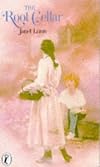
The Root Cellar by Janet Lunn
The Root Cellar is a time-slip adventure first published in 1981, which is considered to be a classic of modern Canadian children's literature. Twelve-year-old Rose Larkin lost her parents in a car accident when she was only three years old. After that, she went to live with her wealthy but emotionally distant grandmother in New York. When her grandmother dies, Rose is sent to live with Aunt Nan, her husband and their four boys in a ramshackle and chaotic home show more near Lake Ontario in Canada.
Rose is miserable in her new home, partly due to the fact that she has no experience of communicating with other young people, and partly because the family's way of life seems so disorganized compared to that of her very prim grandmother.
Shortly after her arrival, Rose accidentally discovers an abandoned root cellar, and quickly realizes that if she steps inside at just the right moment, she will emerge in the middle of the nineteenth century. She meets a girl named Susan who works for the parents of a boy named Will Morrissay. Susan, Will and Rose enjoy a wonderful day together, and Rose feels she has found a place where she really belongs.
Rose returns briefly to her own time for three days, and then on returning to the past is shocked to discover that Susan has aged three years. Will has gone off to fight in the Civil War. By that time, the war has been over for some months, but Will has not returned, and Susan has not heard anything from or about him.
After doing some historical research in her own time, Rose returns to the past, and with Susan embarks on a trip to Washington, D.C. in an attempt to learn what has happened to Will. Since many people in Susan’s time naturally think Rose is a boy because of her short hair, she decides to dress like a boy to provide a little added protection on the trip.
The historical accuracy regarding the nineteenth-century environment and US Civil War is impressive. War in general is portrayed in a very realistic way, and an antiwar and anti-nationalist message is conveyed persuasively through the comments of disillusioned soldiers and the descriptions of their circumstances.
The journey changes Rose from being a self-absorbed girl who looked down on her country-bumpkin relatives into a brave and empathetic young woman. In this way, the book is as much about what it means to be an individual as it is about time travel or history. To quote the book itself:
She remembered that she had thought about marrying Will. She thought about Susan, who wanted only one thing, to have Will home, and about her own self not really knowing what she wanted or even who she was. “Being a person’s too hard,” she thought. “It’s just too hard.”
Indeed, a major theme running throughout this story is the difficulty of not knowing where you belong or even who you are as an individual, and not being able to comprehend all of the factors at play in the world, factors that might occasionally serve to your benefit, but which just as often could bring you harm.
As with other successful works about time travel, for example Tom’s Midnight Garden, much of the poignancy is saved until the end, where all the threads of the story are drawn together and the full significance for the protagonist becomes clear.
Eventually, through experiences both joyful and heartbreaking, Rose comes to understand what is most important, and to know what she wants and where she belongs. All this makes for an emotionally satisfying conclusion.
“Susan,” she whispered, “it’s true. Being a person is very hard.” And she heard, like an echo in her head, “That’s so, Rose,” and could not help smiling.
show less
The Root Cellar is a time-slip adventure first published in 1981, which is considered to be a classic of modern Canadian children's literature. Twelve-year-old Rose Larkin lost her parents in a car accident when she was only three years old. After that, she went to live with her wealthy but emotionally distant grandmother in New York. When her grandmother dies, Rose is sent to live with Aunt Nan, her husband and their four boys in a ramshackle and chaotic home show more near Lake Ontario in Canada.
Rose is miserable in her new home, partly due to the fact that she has no experience of communicating with other young people, and partly because the family's way of life seems so disorganized compared to that of her very prim grandmother.
Shortly after her arrival, Rose accidentally discovers an abandoned root cellar, and quickly realizes that if she steps inside at just the right moment, she will emerge in the middle of the nineteenth century. She meets a girl named Susan who works for the parents of a boy named Will Morrissay. Susan, Will and Rose enjoy a wonderful day together, and Rose feels she has found a place where she really belongs.
Rose returns briefly to her own time for three days, and then on returning to the past is shocked to discover that Susan has aged three years. Will has gone off to fight in the Civil War. By that time, the war has been over for some months, but Will has not returned, and Susan has not heard anything from or about him.
After doing some historical research in her own time, Rose returns to the past, and with Susan embarks on a trip to Washington, D.C. in an attempt to learn what has happened to Will. Since many people in Susan’s time naturally think Rose is a boy because of her short hair, she decides to dress like a boy to provide a little added protection on the trip.
The historical accuracy regarding the nineteenth-century environment and US Civil War is impressive. War in general is portrayed in a very realistic way, and an antiwar and anti-nationalist message is conveyed persuasively through the comments of disillusioned soldiers and the descriptions of their circumstances.
The journey changes Rose from being a self-absorbed girl who looked down on her country-bumpkin relatives into a brave and empathetic young woman. In this way, the book is as much about what it means to be an individual as it is about time travel or history. To quote the book itself:
She remembered that she had thought about marrying Will. She thought about Susan, who wanted only one thing, to have Will home, and about her own self not really knowing what she wanted or even who she was. “Being a person’s too hard,” she thought. “It’s just too hard.”
Indeed, a major theme running throughout this story is the difficulty of not knowing where you belong or even who you are as an individual, and not being able to comprehend all of the factors at play in the world, factors that might occasionally serve to your benefit, but which just as often could bring you harm.
As with other successful works about time travel, for example Tom’s Midnight Garden, much of the poignancy is saved until the end, where all the threads of the story are drawn together and the full significance for the protagonist becomes clear.
Eventually, through experiences both joyful and heartbreaking, Rose comes to understand what is most important, and to know what she wants and where she belongs. All this makes for an emotionally satisfying conclusion.
“Susan,” she whispered, “it’s true. Being a person is very hard.” And she heard, like an echo in her head, “That’s so, Rose,” and could not help smiling.
show less
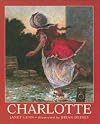
In this lushly illustrated, emotionally wrenching historically true tale of the American Revolution, Janet Lunn tells the story of young Charlotte Haines, who has to face one of the cruel realities of war, family division, and how different, conflicting ideals and philosophies can not only tear families apart, but can turn naturally stubborn, unbending individuals into absolute tyrants.
Charlotte is ten years old and lives in New York City. It is the year 1783 and she faces a major, show more emotionally wrenching dilemma. Her father, who supports the American Revolution has forbidden his daughter from speaking with her uncle, aunt and beloved cousins Betsy and Sally because his brother is a Loyalist. When Charlotte rebels against her tyrannical and unreasonable father and visits her relatives to say goodbye (before they are to leave for exile in Nova Scotia) her father disowns his daughter, actually turning her out of the house. Charlotte returns to her relatives' home and when neither her stubborn, obstinate father nor her meek mother relent, her uncle's family takes her along to Nova Scotia. Charlotte never sees her family again, but in a brief afterword, Janet Lunn shows that Charlotte Haines lived a happy and productive life in Nova Scotia and that one of her many grandchildren was Sir Samuel Leonard Tilley, premier of New Brunswick and one of the Fathers of Confederation (Canadian confederation).
Charlotte is an engaging, emotionally wrenching and heartbreaking story, very different from the usual Revolutionary War tales, where children are often presented as performing quiet acts of bravery and courage for the patriot cause. In fact, Charlotte turns this upside-down and on its side, showing a situation and events where the American patriot is not the hero, but the villain. I found myself completely enveloped by and drawn into the narrative, and so angry and livid at Charlotte's tyrannical father (and weak, submissive mother) that even days after reading the book, I was still experiencing trouble writing a review that was coherent and not simply a ranting tirade against Charlotte's parents. I actually had not only tears of sympathy and empathy, but tears of absolute rage and anger in my eyes, and I still cannot believe that Charlotte's father would disown his daughter for simply daring to speak to her uncle and his family (and that Charlotte's mother and older brother never questioned the father's unreasonableness and cruelty, that they never stood up for Charlotte, that they basically disowned her as well). It boggles the mind that Charlotte's father would call his own daughter a traitor, that he would disown her and reject her for a single (and small) act of supposed disobedience. In fact, I consider Charlotte's father not only a stubborn, unreasonable tyrant, but somewhat of a hypocrite, being more akin to the monarch (King George III of England) whom he supposedly so despises than the patriot (and champion of freedom) he considers himself to be. And while Charlotte is understandably shaken and dismayed at and by having lost her family, she is likely much better off with her uncle's family, she is likely fortunate to have escaped her father's tyranny.
I would consider Charlotte suitable for children above the ages of seven or eight. The text is extensive, but not difficult and actually looks accessible enough to and for younger children if one goes by writing style and word usage alone. However, very young children might be both frightened and disturbed that a young girl could be banished from not only her home, but her country due to a single, seemingly small act of disobedience (if one can even call it that). There is also much background information and historical details that would likely need to be discussed, such as the fact that both the patriots and those loyal to the Kind of England had slaves (that slavery was not just something that occurred in the Southern colonies of the future United States of America). Older children might still find Charlotte's punishment and fate a shock, but will likely know more about the period and benefit from reading the story and discussing both it and the historical background.
Brian Deines' illustrations are lush and luminous, realistically capturing the essence of upper-middle class 18th century colonial America; they provide a fitting complement to the text and could even be of use for more detailed discussions and presentations on topics such as typical 18th century furniture, the clothing worn at the time, what 18th century colonial buildings looked like and so on. However, the faces of the human figures seem rather devoid of emotional intensity; they are all quite similar in feature and expression, making them appear rather stilted and cardboard-like at times. The illustrations (paintings) do give the reader a wonderful sense of historic authenticity, but the human figures seem so much alike in their facial features that it sometimes feels as though they are just part of the general surroundings.
I do wish that Janet Lunn had included a more detailed author's note with suggestions for further reading, as well as the specific biographical sources for the story. It would make using this book in a classroom (or homeschooling) setting more of a teaching and learning tool, and having the biographical sources at hand would, of course, be of benefit if one wanted to check the historical veracity of the story (or if someone were to cast doubt on the historical veracity of the story). show less
Charlotte is ten years old and lives in New York City. It is the year 1783 and she faces a major, show more emotionally wrenching dilemma. Her father, who supports the American Revolution has forbidden his daughter from speaking with her uncle, aunt and beloved cousins Betsy and Sally because his brother is a Loyalist. When Charlotte rebels against her tyrannical and unreasonable father and visits her relatives to say goodbye (before they are to leave for exile in Nova Scotia) her father disowns his daughter, actually turning her out of the house. Charlotte returns to her relatives' home and when neither her stubborn, obstinate father nor her meek mother relent, her uncle's family takes her along to Nova Scotia. Charlotte never sees her family again, but in a brief afterword, Janet Lunn shows that Charlotte Haines lived a happy and productive life in Nova Scotia and that one of her many grandchildren was Sir Samuel Leonard Tilley, premier of New Brunswick and one of the Fathers of Confederation (Canadian confederation).
Charlotte is an engaging, emotionally wrenching and heartbreaking story, very different from the usual Revolutionary War tales, where children are often presented as performing quiet acts of bravery and courage for the patriot cause. In fact, Charlotte turns this upside-down and on its side, showing a situation and events where the American patriot is not the hero, but the villain. I found myself completely enveloped by and drawn into the narrative, and so angry and livid at Charlotte's tyrannical father (and weak, submissive mother) that even days after reading the book, I was still experiencing trouble writing a review that was coherent and not simply a ranting tirade against Charlotte's parents. I actually had not only tears of sympathy and empathy, but tears of absolute rage and anger in my eyes, and I still cannot believe that Charlotte's father would disown his daughter for simply daring to speak to her uncle and his family (and that Charlotte's mother and older brother never questioned the father's unreasonableness and cruelty, that they never stood up for Charlotte, that they basically disowned her as well). It boggles the mind that Charlotte's father would call his own daughter a traitor, that he would disown her and reject her for a single (and small) act of supposed disobedience. In fact, I consider Charlotte's father not only a stubborn, unreasonable tyrant, but somewhat of a hypocrite, being more akin to the monarch (King George III of England) whom he supposedly so despises than the patriot (and champion of freedom) he considers himself to be. And while Charlotte is understandably shaken and dismayed at and by having lost her family, she is likely much better off with her uncle's family, she is likely fortunate to have escaped her father's tyranny.
I would consider Charlotte suitable for children above the ages of seven or eight. The text is extensive, but not difficult and actually looks accessible enough to and for younger children if one goes by writing style and word usage alone. However, very young children might be both frightened and disturbed that a young girl could be banished from not only her home, but her country due to a single, seemingly small act of disobedience (if one can even call it that). There is also much background information and historical details that would likely need to be discussed, such as the fact that both the patriots and those loyal to the Kind of England had slaves (that slavery was not just something that occurred in the Southern colonies of the future United States of America). Older children might still find Charlotte's punishment and fate a shock, but will likely know more about the period and benefit from reading the story and discussing both it and the historical background.
Brian Deines' illustrations are lush and luminous, realistically capturing the essence of upper-middle class 18th century colonial America; they provide a fitting complement to the text and could even be of use for more detailed discussions and presentations on topics such as typical 18th century furniture, the clothing worn at the time, what 18th century colonial buildings looked like and so on. However, the faces of the human figures seem rather devoid of emotional intensity; they are all quite similar in feature and expression, making them appear rather stilted and cardboard-like at times. The illustrations (paintings) do give the reader a wonderful sense of historic authenticity, but the human figures seem so much alike in their facial features that it sometimes feels as though they are just part of the general surroundings.
I do wish that Janet Lunn had included a more detailed author's note with suggestions for further reading, as well as the specific biographical sources for the story. It would make using this book in a classroom (or homeschooling) setting more of a teaching and learning tool, and having the biographical sources at hand would, of course, be of benefit if one wanted to check the historical veracity of the story (or if someone were to cast doubt on the historical veracity of the story). show less
Lists
2025 Books (3)
Awards


You May Also Like


Associated Authors
Statistics
- Works
- 21
- Also by
- 3
- Members
- 2,365
- Popularity
- #10,852
- Rating
- 3.8
- Reviews
- 47
- ISBNs
- 116
- Languages
- 3
- Favorited
- 4