
Larry Burkett (1939–2003)
Author of Debt-Free Living
About the Author
Larry Burkett, a leading author and speaker on Christian Finance, has achieved much success in his career. He has written more than 50 nonfiction books, many of them bestsellers, that offer financial advice based on fundamental Christian principles. His best-selling work, Your Finances in Changing show more Times, has sold more than one million copies. He has also written three novels based on the premise of Christian financial management. In 1976, Burkett founded his ministry, Christian Financial Concepts, and conducts over 200 seminars a year as its president. Since 1982, he has hosted his own daily radio show, Money Matters, which reaches millions of listeners throughout the world. Larry Burkett lives in Gainesville, Georgia. (Bowker Author Biography) show less
Series
Works by Larry Burkett
Business By The Book Complete Guide Of Biblical Principles For The Workplace (1990) 500 copies, 5 reviews
Your Finances In Changing Times (The Christian Financial Concepts Series) (1975) 450 copies, 1 review
Financial Planning Workbook: A Family budgeting Guide (Christian Financial Concepts Series) (1982) 260 copies
Damaged But Not Broken; A Personal Testimony of How to Deal with the Impact of Cancer (1996) 224 copies, 1 review
Women Leaving the Workplace: How to Make the Transition from Work to Home (1995) 202 copies, 1 review
Giving and Tithing: Includes Serving and Stewardship (Burkett Financial Booklets) (1995) 133 copies, 1 review
The Complete Guide to Managing Your Money: Your Finances in Changing Times : Using Your Money Wisely : Debt-Free Living (1996) 106 copies, 1 review
Crisis Control in the New Millennium ( Seven Key Principles for Your Financial Prosperity ) (1999) 81 copies
The Burkett & Blue Definitive Guide to Securing Wealth to Last: Money Essentials for the Second Half of Life (2003) 72 copies, 1 review
A Different Kind of Party (Larry Burkett's Great Smoky Mountains Storybook Series) (2000) 56 copies, 2 reviews
Finding the Career that Fits You: The Companion Workbook to Your Career in Changing Times (1998) 51 copies
Larry Burkett's All About Time (Larry Burkett's Stewardship for the Family) (2003) 50 copies, 1 review
105 Questions Children Ask About Money Matters: With Answers from the Bible for Busy Parents (Questions Children Ask) (1997) 43 copies
Your Complete Guide to Financial Security: How to Invest and Prepare for Your Future Peace of Mind : Investing for the F (1998) 28 copies
Gifts from the Heart: Giving to God What Belongs to God (Burkett, Larry. Stewardship Series, 4.) (1996) 21 copies
Money In Marriage Workbook (Christian Financial Concepts Resourceful Living Series) (1999) 20 copies
Your Financial Future: Includes Retirement Planning, Wills, and Trusts (Larry Burkett Booklets Series) (1992) 19 copies
Sound Business Principles: Includes Management and Personal Issues (Larry Burkett Booklets Series) (1993) 15 copies
Get a Grip on Your Money - Teacher's Guide: A Young Adult Study in Christian Financial Management (1990) 14 copies
Surviving the Money Jungle - Student Workbook: A Junior High Study in Handling Money (1990) 14 copies
Surviving the Nineties Economy: Includes Definitions and Trends (Larry Burkett Booklets Series) (1992) 13 copies
The World's Easiest Pocket Guide to Getting Your First Credit Card (World's Easiest Guides) (2002) 9 copies
Christian Financial Concepts: A Complete Bible Study Course in God's Principles of Handling Money (1975) 8 copies
The World's Easiest Pocket Guide to Renting Your First Apartment (World's Easiest Guides) (2002) 7 copies
Money Map Coach Training Course [With 2 Workbooks and Map and CD (Audio) and Booklet] (2004) 6 copies
How to Prosper in the Underground Economy: A Completely Legal Guide to the Hidden, Multibillion-Dollar Cash Economy ... (1982) 4 copies
Personal finances 3 copies
All About Family Finances [audio] 3 copies
Using resources wisely 3 copies
A Guide to Family Budgeting 3 copies
The Financial Planning Workshop Audiocassette Series (The Financial Planning Workshop, 1990) (1991) 2 copies
The Finanacial Planning Workbook 2 copies
Money before Marriage 2 copies
Het Boek in bedrijf : er is meer te verdienen dan geld : een compleet overzicht van bijbelse principes voor de werkplek (2005) 2 copies
Financial Planning/Budgeting Seminar 2 copies
Elcuaderno De Planificacion Financiera: Financial Planning Workbook (Spanish Edition) (1995) 2 copies
The Financial Planning Workbook Instructor's Manual (The Christian Financial Concepts Series) 2 copies
Biblical Financial Study 1 copy
Lotteries: The Popular Tax 1 copy
An Air Of Superiority 1 copy
Biznes zgodny z Biblią 1 copy
various books 1 copy
The Financial Planning Workbook Instructor's Manual (The Christian Financial Concepts Series) (1991) 1 copy
Word on Finances 1 copy
The Illuinati 1 copy
Overly Committed 1 copy
The World's Easiest Pocket Guide to Creating Your First Financial Plan by Larry Burkett (2001-07-01) 1 copy
Complete Financial Guide 1 copy
Faithful and True 1 copy
Investment Seminar 1 copy
I'm No Hero 1 copy
Bound By Our Words 1 copy
When It's Time to Retire 1 copy
Defining the National Debt 1 copy
The Family Budget 1 copy
Tremors Before The Trauma 1 copy
Friends in Financial Trouble 1 copy
Are Allowances Scriptural? 1 copy
Associated Works
Tagged
Common Knowledge
- Other names
- L. 柏康德
- Birthdate
- 1939-03-03
- Date of death
- 2003-07-04
- Gender
- male
- Occupations
- author
- Organizations
- Christian Financial Concepts, Inc.
Crown Financial Ministries
U.S. Air Force - Short biography
- http://www.crown.org/larry/
- Cause of death
- heart failure
- Nationality
- USA
- Birthplace
- Winter Park, Florida, USA
- Places of residence
- Winter Garden, Florida, USA
- Place of death
- Gainesville, Georgia, USA
- Associated Place (for map)
- Florida, USA
Members
Reviews

In The Coming Economic Earthquake, Larry Burkett offers a stark warning about the future of the American economy from a Christian perspective. Burkett, known for his economic principles shared on Christian radio, explores the dangers of uncontrolled government spending, suggesting a severe day of reckoning -- an economic earthquake -- is on the horizon.
I read this book twice over a period of several years. I kept coming back to it because of it's accessible narrative. The author demystifies show more complex economic concepts for the average reader (likely honed from years of experience in radio broadcasting). The book is part history lesson and part novel, as the author weaves fictional (cautionary?) tales between his more explanatory chapters.
The book's first half provides a historical backdrop of the U.S. economy, tracing pivotal moments from the establishment of the Federal Reserve through the Great Depression, WWII, and various economic crises. It does a good job of explaining history and setting the stage for understanding today's economic challenges. Later in the book he identifies a series of signals (predictions) which portend a coming collapse. His description of risky banking practices and loans to notably unscrupulous characters like Donald Trump made me laugh...and then realize time has borne out his prediction.
Here are some of his key points:
Although some of Burkett's predictions may seem extreme (such as the collapse of the dollar being orchestrated by evildoers at the World Bank -- as described in his final cautionary tale), many of his signs of economic distress are now visible. His advice on individual financial preparedness, advocating for debt avoidance, living within one's means, prioritizing retirement planning, and engaging in the political process to encourage a stable economy, remains as relevant today as it was over three decades ago.
Overall, The Coming Economic Earthquake is a good read for those interested in economic theory, fiscal policy, and personal financial planning. There weren't too many Christian overtones, despite Burkett's background. I've added it to my permanent financial insights bookshelf along with other topics as The Bitcoin Standard and The Creature from Jekyll Island.
Whether or not you subscribe to Burkett's predictions, the work serves as a thought-provoking analysis of the potential consequences of unchecked economic policies in a world of fiat currency.
Review Post Script
I found the closing below in an earlier draft of my review, written back in February 2022 after my first reading of Burkett's work. I think it still has value.
As I worked my way through the second half of the book, the idea that this book was a "history of the future" was foremost in my mind. Mr. Burkett's writing is prescient. There are far, far too many parallels with what has happened in the 30 years since its publication: bank failures, government bailouts, quantitative easing to fund the debt, and even centrally-controlled digital currencies.
This work makes clear that the world we know today (the world of fiat currency and a debt-based economy) was destined to fail from the outset. We are only waking up to it today. Fortunately, today we have a way out -- pure peer-to-peer currency. Money out of the hands of the banks and governments. Sovereign currency that can't be debased. Bitcoin.
I am now more convinced than ever that adoption of a bitcoin standard is the only thing that can save the world.
Post Script – Reflections on the Financial Doomsday Series
I began what I later called my "Financial Doomsday" review series in the wake of COVID-19’s economic shock. After witnessing a 37% drop in the market in early 2020 and questioning the impact of unprecedented stimulus on the dollar’s value, I set out to understand what might come next. Over four and a half years, I read a dozen books warning of collapse, reform, or radical monetary reset. My goal wasn’t panic—it was preparation. I wanted to understand the problem, how we got here, and how to navigate whatever lies ahead.
What became unmistakably clear is that the system is broken—and it’s our own doing. Every book—whether shouting from a libertarian soapbox, preaching progressive reform, or whispering warnings of monetary collapse—echoes the same refrain. We’ve overspent, overpromised, and overextended. The future will not be fixed by half-measures or temporary stimulus.
And yet, I’ve found clarity, not despair. This reading journey wasn’t about hoarding gold or retreating into cynicism. It was about understanding how we got here—and where I stand. My answer is simple: stay invested. Broadly. Globally. Across asset classes. Fiat currencies may weaken, regimes may change, but human ingenuity and markets adapt. That’s the core insight I carry forward—not just from any single book, but from the collective warning they offer.
If you found this review helpful, check out my other reviews in the Financial Doomsday series, grouped below by theme:
Monetary Collapse & Inflation Risk
Free Market Solutions & Libertarian Reform
Global Governance & Centralized Planning
Wealth Inequality & Progressive Redistribution
I read this book twice over a period of several years. I kept coming back to it because of it's accessible narrative. The author demystifies show more complex economic concepts for the average reader (likely honed from years of experience in radio broadcasting). The book is part history lesson and part novel, as the author weaves fictional (cautionary?) tales between his more explanatory chapters.
The book's first half provides a historical backdrop of the U.S. economy, tracing pivotal moments from the establishment of the Federal Reserve through the Great Depression, WWII, and various economic crises. It does a good job of explaining history and setting the stage for understanding today's economic challenges. Later in the book he identifies a series of signals (predictions) which portend a coming collapse. His description of risky banking practices and loans to notably unscrupulous characters like Donald Trump made me laugh...and then realize time has borne out his prediction.
Here are some of his key points:
- Accumulating federal debt and misuse of debt by businesses and households are an impending disaster. Without significant changes, like a balanced budget and other controls on entitlements, an economic collapse (debt spiral) is inevitable.
- Keynesian economic policies, which advocate for continuous federal deficits and a larger government role in the economy, are unsustainable.
- Hyperinflation, similar to post-WWI Germany, and a deep financial depression, is on the horizon. The warning signs he identified in chapters 12 and 13 have all been observed in the last 33 years, including his prediction of "monetary equalization" (which today we know as "quantitative easing").
Although some of Burkett's predictions may seem extreme (such as the collapse of the dollar being orchestrated by evildoers at the World Bank -- as described in his final cautionary tale), many of his signs of economic distress are now visible. His advice on individual financial preparedness, advocating for debt avoidance, living within one's means, prioritizing retirement planning, and engaging in the political process to encourage a stable economy, remains as relevant today as it was over three decades ago.
Overall, The Coming Economic Earthquake is a good read for those interested in economic theory, fiscal policy, and personal financial planning. There weren't too many Christian overtones, despite Burkett's background. I've added it to my permanent financial insights bookshelf along with other topics as The Bitcoin Standard and The Creature from Jekyll Island.
Whether or not you subscribe to Burkett's predictions, the work serves as a thought-provoking analysis of the potential consequences of unchecked economic policies in a world of fiat currency.
Review Post Script
I found the closing below in an earlier draft of my review, written back in February 2022 after my first reading of Burkett's work. I think it still has value.
As I worked my way through the second half of the book, the idea that this book was a "history of the future" was foremost in my mind. Mr. Burkett's writing is prescient. There are far, far too many parallels with what has happened in the 30 years since its publication: bank failures, government bailouts, quantitative easing to fund the debt, and even centrally-controlled digital currencies.
This work makes clear that the world we know today (the world of fiat currency and a debt-based economy) was destined to fail from the outset. We are only waking up to it today. Fortunately, today we have a way out -- pure peer-to-peer currency. Money out of the hands of the banks and governments. Sovereign currency that can't be debased. Bitcoin.
I am now more convinced than ever that adoption of a bitcoin standard is the only thing that can save the world.
Post Script – Reflections on the Financial Doomsday Series
I began what I later called my "Financial Doomsday" review series in the wake of COVID-19’s economic shock. After witnessing a 37% drop in the market in early 2020 and questioning the impact of unprecedented stimulus on the dollar’s value, I set out to understand what might come next. Over four and a half years, I read a dozen books warning of collapse, reform, or radical monetary reset. My goal wasn’t panic—it was preparation. I wanted to understand the problem, how we got here, and how to navigate whatever lies ahead.
What became unmistakably clear is that the system is broken—and it’s our own doing. Every book—whether shouting from a libertarian soapbox, preaching progressive reform, or whispering warnings of monetary collapse—echoes the same refrain. We’ve overspent, overpromised, and overextended. The future will not be fixed by half-measures or temporary stimulus.
And yet, I’ve found clarity, not despair. This reading journey wasn’t about hoarding gold or retreating into cynicism. It was about understanding how we got here—and where I stand. My answer is simple: stay invested. Broadly. Globally. Across asset classes. Fiat currencies may weaken, regimes may change, but human ingenuity and markets adapt. That’s the core insight I carry forward—not just from any single book, but from the collective warning they offer.
If you found this review helpful, check out my other reviews in the Financial Doomsday series, grouped below by theme:
Monetary Collapse & Inflation Risk
- The Great Devaluation by Adam Baratta
- The Coming Economic Earthquake by Larry Burkett
Free Market Solutions & Libertarian Reform
- The Financial Crisis and the Free Market Cure by John A. Allison
- End the IRS Before It Ends Us by Grover Norquist
- How Capitalism Will Save Us by Steve Forbes
Global Governance & Centralized Planning
- The Great Narrative by Klaus Schwab
Wealth Inequality & Progressive Redistribution
- Capital in the Twenty-First Century by Thomas Piketty
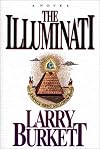
This, weirdly, was one of the formative books of my elementary-school years. No, it's not a young adult book. I was just a weird kid.
The year was 1992. I was nine years old, and two months into fifth grade. My parents had just moved us to a new house, which meant a new school, and the kids in my class were about to spend three days taking a standardized test-- the same standardized test I had taken a couple of weeks before at my old school. The new school obviously thought it would be dandy show more if I would consent just to take the test again, but I refused. So for three days, I sat in the principal's office and read while my classmates clutched No. 2 pencils and stared at row after row of scantron bubbles.
Don't ask why I wasn't allowed to stay home instead of sitting in the principal's office, because I have no idea. But in those days, I didn't really care where I was sitting as long as I was allowed to read. Yes, I say "allowed" to read, because I read so much that my mother would occasionally tear the book out of my hands in exasperation, hoping to jolt me into participating in conversation at the dinner table. The woman who cut my hair when I was growing up told me later that she was always terrified that my hair would come out noticeably crooked, because I insisted on having my head bent down toward my book during my haircuts.
Back to the story. I'm sure I looked ridiculous, hanging out in the school administrative offices at age 9 with a book approximately the size of my head. But this book blew me away. I was riveted. Fascinated. It was, now that I think about it, probably my very first step into a dystopian future. I remember astonishing levels of detail, twenty years later, down to the year, make, and model of the car that figures into one of the escape scenes. (A 1993 Chevy Caprice, if you care, which you don't, because it is the epitome of trivial detail. Still, as a kid I loved the idea of a capricious car, which is probably why I remember it.)
This is the book that first taught me the word "tsunami," a word that no one else around me learned until 2004. This is the book that first caused me to think about how credit cards and debit cards could be used to track someone's movements. This is the book that first sent me fumbling in my pocket for a dollar bill, to examine for myself the weird eyeball on top of a pyramid that was pictured there. Finally, this is the book that is probably at the root of my tendency to develop mild crushes on computer nerds.
So twenty years later, I tip my hat to Larry Burkett. Thanks for writing a book that captivated me completely. show less
The year was 1992. I was nine years old, and two months into fifth grade. My parents had just moved us to a new house, which meant a new school, and the kids in my class were about to spend three days taking a standardized test-- the same standardized test I had taken a couple of weeks before at my old school. The new school obviously thought it would be dandy show more if I would consent just to take the test again, but I refused. So for three days, I sat in the principal's office and read while my classmates clutched No. 2 pencils and stared at row after row of scantron bubbles.
Don't ask why I wasn't allowed to stay home instead of sitting in the principal's office, because I have no idea. But in those days, I didn't really care where I was sitting as long as I was allowed to read. Yes, I say "allowed" to read, because I read so much that my mother would occasionally tear the book out of my hands in exasperation, hoping to jolt me into participating in conversation at the dinner table. The woman who cut my hair when I was growing up told me later that she was always terrified that my hair would come out noticeably crooked, because I insisted on having my head bent down toward my book during my haircuts.
Back to the story. I'm sure I looked ridiculous, hanging out in the school administrative offices at age 9 with a book approximately the size of my head. But this book blew me away. I was riveted. Fascinated. It was, now that I think about it, probably my very first step into a dystopian future. I remember astonishing levels of detail, twenty years later, down to the year, make, and model of the car that figures into one of the escape scenes. (A 1993 Chevy Caprice, if you care, which you don't, because it is the epitome of trivial detail. Still, as a kid I loved the idea of a capricious car, which is probably why I remember it.)
This is the book that first taught me the word "tsunami," a word that no one else around me learned until 2004. This is the book that first caused me to think about how credit cards and debit cards could be used to track someone's movements. This is the book that first sent me fumbling in my pocket for a dollar bill, to examine for myself the weird eyeball on top of a pyramid that was pictured there. Finally, this is the book that is probably at the root of my tendency to develop mild crushes on computer nerds.
So twenty years later, I tip my hat to Larry Burkett. Thanks for writing a book that captivated me completely. show less
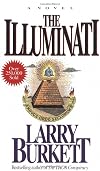
It is interesting that in the author's acknowledgments he said that his sincere desire was to make "good, non-offensive fiction" available to the public, considering this novel is neither good nor non-offensive.
Let's start with the offensive part since that was the first thing I noticed. This book is fundamentalist, conservative, anti-abortion, anti-gay, and anti-ACLU Christian propaganda. I have no problem with Christian fiction and read quite a bit of it, but I do not take kindly to the show more ACLU, homosexuals, or pro-choice people being clearly aligned on the side of evil. Case in point - when the head of the "NCLU" (the fictional stand in for the ACLU) is promoted to attourney general, the pastor main character says something like, "now I REALLY know we are fighting against the side of evil." People protesting for gay rights are frequently described as trouble makers of various sorts, and their symbol is an upside down cross, as an anti-Christian symbol.
As for the writing and plot, there was a lot to be desired. I enjoy a good thriller, especially one of the conspiracy theory persuasion, which is why I picked up this book in the first place. This one was not good. The plot was set in the author's future and our past - written in 1991, takes place in 2001. However, there was a lot of historical information to fill in (from 1991 to 2001), so many of the events in the book took place in the past. Those parts were dry and disjointed. There are also so many characters. Instead of a few main characters or a small ensemble, there were far too many characters. They were always getting killed or carted off somewhere and it became very hard to keep track of them all. Sometimes they would pop back into the story, but sometimes they would pop back into the story 100's of pages later so I couldn't remember exactly who they were. The dialog was terrible. I had to laugh sometimes. And some lines were extremely cheesy - for example, "Randy left the cabin feeling like he had just received the Nobel Peace Price - only from the Lord."
By the last third or so of the book, I realized that it was just a big preachy bit of propaganda. Aside from the whole "gays are bad" aspect, it just got really preachy at the end. And this coming from a Christian! But I suppose since I support gay marriage and don't think abortion is necessarily murder, maybe the author thinks I need to still be saved. Ugh. show less
Let's start with the offensive part since that was the first thing I noticed. This book is fundamentalist, conservative, anti-abortion, anti-gay, and anti-ACLU Christian propaganda. I have no problem with Christian fiction and read quite a bit of it, but I do not take kindly to the show more ACLU, homosexuals, or pro-choice people being clearly aligned on the side of evil. Case in point - when the head of the "NCLU" (the fictional stand in for the ACLU) is promoted to attourney general, the pastor main character says something like, "now I REALLY know we are fighting against the side of evil." People protesting for gay rights are frequently described as trouble makers of various sorts, and their symbol is an upside down cross, as an anti-Christian symbol.
As for the writing and plot, there was a lot to be desired. I enjoy a good thriller, especially one of the conspiracy theory persuasion, which is why I picked up this book in the first place. This one was not good. The plot was set in the author's future and our past - written in 1991, takes place in 2001. However, there was a lot of historical information to fill in (from 1991 to 2001), so many of the events in the book took place in the past. Those parts were dry and disjointed. There are also so many characters. Instead of a few main characters or a small ensemble, there were far too many characters. They were always getting killed or carted off somewhere and it became very hard to keep track of them all. Sometimes they would pop back into the story, but sometimes they would pop back into the story 100's of pages later so I couldn't remember exactly who they were. The dialog was terrible. I had to laugh sometimes. And some lines were extremely cheesy - for example, "Randy left the cabin feeling like he had just received the Nobel Peace Price - only from the Lord."
By the last third or so of the book, I realized that it was just a big preachy bit of propaganda. Aside from the whole "gays are bad" aspect, it just got really preachy at the end. And this coming from a Christian! But I suppose since I support gay marriage and don't think abortion is necessarily murder, maybe the author thinks I need to still be saved. Ugh. show less
When I bought this book in about 2007, I concluded that Burkett was overly alarmist, the American economy was far more robust than he thought and the broad and deep financial collapse he predicted back in 1991 for somewhere around 2000 had proved not to be as bad as he expected. In 2010 we can now see that he was prescient about the consequences of unsustainable debt, both private (mortgages, leases, etc.) and public. The only flaw was in WHEN it would occur, not whether.
The astonishing show more debt load recently assumed by the US Government and many state governments, along with continuing profligate spending and waste, all in the name of "stabilizing the economy" can accomplish little. As demonstrated by Burkett almost 20 years ago, it is quite predictable that things will get worse until governments start to live within their means. And the European Union is showing just how bad it can get with the PIIGS (Portugal, Ireland, Italy, Greece and Spain), especially Greece, leading the way. Read this book, get out of debt, and get your own financial house in order. show less
The astonishing show more debt load recently assumed by the US Government and many state governments, along with continuing profligate spending and waste, all in the name of "stabilizing the economy" can accomplish little. As demonstrated by Burkett almost 20 years ago, it is quite predictable that things will get worse until governments start to live within their means. And the European Union is showing just how bad it can get with the PIIGS (Portugal, Ireland, Italy, Greece and Spain), especially Greece, leading the way. Read this book, get out of debt, and get your own financial house in order. show less
Lists
Awards

You May Also Like


Associated Authors
Statistics
- Works
- 253
- Also by
- 1
- Members
- 11,626
- Popularity
- #2,024
- Rating
- 3.4
- Reviews
- 70
- ISBNs
- 279
- Languages
- 5
- Favorited
- 5