
Shannon Hale
Author of Princess Academy
About the Author
Shannon Hale was born in Salt Lake City, Utah on January 26, 1974. She received a bachelor's degree in English from the University of Utah and a master's degree in creative writing from the University of Montana. Her first book, The Goose Girl, was published in 2003. She writes for both adults and show more young adults. Her adult books include Austenland, Midnight in Austenland, and The Actor and the Housewife. Her young adult books include Book of a Thousand Days, Princess Academy, Palace of Stone, and the Ever after High series. She co-wrote the graphic novels Rapunzel's Revenge and Calamity Jack with husband Dean Hale. (Bowker Author Biography) show less
Image credit: Shannon and Dean Hale at the 2016 Texas Book Festival. By Larry D. Moore, CC BY-SA 4.0, https://commons.wikimedia.org/w/index.php?curid=53088534
Series
Works by Shannon Hale
Ever After High Collection: The Storybook of Legends, The Unfairest of Them All, A Wonderlandiful World (2014) 31 copies
Dream Big (Dream On) 3 copies
Tell Me What You See? 2 copies
The Princess in Black Series 1 copy
Gerçek Dostlar 1 copy
Bubbly Beautiful Kitty Korn 1 copy
Associated Works
The Unbeatable Squirrel Girl Beats Up the Marvel Universe (2016) — Introduction — 313 copies, 16 reviews
First Kiss (Then Tell): A Collection of True Lip-Locked Moments (2007) — Contributor — 92 copies, 3 reviews
True Heroes: A Treasury of Modern-day Fairy Tales Written by Best-selling Authors (2015) — Contributor — 36 copies, 1 review
Tagged
Common Knowledge
- Birthdate
- 1974-01-26
- Gender
- female
- Education
- University of Utah (BA ∙ English)
University of Montana (MFA ∙ Creative Writing)
West High School - Occupations
- novelist
- Organizations
- The Church of Jesus Christ of Latter-day Saints
- Awards and honors
- ARTY Award (Best Prolific Scribe, 2010)
- Relationships
- Hale, Dean (husband)
- Short biography
- Shannon Hale is the award-winning author of young adult novels. She is an avid Austen fan and admirer of men in breeches. She lives with her husband and two small children in Salt Lake City, Utah. [adapted from Austenland (2007)]
- Nationality
- USA
- Birthplace
- Salt Lake City, Utah, USA
- Places of residence
- South Jordan, Utah, USA
- Associated Place (for map)
- Utah, USA
Members
Reviews
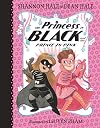
Princess Magnolia has been tasked with preparing for a ball as part of the Flower Festival where many other princesses will be in attendance. She thinks she is more than prepared until an angry emu crashes the party and destroys her decorations. Her monster-fighting alter-ego "The Princess in Black" isn't really much help here -- but can a mysterious masked stranger calling himself "The Prince in Pink" be of assistance?
This was a fun addition to this action-packed series. Each short chapter show more ends on a little bit of a cliffhanger, promoting kids to want to keep reading more. The text is in a large font and uses relatively simple sentence structures to keep it accessible for younger readers. Some of the vocabulary such as "menacing" and "holster" will be a little more challenging, but hopefully in a way that encourages learning rather than just frustrates. I think there is enough other, simpler vocabulary along the way that the former should be the case.
With this series, I always love that a bunch of princesses can save the day with their wits and their brawn, without needing a fellow to step in. However, in this case, we do have a male character who is a key helper -- but more for his ability to decorate with flair than his capacity to fight (although we see he is capable of this as well). It's a nice gender twist and a step towards all kids seeing themselves represented in literature. No matter how silly the story might be (flightless birds upset that they weren't invited to dance!), there can always be deeper messages tucked within for the readers to uncover.
Beyond the Prince in Pink, there's plenty more in the illustrations of pink objects and beautiful costumes with flourishes to appeal to those readers who like those aspects of more traditional princess stories. I really enjoyed the flower theme, especially the little puns seen prior to the ball at the fair with its rides like "bumper bees" and "rosemary-go-round." show less
This was a fun addition to this action-packed series. Each short chapter show more ends on a little bit of a cliffhanger, promoting kids to want to keep reading more. The text is in a large font and uses relatively simple sentence structures to keep it accessible for younger readers. Some of the vocabulary such as "menacing" and "holster" will be a little more challenging, but hopefully in a way that encourages learning rather than just frustrates. I think there is enough other, simpler vocabulary along the way that the former should be the case.
With this series, I always love that a bunch of princesses can save the day with their wits and their brawn, without needing a fellow to step in. However, in this case, we do have a male character who is a key helper -- but more for his ability to decorate with flair than his capacity to fight (although we see he is capable of this as well). It's a nice gender twist and a step towards all kids seeing themselves represented in literature. No matter how silly the story might be (flightless birds upset that they weren't invited to dance!), there can always be deeper messages tucked within for the readers to uncover.
Beyond the Prince in Pink, there's plenty more in the illustrations of pink objects and beautiful costumes with flourishes to appeal to those readers who like those aspects of more traditional princess stories. I really enjoyed the flower theme, especially the little puns seen prior to the ball at the fair with its rides like "bumper bees" and "rosemary-go-round." show less
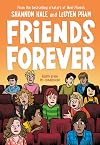
Eighth-grade Shannon has high expectations for herself; she knows she'll feel fulfilled it she could be beautiful, famous, successful, liked by boys, and a good person. In successive sections, introduced with sly fake 1980s-style magazine covers, each goal proves empty; nothing feels like enough, and Shannon decides it might be best not to feel at all. She lets her grades drop in a test to see if her parents will still love her as much, or if their love is conditional on her behavior; she show more visits a psychologist once, but it's not a good match and he says she's a normal teen with normal teen problems. After hitting bottom, Shannon pulls herself back up, realizing she is enough: "This is me. This is what I look like. This is how I feel. And I am enough." Friends Forever goes even deeper than Real Friends and Best Friends; it's poignant, touching, funny, and real. Author's note, photos, notes, and more in the back matter.
Quotes
I was changing, but junior high felt like the place where everything was permanent.
Once you were known for something, no one ever forgot. (47)
I was so anxious for someone to see anything special in me. (72)
...I was learning to play the part I thought I should - a cool girl who didn't get offended and never felt bad. (95)
Maybe I didn't need to be famous. Maybe it was enough just to be part of it. (drama, 116)
If I feel bad, does that mean I am bad? (after mall Santa incident, 143)
Being sensitive was a weakness, feeling sad was a failure. (168)
I still wanted to be successful - but in the ways that made me feel good...not in the ways everyone else expected. (203)
I wanted them to think I was a good person, but I felt ashamed for wanting that. (221)
[Series of illustrations showing Shannon struggling to hold a boulder carved with the word PERFECT] (223)
I thought that maybe this was how I was supposed to feel. How all girls were supposed to feel. Don't get a big head. Don't think well of yourself. Don't feel proud. Or sad. Or worried. Don't feel... (247) show less
Quotes
I was changing, but junior high felt like the place where everything was permanent.
Once you were known for something, no one ever forgot. (47)
I was so anxious for someone to see anything special in me. (72)
...I was learning to play the part I thought I should - a cool girl who didn't get offended and never felt bad. (95)
Maybe I didn't need to be famous. Maybe it was enough just to be part of it. (drama, 116)
If I feel bad, does that mean I am bad? (after mall Santa incident, 143)
Being sensitive was a weakness, feeling sad was a failure. (168)
I still wanted to be successful - but in the ways that made me feel good...not in the ways everyone else expected. (203)
I wanted them to think I was a good person, but I felt ashamed for wanting that. (221)
[Series of illustrations showing Shannon struggling to hold a boulder carved with the word PERFECT] (223)
I thought that maybe this was how I was supposed to feel. How all girls were supposed to feel. Don't get a big head. Don't think well of yourself. Don't feel proud. Or sad. Or worried. Don't feel... (247) show less
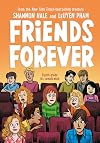
Shannon is now in eighth grade and so thinks it's a great time to start exploring her options to become beautiful, famous, successful, and popular with boys. But when her perm doesn't come out as planned, her talent agency turns out to be a scam, the boys are jerks, and so on and so on, Shannon starts to feel very big feelings and spirals into depression. Will she ever feel like she belongs on a magazine cover recognized for her own achievements?
As with the first two books in this loose show more series, author Shannon Hale pours herself into these books, reliving her days in middle school for the benefit of current middle-grade students. She doesn't shy away from the awkward and bad experiences, including a creepy mall Santa who touches her without consent and numerous petty fights amongst school friends. Hale also talks about her struggles with anxiety and depression quite candidly and openly in the author's note and only a little more subtly in the text through her inner thoughts. I love the way the illustrations really hammer home these themes, with a darker purple and gray palette for when Shannon is feeling low about herself.
But it's not all doom and gloom. Hale also talks about some of the highlights of her eighth grade year, including winning a creative-problem-solving contest, having her first slow dance with a boy she admires, and receiving much love through special surprises on her birthday. In these moments, the illustrations also mimic the feelings with bright, happy colors. Ethereal-feeling illustrations also distinguish when Shannon is having daydreams about an even brighter and fuller future.
Although friendship is certainly a theme, I do feel that is slightly less prominent here than in the previous two books. Instead, the focus is more on familial and societal expectations. Throughout, young Shannon is comparing herself to magazine covers and wondering if women actually can be successful when the business publications only feature men on their covers, what beauty and perfection really mean, and so on. She's also observing how others react to various events and trying to extrapolate data from there, although oftentimes her anxiety and depression pull an incorrect or overly negative response. For instance, when a professional author visits her school and gives constructive criticism on her short story, she brushes over the compliments and thinks her work is unworthy.
On the whole, this book does address some of the many issues that young teens may -- and very likely will -- face in their everyday school life. Overall, the take-away messages are positive, although some less stellar actions are also depicted in the students who bring alcohol to parties or make out with random boys they just met. With Shannon now a teenager, the book scales well for kids who read the first two books as they were published and are now a little older. If a younger child is being introduced to the series right now, they might want to wait a little bit before heading into this book as some more mature content is introduced. show less
As with the first two books in this loose show more series, author Shannon Hale pours herself into these books, reliving her days in middle school for the benefit of current middle-grade students. She doesn't shy away from the awkward and bad experiences, including a creepy mall Santa who touches her without consent and numerous petty fights amongst school friends. Hale also talks about her struggles with anxiety and depression quite candidly and openly in the author's note and only a little more subtly in the text through her inner thoughts. I love the way the illustrations really hammer home these themes, with a darker purple and gray palette for when Shannon is feeling low about herself.
But it's not all doom and gloom. Hale also talks about some of the highlights of her eighth grade year, including winning a creative-problem-solving contest, having her first slow dance with a boy she admires, and receiving much love through special surprises on her birthday. In these moments, the illustrations also mimic the feelings with bright, happy colors. Ethereal-feeling illustrations also distinguish when Shannon is having daydreams about an even brighter and fuller future.
Although friendship is certainly a theme, I do feel that is slightly less prominent here than in the previous two books. Instead, the focus is more on familial and societal expectations. Throughout, young Shannon is comparing herself to magazine covers and wondering if women actually can be successful when the business publications only feature men on their covers, what beauty and perfection really mean, and so on. She's also observing how others react to various events and trying to extrapolate data from there, although oftentimes her anxiety and depression pull an incorrect or overly negative response. For instance, when a professional author visits her school and gives constructive criticism on her short story, she brushes over the compliments and thinks her work is unworthy.
On the whole, this book does address some of the many issues that young teens may -- and very likely will -- face in their everyday school life. Overall, the take-away messages are positive, although some less stellar actions are also depicted in the students who bring alcohol to parties or make out with random boys they just met. With Shannon now a teenager, the book scales well for kids who read the first two books as they were published and are now a little older. If a younger child is being introduced to the series right now, they might want to wait a little bit before heading into this book as some more mature content is introduced. show less
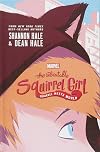
The Unbeatable Squirrel Girl: Squirrel Meets World by Shannon Hale and Dean Hale is a novelisation of the awesome comic book character's early high school life and emergence as a superhero. It's a YA book and is set when Doreen Green is fourteen and has just moved to New Jersey from LA.
This book was awesome! I mean, Squirrel Girl is already a pretty awesome character and if I had any apprehensions going in it was that the novel character wouldn't be quite the same as the comic character. show more But, although novel!Doreen is younger than comic!Doreen (who is in college), the authors managed to get her voice down exactly, giving the book a very similar feel to the comics. And there are footnotes from Doreen as she reads along with us.
On top of that, some of the chapters are from other characters' points of view, like Doreen's best human friend Ana Sofía (more on her shortly) and Doreen's best squirrel friend Tippy-Toe. Yes, there are chapters from Tippy-Toe's point of view. And they are in first person. And they are awesome. So awesome. And my favourite thing with Tippy-Toe is a bit of a spoiler...
Tippy-Toe picks up some ASL from watching Doreen and Ana Sofía sign to each other and then is able to sign to Ana Sofía in an emergency. Eeeee!
Ana Sofía, meanwhile, is the first friend Doreen makes at her new school and is instrumental in keeping her spirits up when times are tough. She also plays a part in helping Squirrel Girl save the day.
Squirrel Girl is awesome and you should read this book even if you haven't read any of the recent comics. They are completely independent of the book, despite being about the same character. I highly recommend this novel to anyone who likes YA and/or superheroes and also doesn't hate fun. Because Squirrel Girl is awesome.
5 / 5 stars show less
This book was awesome! I mean, Squirrel Girl is already a pretty awesome character and if I had any apprehensions going in it was that the novel character wouldn't be quite the same as the comic character. show more But, although novel!Doreen is younger than comic!Doreen (who is in college), the authors managed to get her voice down exactly, giving the book a very similar feel to the comics. And there are footnotes from Doreen as she reads along with us.
On top of that, some of the chapters are from other characters' points of view, like Doreen's best human friend Ana Sofía (more on her shortly) and Doreen's best squirrel friend Tippy-Toe. Yes, there are chapters from Tippy-Toe's point of view. And they are in first person. And they are awesome. So awesome. And my favourite thing with Tippy-Toe is a bit of a spoiler...
Ana Sofía, meanwhile, is the first friend Doreen makes at her new school and is instrumental in keeping her spirits up when times are tough. She also plays a part in helping Squirrel Girl save the day.
Squirrel Girl is awesome and you should read this book even if you haven't read any of the recent comics. They are completely independent of the book, despite being about the same character. I highly recommend this novel to anyone who likes YA and/or superheroes and also doesn't hate fun. Because Squirrel Girl is awesome.
5 / 5 stars show less
Lists
6th Grade (1)
Books for Nina (1)
Book List (1)
Farm Boy Fantasy (1)
Princess Tales (2)
Austenland (2)
Absolute Power (1)
Best Young Adult (2)
Newbery Adjacent (1)
Awards


You May Also Like


Associated Authors
Statistics
- Works
- 94
- Also by
- 9
- Members
- 47,894
- Popularity
- #328
- Rating
- 3.9
- Reviews
- 1,706
- ISBNs
- 829
- Languages
- 16
- Favorited
- 94


