
Kayte Nunn
Author of The Forgotten Letters of Esther Durrant: A Novel
About the Author
Image credit: Kayte Nunn
Works by Kayte Nunn
The Yacht 1 copy
Tagged
Common Knowledge
- Legal name
- Nunn, Kayte
- Birthdate
- 20th century
- Gender
- female
- Occupations
- Magazine Editor
Book Editor
Web Editor - Nationality
- Australia
- Places of residence
- Northern Rivers, New South Wales, Australia
Sydney, New South Wales, Australia - Associated Place (for map)
- New South Wales, Australia
Members
Reviews

Rachel Parker is a research scientist who has just taken a position in the Isles of Scilly to study the effects of climate change on the warty clam. Rachel has moved around a lot in life and has never bothered to form lasting friendships or relationships. When Rachel is caught in a storm passing through the Isles, she takes cover on Little Embers, inhabited by the cantankerous Leah, an artist who prefers to be alone. While on Little Embers, Rachel discovers the suitcase of a former occupant show more of Little Embers and some unsent love letters that she is determined to return to their rightful recipient. In 1951 Esther Durrant is unceremoniously dumped at Little Embers by her husband. Esther has survived a tragedy and still isn't quite right. Little Embers is run by Dr. Richard Creswell, a retreat for men suffering from the psychiatric effects of the War. Dr. Creswell has agreed to treat Esther as well. After fighting and trying to get back to her family, Esther comes to enjoy life on the island and the company of the people around her.
The Forgotten Letters of Esther Durrant feels like is was written just for me; I love the dual timeline in the story, the mysteries of an isolated island, and finding yourself before finding romance. The characters were carefully crafted and pulled me into their stories before revealing everything. Both Rachel and Esther were guarding secrets and were difficult to figure out creating complex and interesting women that I wanted to learn more about. The writing flows easily through time and from character to character making the book easy to read and always wanting to know what's next. I appreciated that the other characters on Ember Island in 1951 were also taken seriously, even at a time when psychological diagnosis were still being developed. I also loved that Esther in 2018 was also a strong character and that I was able to see how she was not defined by her tragedy. The romances were handled well for both Rachel and Esther, I'm glad that they were able to make decisions for themselves and find happiness.
This book was received for free in return for an honest review. show less
The Forgotten Letters of Esther Durrant feels like is was written just for me; I love the dual timeline in the story, the mysteries of an isolated island, and finding yourself before finding romance. The characters were carefully crafted and pulled me into their stories before revealing everything. Both Rachel and Esther were guarding secrets and were difficult to figure out creating complex and interesting women that I wanted to learn more about. The writing flows easily through time and from character to character making the book easy to read and always wanting to know what's next. I appreciated that the other characters on Ember Island in 1951 were also taken seriously, even at a time when psychological diagnosis were still being developed. I also loved that Esther in 2018 was also a strong character and that I was able to see how she was not defined by her tragedy. The romances were handled well for both Rachel and Esther, I'm glad that they were able to make decisions for themselves and find happiness.
This book was received for free in return for an honest review. show less

The Forgotten Letters of Esther Durrant is a terrific historical fiction novel from Australian author Kayte Nunn. Unfolding in dual timelines (1950s and 2018), the story is told from three character perspectives: Rachel (Marine Scientist), Esther Durrant (of the title) and Eve, looking after her grandmother in London.
It has to be said that I'm not usually a fan of romance novels or a great love story, but somehow Kayte Nunn tricked me by writing such a compelling historical fiction novel show more about a woman committed to a mental asylum by her husband in the 1950s, that the romance elements kind of snuck up on me.
Esther Durrant is a young mother committed to a private hospice by her husband with the very best of intentions for her care and recovery. It's 1951 and Esther is outraged when she finds herself trapped at Little Embers, which seems to be little more than a mental asylum. She has no choice but to surrender to the treatment being offered to her and the other patients in residence; men suffering shell shock and PTSD from the war.
Rachel takes up her new research post in the Isles of Scilly, off the Cornish coast and soon comes across the isolated island location of Little Embers. It's there that she discovers a number of incredibly moving letters secreted away in an old suitcase. (Although by the end of the novel, there's never an explanation for why the suitcase wasn't 'sent on' as planned).
In London, Eve is taking care of her grandmother - a retired mountaineer - and helping to write her memoir. These three storylines intertwined exceptionally well with just the right amount of time spent with each character.
The location was vividly described and I enjoyed the remote locality and the rugged wilderness of the Isles of Scilly in both timelines. However I'm not convinced the cover accurately conveyed the content or feel of the novel for me. Perhaps an image of the mental asylum on a remote island with a pair of hiking boots next to the door step would have encompassed the feel of the novel better for me. I also have no idea why there’s a butterfly on the cover.
The promo for this novel promises it will appeal to readers who love Elizabeth Gilbert and Kate Morton. I heartily agree with this. However, I'd go one step further to say that Kayte Nunn achieves her story in a far more compact and precise way than Elizabeth Gilbert did in The Signature of All Things and managed the timelines far better than Kate Morton did in her last novel The Clockmaker's Daughter.
The Forgotten Letters of Esther Durrant is highly recommended for historical fiction fans; even those who don't typically enjoy a romance.
* Copy courtesy of Hachette Australia * show less
It has to be said that I'm not usually a fan of romance novels or a great love story, but somehow Kayte Nunn tricked me by writing such a compelling historical fiction novel show more about a woman committed to a mental asylum by her husband in the 1950s, that the romance elements kind of snuck up on me.
Esther Durrant is a young mother committed to a private hospice by her husband with the very best of intentions for her care and recovery. It's 1951 and Esther is outraged when she finds herself trapped at Little Embers, which seems to be little more than a mental asylum. She has no choice but to surrender to the treatment being offered to her and the other patients in residence; men suffering shell shock and PTSD from the war.
Rachel takes up her new research post in the Isles of Scilly, off the Cornish coast and soon comes across the isolated island location of Little Embers. It's there that she discovers a number of incredibly moving letters secreted away in an old suitcase. (Although by the end of the novel, there's never an explanation for why the suitcase wasn't 'sent on' as planned).
In London, Eve is taking care of her grandmother - a retired mountaineer - and helping to write her memoir. These three storylines intertwined exceptionally well with just the right amount of time spent with each character.
The location was vividly described and I enjoyed the remote locality and the rugged wilderness of the Isles of Scilly in both timelines. However I'm not convinced the cover accurately conveyed the content or feel of the novel for me. Perhaps an image of the mental asylum on a remote island with a pair of hiking boots next to the door step would have encompassed the feel of the novel better for me. I also have no idea why there’s a butterfly on the cover.
The promo for this novel promises it will appeal to readers who love Elizabeth Gilbert and Kate Morton. I heartily agree with this. However, I'd go one step further to say that Kayte Nunn achieves her story in a far more compact and precise way than Elizabeth Gilbert did in The Signature of All Things and managed the timelines far better than Kate Morton did in her last novel The Clockmaker's Daughter.
The Forgotten Letters of Esther Durrant is highly recommended for historical fiction fans; even those who don't typically enjoy a romance.
* Copy courtesy of Hachette Australia * show less
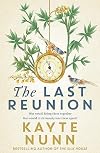
The Last Reunion is a rich and absorbing story about art, war and friendship from bestselling Australian author, Kayte Nunn.
Art dealer intern Olivia Goddard is excited when she’s given the opportunity to evaluate the authenticity of a unique collection of netsuke (small three dimensional carvings traditionally used by Japanese men to secure their kimono sash) including the elusive figure known as the ‘fox-girl’. Arriving at the Wiltshire estate of its owner, Beatrix Pelham, Olivia is show more focused on assessing the pieces and returning to London but illness and a snow storm results in an enforced stay. Keen to learn more about the netsuke, Olivia is intrigued as Beatrix reveals how the ‘ fox-girl’ first came into her possession as a gift from her first love when they were both serving in Burma during WWII.
Employing a dual timeline, Nunn seamlessly combines historical fact and fiction that centres on the unique role women played in the ‘forgotten war’, in The Last Reunion. Around two hundred and fifty Women’s Auxiliary Service members were posted to Burma during WWII where the ‘Wasbies’, as they were known, ran canteens that catered to the troops engaged in fighting the Japanese.
In 1944, Beatrix, Plum, Bubbles, Lucy and Joy are assigned to a mobile canteen unit where they find themselves working long days, and nights, to supply soldiers with food, drink, sundries and a dance partner. I enjoyed getting to know these authentically portrayed, interesting female characters, admiring the strength and courage they displayed in such physically, and emotionally, challenging circumstances. Nunn’s vivid descriptions of the environment and the ‘Wasbies’ role in Burma is fascinating, and I appreciated the opportunity to learn more about this relatively obscure facet of wartime history.
Events related in the wartime timeline play into the later time period, as in 1999, to sell her precious collection of netsuke, Beatrix needs to prove provenance, and to do so must confront a shocking incident that occurred during her time in Burma. Fortuitously an invitation to a reunion of the women Bea once served with arrives while Olivia is at Bea’s house, and sets the scene for a long overdue reckoning.
Offering intrigue, action, and a touch of romance, the well paced plot of The Last Reunion is enough to hold any reader’s attention, though it’s the Wasbies and their role in WWII that I found most compelling. This is interesting, well crafted historical fiction that I’m happy to recommend. show less
Art dealer intern Olivia Goddard is excited when she’s given the opportunity to evaluate the authenticity of a unique collection of netsuke (small three dimensional carvings traditionally used by Japanese men to secure their kimono sash) including the elusive figure known as the ‘fox-girl’. Arriving at the Wiltshire estate of its owner, Beatrix Pelham, Olivia is show more focused on assessing the pieces and returning to London but illness and a snow storm results in an enforced stay. Keen to learn more about the netsuke, Olivia is intrigued as Beatrix reveals how the ‘ fox-girl’ first came into her possession as a gift from her first love when they were both serving in Burma during WWII.
Employing a dual timeline, Nunn seamlessly combines historical fact and fiction that centres on the unique role women played in the ‘forgotten war’, in The Last Reunion. Around two hundred and fifty Women’s Auxiliary Service members were posted to Burma during WWII where the ‘Wasbies’, as they were known, ran canteens that catered to the troops engaged in fighting the Japanese.
In 1944, Beatrix, Plum, Bubbles, Lucy and Joy are assigned to a mobile canteen unit where they find themselves working long days, and nights, to supply soldiers with food, drink, sundries and a dance partner. I enjoyed getting to know these authentically portrayed, interesting female characters, admiring the strength and courage they displayed in such physically, and emotionally, challenging circumstances. Nunn’s vivid descriptions of the environment and the ‘Wasbies’ role in Burma is fascinating, and I appreciated the opportunity to learn more about this relatively obscure facet of wartime history.
Events related in the wartime timeline play into the later time period, as in 1999, to sell her precious collection of netsuke, Beatrix needs to prove provenance, and to do so must confront a shocking incident that occurred during her time in Burma. Fortuitously an invitation to a reunion of the women Bea once served with arrives while Olivia is at Bea’s house, and sets the scene for a long overdue reckoning.
Offering intrigue, action, and a touch of romance, the well paced plot of The Last Reunion is enough to hold any reader’s attention, though it’s the Wasbies and their role in WWII that I found most compelling. This is interesting, well crafted historical fiction that I’m happy to recommend. show less
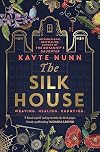
The Silk House is an entrancing novel from Kayte Nunn, unfolding over two timelines from the perspectives of three women.
The novel begins in the present as Thea Rust reports for work at her father’s alma mater, Oxleigh College. The exclusive English boarding school has accepted its first ever class of girls, and Thea, a history teacher, is to live in with them at their campus residence, known as Silk House.
In 1768, Rowan Caswell is an orphan employed as a maid-of-all-work by the owners of show more Silk House, silk merchant Patrick, and his wife Caroline Hollander. The home is not a happy one, for the master’s moods are mercurial and the mistress longs for a child.
Mary-Louise Stephenson is a spinster facing penury with her widowed sister. She believes she is capable of creating unique silk designs that will assure her a fortune, but the male dominated industry is uninterested until silk merchant Patrick Hollander offers her a commission.
Nunn weaves links between the past and present as Thea bears witness to the echoes of tragedy. Troubled by her experience of mysterious occurrences in Silk House, Thea investigates the building’s history discovering it’s reputation for being haunted due to a series of deaths, beginning with that of Caroline Hollander.
The story of Caroline’s haunting demise is revealed primarily through Rowan, who is an unwitting contributor to her mistress’s fate when her knowledge of herbal medicines, passed down to her by her late mother, is ill-used. A suggestion of witchcraft, an omen of bad luck, and a doomed love affair all contribute to the inevitable tragedy that stains Silk House.
To be honest I felt the third perspective of Mary-Louise introduced by Nunn was the only real flaw in the novel, as I thought it superfluous, even though Mary-Louise’s silk fabric design is of some significance in the story. Thea and Rowan are definitely the more compelling characters.
Nevertheless, part ghost story, part mystery the pacing is excellent as the story unravels. Nunn skilfully develops a sense of foreboding and unease as she weaves in and out of the past and present. The story is enriched by historical detail, enhanced by its feminist themes, and enlivened by interesting characters.
Atmospheric and intriguing, with gothic sensibilities, The Silk House is a finely written, spellbinding tale. show less
The novel begins in the present as Thea Rust reports for work at her father’s alma mater, Oxleigh College. The exclusive English boarding school has accepted its first ever class of girls, and Thea, a history teacher, is to live in with them at their campus residence, known as Silk House.
In 1768, Rowan Caswell is an orphan employed as a maid-of-all-work by the owners of show more Silk House, silk merchant Patrick, and his wife Caroline Hollander. The home is not a happy one, for the master’s moods are mercurial and the mistress longs for a child.
Mary-Louise Stephenson is a spinster facing penury with her widowed sister. She believes she is capable of creating unique silk designs that will assure her a fortune, but the male dominated industry is uninterested until silk merchant Patrick Hollander offers her a commission.
Nunn weaves links between the past and present as Thea bears witness to the echoes of tragedy. Troubled by her experience of mysterious occurrences in Silk House, Thea investigates the building’s history discovering it’s reputation for being haunted due to a series of deaths, beginning with that of Caroline Hollander.
The story of Caroline’s haunting demise is revealed primarily through Rowan, who is an unwitting contributor to her mistress’s fate when her knowledge of herbal medicines, passed down to her by her late mother, is ill-used. A suggestion of witchcraft, an omen of bad luck, and a doomed love affair all contribute to the inevitable tragedy that stains Silk House.
To be honest I felt the third perspective of Mary-Louise introduced by Nunn was the only real flaw in the novel, as I thought it superfluous, even though Mary-Louise’s silk fabric design is of some significance in the story. Thea and Rowan are definitely the more compelling characters.
Nevertheless, part ghost story, part mystery the pacing is excellent as the story unravels. Nunn skilfully develops a sense of foreboding and unease as she weaves in and out of the past and present. The story is enriched by historical detail, enhanced by its feminist themes, and enlivened by interesting characters.
Atmospheric and intriguing, with gothic sensibilities, The Silk House is a finely written, spellbinding tale. show less
Awards

You May Also Like


Associated Authors
Statistics
- Works
- 11
- Members
- 641
- Popularity
- #39,338
- Rating
- 3.7
- Reviews
- 34
- ISBNs
- 91
- Languages
- 4