
Jessica Ralli
Author of Our Skin: A First Conversation about Race
Series
Works by Jessica Ralli
Tagged
Common Knowledge
There is no Common Knowledge data for this author yet. You can help.
Members
Reviews
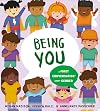
This primer on gender lays the groundwork for affirming conversations and creates opportunities for self-identification.
In straightforward, encouraging prose, Madison and Ralli guide readers through a gentle and interactive introduction to gender, sex, self-expression, and feminism. Beginning with a concrete foundation of commonality (everyone has a body), the lesson continues naturally into specific body parts (elbows, noses, vaginas, penises—the latter two not depicted), all the while show more normalizing that “every person’s body parts look different.” With that understanding, the narrator transitions into the way grown-ups describe babies as boys or girls when they are born, based on genitalia; here there’s a refreshing (but brief) acknowledgement that sometimes grown-ups aren’t sure but make a guess anyway. Emphasizing joy, wonder, the fluidity of identity, and self-expertise, the text carefully distinguishes gender from expression, which leads seamlessly into a developmentally conscious explanation of harmful stereotypes, unfair rules that give boys unearned power, and ultimately a call to action. Prompting questions invite the audience to deepen the facilitated conversation through moments of self-love, reflection, and sharing personal truths. Accompanying illustrations feature a racially diverse cohort of children learning about themselves, playing with one another, and engaging with their community, which includes recurring representations of disabled people as active participants. The final pages, targeted at caregivers, provide additional means of engaging with the conversation and pointedly challenge adults not to underestimate young people.
An invaluable resource that supports ease and confidence. (resources) (Board book. 2-5)
-Kirkus Review show less
In straightforward, encouraging prose, Madison and Ralli guide readers through a gentle and interactive introduction to gender, sex, self-expression, and feminism. Beginning with a concrete foundation of commonality (everyone has a body), the lesson continues naturally into specific body parts (elbows, noses, vaginas, penises—the latter two not depicted), all the while show more normalizing that “every person’s body parts look different.” With that understanding, the narrator transitions into the way grown-ups describe babies as boys or girls when they are born, based on genitalia; here there’s a refreshing (but brief) acknowledgement that sometimes grown-ups aren’t sure but make a guess anyway. Emphasizing joy, wonder, the fluidity of identity, and self-expertise, the text carefully distinguishes gender from expression, which leads seamlessly into a developmentally conscious explanation of harmful stereotypes, unfair rules that give boys unearned power, and ultimately a call to action. Prompting questions invite the audience to deepen the facilitated conversation through moments of self-love, reflection, and sharing personal truths. Accompanying illustrations feature a racially diverse cohort of children learning about themselves, playing with one another, and engaging with their community, which includes recurring representations of disabled people as active participants. The final pages, targeted at caregivers, provide additional means of engaging with the conversation and pointedly challenge adults not to underestimate young people.
An invaluable resource that supports ease and confidence. (resources) (Board book. 2-5)
-Kirkus Review show less
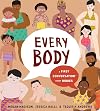
ALL bodies are awesome!
Bodies come in many shapes, sizes, colors, ages, and textures. Each body “can be healthy” and “deserves love and care!” Every body has fat, which stores energy. Bodies are very smart; they tell us when they need something. They signal how we might be feeling with different physical sensations—a tense neck indicates fear; wiggling toes are a sign of excitement. All bodies change and grow over time, whether that be over a day or several years. No matter what, show more “You are in charge of your body!” Unfortunately, “there’s a big problem”—we’re often erroneously told that some bodies are better or healthier than others and that some doctors might even convey misinformation about fat people. Thankfully, there are already many people who work to promote fair treatment for every body. Fostering acceptance and self-love, this book encourages children to consider their own bodies “with curiosity, and without shame.” It tackles big issues with a straightforward frankness that makes the themes digestible to its young audience. Backmatter includes more detailed information about the big subtopics of self-care, body diversity, fat activism, critical media literacy, and the intersectionality of racism, sexism, and ableism with body perception. People of various races, abilities, and sizes are represented in the bright, flat illustrations, while the text calls out medical racism directly. (This book was reviewed digitally.)
So important—“every body” should read this! (website) (Informational picture book. 3-5) show less
Bodies come in many shapes, sizes, colors, ages, and textures. Each body “can be healthy” and “deserves love and care!” Every body has fat, which stores energy. Bodies are very smart; they tell us when they need something. They signal how we might be feeling with different physical sensations—a tense neck indicates fear; wiggling toes are a sign of excitement. All bodies change and grow over time, whether that be over a day or several years. No matter what, show more “You are in charge of your body!” Unfortunately, “there’s a big problem”—we’re often erroneously told that some bodies are better or healthier than others and that some doctors might even convey misinformation about fat people. Thankfully, there are already many people who work to promote fair treatment for every body. Fostering acceptance and self-love, this book encourages children to consider their own bodies “with curiosity, and without shame.” It tackles big issues with a straightforward frankness that makes the themes digestible to its young audience. Backmatter includes more detailed information about the big subtopics of self-care, body diversity, fat activism, critical media literacy, and the intersectionality of racism, sexism, and ableism with body perception. People of various races, abilities, and sizes are represented in the bright, flat illustrations, while the text calls out medical racism directly. (This book was reviewed digitally.)
So important—“every body” should read this! (website) (Informational picture book. 3-5) show less
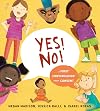
This is an ideal introduction to consent for preschoolers and it presents its nuances in a concrete way. Examples include the different ways "no" can be expressed in words or body language, and that "yes" can become "no." I also appreciate that it describes that kids can feel uncomfortable when adults make choices for them (making them wear a bike helmet or take a bath) and that explaining what's happening and why those directives can help a child feel better about choices made on their show more behalf. The book is interactive, asking questions along the way, sure to engage little ones in a conversation on understanding consent. show less
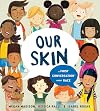
Developed by experts in the fields of early childhood and activism against injustice, this topic-driven board book offers clear, concrete language and beautiful imagery that young children can grasp and adults can leverage for further discussion.
Lists
Awards


You May Also Like
Associated Authors
Statistics
- Works
- 5
- Members
- 1,029
- Popularity
- #25,032
- Rating
- 4.2
- Reviews
- 23
- ISBNs
- 35
- Languages
- 1