

Lee Cockerell
Author of Creating Magic: 10 Common Sense Leadership Strategies from a Life at Disney
About the Author
Lee Cockerell is the former Executive Vice-President of Operations for Walt Disney World" for more than ten years. As one of the public faces of the world-renowned Disney Institute, he conducts seminars and workshops on leadership, time management and professional development. A popular keynote show more speaker, he frequently addresses Fortune 500 corporations, government agencies, educational institutions, and non-profits around the world. He lives in Orlando, Florida. show less
Works by Lee Cockerell
Creating Magic: 10 Common Sense Leadership Strategies from a Life at Disney (2008) 345 copies, 6 reviews
The Customer Rules: The 39 Essential Rules for Delivering Sensational Service (2013) 109 copies, 3 reviews
Tagged
Common Knowledge
- Birthdate
- 1944
- Gender
- male
- Occupations
- Executive Vice President of Operations, Walt Disney World Resort
Members
Reviews
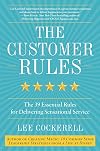
I borrowed this from a coworker and after the first few pages tracked down a couple of copies nearby (that I haven't bought yet) so I can have my own to add to the toolbox. Solid advice, probably heard before for sure, but collected in one place. Cockerell's Title plays on the words, but his subtitle entices: The 39 Essential Rules for Delivering Sensational Service. (I would have left off the definitive article, but I also didn't write the book.) I won't list all of them here - buy or show more borrow it yourself! - but here are a few, with some thoughts...
#1 - Customer Service Is Not A Department. True that, and something I've embodied, engendered, and espoused for years. Cockerell says it's "a personal responsibility". It is. Regardless of your business, job, profession, interactions in life.
#2 - You Win Customers One at a Time and Lose Them a Thousand at a Time. This is an internet age amplification of the old saying of losing them one at a time. People flock to negativity and give more credence to one bad review than a lot of good ones. And Yelp and similar rating sites can lose customers on the basis of a single bad review.
#4 - Don't Get Bored with the Basics. I don't get bored, but this is a good extension. Don't lose sight of the core values, core behaviors, small details. Never forget the fundamentals.
#8 - Always Act Like a Professional. Conduct yourself as a professional and you'll be at least on your way to being a professional. Doesn't matter what your profession [“If you write, fix pipes, grade papers, lay bricks or drive a taxi—do it with a sense of pride. And do it the best you know how. Be cognizant and sympathetic to the guy alongside, because he wants a place in the sun, too. And always . . . always look past his color, his creed, his religion and the shape of his ears. Look for the whole person. Judge him as the whole person.” - Rod Serling]
#9 - Hire the Best Cast. Okay, this is Disney-fied, but really, hire the best people. Or try to. Nothing is guaranteed.
#11 - Become an Expert at Creating Experts. Train your relief, train staff to be knowledgeable, give them the tools (and training) to provide great service. This is simple. But it is at odds with the behavior of the man who wants to think he's the smartest person in the room, or wants to take credit for everything.
#18 - Be a Copycat. Creative plagiarism is okay ... don't reinvent. Learn from others, in and outside your business. Apple consumer electronics might teach you something about performing maintenance on a door.
#20 - Be a Wordsmith - Language Matters. It really does. Cockerell offers the example of "subordinate"...and how people don't get that it means inferior. Use another word - "coworker", "cast member", "team member". I try to rarely (there must always be exceptions) say "my" staff (and cringe when I hear others drop it so easily) because they are not possessions. Don't demean people with indefinite articles (his example is a peeve of his wife: "There's a Priscilla Cockerell here to see you." There's only one, and she's not "a"n object.)
#30 - Be Relentless About Details. Look around. See what people are seeing. People who are not you and not familiar with your place of business. First impressions and all. Goes with #4 above.
#31 - Be Reliable. Provide consistently great quality of service. People consciously and subconsciously look for that...and respond to it.
#33 - Never, Ever Argue With a Customer. Good point and a reason made clearer with one of Cockerell's illustrations: "When a customer has a tantrum, it is vital to not take it personally. The anger is not about you - the customer doesn't even know you or care about you -it is about a situation."
I did take issue - minor - with a few...
#32 - Don't Give the Responsibility Without the Authority. In the Navy, we learn that responsibility cannot be delegated so this runs a little counter to that. A leader cannot be absolved of responsibility by delegating. Still, each position, level, tier has a responsibility of some sort and authority commensurate with the job needs to go with it. I heard too many times from my Army peers, "I need to ask my Colonel." This from an Officer in Charge! (Actual position title.) I see it in my world now, as some people want all of the power and don't trust, or don't want to trust their staff.
#34 - Never Say No, Except "No Problem". I disagree to a point with this. I learned a long time ago that the customer is not always right! And it is our job to help that customer understand that. In my customer service world where the service results are not as immediate (design and construction, or minor construction), "no" is sometimes necessary, whether because of budget reasons or conformance, or whatever. In my career, I have followed "no problem" predecessors and had to fix a lot of problems. I have also followed "no" people and had to fix those problems! My solution might seem a little vacillatory, but it is "I'll see what I can do."
And one peeve about Rule #37 - Surprise Them with Something Extra... Cockerell says "we all love the surprise of getting something extra when it's not expected", and mentions something like an extra plum at the farmer's marker for example. He also mentions one I-don't-think-so anecdote ... a baker's dozen ...as a customer service extra. The reality is, bakers would be penalized if they shorted a customer, so the good service was for self-preservation!
Good book; short read. Worth several rereads to refresh. show less
#1 - Customer Service Is Not A Department. True that, and something I've embodied, engendered, and espoused for years. Cockerell says it's "a personal responsibility". It is. Regardless of your business, job, profession, interactions in life.
#2 - You Win Customers One at a Time and Lose Them a Thousand at a Time. This is an internet age amplification of the old saying of losing them one at a time. People flock to negativity and give more credence to one bad review than a lot of good ones. And Yelp and similar rating sites can lose customers on the basis of a single bad review.
#4 - Don't Get Bored with the Basics. I don't get bored, but this is a good extension. Don't lose sight of the core values, core behaviors, small details. Never forget the fundamentals.
#8 - Always Act Like a Professional. Conduct yourself as a professional and you'll be at least on your way to being a professional. Doesn't matter what your profession [“If you write, fix pipes, grade papers, lay bricks or drive a taxi—do it with a sense of pride. And do it the best you know how. Be cognizant and sympathetic to the guy alongside, because he wants a place in the sun, too. And always . . . always look past his color, his creed, his religion and the shape of his ears. Look for the whole person. Judge him as the whole person.” - Rod Serling]
#9 - Hire the Best Cast. Okay, this is Disney-fied, but really, hire the best people. Or try to. Nothing is guaranteed.
#11 - Become an Expert at Creating Experts. Train your relief, train staff to be knowledgeable, give them the tools (and training) to provide great service. This is simple. But it is at odds with the behavior of the man who wants to think he's the smartest person in the room, or wants to take credit for everything.
#18 - Be a Copycat. Creative plagiarism is okay ... don't reinvent. Learn from others, in and outside your business. Apple consumer electronics might teach you something about performing maintenance on a door.
#20 - Be a Wordsmith - Language Matters. It really does. Cockerell offers the example of "subordinate"...and how people don't get that it means inferior. Use another word - "coworker", "cast member", "team member". I try to rarely (there must always be exceptions) say "my" staff (and cringe when I hear others drop it so easily) because they are not possessions. Don't demean people with indefinite articles (his example is a peeve of his wife: "There's a Priscilla Cockerell here to see you." There's only one, and she's not "a"n object.)
#30 - Be Relentless About Details. Look around. See what people are seeing. People who are not you and not familiar with your place of business. First impressions and all. Goes with #4 above.
#31 - Be Reliable. Provide consistently great quality of service. People consciously and subconsciously look for that...and respond to it.
#33 - Never, Ever Argue With a Customer. Good point and a reason made clearer with one of Cockerell's illustrations: "When a customer has a tantrum, it is vital to not take it personally. The anger is not about you - the customer doesn't even know you or care about you -it is about a situation."
I did take issue - minor - with a few...
#32 - Don't Give the Responsibility Without the Authority. In the Navy, we learn that responsibility cannot be delegated so this runs a little counter to that. A leader cannot be absolved of responsibility by delegating. Still, each position, level, tier has a responsibility of some sort and authority commensurate with the job needs to go with it. I heard too many times from my Army peers, "I need to ask my Colonel." This from an Officer in Charge! (Actual position title.) I see it in my world now, as some people want all of the power and don't trust, or don't want to trust their staff.
#34 - Never Say No, Except "No Problem". I disagree to a point with this. I learned a long time ago that the customer is not always right! And it is our job to help that customer understand that. In my customer service world where the service results are not as immediate (design and construction, or minor construction), "no" is sometimes necessary, whether because of budget reasons or conformance, or whatever. In my career, I have followed "no problem" predecessors and had to fix a lot of problems. I have also followed "no" people and had to fix those problems! My solution might seem a little vacillatory, but it is "I'll see what I can do."
And one peeve about Rule #37 - Surprise Them with Something Extra... Cockerell says "we all love the surprise of getting something extra when it's not expected", and mentions something like an extra plum at the farmer's marker for example. He also mentions one I-don't-think-so anecdote ... a baker's dozen ...as a customer service extra. The reality is, bakers would be penalized if they shorted a customer, so the good service was for self-preservation!
Good book; short read. Worth several rereads to refresh. show less
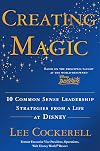
This review has to start by letting you know I liked this book. It did an excellent job of laying out important aspects of successful leaders. Cockerell has done a perfect job of pulling from his experiences at Disney, Marriott, and his entire life to talk about what makes successful leadership.
Just reading the titles, it can feel these are self-evident truths – a rehash of things we've seen before. "Everyone is Important" and "Eliminate Hassles" and "Break the Mold" sound like they could show more come from many of the other leadership books we have all read. What makes this different is the stories he tells around them – the life lessons he learned and teaches – and the details he builds around each of these concepts. It is a very persuasive and motivating book.
Here's the only problem I've had. I know a few people who have worked at Disney. It is like any other company. It has it good (maybe more good than most), but it also has its bad. That means that the rosy picture painted by Cockerell is probably less than accurate. As I read this book, a little voice in the back of my head kept reminding me of that.
However, that does not diminish the truths he is telling.
And so, my job was to keep turning that nagging voice off and listen close to the lessons. And that is why you should read the book – the lessons and the detail will be valuable in anyone's pursuit towards leadership. show less
Just reading the titles, it can feel these are self-evident truths – a rehash of things we've seen before. "Everyone is Important" and "Eliminate Hassles" and "Break the Mold" sound like they could show more come from many of the other leadership books we have all read. What makes this different is the stories he tells around them – the life lessons he learned and teaches – and the details he builds around each of these concepts. It is a very persuasive and motivating book.
Here's the only problem I've had. I know a few people who have worked at Disney. It is like any other company. It has it good (maybe more good than most), but it also has its bad. That means that the rosy picture painted by Cockerell is probably less than accurate. As I read this book, a little voice in the back of my head kept reminding me of that.
However, that does not diminish the truths he is telling.
And so, my job was to keep turning that nagging voice off and listen close to the lessons. And that is why you should read the book – the lessons and the detail will be valuable in anyone's pursuit towards leadership. show less
This book was originally given to me by our district superintendent who wanted us to take a look at how we lead and start to change a culture. The book is written by Lee Cockerell, who is the former Executive VP of Operations at Walt Disney World Resort - the epitome of customer service. His expertise of leadership strategies is definitely top notch.
Mr. Cockerell goes through his strategies in a very familiar, easy to read style, with stories throughout, in order to visualize his points show more clearly. Emphasis on obvious leadership issues, such as character, communication, and the ability to listen for that next great idea are prevalent throughout the book.
We used this book as a study guide over several months and it gave cause to stop, ponder, and reflect on ways that we were incorporating these strategies into our own leadership situation (mine as an elementary principal). While some of the explanations were geared more towards business, most could be adapted to our schools, in which the student and their family are our most valued customers.
I found myself highlighting and marking pages for ideas to bring to staff to spread leadership tidbits throughout the year next year. Teachers have a lot of professional development on strategies for instruction, technology, or the management of their classrooms, but oftentimes, don't see themselves as leaders - this might be a step to acknowledge that role for them.
This book, overall, was excellent - it isn't a strategy that you can instantly put into effect, but rather something to be pondered, processed, and carried forth in the way you carry yourself. It helps to address the LEADERSHIP part of the job, not the MANAGEMENT part (and yes, I have both parts, as do most leaders). It will definitely be one that I refer back to throughout my career. show less
Mr. Cockerell goes through his strategies in a very familiar, easy to read style, with stories throughout, in order to visualize his points show more clearly. Emphasis on obvious leadership issues, such as character, communication, and the ability to listen for that next great idea are prevalent throughout the book.
We used this book as a study guide over several months and it gave cause to stop, ponder, and reflect on ways that we were incorporating these strategies into our own leadership situation (mine as an elementary principal). While some of the explanations were geared more towards business, most could be adapted to our schools, in which the student and their family are our most valued customers.
I found myself highlighting and marking pages for ideas to bring to staff to spread leadership tidbits throughout the year next year. Teachers have a lot of professional development on strategies for instruction, technology, or the management of their classrooms, but oftentimes, don't see themselves as leaders - this might be a step to acknowledge that role for them.
This book, overall, was excellent - it isn't a strategy that you can instantly put into effect, but rather something to be pondered, processed, and carried forth in the way you carry yourself. It helps to address the LEADERSHIP part of the job, not the MANAGEMENT part (and yes, I have both parts, as do most leaders). It will definitely be one that I refer back to throughout my career. show less
There aren't any surprise business revelations in this book. The title describes it best as "common sense leadership." But if you are a fan of Disney, you may enjoy reading the anecdotal stories.
You May Also Like


Statistics
- Works
- 10
- Members
- 530
- Popularity
- #46,960
- Rating
- 4.1
- Reviews
- 10
- ISBNs
- 28
- Languages
- 2