
Margaret Sullivan (1)
Author of Newsroom Confidential: Lessons (and Worries) from an Ink-Stained Life
For other authors named Margaret Sullivan, see the disambiguation page.
About the Author
Margaret Sullivan is the media columnist of the Washington Post, the former public editor of the New York Times, and the former editor of the Buffalo News, where she started her career as a summer intern. She was twice elected a director of the National Society of News Editors and is a former show more member of the Pulitzer Prize board. Follow her @Sulliview. show less
Works by Margaret Sullivan
Associated Works
Tagged
Common Knowledge
- Gender
- female
Members
Reviews
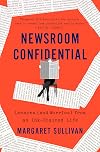
This book is a challenge to the establishment of journalism. Margaret Sullivan wants to hold her colleagues, particularly those at the New York Times, accountable for the way they covered the Trump and Clinton campaigns and all that followed. Her unflinching commitment to truth and ethics shines through in the book, which make me admire her greatly.
The bulk of the book covered her time as public editor at the New York Times, a position I found fascinating. She represented public concerns show more and had the ability to quiz any editor or reporter on why they covered a story the way they did, stating that she never had a comfortable day at the New York Times. She campaigned against anonymous sources, stating that they were overused and damaged public trust in the paper. The book has moments of humor, such as when another editor ran a piece called: "On the Condition of Anonymity: A Poem for Margaret Sullivan."
Sullivan served as public editor for much of the 2016 campaign, leaving just before the election. She lays the blame for the coverage of Hillary's emails at the feet of the New York Times and blames journalists for the copious amounts of coverage Trump received, She believes journalists have a hefty amount of sway in an election cycle, and thinks critical mistakes led to Hillary's loss. She wants journalists at major newspapers to wrestle with their role in the election outcome. She's obviously someone who never shirks a tough conversation.
As someone interested in journalism but admittedly not following the careers of individual reporters at top papers, sometimes her references went over my head. I'm a former small-town journalist, and I hoped for more detailed stories about what went on in big newsrooms. Instead, Sullivan often reflects on the state of journalism as a whole and how it came to be derided as fake news in recent years.
She ends with a challenge to modern journalists: does covering both sides mean giving equal space, even when the facts support one side more than the other?
I found this quote to be particularly powerful:
"Objectivity doesn't mean both-sidesism. It doesn't mean balance. It doesn't mean neutrality or false equivalence. It does mean open-mindedness. It does mean a willingness to listen and learn. It does mean being thorough in our research. It means not thinking we start with answers but rather that we go seeking them. It represents an acknowledgement on our part that what we know, or think we know, pales in comparison to what we don't know (and may not have even thought to ask.)"
Thank you to NetGalley and the publisher for an advance review copy of this book in exchange for an honest review. show less
The bulk of the book covered her time as public editor at the New York Times, a position I found fascinating. She represented public concerns show more and had the ability to quiz any editor or reporter on why they covered a story the way they did, stating that she never had a comfortable day at the New York Times. She campaigned against anonymous sources, stating that they were overused and damaged public trust in the paper. The book has moments of humor, such as when another editor ran a piece called: "On the Condition of Anonymity: A Poem for Margaret Sullivan."
Sullivan served as public editor for much of the 2016 campaign, leaving just before the election. She lays the blame for the coverage of Hillary's emails at the feet of the New York Times and blames journalists for the copious amounts of coverage Trump received, She believes journalists have a hefty amount of sway in an election cycle, and thinks critical mistakes led to Hillary's loss. She wants journalists at major newspapers to wrestle with their role in the election outcome. She's obviously someone who never shirks a tough conversation.
As someone interested in journalism but admittedly not following the careers of individual reporters at top papers, sometimes her references went over my head. I'm a former small-town journalist, and I hoped for more detailed stories about what went on in big newsrooms. Instead, Sullivan often reflects on the state of journalism as a whole and how it came to be derided as fake news in recent years.
She ends with a challenge to modern journalists: does covering both sides mean giving equal space, even when the facts support one side more than the other?
I found this quote to be particularly powerful:
"Objectivity doesn't mean both-sidesism. It doesn't mean balance. It doesn't mean neutrality or false equivalence. It does mean open-mindedness. It does mean a willingness to listen and learn. It does mean being thorough in our research. It means not thinking we start with answers but rather that we go seeking them. It represents an acknowledgement on our part that what we know, or think we know, pales in comparison to what we don't know (and may not have even thought to ask.)"
Thank you to NetGalley and the publisher for an advance review copy of this book in exchange for an honest review. show less
This should be required reading for every student of journalism. Newsroom Confidential is part memoir, part lesson for news media across America.
Sullivan recounts her career as a journalist spanning four decades while working for some of the most influential newspapers in the country. She holds interest while recounting the papers' successes and failures. This is especially true while working for the New York Times as Public Editor. That position serves the readers by making sure each show more article published meets the integrity and ethical standards expected of the Times. Not only did she hold the Times writers responsible for their reporting, she herself was responsible directly to the public as she answered demands from readers. The Public Editor position, sadly, is disappearing from US publications as it now has from the New York Times.
The most important part of the book is Sullivan's honest examination of the media including all forms of "news". Her honesty will make some uncomfortable, some angry and some rejoicing her words that should have been said long before this. Her criticism of "fair and balanced" is on the mark and she doesn't hold back when naming organizations that hold the responsibility for the divided nation we are today. Most importantly, Margaret Sullivan offers hope for the future with a road map for journalists to follow. We'll see what path the media follows.
I thank the author, publisher and NetGalley for allowing me to read an ARC of this book in exchange for my honest review. show less
Sullivan recounts her career as a journalist spanning four decades while working for some of the most influential newspapers in the country. She holds interest while recounting the papers' successes and failures. This is especially true while working for the New York Times as Public Editor. That position serves the readers by making sure each show more article published meets the integrity and ethical standards expected of the Times. Not only did she hold the Times writers responsible for their reporting, she herself was responsible directly to the public as she answered demands from readers. The Public Editor position, sadly, is disappearing from US publications as it now has from the New York Times.
The most important part of the book is Sullivan's honest examination of the media including all forms of "news". Her honesty will make some uncomfortable, some angry and some rejoicing her words that should have been said long before this. Her criticism of "fair and balanced" is on the mark and she doesn't hold back when naming organizations that hold the responsibility for the divided nation we are today. Most importantly, Margaret Sullivan offers hope for the future with a road map for journalists to follow. We'll see what path the media follows.
I thank the author, publisher and NetGalley for allowing me to read an ARC of this book in exchange for my honest review. show less
Full disclosure: I worked with Margaret Sullivan at The Buffalo News. We were hired as interns in the same summer. Years later, she would become editor. I would end up in City Hall. “Newsroom Confidential” casts an enlightening and alarming spotlight on the state of journalism. The fact that I scrawled several pages of notes as I was reading the book speaks volumes about its value. I intend to discuss some of the timely issues with students in my college journalism classes. As an avid show more reader of Sullivan’s works in the Washington Post and New York Times, many of her themes and viewpoints were not new to me. This isn’t a criticism of the book; it’s a reflection of my steady reading diet of all-things-journalism. The meticulously researched book shares insights on “objectivity,” “fake news,” social media algorithms, media literacy and dozens of other weighty issues. Sullivan goes beyond identifying the problems that face journalism. She proposes some key reforms. She also shares many lively anecdotes about her impressive career. Still, readers who expect dicey or spicy nuggets given the book's title might be disappointed. “Newsroom Confidential” is not even remotely close to a sensational, “tell-all” autobiography. But this clearly wasn’t Sullivan’s intent. Her latest book is an important examination of the state of journalism – and it couldn’t have been published at more opportune time. show less
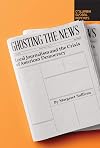
Talk about a timely topic. This enlightening tome should be required reading for anyone who is concerned about the future of journalism and our democracy. Sullivan (who in the interest of full disclosure served as editor of The Buffalo News when I was a reporter at the publication) makes a compelling case that "real news" is as much a problem as "fake news." She issues a dire warning about how the decline of daily newspapers jeopardizes efforts to hold governments accountable. Communities show more that suffer from "news poverty" face the risk of more government corruption, higher taxes, a more divided electoral base and a less-informed populace. Sullivan, the media columnist for The Washington Post, weaves in lively anecdotes that reinforce her arguments. She also explores possible solutions to the decline of local news ecosystems, including the rise of numerous nonprofit newsrooms. "Ghosting the News" is an important book that graphically illustrates why we all should concerned about the demise of daily newspapers. show less
Awards


Statistics
- Works
- 2
- Also by
- 1
- Members
- 195
- Popularity
- #112,376
- Rating
- 3.9
- Reviews
- 11
- ISBNs
- 20