
Lauren Redniss (1) (1974–)
Author of Radioactive: Marie & Pierre Curie: A Tale of Love and Fallout
For other authors named Lauren Redniss, see the disambiguation page.
About the Author
Image credit: Lauren Redniss
Works by Lauren Redniss
Century Girl: 100 Years in the Life of Doris Eaton Travis, Last Living Star of the Ziegfeld Follies (2006) 143 copies, 3 reviews
Associated Works
Tagged
Common Knowledge
- Canonical name
- Redniss, Lauren
- Birthdate
- 1974
- Gender
- female
- Awards and honors
- MacArthur Foundation "Genius Grant"
PEN/E. O. Wilson Literary Science Writing Award - Nationality
- USA
- Associated Place (for map)
- USA
Members
Reviews
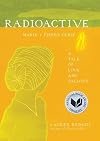
[Radioactive] is a marvelous book. It's at once a biographical sketch of two pioneering researchers of radioactivity, a truly romantic love story, and a chilling history-of-the-science report. Presented through vibrantly colorful and lyrical, though curiously awkward, illustrations, Radioactive challenges the conventional image of the "Graphic Novel".
Marie and Pierre Curie—and their scientific work— are the subjects. Pierre Curie was born into science, son of a physician working in a show more neuroanatomical lab. He proved himself early and often, earning a university degree at 16, publishing a scientific paper at 21, and joining the Sorbonne's mineralogy lab to study crystals. Marya Sklodowska, on the other hand, was born into a working class Polish family living in Warsaw under Russian rule. A feature of early education included surprise interrogations by a state inspector who demanded students recite the names of Tzars and members of the imperial family. To get the education she wanted, she joined the Flying University, a clandestine network of a thousand women who met in secret and defied Russian control of education. Nevertheless, at 18, Marya took herself to Paris.
In 1891, the year 32-year-old Pierre began his doctoral dissertation ("Magnetic Properties of Bodies at Diverse Temperatures"), the 24-year-old Marya enrolled at the Sorbonne as Marie. She was one of only 23 female students among the total enrollment of 1800. Having completed degrees in mathematics and in physics in two years, she was hired by a national lab to study the magnetic properties of steel. She was working in borrowed space in a crowded lab until a Polish physicist visiting Paris introduced her to "a scientist of great merit": Pierre Curie. Thereafter, Marie reported on their introduction:
Upon entering the room I perceived, standing framed by the French window opening on the balcony, a tall young man with auburn hair and large, limpid eyes. I noticed the grave and gentle expression of his face, as well a certain abandon in his attitude, suggesting the dreamer absorbed in his reflections…We began a conversation which soon became friendly.
The two immediately began sharing lab space and research. Pierre persuaded Marie to marry him. They had a daughter and named her Irene. They collaborated in all ways, even keeping the same diary. Together they demonstrated the existence of two new elements, radium and polonium (the latter named for Marie's homeland, Poland). For this work, the Curies won the Nobel Prize in Physics in 1902.
Radium is simultaneously mesmerizing and deadly. Both Marie and Pierre were captivated by its glow, and while aware of the hazard, they handled the material during long days in their lab. Marie slept with a tiny radium crumb in a vial beside her pillow. Ultimately, the exposure undermined Marie's health, delaying the Stockholm trip to accept the Prize for more than a year.
Marie and Pierre Curie's lives are presented in a straight chronology. But accounts of the dramatic, often terrible but occasional beneficial, impacts of their discoveries, often decades later, disrupt the timeline. The linkage is essential.
The book is entirely Redniss's. She organized the presentation, wrote the text. She laid out the pages. She created the illustrations, using a technique called "cyanoprinting". (The process is an old one and is used to make blueprints.) She added colors to the prints using paints or colored pencils. She even designed the typeface.
The artwork in Radioactive is unique. Not inspired by comic-strip conventions, it doesn't use the comic artist's vocabulary. Too, the book's design bends the conventions of story presentation. There's no grid, no uniform lineup of panels, each depicting an action, a phrase of dialog or a reaction or an emotion. Redniss may have used a grid to guide her layouts, but if she did, it is transparent. The art and the text blocks (which seldom are "blocks") flow across the spreads.
I first read Radioactive about 10 years ago. At the time, graphic novels were comics in the guise of books. Each page presented a grid of panels with cartoon figures and dialog balloons. Redniss's concept blew me away. It was—and still is, of course—a book aglow, perfectly fitting the topics.
It is quite unfortunate that images can't be shown in the reviews, for this is a GRAPHIC edition. Images are so important for anyone to get a satisfactory understanding of the book. Here's what I posted to my thread:
https://www.librarything.com/topic/342172#7856401 show less
Marie and Pierre Curie—and their scientific work— are the subjects. Pierre Curie was born into science, son of a physician working in a show more neuroanatomical lab. He proved himself early and often, earning a university degree at 16, publishing a scientific paper at 21, and joining the Sorbonne's mineralogy lab to study crystals. Marya Sklodowska, on the other hand, was born into a working class Polish family living in Warsaw under Russian rule. A feature of early education included surprise interrogations by a state inspector who demanded students recite the names of Tzars and members of the imperial family. To get the education she wanted, she joined the Flying University, a clandestine network of a thousand women who met in secret and defied Russian control of education. Nevertheless, at 18, Marya took herself to Paris.
In 1891, the year 32-year-old Pierre began his doctoral dissertation ("Magnetic Properties of Bodies at Diverse Temperatures"), the 24-year-old Marya enrolled at the Sorbonne as Marie. She was one of only 23 female students among the total enrollment of 1800. Having completed degrees in mathematics and in physics in two years, she was hired by a national lab to study the magnetic properties of steel. She was working in borrowed space in a crowded lab until a Polish physicist visiting Paris introduced her to "a scientist of great merit": Pierre Curie. Thereafter, Marie reported on their introduction:
Upon entering the room I perceived, standing framed by the French window opening on the balcony, a tall young man with auburn hair and large, limpid eyes. I noticed the grave and gentle expression of his face, as well a certain abandon in his attitude, suggesting the dreamer absorbed in his reflections…We began a conversation which soon became friendly.
The two immediately began sharing lab space and research. Pierre persuaded Marie to marry him. They had a daughter and named her Irene. They collaborated in all ways, even keeping the same diary. Together they demonstrated the existence of two new elements, radium and polonium (the latter named for Marie's homeland, Poland). For this work, the Curies won the Nobel Prize in Physics in 1902.
Radium is simultaneously mesmerizing and deadly. Both Marie and Pierre were captivated by its glow, and while aware of the hazard, they handled the material during long days in their lab. Marie slept with a tiny radium crumb in a vial beside her pillow. Ultimately, the exposure undermined Marie's health, delaying the Stockholm trip to accept the Prize for more than a year.
Marie and Pierre Curie's lives are presented in a straight chronology. But accounts of the dramatic, often terrible but occasional beneficial, impacts of their discoveries, often decades later, disrupt the timeline. The linkage is essential.
The book is entirely Redniss's. She organized the presentation, wrote the text. She laid out the pages. She created the illustrations, using a technique called "cyanoprinting". (The process is an old one and is used to make blueprints.) She added colors to the prints using paints or colored pencils. She even designed the typeface.
The artwork in Radioactive is unique. Not inspired by comic-strip conventions, it doesn't use the comic artist's vocabulary. Too, the book's design bends the conventions of story presentation. There's no grid, no uniform lineup of panels, each depicting an action, a phrase of dialog or a reaction or an emotion. Redniss may have used a grid to guide her layouts, but if she did, it is transparent. The art and the text blocks (which seldom are "blocks") flow across the spreads.
I first read Radioactive about 10 years ago. At the time, graphic novels were comics in the guise of books. Each page presented a grid of panels with cartoon figures and dialog balloons. Redniss's concept blew me away. It was—and still is, of course—a book aglow, perfectly fitting the topics.
It is quite unfortunate that images can't be shown in the reviews, for this is a GRAPHIC edition. Images are so important for anyone to get a satisfactory understanding of the book. Here's what I posted to my thread:
https://www.librarything.com/topic/342172#7856401 show less

What an incredible book. The illustrations, the personal interviews, the story itself, and all the fascinating insight into local and national indigenous history. I left wanting to read more by Redniss and would recommend this to anyone who enjoys current non-fiction, indigenous non-fiction, and residents of Arizona, Oklahoma, the Dakotas, and beyond.
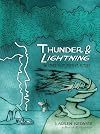
I loved Redniss’s previous book, Radioactive, a history of Marie Curie and of radiation itself, told via historical, scientific and personal vignettes in an original handwritten-like font and hundreds of original illustrations evocative of the mystery and magic of radiation.
Redniss’s new book changes the topic to weather but continues the beautiful format and presentation, with a similar font that’s easier to read and artwork that is positively ... atmospheric :) There is the show more disorienting blindness of fog, captured in an extended series of gray-toned pages with minimal anchoring text. There is a section on “meteorological warfare,” where clouds are seeded to induce disruptive rain. There is forecasting, from medieval almanacs to the 1792 debut of the Old Farmer’s Almanac with its “secret forecasting formula.”
I’m fascinated by wind and enjoyed the section on trade winds, including when they meet near the equator and create the “doldrums” (a void; a still, windless zone) and also where they flow unobstructed, as swimmer Diana Nyad noted when she and her trainer once chatted with a sailor while waiting for favorable weather conditions between Cuba and Florida:
[She took us] out on the dock in Key West, on the Atlantic Ocean side, and she said, “Put your tongue out in the air.” So the three of us are standing there with our tongues hanging out in the breeze. And she said, “What do you sense?” We definitely sensed something grainy, crunchy, you know, in the mouth. And we said, “Wow, it’s the salt.” She said, “No. It is the Sahara dust.” Literally grains of sand from the Sahara Desert.
I enjoyed Thunder & Lightning slightly less than Radioactive; its content feels born of a folder-full of stories about people, events and topics related (sometimes peripherally) to weather, accumulated over years, more than a real exploration of the topic. But it’s curious. Poetic. Beautiful. A satisfying experience.
(Review based on an advance reading copy provided by the publisher.) show less
Redniss’s new book changes the topic to weather but continues the beautiful format and presentation, with a similar font that’s easier to read and artwork that is positively ... atmospheric :) There is the show more disorienting blindness of fog, captured in an extended series of gray-toned pages with minimal anchoring text. There is a section on “meteorological warfare,” where clouds are seeded to induce disruptive rain. There is forecasting, from medieval almanacs to the 1792 debut of the Old Farmer’s Almanac with its “secret forecasting formula.”
I’m fascinated by wind and enjoyed the section on trade winds, including when they meet near the equator and create the “doldrums” (a void; a still, windless zone) and also where they flow unobstructed, as swimmer Diana Nyad noted when she and her trainer once chatted with a sailor while waiting for favorable weather conditions between Cuba and Florida:
[She took us] out on the dock in Key West, on the Atlantic Ocean side, and she said, “Put your tongue out in the air.” So the three of us are standing there with our tongues hanging out in the breeze. And she said, “What do you sense?” We definitely sensed something grainy, crunchy, you know, in the mouth. And we said, “Wow, it’s the salt.” She said, “No. It is the Sahara dust.” Literally grains of sand from the Sahara Desert.
I enjoyed Thunder & Lightning slightly less than Radioactive; its content feels born of a folder-full of stories about people, events and topics related (sometimes peripherally) to weather, accumulated over years, more than a real exploration of the topic. But it’s curious. Poetic. Beautiful. A satisfying experience.
(Review based on an advance reading copy provided by the publisher.) show less
I had heard the name Marie Curie, but I did not know much about this pioneering scientist. Wow, what an eye-opener. She was born in Poland in 1867 and moved to Paris in 1891, to study science at the University of Paris. A couple years later, she meets Pierre Curie, an instructor at the School of Physics and Chemistry. They soon marry and begin blazing a path, that will bring both wonder to the world and incredible destruction.
This all will launch, with their discovery of polonium and radium, show more which sets off a long list of breakthroughs, leading to “radioactivity”, a term they both coined. I think we know where this is heading.
I am not much of a science geek, but I do not think there has ever been a pairing, in the history of science, that has reached these monumental achievements. The couple ended up winning the Nobel Peace Prize for physics and eight years later, Marie earned a second one for chemistry.
Yes, this wonderful graphic biography, is a love story and a scientific history lesson but it is also explores the horrible repercussions: “The Fallout” part of the title. Hiroshima, Three Mile Island and Chernobyl make appearances, along with a few lesser horror stories featuring the evils of radiation.
I cannot express how perfect this all comes together, with simple illustrations and a vibrant palette of colors, all held together with a strong narrative drive. Find this book! show less
This all will launch, with their discovery of polonium and radium, show more which sets off a long list of breakthroughs, leading to “radioactivity”, a term they both coined. I think we know where this is heading.
I am not much of a science geek, but I do not think there has ever been a pairing, in the history of science, that has reached these monumental achievements. The couple ended up winning the Nobel Peace Prize for physics and eight years later, Marie earned a second one for chemistry.
Yes, this wonderful graphic biography, is a love story and a scientific history lesson but it is also explores the horrible repercussions: “The Fallout” part of the title. Hiroshima, Three Mile Island and Chernobyl make appearances, along with a few lesser horror stories featuring the evils of radiation.
I cannot express how perfect this all comes together, with simple illustrations and a vibrant palette of colors, all held together with a strong narrative drive. Find this book! show less
Lists
Awards


You May Also Like


Associated Authors
Statistics
- Works
- 6
- Also by
- 2
- Members
- 1,451
- Popularity
- #17,710
- Rating
- 4.1
- Reviews
- 69
- ISBNs
- 28
- Languages
- 3
- Favorited
- 1