
Cynthia Barnett
Author of Rain: A Natural and Cultural History
About the Author
Cynthia Barnett is a long-time journalist who has reported on freshwaters issues from the Suwannee River to Singapore. Her awards include a national Sigma Delta Chi prize for investigative magazine reporting and eight Green Eyeshades, which recognize outstanding journalism in the Southeast. The show more author of Mirage: Florida and the Vanishing Water of the Eastern U.S., she earned a master's degree in environmental history at the University of Florida and was a Knight-Wallace Fellow at the University of Michigan. She lives with her family in Gainesville, Florida. show less
Works by Cynthia Barnett
Tagged
Common Knowledge
- Canonical name
- Barnett, Cynthia
- Birthdate
- 1966
- Gender
- female
- Places of residence
- Gainsville, Florida, USA
- Map Location
- USA
Members
Reviews
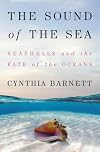
I have a large shell in my home. I remember seeing it in my grandparent’s home when I was a girl, and knowing that my grandfather had collected it. I would place my ear to it’s opening to hear the sound of the sea which I had never seen.
Later in life I learned it was a conch shell, and I did see the ocean and hear it for myself. But I knew very little about conches, or where the shell came from, or how my grandfather came to own one.
Early after picking up The Sound of the Sea, I turned show more to Cynthia Barnett’s chapter on the Queen Conch. She tells of the Lucayan culture that harvested and barbequed the Queen Conch before they were exterminated by 1513. Queen Victoria had a preference for shell cameos, and commissioned wedding commemoratives made of the shell. By the 1940s, the conch was suffering from over harvesting in the Keys, and repopulation efforts failed. By 2018, scientists determined that there were too few conch left in the Bahamas to reproduce. Efforts are being made to farm the conch, but with the ocean heating up from climate change, they are one more example of what we are losing.
“I had set out to listen to seashells as chroniclers of nature’s truth,” Barnett writes in her conclusion. “But as much as shells told about oceans, they had more to say about people.” Humans have used shells for food and to make tools. Shell collector’s mania drove up their value, driving over fishing. Shells decorated the boxes sold by an East Side London family who in a few generations turned the business into Shell Oil. Wealthy people ornamented their walls with shells and built grottos of shells. The were used for personal ornament and for money. As instruments they called alarms, were the voice of gods, and called people to worship. Christians who underwent the pilgrimage of St. James sewed shells onto their clothing, and giant clam shells were used for baptismal fonts.
Every chapter is a beautiful, fascinating look into science, history, and nature through a specific shell. I learned so much, my interest never flagging.
I knew about the history of the color purple from the murex shell. And had read about shells as money and how they were used in decorations. I have a hand made pin and earrings made of delicate shells that had belonged to my great-grandmother. But there was so much more to learn!
I found her chapter on Triton’s Trumpet and Chavin de Huantar in Peru one of the most fascinating histories in the book. High in the Andes, this ancient city predates the Incas, and consists of temples and underground galleries with running water and reflective walls, all created for religious awe and wonder. They had no written language, but the art depicts the use of shells in ritual, especially the conch.
To hear the ocean’s softest song, walk the Sothern beaches of Sanibel Island. Listen closely at the break line. As each wave pulls back to sea, a sparkly tinkle rises from the rumble; the roil of tiny shells.
from The Sound of the Sea by Cynthia Barnett
The book is a travelogue as well, with glorious descriptions of the places she visited.
She mentions the Michigan roadside attraction Sea Shell City, with its billboard of the Man Eating Clam. I finally got to visit it when I was a mother with an eager son, and saw the bins of shells and the clam on display. Stories abound of the clam in nature grasping the hand or foot of divers who met their death. WWII Navy manuals even advised how to free oneself from the clam!
After reading this book, I think about the beautiful shells I bought as a teenager, which later graced my mother’s shelf. The delicate Nautilus, the cream cone shell tipped in purple, the moon snail, the spiny armed shells. And, of course, about the conch sitting on the shelf in my home now. I had never considered the animals that had lived inside these beautiful homes, or about their impact on our world.
We are arrived at the breaking point. We have been greedy and selfish and it has wrecked havoc. Climate change is already remaking the world. There is so much still to be learned about the multitude of life in the oceans and the answers they hold to problems we face. Some are adapting, while others are disappearing. Barnett’s book brings an appreciation for what we are losing.
I received a free book through Amazon Vine. My review is fair and unbiased. show less
Later in life I learned it was a conch shell, and I did see the ocean and hear it for myself. But I knew very little about conches, or where the shell came from, or how my grandfather came to own one.
Early after picking up The Sound of the Sea, I turned show more to Cynthia Barnett’s chapter on the Queen Conch. She tells of the Lucayan culture that harvested and barbequed the Queen Conch before they were exterminated by 1513. Queen Victoria had a preference for shell cameos, and commissioned wedding commemoratives made of the shell. By the 1940s, the conch was suffering from over harvesting in the Keys, and repopulation efforts failed. By 2018, scientists determined that there were too few conch left in the Bahamas to reproduce. Efforts are being made to farm the conch, but with the ocean heating up from climate change, they are one more example of what we are losing.
“I had set out to listen to seashells as chroniclers of nature’s truth,” Barnett writes in her conclusion. “But as much as shells told about oceans, they had more to say about people.” Humans have used shells for food and to make tools. Shell collector’s mania drove up their value, driving over fishing. Shells decorated the boxes sold by an East Side London family who in a few generations turned the business into Shell Oil. Wealthy people ornamented their walls with shells and built grottos of shells. The were used for personal ornament and for money. As instruments they called alarms, were the voice of gods, and called people to worship. Christians who underwent the pilgrimage of St. James sewed shells onto their clothing, and giant clam shells were used for baptismal fonts.
Every chapter is a beautiful, fascinating look into science, history, and nature through a specific shell. I learned so much, my interest never flagging.
I knew about the history of the color purple from the murex shell. And had read about shells as money and how they were used in decorations. I have a hand made pin and earrings made of delicate shells that had belonged to my great-grandmother. But there was so much more to learn!
I found her chapter on Triton’s Trumpet and Chavin de Huantar in Peru one of the most fascinating histories in the book. High in the Andes, this ancient city predates the Incas, and consists of temples and underground galleries with running water and reflective walls, all created for religious awe and wonder. They had no written language, but the art depicts the use of shells in ritual, especially the conch.
To hear the ocean’s softest song, walk the Sothern beaches of Sanibel Island. Listen closely at the break line. As each wave pulls back to sea, a sparkly tinkle rises from the rumble; the roil of tiny shells.
from The Sound of the Sea by Cynthia Barnett
The book is a travelogue as well, with glorious descriptions of the places she visited.
She mentions the Michigan roadside attraction Sea Shell City, with its billboard of the Man Eating Clam. I finally got to visit it when I was a mother with an eager son, and saw the bins of shells and the clam on display. Stories abound of the clam in nature grasping the hand or foot of divers who met their death. WWII Navy manuals even advised how to free oneself from the clam!
After reading this book, I think about the beautiful shells I bought as a teenager, which later graced my mother’s shelf. The delicate Nautilus, the cream cone shell tipped in purple, the moon snail, the spiny armed shells. And, of course, about the conch sitting on the shelf in my home now. I had never considered the animals that had lived inside these beautiful homes, or about their impact on our world.
We are arrived at the breaking point. We have been greedy and selfish and it has wrecked havoc. Climate change is already remaking the world. There is so much still to be learned about the multitude of life in the oceans and the answers they hold to problems we face. Some are adapting, while others are disappearing. Barnett’s book brings an appreciation for what we are losing.
I received a free book through Amazon Vine. My review is fair and unbiased. show less
This ranks among the group of particularly successful popular science/history books I've read. It is ordered well, and gifted at covering topics in enough depth to get you interested (vs too little information or too much given to one event/issue) and yet still feel like a full picture. The writing is good, with bits of humor which come across as natural rather than forced.
The book is divided into five sections, which cover different aspects of rain and our relationship with it, with a very show more good introduction about the origins of rain (why we have it and Mars and Venus lost it, the transformation of earth, etc...). One section deals with the early weather recorders and studiers and the invention and marketing of rain gear. Another covers American Rain with chapters on Thomas Jefferson (and the poor placement of Monticello when it came to water access), the insane belief that 'rain follows the plow' by which the great plains were settled (a region formerly called the Great American Desert before a brief wet period), and the rainmakers that showed up during droughts (including those who tried to practice actual science, not just the outright charlatans).
I really enjoyed reading it, learned a lot of new information and made notes on books covering some topics in more depth (a home run for me and any similarly broad non-fiction work). My favorite factoid being about the origin of the "Neither rain nor sleet nor dark of night..." phrase coming from Herodotus's descriptions of Persian couriers (favorite partly because my mom was a mail carrier for most of my life).
This review is based on an ARC copy of the book, and I do hope the final edition has included some pictures and maps. show less
The book is divided into five sections, which cover different aspects of rain and our relationship with it, with a very show more good introduction about the origins of rain (why we have it and Mars and Venus lost it, the transformation of earth, etc...). One section deals with the early weather recorders and studiers and the invention and marketing of rain gear. Another covers American Rain with chapters on Thomas Jefferson (and the poor placement of Monticello when it came to water access), the insane belief that 'rain follows the plow' by which the great plains were settled (a region formerly called the Great American Desert before a brief wet period), and the rainmakers that showed up during droughts (including those who tried to practice actual science, not just the outright charlatans).
I really enjoyed reading it, learned a lot of new information and made notes on books covering some topics in more depth (a home run for me and any similarly broad non-fiction work). My favorite factoid being about the origin of the "Neither rain nor sleet nor dark of night..." phrase coming from Herodotus's descriptions of Persian couriers (favorite partly because my mom was a mail carrier for most of my life).
This review is based on an ARC copy of the book, and I do hope the final edition has included some pictures and maps. show less
 This review was written for LibraryThing Early Reviewers.
It's raining and I've been complaining even though I'm at work and it really shouldn't matter. After reading Rain: A Natural and Cultural History, I know I should be grateful for those wonderful drops especially since we're three inches behind for the year and I need to put in a garden. This is a well-written look at the meaning of rain to our culture. Barnett ponders the mythology, the associated rituals, the literary response, the science and the history of man's relationship with rain. show more Too much, or the lack thereof has had a profound effect on civilization and our very existence. No more complaining about the rain, go out and dance in it. show less
This review was written for LibraryThing Early Reviewers.
Summary: Rain is something that shapes each of our lives - whether by its abundance or its lack or just by getting caught out without an umbrella - yet it is something that most of us know relatively little about. In this book, Cynthia Barnett is out to change that, discussing rain's role on our culture, starting with the rains that filled the oceans on primordial Earth, and how the lack of rain may have shaped our species' evolution. She then moves through the relationship between rain and show more religion, weather forecasting in its early and modern forms, the effect of droughts on agriculture and American history and the effect of the monsoon elsewhere, cloud seeding, rain as depicted in art and literature, architecture designed with rain in mind, and the likely effects of global climate change on our relationship with the water that falls, proverbially, into each life, at least a little.
Review: I love me a good rainy day, so I was a natural fit for this book. And it was especially appropriate after moving from somewhere with occasional good solid steadily rainy days to somewhere with almost daily brief torrential downpours - at least during the summer when I read this. This book also ticks a lot of my non-fiction boxes: microhistory on a unique topic, a blend of science and culture and history, a good source of trivia, some exotic locations, etc. (Not to mention references to some of my favorites: Douglas Adams, Ray Bradbury, Doctor Who.) Barnett writes smoothly and engagingly, and seemed equally comfortable writing science as she did writing a travelogue. But what I most enjoyed about this book was the new perspective she gave on something so familiar. I learned a lot of history, sure, and brushed up on a lot of the science. But what I really took away from this was the moments of "Huh, you know, she's right, we have a bunch of specific scientific terms for things like cloud formations, but no shared lexicon when it comes to types of rain." (This was one of the Douglas Adams references, to So Long and Thanks for All the Fish.) I also thought her ideas about the relationship between rain and religion - that religions that were born in arid agricultural regions tend to be monotheistic, with God as a paternal figure that can give or withhold the precious rain, while regions that experience the yearly innundation of the monsoon tend to be polytheistic, and tend to have a cyclical vision of birth and death and rebirth - were fascinating. I don't know how well they would hold up under intense scrutiny, but it's certainly something interesting to consider. On a less grand scale, I also never realized before reading this book that the Morton Salt slogan "When it rains, it pours" slogan was a pun on the fact that the salt doesn't clump (and thus will pour) in humid weather. So in general, I quite enjoyed this book, although of course there were some parts that I found less interesting and thus somewhat slower going than others. 4 out of 5 stars.
Recommendation: If you like meterology, microhistories, or just a good rainy day, you'll probably find something in this book that you didn't know before. Worth the read. show less
Review: I love me a good rainy day, so I was a natural fit for this book. And it was especially appropriate after moving from somewhere with occasional good solid steadily rainy days to somewhere with almost daily brief torrential downpours - at least during the summer when I read this. This book also ticks a lot of my non-fiction boxes: microhistory on a unique topic, a blend of science and culture and history, a good source of trivia, some exotic locations, etc. (Not to mention references to some of my favorites: Douglas Adams, Ray Bradbury, Doctor Who.) Barnett writes smoothly and engagingly, and seemed equally comfortable writing science as she did writing a travelogue. But what I most enjoyed about this book was the new perspective she gave on something so familiar. I learned a lot of history, sure, and brushed up on a lot of the science. But what I really took away from this was the moments of "Huh, you know, she's right, we have a bunch of specific scientific terms for things like cloud formations, but no shared lexicon when it comes to types of rain." (This was one of the Douglas Adams references, to So Long and Thanks for All the Fish.) I also thought her ideas about the relationship between rain and religion - that religions that were born in arid agricultural regions tend to be monotheistic, with God as a paternal figure that can give or withhold the precious rain, while regions that experience the yearly innundation of the monsoon tend to be polytheistic, and tend to have a cyclical vision of birth and death and rebirth - were fascinating. I don't know how well they would hold up under intense scrutiny, but it's certainly something interesting to consider. On a less grand scale, I also never realized before reading this book that the Morton Salt slogan "When it rains, it pours" slogan was a pun on the fact that the salt doesn't clump (and thus will pour) in humid weather. So in general, I quite enjoyed this book, although of course there were some parts that I found less interesting and thus somewhat slower going than others. 4 out of 5 stars.
Recommendation: If you like meterology, microhistories, or just a good rainy day, you'll probably find something in this book that you didn't know before. Worth the read. show less
This review was written for LibraryThing Early Reviewers.Lists
Awards


You May Also Like


Statistics
- Works
- 8
- Members
- 849
- Popularity
- #30,130
- Rating
- 3.9
- Reviews
- 99
- ISBNs
- 25
- Languages
- 2
