
Paul Moorhouse
Author of Dali
About the Author
Works by Paul Moorhouse
Associated Works
Tagged
Common Knowledge
- Canonical name
- Moorhouse, Paul
- Gender
- male
- Education
- London University (MA | Art History)
- Occupations
- curator
art historian - Organizations
- National Portrait Gallery
Tate
Government Art Collection - Nationality
- UK
- Associated Place (for map)
- UK
Members
Reviews

Cindy Sherman is among the most influential artists of her generation. Using herself as model, wearing a range of costumes and portraying herself in invented situations, she interrogates the imagery employed by the mass media, po pular culture and fine art. Television, advertising, magazines, fashion and Old Master paintings all form part of her visual language.
Whether using make-up, costumes, props and prosthetics to manipulate her own appearance, or devising elaborate tableaux, her entire show more body of 40 years’ work constitutes a highly distinctive response to contemporary and earlier culture, whose stylistic tropes she appropriates and quotes. This book will explore the rich cultural sources that Sherman plunders in creating provocative and ambiguous images that lead us to question the things we see.
Sherman’s work is surveyed through two related themes. Examining Sherman’s art within the context of portraiture it explores the way that identity is constructed from appearance. It also considers the nature of Sherman’s involvement with a range of styles by positioning her work in the context of the pre-existing imagery that she appropriates. show less
Whether using make-up, costumes, props and prosthetics to manipulate her own appearance, or devising elaborate tableaux, her entire show more body of 40 years’ work constitutes a highly distinctive response to contemporary and earlier culture, whose stylistic tropes she appropriates and quotes. This book will explore the rich cultural sources that Sherman plunders in creating provocative and ambiguous images that lead us to question the things we see.
Sherman’s work is surveyed through two related themes. Examining Sherman’s art within the context of portraiture it explores the way that identity is constructed from appearance. It also considers the nature of Sherman’s involvement with a range of styles by positioning her work in the context of the pre-existing imagery that she appropriates. show less
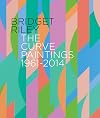
Still slightly annoyed I didn't make it to this exhibition, but this book is pretty good. I love reading interviews with Bridget Riley as her processes always seem so meticulous, so thought through, and so filled with curiosity. Her paintings are incredible in a gallery and are never going to pack the same punch in a book, but still play tricks on your eyes and are full of life.
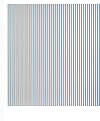
Published on the occasion of Bridget Riley’s major exhibition at David Zwirner in London in the summer of 2014, this fully illustrated catalogue offers intimate explorations of paintings and works on paper produced by the legendary British artist over the past fifty years, focusing specifically on her recurrent use of the stripe motif.
Riley has devoted her practice to actively engaging viewers through elementary shapes such as lines, circles, curves, and squares, creating visual show more experiences that at times trigger optical sensations of vibration and movement. The London show, her most extensive presentation in the city since her 2003 retrospective at Tate Britain, explored the stunning visual variety she has managed to achieve working exclusively with stripes, manipulating the surfaces of her vibrant canvases through subtle changes in hue, weight, rhythm, and density. As noted by Paul Moorhouse, “Throughout her development, Riley has drawn confirmation from Euge`ne Delacroix’s observation that ‘the first merit of a painting is to be a feast for the eyes.’ [Her] most recent stripe paintings are a striking reaffirmation of that principle, exciting and entrancing the eye in equal measure.”
Created in close collaboration with the artist, the publication’s beautifully produced color plates offer a selection of the iconic works from the exhibition. These include the artist’s first stripe works in color from the 1960s, a series of vertical compositions from the 1980s that demonstrate her so-called “Egyptian” palette—a “narrow chromatic range that recalled natural phenomena”—and an array of her modestly scaled studies, executed with gouache on graph paper and rarely before seen.
A range of texts about Riley’s original and enduring practice grounds and contextualizes the images, including new scholarship by art historian Richard Shiff, texts on both the artist’s wall paintings and newest body of work by Paul Moorhouse, 20th Century Curator at the National Portrait Gallery in London, and a 1978 interview with Robert Kudielka, her longtime confidant and foremost critic. Additionally, the book features little-seen archival imagery of Riley at work over the years; documentation of her recent commissions for St. Mary’s Hospital in West London, taken especially for this publication; and installation views of the exhibition itself, installed throughout the three floors of the gallery’s eighteenth-century Georgian townhouse located in the heart of Mayfair. show less
Riley has devoted her practice to actively engaging viewers through elementary shapes such as lines, circles, curves, and squares, creating visual show more experiences that at times trigger optical sensations of vibration and movement. The London show, her most extensive presentation in the city since her 2003 retrospective at Tate Britain, explored the stunning visual variety she has managed to achieve working exclusively with stripes, manipulating the surfaces of her vibrant canvases through subtle changes in hue, weight, rhythm, and density. As noted by Paul Moorhouse, “Throughout her development, Riley has drawn confirmation from Euge`ne Delacroix’s observation that ‘the first merit of a painting is to be a feast for the eyes.’ [Her] most recent stripe paintings are a striking reaffirmation of that principle, exciting and entrancing the eye in equal measure.”
Created in close collaboration with the artist, the publication’s beautifully produced color plates offer a selection of the iconic works from the exhibition. These include the artist’s first stripe works in color from the 1960s, a series of vertical compositions from the 1980s that demonstrate her so-called “Egyptian” palette—a “narrow chromatic range that recalled natural phenomena”—and an array of her modestly scaled studies, executed with gouache on graph paper and rarely before seen.
A range of texts about Riley’s original and enduring practice grounds and contextualizes the images, including new scholarship by art historian Richard Shiff, texts on both the artist’s wall paintings and newest body of work by Paul Moorhouse, 20th Century Curator at the National Portrait Gallery in London, and a 1978 interview with Robert Kudielka, her longtime confidant and foremost critic. Additionally, the book features little-seen archival imagery of Riley at work over the years; documentation of her recent commissions for St. Mary’s Hospital in West London, taken especially for this publication; and installation views of the exhibition itself, installed throughout the three floors of the gallery’s eighteenth-century Georgian townhouse located in the heart of Mayfair. show less
Op Art was the first Fine Art movement I ever engaged with, way back in my early to mid teens. I found a book about it in the school library. Its geometrical aesthetic appealed to me very strongly, so much so that I even made a few pencil drawings of my own that fitted in the genre - I might even still have them somewhere. So when a local art gallery held an Op Art retrospective (I think Brits only) I dashed along to see if I still liked that kind of thing. - Yep! Still love it - bought show more every book they stocked about it. This is one of them. It's an exhibition catalogue, with an interview with Bridget Riley and a short biography of her, focusing almost exclusively on her artistic accomplishments. The art is fab, given as much space as the middling sized format (for an art book) allows and carefully reproduced to preserve the colour effects of the original. show less
You May Also Like


Associated Authors
Statistics
- Works
- 37
- Also by
- 1
- Members
- 658
- Popularity
- #38,342
- Rating
- 4.0
- Reviews
- 10
- ISBNs
- 49
- Languages
- 2