

Ann Temkin
Author of Barnett Newman
About the Author
Ann Temkin is the Muriel and Philip Berman Curator of 20th Century Art at the Philadelphia Museum of Art. (Bowker Author Biography)
Works by Ann Temkin
Tagged
Common Knowledge
- Birthdate
- 20th Century
- Gender
- female
Members
Reviews
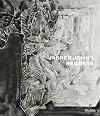
In June 2012, Jasper Johns encountered a photograph of the painter Lucian Freud reproduced in a Christie's auction catalogue. Inspired not only by the image, but by the physical qualities of the photograph itself, Johns took this motif through a succession of cross-medium permutations. He also incorporated into his art the text of a rubber stamp he had had made several years earlier to allow him to efficiently decline the myriad requests and invitations that come his way: "Regrets/Jasper show more Johns." But the stamp's text also calls to mind the more familiar connotations of regret, such as loss, disappointment and remorse, evoking an enigmatic sense of melancholy. Published in conjunction with an exhibition of this series of paintings, drawings and prints created over the last year and a half through an intricate combination of techniques, this publication presents each of the new works in full color. An essay by Ann Temkin, Chief Curator of Painting and Sculpture, and Christophe Cherix, Chief Curator of Drawings and Prints, The Museum of Modern Art, examines the importance of process and experimentation, the cycle of dead ends and fresh starts, and the incessant interplay of materials, meaning, and representation so characteristic of Johns' career over the last 60 years. show less
Judd by Ann Temkin
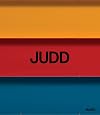
The first retrospective in 30 years on American maverick Donald Judd’s minimalist sculpture, architecture and furniture
Published to accompany the first US retrospective exhibition of Donald Judd’s sculpture in more than 30 years, Judd explores the work of a landmark artist who, over the course of his career, developed a material and formal vocabulary that transformed the field of modern sculpture.
Donald Judd was among a generation of artists in the 1960s who sought to entirely do away show more with illusion, narrative and metaphorical content. He turned to three dimensions as well as industrial working methods and materials in order to investigate “real space,” by his definition. Judd surveys the evolution of the artist’s work, beginning with his paintings, reliefs and handmade objects from the early 1960s; through the years in which he built an iconic vocabulary of works in three dimensions, including hollow boxes, stacks and progressions made with metals and plastics by commercial fabricators; and continuing through his extensive engagement with color during the last decade of his life.
This richly illustrated catalog takes a close look at Judd’s achievements, and, using newly available archival materials at the Judd Foundation and elsewhere, expands scholarly perspectives on his work. The essays address subjects such as his early beginnings in painting, the fabrication of his sculptures, his site-specific pieces and his work in design and architecture.
Donald Judd (1928–94) began his professional career working as a painter while studying art history and writing art criticism. One of the foremost sculptors of our time, Judd refused this designation and other attempts to label his art: his revolutionary approach to form, materials, working methods and display went beyond the set of existing terms in midcentury New York. His work, in turn, changed the language of modern sculpture. show less
Published to accompany the first US retrospective exhibition of Donald Judd’s sculpture in more than 30 years, Judd explores the work of a landmark artist who, over the course of his career, developed a material and formal vocabulary that transformed the field of modern sculpture.
Donald Judd was among a generation of artists in the 1960s who sought to entirely do away show more with illusion, narrative and metaphorical content. He turned to three dimensions as well as industrial working methods and materials in order to investigate “real space,” by his definition. Judd surveys the evolution of the artist’s work, beginning with his paintings, reliefs and handmade objects from the early 1960s; through the years in which he built an iconic vocabulary of works in three dimensions, including hollow boxes, stacks and progressions made with metals and plastics by commercial fabricators; and continuing through his extensive engagement with color during the last decade of his life.
This richly illustrated catalog takes a close look at Judd’s achievements, and, using newly available archival materials at the Judd Foundation and elsewhere, expands scholarly perspectives on his work. The essays address subjects such as his early beginnings in painting, the fabrication of his sculptures, his site-specific pieces and his work in design and architecture.
Donald Judd (1928–94) began his professional career working as a painter while studying art history and writing art criticism. One of the foremost sculptors of our time, Judd refused this designation and other attempts to label his art: his revolutionary approach to form, materials, working methods and display went beyond the set of existing terms in midcentury New York. His work, in turn, changed the language of modern sculpture. show less

Gabriel Orozco emerged at the beginning of the 1990s as one of the most intriguing and original artists of his generation, one of the last to come of age during the twentieth century. His work is unique in its formal power and intellectual rigor, resisting confinement to one medium and roaming freely and fluently among drawing, photography, sculpture, installation and painting. Orozco deliberately blurs the boundary between the art object and the everyday environment, situating his work in a show more place that merges art and reality, whether through exquisite drawings made on airplane boarding passes or sculptures composed of recovered trash. This publication examines two decades of the artist's production year by year, from 1989 through 2009. Each section is richly illustrated and includes a short text, based on interviews with the artist, that combines biographical information with a brief and focused discussion of selected works. Critical essays by Ann Temkin, Benjamin H.D. Buchloh and Briony Fer supplement these foundational and chronological explorations, providing new insights and strategies for grounding Orozco's work in the larger landscape of contemporary art production.
Gabriel Orozco (born in Mexico, 1962) studied at the Escuela Nacional de Artes Plásticas in Mexico City, and at the Círculo de Bellas Artes in Madrid, Spain. He has exhibited at the Whitney Museum of American Art, The Museum of Modern Art, New York, the Guggenheim Museum, the Philadelphia Museum of Art and the Venice Biennale. Orozco lives and works in New York, Paris and Mexico City. show less
Gabriel Orozco (born in Mexico, 1962) studied at the Escuela Nacional de Artes Plásticas in Mexico City, and at the Círculo de Bellas Artes in Madrid, Spain. He has exhibited at the Whitney Museum of American Art, The Museum of Modern Art, New York, the Guggenheim Museum, the Philadelphia Museum of Art and the Venice Biennale. Orozco lives and works in New York, Paris and Mexico City. show less
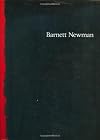
A survey of the work of 20th century American artist Barnett Newman (1905-1970) from his founding role in the New York School in the 1940s to his key influence on both minimalism and conceptual art in the 1960s.
Featuring more than 100 of his paintings, drawings, prints, and sculptures, the book also offers significant new scholarly findings based on the archives of the Barnett Newman Foundation. Each work of art is reproduced in full color and accompanied by its own entry. A comprehensive show more chronology of the artist's life based on new documentation, a selected bibliography, and a selected exhibition history complete the volume. show less
Featuring more than 100 of his paintings, drawings, prints, and sculptures, the book also offers significant new scholarly findings based on the archives of the Barnett Newman Foundation. Each work of art is reproduced in full color and accompanied by its own entry. A comprehensive show more chronology of the artist's life based on new documentation, a selected bibliography, and a selected exhibition history complete the volume. show less
Awards

You May Also Like


Associated Authors
Statistics
- Works
- 31
- Members
- 896
- Popularity
- #28,592
- Rating
- 4.4
- Reviews
- 7
- ISBNs
- 58
- Languages
- 5