
Gabrielle Zevin
Author of Tomorrow, and Tomorrow, and Tomorrow
About the Author
Gabrielle Zevin was born in New York City on October 24, 1977. She received a degree in English and American literature from Harvard University in 2000. She has written both adult and young adult novels. Her debut, Margarettown, was a selection of the Barnes and Noble Discover Great New Writers show more program. Her other works include The Hole We're In, Memoirs of a Teenage Amnesiac, and The Storied Life of A. J. Fikry. Her young adult novel Elsewhere was an American Library Association Notable Children's Book. She has also written for the New York Times Book Review and NPR's All Things Considered. She is the screenwriter of Conversations with Other Women starring Helena Bonham Carter and Aaron Eckhart, for which she received an Independent Spirit Award Nomination. In 2009, she and director Hans Canosa adapted her novel Memoirs of a Teenage Amnesiac into the Japanese film, Dareka ga Watashi ni Kiss wo Shita. (Bowker Author Biography) show less
Image credit: Aaron Eckhart
Series
Works by Gabrielle Zevin
Gabrielle Zevin eBook Sampler 4 copies
Associated Works
Perigo Imediato; À Beira do Lago; A Advogada do Cão; Era Uma Vez Um Livreiro — Contributor — 1 copy
Tagged
Common Knowledge
- Birthdate
- 1977-10-24
- Gender
- female
- Education
- Harvard University
- Occupations
- screenwriter
novelist
young adult writer - Awards and honors
- Independent Spirit Award (Nomination, Best Original Screenplay, 2007)
Austin Film Festival (Audience Award, 2002) - Nationality
- USA
- Birthplace
- New York, New York, USA
- Places of residence
- Los Angeles, California, USA
- Associated Place (for map)
- USA
Members
Reviews
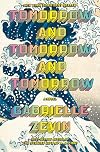
The Publisher Says: In this exhilarating novel by the best-selling author of The Storied Life of A. J. Fikry two friends—often in love, but never lovers—come together as creative partners in the world of video game design, where success brings them fame, joy, tragedy, duplicity, and, ultimately, a kind of immortality.
On a bitter-cold day, in the December of his junior year at Harvard, Sam Masur exits a subway car and sees, amid the hordes of people waiting on the platform, Sadie Green. show more He calls her name. For a moment, she pretends she hasn't heard him, but then, she turns, and a game begins: a legendary collaboration that will launch them to stardom. These friends, intimates since childhood, borrow money, beg favors, and, before even graduating college, they have created their first blockbuster, Ichigo. Overnight, the world is theirs. Not even twenty-five years old, Sam and Sadie are brilliant, successful, and rich, but these qualities won't protect them from their own creative ambitions or the betrayals of their hearts.
Spanning thirty years, from Cambridge, Massachusetts, to Venice Beach, California, and lands in between and far beyond, Gabrielle Zevin's Tomorrow, and Tomorrow, and Tomorrow is a dazzling and intricately imagined novel that examines the multifarious nature of identity, disability, failure, the redemptive possibilities in play, and above all, our need to connect: to be loved and to love. Yes, it is a love story, but it is not one you have read before.
I RECEIVED A DRC FROM THE PUBLISHER VIA NETGALLEY. THANK YOU.
My Review: When you're old, like me, you don't expect to follow middle-aged peoples' passions because you raised them so you know there's just stuff not shared between generations. One of those things is gaming. I've watched people get really passionate about the games they're playing and, frankly, wanted to yawn in their face. I do not see the appeal. But, knowing this was going to be the spine of the story, I was ready for that and factored my indifference out of the story's appeal.
What we're left with is the childhood friend, I think most of us have had one, whose idea of a good time marches well with our own and whose ability to connect with our quiet places makes them invaluable and necessary companions. This is not to say they're romantic-partner material, and in some odd way I think that romantic facet, if present, actually works against this sort of long-term companionship. The relationship that Sam and Sadie take with them through their lives is that companionably silent, creatively clicking connection. It's a wonderful thing to find and, mirabile dictu, Author Zevin makes the force of it real, present, and never overplays her hand with it. A tremendously admirable and no doubt difficult achievement.
The hardest thing to admit to yourself is that you're the Bad Guy in someone else's fairy tale of life and love. Someone out there thinks of you with acute hurt and badly wounded feelings. Sam and Sadie are that to each other, as well as companionable besties. It's complicated, and it wouldn't do to spend time spoilering it, but suffice to say that the ability to betray, then to forgive yourself and seek forgiveness from the betrayed, is another very difficult thing to present in any believable way in fiction. Author Zevin does that, too.
It's a story about the depths of devotion to an idea, an ideal, and a cause in service of one's burning passion to make and be more than one is. It's a story about Love being, in the end, enough to make even failure less important. It's a story about Sam and Sadie making a life with each other: even though not spouses, they're necessary in each others' world because...well, because.
There it is, in that brief passage. That is what some connections offer, and what some of us luck into once or twice in a lifetime. It's precious beyond price and it's the heart of this loving story of the messy, cruel, angry thing we call life.
Why, then, have I given the read a mere four stars? Because I am, as noted above, old. It is not a story written for me, and so I am not as invested in it as I would be if I were 42 not 62. I expect that others will love the delicate and intricate love among all three main protagonists without the sense I had of being spoken around at the dinner table. It's a fate, like bed-wetting, that comes around again after being left behind in childhood. Hence the lack of a fifth, or fraction of a fifth, star. Still a story I'd encourage you to read. (With an agèd person caveat.) show less
On a bitter-cold day, in the December of his junior year at Harvard, Sam Masur exits a subway car and sees, amid the hordes of people waiting on the platform, Sadie Green. show more He calls her name. For a moment, she pretends she hasn't heard him, but then, she turns, and a game begins: a legendary collaboration that will launch them to stardom. These friends, intimates since childhood, borrow money, beg favors, and, before even graduating college, they have created their first blockbuster, Ichigo. Overnight, the world is theirs. Not even twenty-five years old, Sam and Sadie are brilliant, successful, and rich, but these qualities won't protect them from their own creative ambitions or the betrayals of their hearts.
Spanning thirty years, from Cambridge, Massachusetts, to Venice Beach, California, and lands in between and far beyond, Gabrielle Zevin's Tomorrow, and Tomorrow, and Tomorrow is a dazzling and intricately imagined novel that examines the multifarious nature of identity, disability, failure, the redemptive possibilities in play, and above all, our need to connect: to be loved and to love. Yes, it is a love story, but it is not one you have read before.
I RECEIVED A DRC FROM THE PUBLISHER VIA NETGALLEY. THANK YOU.
My Review: When you're old, like me, you don't expect to follow middle-aged peoples' passions because you raised them so you know there's just stuff not shared between generations. One of those things is gaming. I've watched people get really passionate about the games they're playing and, frankly, wanted to yawn in their face. I do not see the appeal. But, knowing this was going to be the spine of the story, I was ready for that and factored my indifference out of the story's appeal.
Sadie had often reflected that sex and video games had a great deal in common. There were certain objectives that needed to be met. There were certain rules that shouldn't be broken. There was a correct combination of movements—button mashes, joystick pivots, keystrokes, commands—that made the whole thing work or not work. There was a pleasure to knowing you had played the game correctly and a release that came when you reached the next level. To be good at sex was to be good at the game of sex.
What we're left with is the childhood friend, I think most of us have had one, whose idea of a good time marches well with our own and whose ability to connect with our quiet places makes them invaluable and necessary companions. This is not to say they're romantic-partner material, and in some odd way I think that romantic facet, if present, actually works against this sort of long-term companionship. The relationship that Sam and Sadie take with them through their lives is that companionably silent, creatively clicking connection. It's a wonderful thing to find and, mirabile dictu, Author Zevin makes the force of it real, present, and never overplays her hand with it. A tremendously admirable and no doubt difficult achievement.
Why was it so hard for him to say he loved her even when she said it to him? He knew he loved her. People who felt far less for each other said "love" all the time, and it didn't mean a thing. And maybe that was the point. He more than loved Sadie Green. There needed to be another word for it.
–and–
To allow yourself to play with another person is no small risk. It means allowing yourself to be open, to be exposed, to be hurt. It is the human equivalent of the dog rolling on its back—I know you won't hurt me, even though you can. It is the dog putting its mouth around your hand and never biting down. To play requires trust and love.
The hardest thing to admit to yourself is that you're the Bad Guy in someone else's fairy tale of life and love. Someone out there thinks of you with acute hurt and badly wounded feelings. Sam and Sadie are that to each other, as well as companionable besties. It's complicated, and it wouldn't do to spend time spoilering it, but suffice to say that the ability to betray, then to forgive yourself and seek forgiveness from the betrayed, is another very difficult thing to present in any believable way in fiction. Author Zevin does that, too.
"We work through our pain. That's what we do. We put the pain into the work, and the work becomes better. But you have to participate. You have to talk to me. You can't ignore me and our company and everything that came before."
It's a story about the depths of devotion to an idea, an ideal, and a cause in service of one's burning passion to make and be more than one is. It's a story about Love being, in the end, enough to make even failure less important. It's a story about Sam and Sadie making a life with each other: even though not spouses, they're necessary in each others' world because...well, because.
“I thought you were worried I was going to die," Sam said.
"No. You'll never die. And if you ever died, I'd just start the game again," Sadie said.
"Sam's dead. Put another quarter in the machine."
"Go back to the save point. Keep playing, and we'll win eventually.”
There it is, in that brief passage. That is what some connections offer, and what some of us luck into once or twice in a lifetime. It's precious beyond price and it's the heart of this loving story of the messy, cruel, angry thing we call life.
Why, then, have I given the read a mere four stars? Because I am, as noted above, old. It is not a story written for me, and so I am not as invested in it as I would be if I were 42 not 62. I expect that others will love the delicate and intricate love among all three main protagonists without the sense I had of being spoken around at the dinner table. It's a fate, like bed-wetting, that comes around again after being left behind in childhood. Hence the lack of a fifth, or fraction of a fifth, star. Still a story I'd encourage you to read. (With an agèd person caveat.) show less
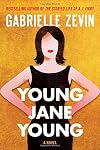
In college, Aviva Grossman works as an intern for handsome congressman Aaron Levin, and they start a secret affair that is exposed when they are in a car crash together (though neither of them is at fault. For the crash). As in the Monica Lewinsky case, the scandal ruins Aviva but only briefly affects the congressman.
Pregnant (not by the congressman), Aviva changes her name and asks her grandmother for help to set up a new life: she goes to a small town in Maine and becomes an event show more planner. As soon as she's old enough, her daughter Ruby begins to help her as her assistant. But when Jane decides to run for mayor, her opponent's underhanded tactics send Ruby searching - and she finds out about Jane's past as Aviva. Furious at being lied to her whole life, Ruby takes off for Florida to confront the congressman she thinks is her father.
Young Jane Young is told in five parts, by five (or four, depending how you count) different people: Rachel Shapiro, Aviva's mother; Jane, grown-up Aviva; Ruby, Jane's 13-year-old daughter, in e-mails to an international pen pal; Embeth, the congressman's wife; and Aviva herself, in second-person, Choose Your Own Adventure format. This is brilliantly fun and effective.
See also: Where'd You Go, Bernadette? by Maria Semple; Monica Lewinsky's TED Talk
Quotes
"Anticipating the worst doesn't provide insurance from the worst happening," Mimmy says. (Rachel, 65)
People were often the worst versions of themselves in the months leading up to a wedding. Occasionally, though, the worst version of someone was the actual version of someone, but it was difficult to know if one was in that situation until after the fact. (Jane, 103)
"The only past you have a right to know about is your own." (Jane to Ruby, 103)
It is foolish to speculate what is happening inside another human's shell. (104)
I believed a mother must act like the woman she wanted her daughter to become. (104)
"The things we don't have are sadder than the things we have. Because the things we don't have exist in our imaginations, where they are perfect." (Ruby to Franny, 139)
Embeth's special power was what Jorge referred to as "negative empathy" - she could always imagine the worst thing a person might be thinking. (179-180)
You have no power, and he has all the power. And this sometimes frustrates you. (Aviva, 239)
..you are thinking how having an affair with your boss is kind of like being in a straitjacket and in chains and submerged in water. You feel like you will need to be an emotional Houdini if you are ever going to extricate yourself. (254)
"Why are you so quiet?" he asks.
Because, you want to say, I am a person with an interior world that you know nothing about. But to say such a thing would violate the terms of your relationship. (255)
The discovery of your shame is one click away...[the Internet is like The Scarlet Letter]. There's that scene at the beginning where Hester Prynne is forced to stand in the town square for the afternoon. Maybe three or four hours. Whatever the time, it's unbearable to her.
You will be standing in that square forever.
You will wear that "A" until you're dead.
You consider your options.
You have no options. (267)
You don't always feel like you love Ruby as much as you should. Where is room for love? All you have is fear and a to-do list. But you take care of her as best you can, and you think of what your grandmother said: "To take care of something is to love it." (284) show less
Pregnant (not by the congressman), Aviva changes her name and asks her grandmother for help to set up a new life: she goes to a small town in Maine and becomes an event show more planner. As soon as she's old enough, her daughter Ruby begins to help her as her assistant. But when Jane decides to run for mayor, her opponent's underhanded tactics send Ruby searching - and she finds out about Jane's past as Aviva. Furious at being lied to her whole life, Ruby takes off for Florida to confront the congressman she thinks is her father.
Young Jane Young is told in five parts, by five (or four, depending how you count) different people: Rachel Shapiro, Aviva's mother; Jane, grown-up Aviva; Ruby, Jane's 13-year-old daughter, in e-mails to an international pen pal; Embeth, the congressman's wife; and Aviva herself, in second-person, Choose Your Own Adventure format. This is brilliantly fun and effective.
See also: Where'd You Go, Bernadette? by Maria Semple; Monica Lewinsky's TED Talk
Quotes
"Anticipating the worst doesn't provide insurance from the worst happening," Mimmy says. (Rachel, 65)
People were often the worst versions of themselves in the months leading up to a wedding. Occasionally, though, the worst version of someone was the actual version of someone, but it was difficult to know if one was in that situation until after the fact. (Jane, 103)
"The only past you have a right to know about is your own." (Jane to Ruby, 103)
It is foolish to speculate what is happening inside another human's shell. (104)
I believed a mother must act like the woman she wanted her daughter to become. (104)
"The things we don't have are sadder than the things we have. Because the things we don't have exist in our imaginations, where they are perfect." (Ruby to Franny, 139)
Embeth's special power was what Jorge referred to as "negative empathy" - she could always imagine the worst thing a person might be thinking. (179-180)
You have no power, and he has all the power. And this sometimes frustrates you. (Aviva, 239)
..you are thinking how having an affair with your boss is kind of like being in a straitjacket and in chains and submerged in water. You feel like you will need to be an emotional Houdini if you are ever going to extricate yourself. (254)
"Why are you so quiet?" he asks.
Because, you want to say, I am a person with an interior world that you know nothing about. But to say such a thing would violate the terms of your relationship. (255)
The discovery of your shame is one click away...[the Internet is like The Scarlet Letter]. There's that scene at the beginning where Hester Prynne is forced to stand in the town square for the afternoon. Maybe three or four hours. Whatever the time, it's unbearable to her.
You will be standing in that square forever.
You will wear that "A" until you're dead.
You consider your options.
You have no options. (267)
You don't always feel like you love Ruby as much as you should. Where is room for love? All you have is fear and a to-do list. But you take care of her as best you can, and you think of what your grandmother said: "To take care of something is to love it." (284) show less
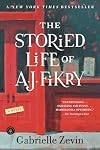
(5) I read this in basically two sittings. (does that make it a novella or a novel, AJ?) This is one of those books that any dedicated reader will surely love. A grouchy bookstore owner on an Island that seems to be Martha's Vineyard undergoes an amazing change of fortunes after what seems to be coincidence and bad luck. But nothing in stories is ever a coincidence, is it? This is part love story, part parent-child drama, part mystery even. With literature shoutouts, twists, foreshadowing, show more and other clever winks and nods to fiction writing. For example, each chapter is a short-story recommendation with a card, the bookseller's personalized recommendation, introducing the chapter.
The story is delightful and the writing is pitch-perfect. Almost, but not quite a fairy-tale. I think in many ways some of what one may choose to criticize about the novel - too much serendipity, sentimentality, a bit contrived - was almost done intentionally as a gentle parody of, well, a novel.
Very sweet. very engaging. I kept getting up to see gratifyingly that my little boys had fallen asleep surrounded by their chapter books and all felt right with the world. show less
The story is delightful and the writing is pitch-perfect. Almost, but not quite a fairy-tale. I think in many ways some of what one may choose to criticize about the novel - too much serendipity, sentimentality, a bit contrived - was almost done intentionally as a gentle parody of, well, a novel.
Very sweet. very engaging. I kept getting up to see gratifyingly that my little boys had fallen asleep surrounded by their chapter books and all felt right with the world. show less
I've read a few of this author's other works previously, and while I enjoyed them immensely, it was nothing compared to my love of this book. It's not that it's a light piece of fiction fluff to wile away an afternoon. It's not that it's full of happiness, and rainbows, spouting messages of good will to all, and a dozen books for every shelf. In fact, the lead character is rather curmudgeonly, set in his ways, and unlikely to change any time soon. He's been touched by life and not always in show more a good way, so the store he calls his home is his domain; all others that don't care for his way of "ruling" know where the door is and to avoid it hitting them on the backside on their way out. He often oversteps the bounds of propriety, thus his favorite flavor ought to be foot, and yet because of his lack of caring about socially acceptable behavior...it's not. He's just off the wall enough to make you care, and the changes he goes through (however unwillingly) as his heart opens up (thanks to a rather smart little cookie dropped inside his door) and his world is changed for the better (in part thanks to a not so accurately penned worked and the fab lit agent that turned his attention towards it and her), are remarkable enough to make it stick with you long after the final page is turned. show less
Lists
To Read (1)
Carole's List (1)
READ IN 2021 (1)
Netgalley Reads (1)
FAB 2021 (1)
Found Family (1)
deBib 2023 (1)
Dead narrators (1)
READ in 2023 (1)
Female Author (1)
Books to Read (1)
READ IN 2022 (1)
Staff Picks (1)
Best Young Adult (1)
Indie Next Picks (2)
Best of 2022 (1)
To Read (1)
READ in 2024 (1)
Overdue Podcast (1)
Five star books (1)
Favourite Books (1)
Awards


You May Also Like


Associated Authors
Statistics
- Works
- 14
- Also by
- 3
- Members
- 25,837
- Popularity
- #808
- Rating
- 3.9
- Reviews
- 1,510
- ISBNs
- 289
- Languages
- 20
- Favorited
- 27

