
Diccon Bewes
Author of Swiss watching
About the Author
Image credit: Author photo taken by Alison Pouliot
Works by Diccon Bewes
Slow Train to Switzerland: One Tour, Two Trips, 150 Years and a World of Change Apart (2013) 129 copies, 4 reviews
The Expert Guide to Your Life in Switzerland Export Edition: Advice from 15 Experts in Switzerland (2020) 2 copies
The Best Swiss Train Rides 1 copy
Tagged
Common Knowledge
- Gender
- male
- Education
- London School of Economics
- Occupations
- bookseller
- Agent
- Edwin Hawkes
- Nationality
- UK
- Places of residence
- Bern, Switzerland
Members
Reviews
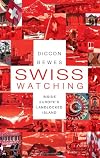
If the quality of travel writing can be measured by the strength of desire it inspires in a reader for travel to that destination, then Diccon Bewes's Swiss Watching is very good. The book is part travelogue and part introduction to popular culture. The more I read of it, the more eager I became to make a return trip to Switzerland. (In my college years, I spent a couple of days in Switzerland on a camping trip from London to Italy's Adriatic coast.)
Bewes is a UK citizen who now lives in show more Switzerland. He's been in Switzerland long enough to notice things about Swiss culture and geography that most short-term tourists wouldn't notice. His writing is mostly complimentary, and the occasional criticisms have an air of affectionate amusement rather than arrogant superiority.
The book is heavy on cultural comparisons between Switzerland and the UK. I lived in the UK for several years, so I had no difficulty with the British English and cultural references. Americans with less exposure to British English may be puzzled by references to places/things like Sainsbury's, OBEs and Clapham Junction.
"Extras" include maps hand drawn by the author, an alphabetical list of cantons with demographic, geographic, and cultural statistics, and a recommended reading list helpfully divided between books about Switzerland, books set in Switzerland, and books by Swiss authors available in English translation.
Recommended to readers looking for popular travel writing a step above a basic travel guide. Since Bewes writes as an outsider, readers interested in a deeper study of Swiss culture will want to balance it with books written by cultural insiders.
This review is based on an electronic copy provided by the publisher through NetGalley. show less
Bewes is a UK citizen who now lives in show more Switzerland. He's been in Switzerland long enough to notice things about Swiss culture and geography that most short-term tourists wouldn't notice. His writing is mostly complimentary, and the occasional criticisms have an air of affectionate amusement rather than arrogant superiority.
The book is heavy on cultural comparisons between Switzerland and the UK. I lived in the UK for several years, so I had no difficulty with the British English and cultural references. Americans with less exposure to British English may be puzzled by references to places/things like Sainsbury's, OBEs and Clapham Junction.
"Extras" include maps hand drawn by the author, an alphabetical list of cantons with demographic, geographic, and cultural statistics, and a recommended reading list helpfully divided between books about Switzerland, books set in Switzerland, and books by Swiss authors available in English translation.
Recommended to readers looking for popular travel writing a step above a basic travel guide. Since Bewes writes as an outsider, readers interested in a deeper study of Swiss culture will want to balance it with books written by cultural insiders.
This review is based on an electronic copy provided by the publisher through NetGalley. show less
The great title pun of Swiss Watching reveals also the book's main weakness: As a watcher, Bewes discovers and describes only the (somewhat) obvious surface. His language skills do not allow him to distinguish between the peculiarities of German and Swiss German which shaves off much of what constitutes "Swissness".
Nevertheless, the book offers a good overview of Swiss history and its political system as well as its Top Ten touristic sights. Do not expect to find the gems and real insight show more into the Swiss character, as it takes years to even grasp the enormous differences of this little country. Switzerland went to the Sevilla World Expo with the paradoxical, post-modern slogan "Switzerland does not exist" which is a semantic Schrödinger's cat. The differences of languages, regions, religions and cultures makes anything typical atypical for some if not for most. Switzerland contains multitudes that defy stereotypes. Switzerland was one of the first countries to allow women to study at universities and had one of the last local holdouts against female suffrage. Swiss banks relied upon excessive formalism to deprive Jewish holocaust survivors of their money. Yet Switzerland took in more Jewish refugees than the United States of America and has rigorously examined its failed wartime banking policies (which both Wall Street and Israel have yet to do too.). A land of extreme openness, protected by a plethora of local monopolies. Switzerland is both extremely progressive and modern, and rural and conservative. Market research is thus ridiculously expensive to do in Switzerland, yet if a product survives on the Swiss market, it will usually do well in most rich markets. After all, Switzerland is a miniature version of Europe. Given his British origin, Bewes sees Switzerland as an island in a European sea. It might be more accurate to describe Switzerland as a Mandelbrot fractal joint of its neighbors.
Overall, recommended with caution. Also best bought abroad as in Switzerland the book costs more than twice the book's price in Euros. show less
Nevertheless, the book offers a good overview of Swiss history and its political system as well as its Top Ten touristic sights. Do not expect to find the gems and real insight show more into the Swiss character, as it takes years to even grasp the enormous differences of this little country. Switzerland went to the Sevilla World Expo with the paradoxical, post-modern slogan "Switzerland does not exist" which is a semantic Schrödinger's cat. The differences of languages, regions, religions and cultures makes anything typical atypical for some if not for most. Switzerland contains multitudes that defy stereotypes. Switzerland was one of the first countries to allow women to study at universities and had one of the last local holdouts against female suffrage. Swiss banks relied upon excessive formalism to deprive Jewish holocaust survivors of their money. Yet Switzerland took in more Jewish refugees than the United States of America and has rigorously examined its failed wartime banking policies (which both Wall Street and Israel have yet to do too.). A land of extreme openness, protected by a plethora of local monopolies. Switzerland is both extremely progressive and modern, and rural and conservative. Market research is thus ridiculously expensive to do in Switzerland, yet if a product survives on the Swiss market, it will usually do well in most rich markets. After all, Switzerland is a miniature version of Europe. Given his British origin, Bewes sees Switzerland as an island in a European sea. It might be more accurate to describe Switzerland as a Mandelbrot fractal joint of its neighbors.
Overall, recommended with caution. Also best bought abroad as in Switzerland the book costs more than twice the book's price in Euros. show less
This book feels like a weird combination of letters written by someone to a friend thinking of moving to Switzerland and the stuff that goes into a Lonely Planet guidebook around all the recommendations of where to stay and eat and what hours the museums are open. Looking back, I find I did learn a lot about Switzerland, some of it very intriguing, but I didn't enjoy the book as a book.
Bewes appears to believe in telling people rather than showing them; the reverse of the best way to write show more a travel book. Moreover, the Swiss are never allowed to speak for themselves; all we get are the author's opinions and theories and ostensibly witty asides. (Of one former red-light district, he observes that now the only tarts there are of the apple and plum variety, guffaw guffaw; he writes of an early Protestant leader that “Zwingli’s revolutionary ideas spread across the country like runny cheese, though, as this is Switzerland, there were some holes" and comments later, in connection with a discussion of Swiss politics that "the gravy train" may be the only form of transportation not readily found in the country.)
Such labored humor and faux-chatty style (is it ever appropriate to refer, in print, to a scorned politician as being "not a happy bunny"??) grated on me throughout; so, too, did the banality of some of the observations, such as the fact that the Swiss don't like small talk and are tyrannical observers of the Sabbath. That irritation made it harder for me to detect and appreciate the real insights, such as the complicated relationship of Switzerland with the wartorn 20th century, since it didn't participate in those wars and profited from them. But even then, the author backs away from real confrontation with some tough and interesting issues. Why not include some conversations with real Swiss about what they actually think about the fact that they had no "lost generations"? Or talk to some of the immigrants about the fact that it takes 12 years, at least, to become a Swiss resident?
Ultimately, this struck me as a facile and not terribly well-written book, although I suppose it would be amusing for anyone pondering moving there or doing business there. But it's definitely not the travel narrative I had hoped for. 2.8 stars.
Full disclosure: I received an e-book version of this from the publisher via NetGalley.com. show less
Bewes appears to believe in telling people rather than showing them; the reverse of the best way to write show more a travel book. Moreover, the Swiss are never allowed to speak for themselves; all we get are the author's opinions and theories and ostensibly witty asides. (Of one former red-light district, he observes that now the only tarts there are of the apple and plum variety, guffaw guffaw; he writes of an early Protestant leader that “Zwingli’s revolutionary ideas spread across the country like runny cheese, though, as this is Switzerland, there were some holes" and comments later, in connection with a discussion of Swiss politics that "the gravy train" may be the only form of transportation not readily found in the country.)
Such labored humor and faux-chatty style (is it ever appropriate to refer, in print, to a scorned politician as being "not a happy bunny"??) grated on me throughout; so, too, did the banality of some of the observations, such as the fact that the Swiss don't like small talk and are tyrannical observers of the Sabbath. That irritation made it harder for me to detect and appreciate the real insights, such as the complicated relationship of Switzerland with the wartorn 20th century, since it didn't participate in those wars and profited from them. But even then, the author backs away from real confrontation with some tough and interesting issues. Why not include some conversations with real Swiss about what they actually think about the fact that they had no "lost generations"? Or talk to some of the immigrants about the fact that it takes 12 years, at least, to become a Swiss resident?
Ultimately, this struck me as a facile and not terribly well-written book, although I suppose it would be amusing for anyone pondering moving there or doing business there. But it's definitely not the travel narrative I had hoped for. 2.8 stars.
Full disclosure: I received an e-book version of this from the publisher via NetGalley.com. show less
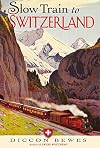
A wonderful book about the first group of British tourists who traveled to Switzerland in an organized tour by Thomas Cook. Arriving by train in Geneva, the small group undertakes a demanding journey of marches and train trips across the Alps via Interlaken to Lucerne. The most surprising fact is how much of the present tourist attractions were already available in the mid-19th century. The large number of British visitors started a virtuous circle that allowed for more investment in tourist show more infrastructure (hotels, transportation, attractions) which in turn led to a further increase in demand. Like most group tourists these English men and women hardly encounter the natives in their timetable driven hunt for sights and attractions. In contrast, today's travelers will bring along more than two pairs of underwear. As the baggage was often sent ahead, they had to make do with one pair of daytime underwear and another one for the evening ... The past is a strange land. A great read only marred by quite a few easily avoided historical mistakes (e.g. Napoleon was in Egypt during the Swiss campaign!). Highly recommended. show less
You May Also Like


Statistics
- Works
- 11
- Members
- 388
- Popularity
- #62,337
- Rating
- 3.8
- Reviews
- 12
- ISBNs
- 29
- Languages
- 2