
Annette von Droste-Hülshoff (1797–1848)
Author of The Jew's Beech
About the Author
Image credit: By Johann Joseph Sprick (German, 1808-1842) - http://www.bildindex.de, Public Domain, https://commons.wikimedia.org/w/index.php?curid=213262
Series
Works by Annette von Droste-Hülshoff
EinFach Deutsch : Textausgaben : Annette von Droste-Hülshoff : Die Judenbuche [2nd edition] (1999) — Text — 6 copies
EinFach Deutsch : Textausgaben : Annette von Droste-Hülshoff : Die Judenbuche [1st edition] (1999) — Text — 4 copies
Sämtliche Werke: Sämtliche Werke, 2 Bde., Ln, Bd.2, Prosa, Epische und Dramatische Werke, Übersetzungen: Bd 2 (1994) 4 copies
Lesen und Üben : Annette von Droste-Hülshoff : Eine Geschichte aus Westfalen [book + sound recording] (2011) — Writer — 3 copies
Sämtliche Werke, 2 Bde., Ln, Bd.2, Gedichte, Versepik, Prosa, Dramen, Libretti, Übersetzungen (1989) 3 copies
Cornelsen Literathek : Text - Erläuterungen - Materialien : Annette von Droste-Hülshoff : Die Judenbuche (2013) 2 copies
Gesammelte Werke 2 [...] 2 copies
Gesammelte Werke Bd. 1 [...] 2 copies
Die judenbuche, gedichte 2 copies
Briefe Gedichte Erzaehlungen 2 copies
Gedichte / Prosa / Briefe — Author — 2 copies
S_mtliche Werke 1 copy
Werke und Briefe 1 copy
Lyrische Gedichte 1 copy
Werke und Briefe 1. Band: Lyrik, Epische Dichtung. 2. Band: Prosa, Dramatische Dichtungen, Ausgewählte Briefe (1976) — Author — 1 copy
Du Luft und ich, und der uralte Stein - Die Judenbuche — Author — 1 copy
Gesammelte Schriften von Annette Freiin von Droste-Hülshoff (Deutsche Volksbibliothek vierte Reihe) (1878) 1 copy
Sämtliche Werke Bd 2: Sämtliche Werke, 2 Bde., Ld, Bd.2, Prosa, Versepen, dramatische Versuche, Übersetzungen (1994) 1 copy
Biographie 1 copy
Droste-Hülshoffs Werke 1 copy
Werke 1 copy
Lutz Görner spricht Annette von Droste- Hülshoff. 2 CDs. Ein Lebensbild in Gedichten, Prosa und Briefen (1998) 1 copy
Westfälische Schilderungen 1 copy
Associated Works
Bitter Healing: German Women Writers, 1700-1830. An Anthology (European Women Writers) (1990) — Contributor — 23 copies
German Novellas of Realism I: Stifter, Droste-Hülshoff, Gotthelf, Grillparzer, Mörike (1989) — Author — 16 copies
Deutsche Novellen von Tieck bis Hauptmann — Contributor — 8 copies
Annette von Droste-Hülshoff unterwegs : auf den Spuren der Dichterin durch Westfalen (2004) — Associated Name — 4 copies
Tag für Tag im Leben der Annette von Droste-Hülshoff : Daten - Texte - Dokumente (1996) — Associated Name — 2 copies
Lebensgut — Ein deutsches Lesebuch für Mädchen — 5. Teil (9. Schuljahr) — Contributor — 1 copy
Tagged
Common Knowledge
- Canonical name
- Droste-Hülshoff, Annette von
- Legal name
- Droste zu Hülshoff, Anna Elisabeth Franzisca Adolphina Wilhelmina Ludovica Freiin von
- Other names
- DROSTE-HÜLSHOFF, Annette VON
DROSTE HÜLSHOFF, Annette VON - Birthdate
- 1797-01-10
- Date of death
- 1848-05-24
- Gender
- female
- Education
- private tutors
- Occupations
- poet
fairy tale writer
crime writer
composer
aristocrat - Relationships
- Schopenhauer, Adele (friend)
- Cause of death
- pneumonia
- Nationality
- Germany
- Birthplace
- Burg Hülshoff, Havixbeck, Nordrhein-Westfalen, Deutschland
- Places of residence
- Burg Hülshoff, Havixbeck, Nordrhein-Westfalen, Deutschland
Köln, Nordrhein-Westfalen, Deutschland
Bonn, Nordrhein-Westfalen, Deutschland
Haus Rüschhaus, Nienberge, Münster, Nordrhein-Westfalen, Deutschland
Schloss Eppishausen, Erlen, Thurgau, Schweiz
Meersburg, Baden-Württemberg, Deutschland - Place of death
- Meersburg, Baden-Württemberg, Deutschland
- Burial location
- Meersburger Friedhof
- Associated Place (for map)
- Nordrhein-Westfalen, Deutschland
Members
Reviews
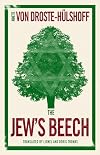
Annette von Droste-Hülshoff (1797-1848) was born into an aristocratic Catholic family near Munster and spent most of her life in rural Westphalia. She never married and rarely tasted city life. This notwithstanding it appears that she was well aware of the prevailing literary trends of the day and her apparently "limited" life experiences did not stop her from exploring deep philosophical issues in her works.
Take this strange novella - "The Jew's Beech". It is, ostensibly, a murder mystery show more inspired by true events - the unsolved murders of a forester and a Jewish moneylender - which were recorded in the archives of the author's family. The story itself however is just a pretext for an exploration of such themes as good and evil, the corruptibility of young minds and the stifling prejudices which, in a small community, can cloud the minds of even the best of people.
Annette von Droste-Hülshoff was primarily a poet and Die Judenbuche is her only piece of prose. For better or for worse, it is very much a poet's work. Let's start with the weaknesses first. A master storyteller could have made a nail-biting thriller out of this. Von Droste-Hülshoff however seems blissfully unconcerned about narrative conventions. Many facts are left unexplained, new characters appear with barely an introduction, the structure sometimes feels lopsided with flashbacks and flashforwards. Then there is the famously obscure ending, which lends itself to multiple interpretations and raises more questions than it answers. It leaves one wondering whether the author was being consciously obscure - a proto-(post)modernist, if you will - or whether she was merely unable to tie up the plot's loose ends.
But in the novella's weaknesses lie also its strengths. The work is rich in allusion and metaphor - chief amongst them the striking image of the lone beech tree of the title. Although the book is firmly rooted in reality, the atmosphere conjured up by the novella is straight out of Brothers Grimm - magical forests, eerie apparitions and unsettling premonitions abound. Indeed this has been justly described as a "Gothic" work - it has many of the genre's tropes and is close in style to the literature of the "Uncanny" exemplified by Hoffmann and like-minded authors.
English editions of this novella are rare. This Alma classics edition uses the 1958 translation by Doris and Lionel Thomas and includes an introduction and timeline.
It may not be "entertaining" in the usual sense of the word and is ultimately frustrating as a murder mystery, but this strange work is certainly worth reading. show less
Take this strange novella - "The Jew's Beech". It is, ostensibly, a murder mystery show more inspired by true events - the unsolved murders of a forester and a Jewish moneylender - which were recorded in the archives of the author's family. The story itself however is just a pretext for an exploration of such themes as good and evil, the corruptibility of young minds and the stifling prejudices which, in a small community, can cloud the minds of even the best of people.
Annette von Droste-Hülshoff was primarily a poet and Die Judenbuche is her only piece of prose. For better or for worse, it is very much a poet's work. Let's start with the weaknesses first. A master storyteller could have made a nail-biting thriller out of this. Von Droste-Hülshoff however seems blissfully unconcerned about narrative conventions. Many facts are left unexplained, new characters appear with barely an introduction, the structure sometimes feels lopsided with flashbacks and flashforwards. Then there is the famously obscure ending, which lends itself to multiple interpretations and raises more questions than it answers. It leaves one wondering whether the author was being consciously obscure - a proto-(post)modernist, if you will - or whether she was merely unable to tie up the plot's loose ends.
But in the novella's weaknesses lie also its strengths. The work is rich in allusion and metaphor - chief amongst them the striking image of the lone beech tree of the title. Although the book is firmly rooted in reality, the atmosphere conjured up by the novella is straight out of Brothers Grimm - magical forests, eerie apparitions and unsettling premonitions abound. Indeed this has been justly described as a "Gothic" work - it has many of the genre's tropes and is close in style to the literature of the "Uncanny" exemplified by Hoffmann and like-minded authors.
English editions of this novella are rare. This Alma classics edition uses the 1958 translation by Doris and Lionel Thomas and includes an introduction and timeline.
It may not be "entertaining" in the usual sense of the word and is ultimately frustrating as a murder mystery, but this strange work is certainly worth reading. show less
Annette von Droste-Hülshoff (1797-1848) was born into an aristocratic Catholic family near Munster and spent most of her life in rural Westphalia. She never married and rarely tasted city life. This notwithstanding it appears that she was well aware of the prevailing literary trends of the day and her apparently "limited" life experiences did not stop her from exploring deep philosophical issues in her works.
Take this strange novella - "The Jew's Beech". It is, ostensibly, a murder mystery show more inspired by true events - the unsolved murders of a forester and a Jewish moneylender - which were recorded in the archives of the author's family. The story itself however is just a pretext for an exploration of such themes as good and evil, the corruptibility of young minds and the stifling prejudices which, in a small community, can cloud the minds of even the best of people.
Annette von Droste-Hülshoff was primarily a poet and Die Judenbuche is her only piece of prose. For better or for worse, it is very much a poet's work. Let's start with the weaknesses first. A master storyteller could have made a nail-biting thriller out of this. Von Droste-Hülshoff however seems blissfully unconcerned about narrative conventions. Many facts are left unexplained, new characters appear with barely an introduction, the structure sometimes feels lopsided with flashbacks and flashforwards. Then there is the famously obscure ending, which lends itself to multiple interpretations and raises more questions than it answers. It leaves one wondering whether the author was being consciously obscure - a proto-(post)modernist, if you will - or whether she was merely unable to tie up the plot's loose ends.
But in the novella's weaknesses lie also its strengths. The work is rich in allusion and metaphor - chief amongst them the striking image of the lone beech tree of the title. Although the book is firmly rooted in reality, the atmosphere conjured up by the novella is straight out of Brothers Grimm - magical forests, eerie apparitions and unsettling premonitions abound. Indeed this has been justly described as a "Gothic" work - it has many of the genre's tropes and is close in style to the literature of the "Uncanny" exemplified by Hoffmann and like-minded authors.
English editions of this novella are rare. This Alma classics edition uses the 1958 translation by Doris and Lionel Thomas and includes an introduction and timeline.
It may not be "entertaining" in the usual sense of the word and is ultimately frustrating as a murder mystery, but this strange work is certainly worth reading. show less
Take this strange novella - "The Jew's Beech". It is, ostensibly, a murder mystery show more inspired by true events - the unsolved murders of a forester and a Jewish moneylender - which were recorded in the archives of the author's family. The story itself however is just a pretext for an exploration of such themes as good and evil, the corruptibility of young minds and the stifling prejudices which, in a small community, can cloud the minds of even the best of people.
Annette von Droste-Hülshoff was primarily a poet and Die Judenbuche is her only piece of prose. For better or for worse, it is very much a poet's work. Let's start with the weaknesses first. A master storyteller could have made a nail-biting thriller out of this. Von Droste-Hülshoff however seems blissfully unconcerned about narrative conventions. Many facts are left unexplained, new characters appear with barely an introduction, the structure sometimes feels lopsided with flashbacks and flashforwards. Then there is the famously obscure ending, which lends itself to multiple interpretations and raises more questions than it answers. It leaves one wondering whether the author was being consciously obscure - a proto-(post)modernist, if you will - or whether she was merely unable to tie up the plot's loose ends.
But in the novella's weaknesses lie also its strengths. The work is rich in allusion and metaphor - chief amongst them the striking image of the lone beech tree of the title. Although the book is firmly rooted in reality, the atmosphere conjured up by the novella is straight out of Brothers Grimm - magical forests, eerie apparitions and unsettling premonitions abound. Indeed this has been justly described as a "Gothic" work - it has many of the genre's tropes and is close in style to the literature of the "Uncanny" exemplified by Hoffmann and like-minded authors.
English editions of this novella are rare. This Alma classics edition uses the 1958 translation by Doris and Lionel Thomas and includes an introduction and timeline.
It may not be "entertaining" in the usual sense of the word and is ultimately frustrating as a murder mystery, but this strange work is certainly worth reading. show less
This brilliant novella is both a murder mystery and a portrait of society in the 18th century with its lawlessness and anti-semitism.
Plot:
Friedrich grows up under tough circumstances with an alcoholic, abusive father. Even after his father dies and he is adopted by his uncle Simon, Friedrich grows up to become a very hard man who is followed around everywhere by Johannes, Simon’s illegitimate son. When a group of wood thieves turn more violent, Friedrich is involved. And when a Jewish man, Aaron, is murderd, Friedrich is also implicated.
Die Judenbuche is an interesting novella that I think could have even profited from show more being expanded into a novel. In any case the slim volume does carry quite a punch already.
Read more on my blog: https://kalafudra.com/2018/04/25/die-judenbuche-the-jews-beech-annette-von-drost... show less
Friedrich grows up under tough circumstances with an alcoholic, abusive father. Even after his father dies and he is adopted by his uncle Simon, Friedrich grows up to become a very hard man who is followed around everywhere by Johannes, Simon’s illegitimate son. When a group of wood thieves turn more violent, Friedrich is involved. And when a Jewish man, Aaron, is murderd, Friedrich is also implicated.
Die Judenbuche is an interesting novella that I think could have even profited from show more being expanded into a novel. In any case the slim volume does carry quite a punch already.
Read more on my blog: https://kalafudra.com/2018/04/25/die-judenbuche-the-jews-beech-annette-von-drost... show less
Lists
Awards


You May Also Like


Associated Authors
Statistics
- Works
- 121
- Also by
- 17
- Members
- 1,025
- Popularity
- #25,136
- Rating
- 3.4
- Reviews
- 11
- ISBNs
- 143
- Languages
- 10
- Favorited
- 4
